
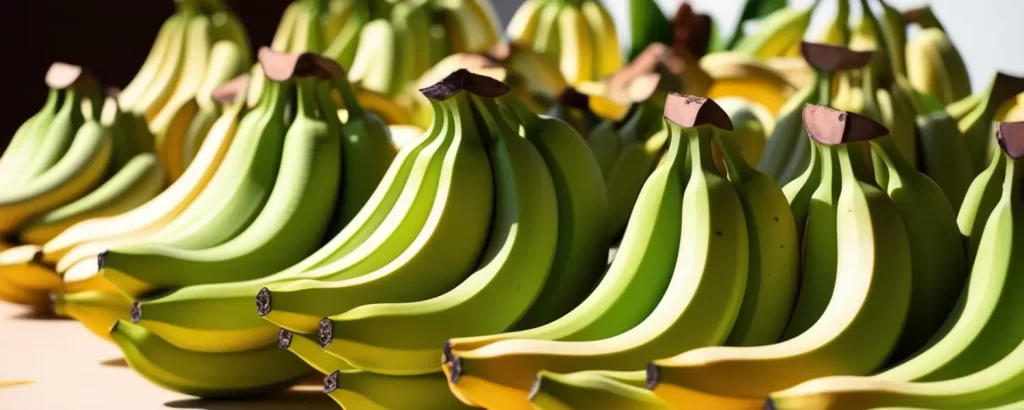
Indian bananas have carved a niche in the global fruit market, celebrated for their sweetness, nutritional value, and consistent quality. The journey of these bananas from the lush fields of India to international grocery stores is a meticulous process, governed by stringent standards to ensure every fruit arrives in perfect condition.
For importers and businesses worldwide, understanding this process reveals why Indian bananas, particularly varieties like the G9 Cavendish banana, are a premium choice. This article delves into the precise farming and harvesting methods that make Indian bananas a top-tier export commodity.
The Foundation: Ideal Cultivation Practices for Export-Quality Bananas
The quality of an exported banana begins long before it is harvested. It starts with the soil, the climate, and the specific cultivation techniques employed by Indian farmers who specialize in produce for the global market.
- Site and Soil Selection: The cultivation of export-grade Indian bananas happens in select agro-climatic zones across states like Maharashtra, Andhra Pradesh, Gujarat, and Tamil Nadu. These regions offer the tropical conditions—a temperature range of 15°C to 35°C and high humidity—that bananas thrive in. The soil is a critical factor; farmers prefer deep, well-drained loamy soils rich in organic matter with a pH level between 6.0 and 7.5. This ensures optimal nutrient uptake and robust plant growth, laying the groundwork for high-quality fruit.
- The Rise of the G9 Cavendish Banana: While India grows numerous banana varieties, the G9 Cavendish banana, a sub-variety of the Cavendish banana, dominates the export market. It is favored for its high yield, long shelf life, ability to withstand long-distance transportation, and its appealing taste and appearance. Farmers increasingly use tissue-cultured G9 plantlets. This modern technique ensures the plants are disease-free, uniform in growth, and mature at a predictable rate, which is crucial for large-scale commercial farming for export.
- Nutrient and Water Management: Banana plants are heavy feeders. A carefully planned schedule of fertilization is implemented, providing a balanced mix of nitrogen, phosphorus, and potassium, along with essential micronutrients. Drip irrigation is the standard for banana cultivation in India for export. This method is highly efficient, delivering water and soluble fertilizers directly to the root zone, conserving water, and ensuring that each plant receives the precise amount of hydration needed for developing large, healthy banana bunches.
Import products for your Needs

The Critical Stage: Harvesting with Precision
Harvesting is arguably the most critical step in the farm-to-port journey. The timing and method of harvesting directly impact the banana’s shelf life, ripening process, and final quality upon arrival at its destination.
- Determining the Perfect Harvest Time: Indian bananas destined for export are always harvested while they are mature but still green. The maturity is determined not by color, but by the “angularity” of the fruit. As the banana matures, it becomes plumper and more rounded, losing its sharp angles. Expert harvesters gauge this fullness, along with the number of weeks since flowering (typically 11-13 weeks for Cavendish), to decide the optimal harvest day. This precision ensures the bananas can withstand the transit time and ripen uniformly after reaching the destination market.
- The Art of Cutting the Bunch: Harvesting is a skilled, two-person job. One worker uses a sharp, long-handled knife to make a cut in the pseudostem of the banana plant, causing the heavy bunch to bend over slowly. The second worker catches the bunch on their shoulder to prevent it from touching the ground, which could cause bruising and scarring. This careful handling at the very first stage is a hallmark of Indian banana harvesting for export. The bunch is then transported from the field to the packing house, often using cableway systems to minimize physical impact.
Post-Harvest Management: The Key to Global Success
Once harvested, the clock starts ticking. The post-harvest management process is a series of carefully orchestrated steps designed to clean, grade, and pack the bananas according to strict banana export standards.
- De-handing and Washing: At the packhouse, the large bunches are “de-handed”—cut into smaller hands or clusters of 4-6 fingers. These hands are immediately placed in large tanks of clean, circulating water. This washing process serves two purposes: it removes field dust and dirt, and it helps to wash away the sticky latex that seeps from the cut crown, which can otherwise cause staining on the peel.
- Quality Control and Grading: After washing, the banana hands are placed on grading tables. Trained workers meticulously inspect each hand. They are graded based on size (length and caliber), weight, and appearance. Any fruit with defects such as blemishes, bruises, or signs of disease is removed. Only the ‘A’ Grade, premium quality Cavendish banana hands make it to the packing stage.
- Fungicide Treatment and Packing: The crown of each graded hand is treated with a food-grade fungicide. This is a crucial step to prevent crown rot, a fungal disease that can develop during transit. The hands are then air-dried and carefully packed into strong, ventilated corrugated fiberboard boxes, typically weighing 7 kg or 13 kg. The boxes are lined with plastic to create a modified atmosphere, which helps in preserving freshness.
- Pre-cooling and Reefer Transport: Before the container is sealed, the packed boxes are pre-cooled to a specific temperature, usually around 13.5°C. This process removes the “field heat” from the fruit and is vital for extending its green life. The boxes are then loaded into refrigerated (“reefer”) containers, which maintain this precise temperature and humidity throughout their journey by sea, ensuring the Indian bananas arrive at their destination in a green, unripened state, ready for distribution and sale.
From the careful selection of G9 Cavendish plantlets to the temperature-controlled journey across oceans, the process of farming and harvesting Indian bananas for export is a testament to India’s commitment to quality and its growing prowess in the global agricultural market.
Frequently Asked Questions (FAQs)
- Why is the G9 Cavendish banana the most exported variety from India? The G9 Cavendish banana is favored for export due to its ideal characteristics for long-distance trade. It has a high yield, a thick and resilient peel that protects it during transport, a long green life, and it ripens uniformly. Its sweet taste and appealing appearance also meet the preferences of international consumers.
- How do farmers ensure Indian bananas meet international quality standards? Indian farmers adhere to strict protocols, often guided by exporters and bodies like APEDA (Agricultural and Processed Food Products Export Development Authority). This includes using disease-free tissue culture plants, practicing precise nutrient and water management through drip irrigation, and following Good Agricultural Practices (GAP) to minimize chemical residues and ensure fruit safety and quality.
- What is “de-handing” and why is it important for banana exports? De-handing is the process of cutting the large main stalk (bunch) of bananas into smaller clusters called “hands.” This is essential for export because it allows for easy washing, grading for quality and size, uniform packing into standardized boxes, and simpler handling throughout the supply chain, reducing the risk of damage.
- How are Indian bananas kept fresh during their long journey overseas? A combination of techniques known as the “cold chain” is used. It starts with harvesting the bananas when they are mature green, followed by pre-cooling them to about 13.5°C. They are then packed in ventilated boxes and transported in refrigerated (reefer) containers that maintain this specific temperature and humidity, slowing down the ripening process until they reach their destination.
- Are chemicals used on bananas that are exported from India? All treatments are done in compliance with the import regulations of the destination country. While food-grade fungicides are applied to the cut crown to prevent rot during transit, the use of pesticides during cultivation is carefully managed to ensure that any residues are well within the safe limits (MRLs – Maximum Residue Levels) set by international food safety authorities.
- Can importers request specific sizes or packaging for Indian bananas? Yes, flexibility in packing is a key service offered by Indian exporters. Importers can typically specify their requirements, such as the number of fingers per hand, the calibration (thickness) of the bananas, and the weight of the carton (e.g., 7 kg, 13.5 kg), allowing them to cater to the specific needs of their market.
About us
Exim Internationals is a premier export company dedicated to delivering the finest products from India to international markets. Our mission is to establish India as a global export powerhouse, contributing to economic growth and showcasing the richness of Indian goods worldwide.
From the pashmina shawls and apples of the North to the spices of the South, the fruits and powders of the West, and the tea and bamboo of the East, we connect every corner of India with the global market.
Certification we have: FSSAI, APEDA, IEC, UDYAM, FIEO, Spices Board, Coconut
Contact us
Samin heritage, Sl building, Shop no. 19, Chandan wadi, Almeda road Thane west, Maharashtra, India-400601.
Email Us: support@eximinternationals.com
Call Us: +91 9820446601 | +91 9321559185

