
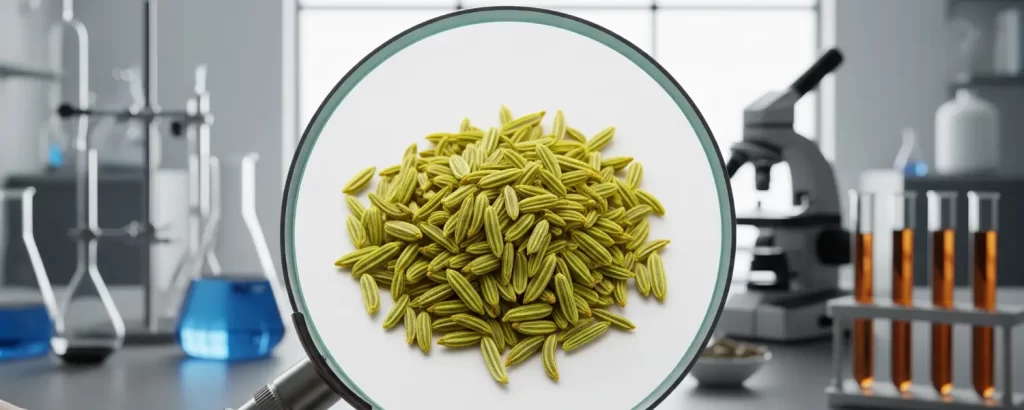
Fennel seeds, with their distinctive anise-like aroma and flavour, are a globally traded commodity, finding their way into culinary creations, herbal infusions, and even pharmaceutical applications. However, for international buyers looking to source fennel seeds in bulk from a major producer like India, understanding that “fennel seed” is not a monolithic entity is crucial. The difference between a standard batch and export-grade fennel lies in a set of meticulously defined quality specifications.
As a trusted exporter based in Pune, Maharashtra, India, Exim Internationals believes in empowering our global partners with the knowledge to make informed sourcing decisions. This guide will delve into the key quality parameters that define export-grade fennel seeds, ensuring you get the premium product your business demands.
Why Quality Specifications Matter for Export-Grade Fennel
For international trade, consistent quality is non-negotiable. Buyers rely on specific parameters to ensure the fennel seeds they receive meet their production requirements, flavour profiles, and regulatory standards. Deviations in quality can lead to product recalls, financial losses, and damage to brand reputation. Understanding these specifications allows buyers to:
Ensure Consistent Flavour and Aroma: Key for food and beverage manufacturers.
Meet Regulatory Standards: Important for food safety and import compliance in different countries.
Optimize Processing: Uniformity in size and moisture content aids efficient processing.
Maximize Shelf Life: Proper quality control minimizes the risk of spoilage during transit and storage.
Key Quality Specifications for Export-Grade Fennel Seeds
When sourcing bulk fennel seeds for export, pay close attention to the following crucial parameters:
1. Volatile Oil Content: This is arguably the most important specification, as it directly dictates the intensity of the fennel’s characteristic aroma and flavour, primarily due to the presence of anethole, fenchone, and estragole.
Typical Range: Export-grade fennel seeds typically have a volatile oil content ranging from 2% to 4% or even higher, depending on the variety and growing conditions.
Testing: This is measured through hydrodistillation, and a Certificate of Analysis (COA) from a reputable laboratory should clearly state the percentage of volatile oil.
2. Purity: This refers to the absence of foreign matter, including dust, stones, stems, other seeds, and damaged or discolored fennel seeds.
Acceptable Limits: Export standards usually specify a maximum percentage of foreign matter, often below 0.5% to 1%.
Importance: High purity ensures a clean product, reduces processing costs, and meets food safety regulations.
3. Moisture Content: The level of moisture in the seeds directly impacts their shelf life and susceptibility to mould growth.
Ideal Range: For export, the moisture content should ideally be below 10-12%.
Monitoring: Proper drying and storage practices by the fennel seeds producer are crucial to maintain this level.
4. Size and Shape: While not always a primary specification for flavour, uniformity in size and the characteristic oblong shape of fennel seeds can be important for visual appeal, especially when sold as a whole spice.
Grading: Some exporters may offer different size grades based on buyer requirements.
5. Colour: Export-grade fennel seeds typically exhibit a uniform greenish-yellow to light brown colour. Significant variations or the presence of dark or discolored seeds can indicate lower quality or improper handling.
6. Damaged Seeds: The percentage of broken, shriveled, or insect-damaged seeds should be minimal. High levels of damage can affect the overall quality and appearance.
7. Salmonella and E. coli Counts: For food-grade applications, stringent microbiological testing is essential to ensure the absence of harmful bacteria like Salmonella and E. coli. Exporters should provide lab reports confirming these counts are within acceptable international limits.
Import products for your Needs

Sourcing the Right Quality: Questions to Ask Your Supplier
To ensure you are sourcing export-grade fennel seeds that meet your specific needs, it’s crucial to ask your potential suppliers the right questions:
Can you provide a detailed specification sheet for your export-grade fennel seeds?
What is the typical volatile oil content of your fennel seed batches? Can you share a recent Certificate of Analysis (COA)?
What measures do you take to ensure the purity of the seeds during harvesting and processing?
What is the average moisture content of your exported fennel seeds?
Do you offer different grades or varieties of fennel seeds (e.g., Lucknow or Gujarati), and how do their specifications differ?
What are your packaging standards for bulk export to ensure the quality is maintained during transit?
Do you conduct microbiological testing for Salmonella and E. coli? Can you provide reports?
By asking these questions to your fennel seeds supplier, you can gain a clear understanding of their quality control processes and ensure you are purchasing a product that meets the rigorous standards of international trade.
Partnering for Quality in Every Seed
Understanding the quality specifications of export-grade fennel seeds is paramount for global buyers. By focusing on parameters like volatile oil content, purity, moisture, and microbiological safety, you can secure a consistent and high-quality supply for your business needs.
At Exim Internationals, we are committed to providing our clients with premium export-grade fennel seeds that meet stringent international standards. Contact us today to discuss your specific requirements and learn more about our quality assurance processes.
Frequently Asked Questions (FAQs)
1. What is the difference between Lucknow and Gujarati fennel seeds? Lucknow fennel seeds are generally known for their sweeter aroma and higher volatile oil content, particularly anethole. Gujarati fennel seeds may have a slightly greener colour and a somewhat different flavour profile. Specifying the origin can help you target the desired characteristics.
2. How is the volatile oil content in fennel seeds measured? The volatile oil content is typically measured using a laboratory method called hydrodistillation, where the essential oils are extracted from the seeds using steam, and the volume is then measured and expressed as a percentage of the seed weight.
3. What is considered an acceptable level of foreign matter in export-grade fennel seeds? Acceptable levels usually range from below 0.5% to 1%, depending on the specific grade and buyer requirements. Lower foreign matter content indicates a higher quality product.
4. Why is low moisture content important in exported fennel seeds? Low moisture content (below 10-12%) is crucial to prevent the growth of mould, fungi, and insects during long sea voyages and storage, thus ensuring a longer shelf life and maintaining the quality of the seeds.
5. Do different industries have different quality requirements for fennel seeds? Yes, the specific requirements can vary. For example, the pharmaceutical industry may have very strict limits on microbial counts and specific volatile oil percentages, while the culinary industry might focus more on aroma, flavour, and visual appearance.
6. What kind of packaging is typically used for exporting bulk fennel seeds from India? Bulk fennel seeds for export are commonly packed in sturdy, food-grade jute bags or polypropylene (PP) bags, usually in sizes ranging from 25 kg to 50 kg, to protect them from physical damage and moisture during transit.
7. How can I ensure the quality of the fennel seeds I am importing? Request a pre-shipment sample, ask for a detailed specification sheet and a recent Certificate of Analysis (COA) from a reputable laboratory, and consider engaging a third-party inspection agency to verify the quality before shipment.
8. As a fennel seeds producer and exporter, what certifications should Exim Internationals possess? Relevant certifications for a spice exporter include registration with the Spice Board of India, ISO 9001 (Quality Management System), ISO 22000 or HACCP (Food Safety Management System), and potentially organic certifications if applicable. These certifications demonstrate a commitment to quality and safety standards.