
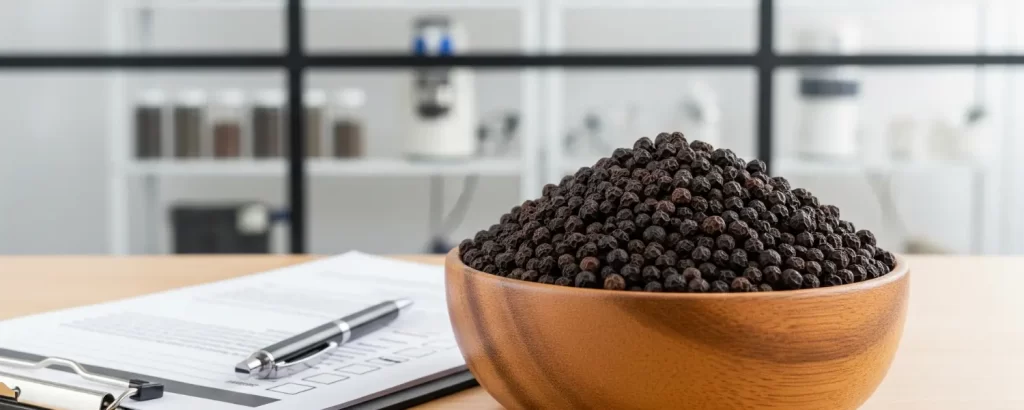
Black pepper, the “King of Spices,” is a global commodity, essential for culinary applications and increasingly valued for its potential health benefits. For businesses looking to purchase bulk black pepper, whether you’re a food manufacturer, spice blender, or international distributor, the quality and reliability of your supplier are paramount. A seemingly small difference in grade or processing can significantly impact your final product and your bottom line.
Before you commit to a large purchase, it’s crucial to go beyond just the price and ask the right questions. As a leading black pepper sourcing hub, particularly for premium Indian varieties, we at Exim Internationals believe in empowering buyers with the information they need to make informed decisions. Here are 5 critical questions you must ask your black pepper supplier before placing a bulk order:
1. What is the Origin and Grade of Your Black Pepper?
This might seem obvious, but the answer holds significant weight. Don’t just settle for “Indian Black Pepper.” Dig deeper:
Specific Growing Region: Ask about the specific regions where the pepper is grown. Is it from Kerala (known for Malabar black pepper)? Karnataka? These regions have distinct climates and cultivation practices that influence the pepper’s flavour profile and quality.
Variety/Grade: Understand the specific grade being offered. Are you being quoted for Tellicherry Garbled Extra Bold (TGEB), known for its large size and superior aroma? Or perhaps Malabar Garbled (MG-1), another premium variety? Lower grades exist, and their quality and price will differ significantly.
Garbled vs. Ungarbled: Inquire if the pepper is “garbled” (cleaned and sorted to remove impurities like dust, stones, and light berries) or “ungarbled.” Garbled pepper is generally of higher quality and commands a premium.
Knowing the precise origin and grade allows you to align your purchase with your specific needs and quality expectations. A reputable Indian black pepper exporter will be transparent about this information.
2. What is the Piperine Content?
Piperine is the bioactive compound responsible for black pepper’s characteristic pungency and many of its potential health benefits. The piperine content is a key indicator of the pepper’s quality and potency.
Ask for a Certificate of Analysis (COA): A COA from a third-party laboratory will provide a detailed breakdown of the pepper’s chemical composition, including the piperine percentage. Premium Indian black pepper, particularly Tellicherry and Malabar varieties, typically boasts higher piperine content.
Understand Your Requirements: Determine the minimum piperine level required for your application. This is especially crucial if you are using black pepper for its functional properties in food supplements or nutraceuticals.
Don’t hesitate to ask for documented proof of the piperine content. A quality-focused black pepper supplier will readily provide this.
Import products for your Needs

3. What is the Moisture Content and Density?
These physical parameters are crucial for the pepper’s shelf life, quality, and the cost-effectiveness of your purchase:
Moisture Content: High moisture content can lead to mould growth and spoilage during storage and transit. Ideally, the moisture content should be below 12%. Ask your supplier to specify this and how it is measured.
Density (g/l): Density, measured in grams per litre, is an indicator of the pepper’s fullness and maturity. Higher density typically correlates with better quality and flavour. Ask your supplier for the density specification of the offered lot.
These seemingly technical details can save you significant issues down the line. A reliable supplier will have these parameters readily available.
4. What are Your Quality Control Measures and Certifications?
Understanding your supplier’s commitment to quality is vital for a consistent and trustworthy supply chain:
Farm-to-Fork Approach: Inquire about their sourcing practices. Do they work directly with farmers in the spice gardens? What quality checks are in place at the farm level?
Processing Standards: Understand their processing facilities and hygiene standards. Are they following Good Manufacturing Practices (GMP)?
Certifications: Ask if they hold relevant certifications such as ISO, HACCP, or certifications from the Spice Board of India. These demonstrate a commitment to quality and food safety.
A responsible mustard producer (if they also deal in black pepper, as many spice companies do in India) and exporter will have robust quality control systems and relevant certifications.
5. What are Your Packaging and Shipping Procedures for Bulk Orders?
The way your bulk black pepper is packaged and shipped directly impacts its condition upon arrival:
Packaging Material: Inquire about the type of packaging used for bulk shipments (e.g., jute bags, PP bags). Ensure it is suitable for long sea journeys and will protect the pepper from moisture and physical damage.
Fumigation: Ask if the shipment will be fumigated to prevent pest infestation during transit.
Logistics and Documentation: Understand their shipping procedures, the ports they typically use (e.g., Cochin Port in Kerala), and their experience with export documentation.
A seasoned exporter will have well-established procedures to ensure your bulk order arrives safely and in good condition.
Informed Decisions for Quality Black Pepper
By asking these five key questions, you empower yourself to make informed decisions when sourcing bulk black pepper. This due diligence will not only help you secure high-quality spice but also establish a reliable and trustworthy relationship with your supplier.
At Exim Internationals, we pride ourselves on our transparency and commitment to quality. We encourage our potential partners to ask these critical questions because we are confident in our ability to provide the answers and the premium Indian black pepper your business deserves.
Ready to source high-quality Indian black pepper? Contact us today to discuss your specific requirements and get answers to all your important questions.
Frequently Asked Questions (FAQs)
1. What is the difference between Tellicherry and Malabar black pepper? Tellicherry black pepper is a specific grade of black pepper from the Malabar coast of Kerala. It’s harvested when the berries are almost ripe, resulting in a larger size and a more complex, nuanced flavour compared to standard Malabar Garbled (MG-1) pepper, which is harvested when fully ripe.
2. What does “garbled” mean in the context of black pepper? “Garbled” refers to black peppercorns that have been cleaned and sorted to remove impurities such as dust, stones, stems, and lightweight, immature berries. Garbled pepper is considered a higher quality than ungarbled pepper.
3. Why is piperine content important when buying black pepper in bulk? Piperine is the primary compound responsible for black pepper’s pungency and is also studied for its potential health benefits. A higher piperine content indicates a more potent and flavourful pepper, which is crucial for both culinary and functional applications.
4. What is a Certificate of Analysis (COA) for black pepper? A COA is a document issued by a third-party laboratory that provides a detailed chemical analysis of the black pepper, including its piperine content, moisture level, density, and other quality parameters. It’s essential for verifying the quality and specifications of your purchase.
5. What is the ideal moisture content for bulk black pepper to prevent spoilage? The ideal moisture content for bulk black pepper should be below 12%. Higher moisture levels can lead to the growth of mould and fungi, reducing the quality and shelf life of the spice.
6. Are there different packaging options available for bulk black pepper exports? Yes, standard packaging for bulk export typically includes 25 kg or 50 kg jute bags or PP (polypropylene) bags with inner liners to protect the pepper from moisture and damage during transit. Specific packaging requests can often be accommodated.
7. What are some common ports of origin for black pepper exports from India? The primary ports for black pepper exports from India are Cochin (Kochi) in Kerala, and sometimes Chennai and Mumbai, depending on the exporter’s location and logistical arrangements.
8. How can I ensure the black pepper I receive matches the sample I was provided? Request a pre-shipment sample and ensure that the final shipment is accompanied by a Certificate of Analysis (COA) that matches the specifications of the sample. You can also engage a third-party inspection agency to verify the quality and quantity of the shipment before it departs.
About us
Exim Internationals is a premier export company dedicated to delivering the finest products from India to international markets. Our mission is to establish India as a global export powerhouse, contributing to economic growth and showcasing the richness of Indian goods worldwide.
From the pashmina shawls and apples of the North to the spices of the South, the fruits and powders of the West, and the tea and bamboo of the East, we connect every corner of India with the global market.
Certification we have: FSSAI, APEDA, IEC, UDYAM, FIEO, Spices Board, Coconut
Contact us
Samin heritage, Sl building, Shop no. 19, Chandan wadi, Almeda road Thane west, Maharashtra, India-400601.
Email Us:support@eximinternationals.com
Call Us: +91 9820446601 | +91 9321559185