
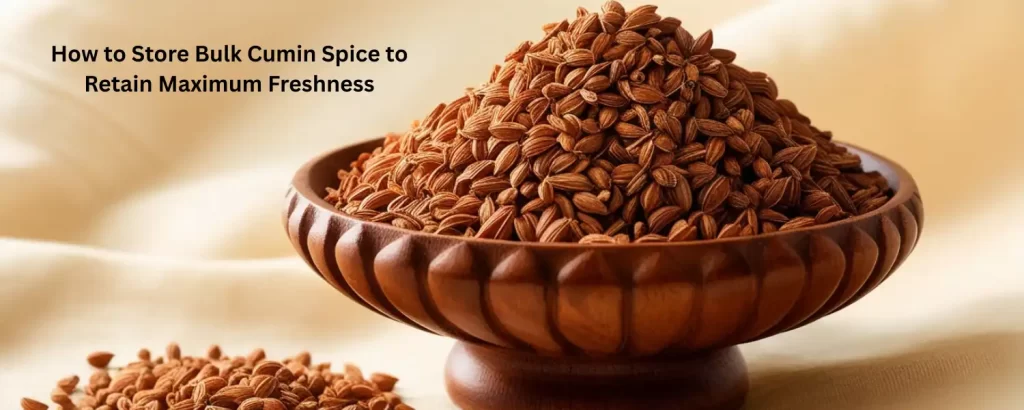
How to Store Bulk Cumin Spice to Retain Maximum Freshness
For any business dealing in spices, from international importers to local distributors, the quality of the product is paramount. Cumin spice, with its distinctively warm and earthy aroma, is a staple in global cuisine. Sourcing high-quality Indian cumin is the first step, but preserving its potent flavour and aromatic profile is what truly protects your investment and ensures customer satisfaction. Storing cumin in large, commercial quantities presents unique challenges. Unlike a small jar in a home kitchen, bulk inventory may be held for weeks or months. During this time, exposure to environmental factors can significantly degrade its quality. This guide provides professional best practices for storing bulk cumin spice, ensuring that the last bag is as fresh as the first. Why Proper Storage of Cumin Spice is Crucial for Your Business The volatile oils, or essential oils, in cumin are responsible for its signature taste and aroma. Improper storage causes these oils to evaporate, leading to a weak, stale product. For a business, this translates to: Financial Loss: Degraded stock is unsellable and must be discarded. Customer Dissatisfaction: Inconsistent or poor-quality cumin will damage your reputation. Wasted Investment: The effort and capital spent on sourcing premium cumin from a reliable cumin supplier are wasted if the product spoils in your warehouse. Proper storage is not just a recommendation; it’s a critical component of quality control and supply chain management. Whole Cumin Seeds vs. Ground Cumin: A Storage Perspective Understanding the form of your cumin is essential, as their storage needs and shelf life differ significantly. Whole Cumin Seeds: The outer seed coat acts as a natural protective barrier for the essential oils inside. This gives whole cumin seeds a much longer shelf life, often lasting up to 3-4 years under ideal conditions. The flavour remains locked within until the seeds are crushed or ground. Ground Cumin: Grinding increases the surface area exposed to the elements, making it far more susceptible to degradation. Ground cumin loses its potency much faster than whole seeds, typically having a shelf life of about 6 months to a year. For businesses, storing whole cumin seeds and grinding them as needed is the most effective strategy for guaranteeing freshness. If you deal primarily in ground cumin, meticulous storage is even more critical. Import products for your Needs Ready to Import The Four Enemies of Cumin Spice Freshness To maintain cumin quality, you must protect it from four primary adversaries: light, heat, air, and moisture. 1. Light (The Fader) Direct exposure to sunlight or even harsh fluorescent lighting can be detrimental. The UV rays act as a catalyst for chemical reactions that break down the spice’s chemical compounds, causing its rich brown colour to fade and its flavour to weaken. Solution: Always store cumin in opaque, light-proof containers. If packed in clear bags, they should be placed inside larger, light-blocking cartons or stored in a completely dark room. 2. Heat (The Volatilizer) Heat is perhaps the biggest enemy of spice freshness. It accelerates the evaporation of volatile oils, causing the aroma—and thus the flavour—to dissipate into the air. Storing cumin near heat sources like ovens, machinery, or in a warehouse with poor temperature control is a recipe for rapid quality loss. Solution: Designate a dedicated cool storage area. The ideal temperature for preserving spice aroma is consistently below 20°C (68°F). 3. Air (The Oxidizer) Oxygen in the air causes oxidation, a chemical process that makes fats go rancid and flavours turn stale. The more air your cumin is exposed to, the faster this process occurs. This is why a half-empty container of ground cumin will lose its flavour faster than a full one. Solution: Use airtight containers. For bulk quantities, this means food-grade, sealable drums, bins, or multi-wall bags with airtight liners. When portioning out smaller amounts, ensure the main container is resealed securely and immediately. 4. Moisture (The Clumper) Moisture is disastrous for dried spices. It causes ground cumin to clump, making it difficult to use. More dangerously, it creates the perfect breeding ground for mould and bacteria, rendering your entire stock unsafe and unusable. High humidity is just as damaging as direct contact with water. Solution: Store cumin in a dry environment with a relative humidity below 60%. Never handle cumin with wet scoops or in a steamy environment. Desiccants can be used in storage areas to help control humidity, but they should not come into direct contact with the product unless they are food-grade. Best Practices for Storing Bulk Cumin Spice Choose the Right Containers: Invest in food-grade, airtight, and opaque containers suitable for bulk storage. Stainless steel bins are an excellent, non-reactive option. For products received from a cumin exporter, keeping them in their original sealed, multi-wall paper or foil-lined sacks is ideal until they need to be opened. Control the Storage Environment: The mantra is Cool, Dark, and Dry. Your warehouse or storage room should be well-ventilated but shielded from direct sunlight and away from external walls that can fluctuate in temperature. Implement a “First-In, First-Out” (FIFO) System: This inventory management practice ensures that older stock is used before newer stock. It prevents packages from being left at the back of the shelf for extended periods, guaranteeing a fresh and consistent product turnover. Label all containers with the date of receipt. Conduct Regular Quality Checks: Periodically open a sample to check the cumin spice quality. Your senses are the best tools: check for a strong, pungent aroma, consistent colour, and a dry, loose texture. Any sign of clumping, mould, or a weak “dusty” smell indicates a problem. Properly storing your bulk cumin spice is a non-negotiable business practice. It safeguards the quality of your product, protects your bottom line, and reinforces your reputation as a provider of premium spices. From sourcing from a reliable cumin supplier to managing your inventory with care, every step is crucial in delivering the freshness your customers expect. Frequently Asked Questions (FAQs) Q1. What is the ideal temperature
How to Store Bulk Cumin Spice to Retain Maximum Freshness Read Post »