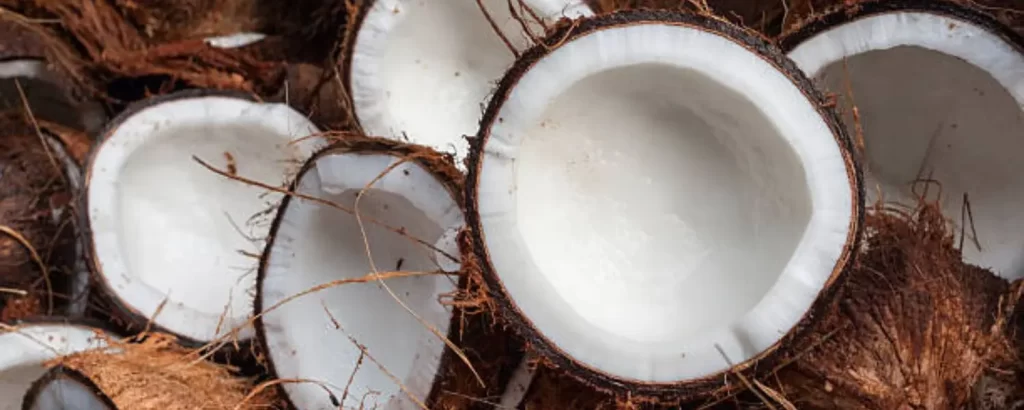
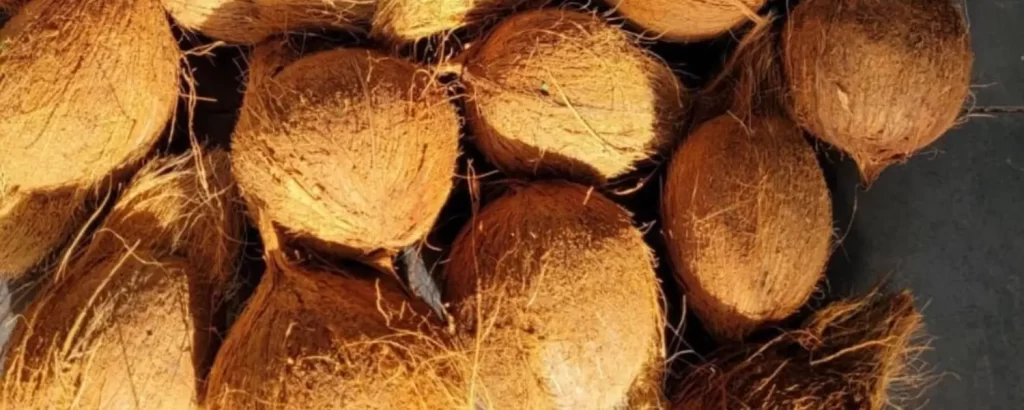
coconut

brown coconuts
Export Import Fruits

How is Brown Coconut Used in Cosmetics and Wellness Products?

The humble brown coconut, often pictured on tropical beaches, is far more than just a culinary delight. This mature fruit of the Cocos nucifera tree is a powerhouse of nutrients and versatile compounds, making it a revered ingredient in the global cosmetics and wellness industry. From its luscious oil to its fibrous husk and sturdy shell, every part of the mature coconut is utilized, aligning perfectly with the growing consumer demand for natural, sustainable, and effective ingredients. As a leading name in the export of high-quality coconuts, we’ve seen firsthand the rising demand for brown coconut derivatives in beauty formulations. Let’s delve into the specific ways this tropical treasure is transforming skincare, haircare, and personal wellness routines around the world. The Liquid Gold: Coconut Oil At the heart of the brown coconut’s cosmetic appeal is its oil. Extracted from the rich, white meat (copra), virgin coconut oil is a multi-purpose marvel. Its magic lies in its unique molecular structure, which is rich in medium-chain fatty acids like lauric acid, capric acid, and caprylic acid. Deep Moisturization: Unlike many synthetic moisturizers that simply sit on the skin’s surface, the smaller molecules of coconut oil penetrate the skin’s layers, providing deep hydration and nourishment. It’s a key ingredient in body butters, lip balms, and face creams, helping to fortify the skin’s natural barrier and lock in moisture. Hair Revitalization: For centuries, coconut oil has been used as a natural hair conditioner. It helps to reduce protein loss from hair shafts, preventing breakage and split ends. As a pre-shampoo treatment or a leave-in serum, it tames frizz, adds a brilliant shine, and promotes a healthy scalp. Gentle Makeup Removal: Its oily nature makes it an incredibly effective and gentle makeup remover, capable of dissolving even stubborn waterproof mascara without harsh chemicals, leaving the skin soft and hydrated. The Natural Exfoliator: Coconut Shell Powder Sustainability is a cornerstone of modern wellness, and the use of coconut shells is a prime example. Instead of being discarded, the hard shells of brown coconuts are finely ground to create a gentle, natural exfoliant. This coconut shell powder is a popular ingredient in face and body scrubs. It effectively sloughs away dead skin cells, unclogs pores, and improves circulation, revealing brighter, smoother skin. As a biodegradable alternative to plastic microbeads, it’s an eco-friendly choice that appeals to environmentally conscious consumers and brands alike. The Soothing Elixir: Coconut Milk and Cream Derived from the grated meat of the mature coconut, coconut milk and cream are renowned for their soothing and hydrating properties. Rich in vitamins C, E, and B, as well as minerals like iron and magnesium, they are a feast for the skin and hair. In cosmetics, coconut milk is incorporated into lotions, shower gels, and face masks to calm irritated or sensitive skin, reduce redness, and provide a boost of moisture. In haircare, it’s the star of hydrating shampoos and deep-conditioning masks, helping to restore elasticity and vitality to dry, brittle hair. Import products for your Needs Ready to Import The Purifying Powerhouse: Activated Coconut Charcoal One of the most innovative uses of the brown coconut shell is the production of activated charcoal. This is created by heating the shells to very high temperatures in an oxygen-deprived environment. The resulting charcoal is incredibly porous and acts like a magnet for toxins and impurities. Activated coconut charcoal is a leading ingredient in detoxifying face masks, cleansers, and soaps. It binds to dirt, excess oil, and pollutants, drawing them out of the pores for a deep-cleansing effect. It has also gained immense popularity in natural toothpaste formulations for its ability to help whiten teeth by absorbing plaque and tannins. The Complete Package: A Sustainable and Effective Choice The widespread use of brown coconut in cosmetics is no mere trend. It represents a shift towards ingredients that are not only effective but also natural, versatile, and sustainable. From luxury spa treatments to everyday personal care products, the derivatives of the mature coconut offer a holistic solution. As global suppliers, we are proud to provide the high-quality raw materials that enable brands to create products that are good for their customers and the planet. Frequently Asked Questions (FAQs) Q1. Is brown coconut oil comedogenic (will it clog pores)? While virgin coconut oil is highly beneficial, it is considered moderately comedogenic. Individuals with very oily or acne-prone skin might prefer to use it on their body and hair rather than their face, or look for non-comedogenic formulations that include its derivatives.   Q2. What is the difference between oil from a green coconut and a brown coconut? Oil is almost exclusively extracted from the mature, brown coconut because its meat (copra) has a much higher oil content, making the extraction process more efficient and yielding a richer product ideal for cosmetic use.   Q3. Can I use cooking-grade coconut oil on my skin? For cosmetic purposes, it’s best to use virgin or cold-pressed coconut oil. These varieties are less refined and retain more of the natural vitamins and antioxidants that are beneficial for skin and hair.   Q4. Are products with coconut shell powder harsh on the skin? When ground into a fine powder, coconut shells provide a gentle and effective exfoliation. The particle size is key, and reputable cosmetic brands use a fine grade that is safe for most skin types, avoiding the irritation that can be caused by larger, sharper exfoliants.   Q5. How does activated charcoal from coconut whiten teeth? Activated coconut charcoal is mildly abrasive and highly adsorbent. It gently polishes the teeth and pulls stains (like those from coffee and wine) from the enamel, leading to a brighter, whiter appearance over time.   Q6. Why is brown coconut considered a sustainable ingredient in cosmetics? It’s considered highly sustainable because every part of the fruit can be used. The meat gives oil and milk, the shell provides exfoliants and activated charcoal, and the husk (coir) is used in horticulture and other industries, ensuring minimal waste. About us

How is Brown Coconut Used in Cosmetics and Wellness Products? Read Post »
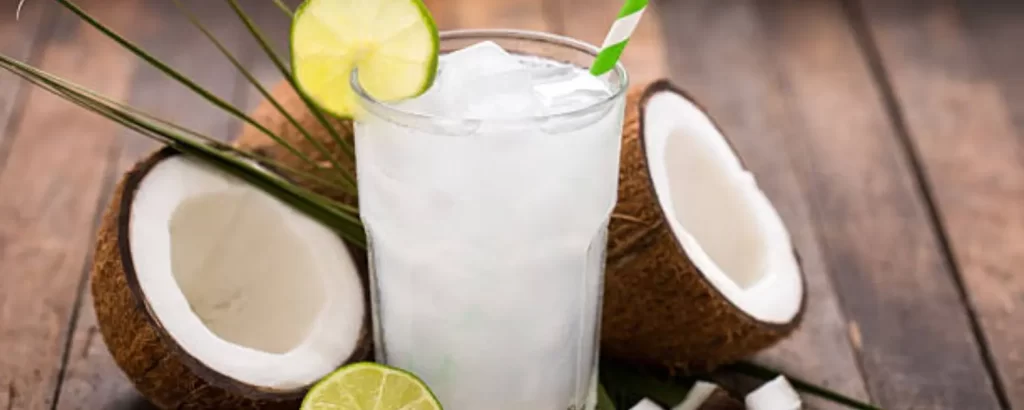
coconut water
Export Import Fruits

Antioxidant and Longevity-Inducing Properties of Coconut Water on Human Dermal Fibroblasts

Introduction Coconut water, the watery liquid held in young green coconuts, has long been prized for its hydrating and nutritional attributes. But in more recent years, studies now show that the all-natural beverage can confer advantage at a cellular level—in this case, with skin quality and aging. New research on human dermal fibroblasts (the cells that produce collagen and structure the skin) indicates that coconut water can have both antioxidant and longevity-inducing effects. Knowledge of Dermal Fibroblasts and Skin Aging Dermal fibroblasts play a central role in the integrity of skin. They secrete collagen, elastin, and other components of the extracellular matrix that maintain the skin’s tautness, good hydration, and smoothness. The cells do experience oxidative damage and senescence with age and yield visible signs of aging in the form of wrinkles, dryness, and elasticity loss. Enter coconut water—a natural product that contains cytokinins, antioxidants, vitamins, and minerals—designed to possibly delay or slow down these cellular changes. Import products for your Needs Ready to Import Coconut Water: Why Is It Biologically Active? Coconut water is not just a delicious drink. It contains: Cytokinins: Plant hormones that regulate cell division and delay plant aging.Research indicates that they can have similar actions in human cells. Ascorbic Acid (Vitamin C): Highly effective antioxidant which neutralizes free radicals and supports collagen synthesis. Magnesium, Potassium, and Calcium: Electrolytes facilitating cellular hydration and performance. Polyphenols: Antioxidants which protect against oxidative stress. Scientific Insights: Activities on Human Dermal Fibroblasts 1. Antioxidant Activity Through experiment, coconut water has been shown to reduce reactive oxygen species (ROS) in human cultured dermal fibroblasts. Through the reduction of oxidative injury, coconut water can maintain cells against premature aging and increase their tolerance. 2. Enhanced Cell Viability Experiments show that fibroblast cells treated with coconut water extracts have increased viability after being exposed to stress conditions. This suggests a supportive, protective effect on cells in the skin. 3. Anti-Senescent Properties Some of the co-factors of coconut water, namely cytokinins, were discovered to delay the onset of cellular senescence, i.e., loss of cells’ capacity to divide and function normally. Delaying senescence preserves youthful skin structure and function. 4. Collagen Synthesis Facilitation Vitamin C and other micronutrients in coconut water are co-factors in collagen biosynthesis, enabling fibroblasts in dermal support structure and elasticity. Import products for your Needs Ready to Import Potential Applications in Skincare and Dermatology Because of its antioxidant and anti-aging activity, coconut water is researched as a functional ingredient in: Anti-aging serums Toners and moisturizers Post-treatment recovery sprays (e.g., chemical peels or microneedling) Nutraceutical supplements for skin longevity Its natural, non-toxic status also makes it especially well-placed in clean beauty and green skincare product lines. About us Exim Internationals is a premier export company dedicated to delivering the finest products from India to international markets. Our mission is to establish India as a global export powerhouse, contributing to economic growth and showcasing the richness of Indian goods worldwide. From the pashmina shawls and apples of the North to the spices of the South, the fruits and powders of the West, and the tea and bamboo of the East, we connect every corner of India with the global market. Certification we have: FSSAI, APEDA, IEC, UDYAM, FIEO, Spices Board, Coconut Contact us Samin heritage, Sl building, Shop no. 19, Chandan wadi, Almeda road Thane west, Maharashtra, India-400601. Email Us: support@eximinternationals.comCall Us: +91 9820446601 | +91 9321559185

Antioxidant and Longevity-Inducing Properties of Coconut Water on Human Dermal Fibroblasts Read Post »

Coconut milk
Export Import Fruits

When Coconut milk Separates and which coconut are best for it?

Coconut milk is a staple in most kitchens around the world, valued for its richness of flavor and ease of use. But there is something that tends to surprise customers – coconut milk separation. When cooking, baking, or even making beverages, it is helpful to know why coconut milk separates and how to deal with it to be able to enjoy this tropical gem even more. At Exim International, our leading import-export company dealing in trading high-quality coconut products, we are careful to maintain the natural essence of our coconut milk in the best possible way without forgetting global standards. Why Does Coconut Milk Separate? Coconut milk is a natural emulsion of coconut oil, water, and protein. It does not contain any stabilizers to keep the homogenous blend of the ingredients like in dairy milk. It segregates due to the following: Natural Fat Content – There are high contents of healthy fats in coconut milk, and these may settle at the top and form a rich cream. Temperature Changes – The freezing temperatures cause the hardening of fat, but warmth makes the fat soften again. Lack of Emulsifiers – Since the coconut milk is natural and does not contain any artificial stabilizers, there is natural separation over time. Storage Time – Permitted to sit unattended for a short while, heavier coconut solids settle at the bottom and the lighter water is on top. Import products for your Needs Ready to Import Is Separated Coconut Milk Safe to Use? Ahhh! Separated milk from coconut ain’t no bad thing—it’s just a sign that it is clean. The coconut cream is that thick layer sitting on top of the surface, and the watery one below it is coconut water. Both get utilized in alternate cooking processes. How to Fix Separated Coconut Milk? If your milk of coconut has been separated, that’s how you can get back to smooth shape: Shake Well – Shake packaged or canned coconut milk thoroughly before opening to blend the layers. Stir or Blend – If it has separated, you can re-emulsify it by blending or stirring it with a spoon. Soften It Up – Heating milk of coconut slowly on low heat with stirring will liquefy hard fat. Innovative Uses of Separated Coconut Milk Instead of trying to fix it, you can use the individual components and enjoy the variation: Coconut Cream – Suitable for curries, soups, non-dairy whipped cream, and sauce thickening. Coconut Water – Suitable for smoothies, beverages, and seasoning food with light coconut flavor. Import products for your Needs Ready to Import About us Exim Internationals is a premier export company dedicated to delivering the finest products from India to international markets. Our mission is to establish India as a global export powerhouse, contributing to economic growth and showcasing the richness of Indian goods worldwide. From the pashmina shawls and apples of the North to the spices of the South, the fruits and powders of the West, and the tea and bamboo of the East, we connect every corner of India with the global market. Certification we have: FSSAI, APEDA, IEC, UDYAM, FIEO, Spices Board, Coconut Contact us Samin heritage, Sl building, Shop no. 19, Chandan wadi, Almeda road Thane west, Maharashtra, India-400601. Email Us: support@eximinternationals.comCall Us: +91 9820446601 | +91 9321559185

When Coconut milk Separates and which coconut are best for it? Read Post »

Scroll to Top
exim international logo

Get Our Products Pricing

Fill out the form to download!