
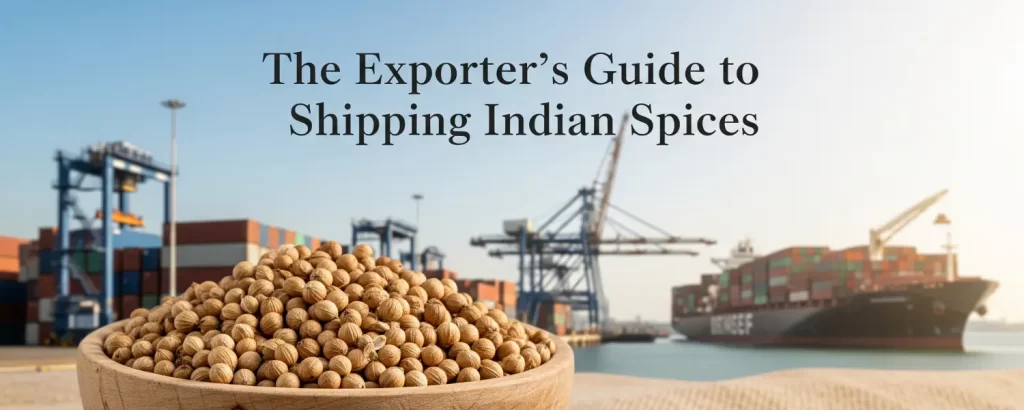
oriander seeds are a cornerstone of global cuisine, lending their warm, citrusy, and slightly sweet notes to everything from savoury curry powders in Asia to pickling spices in Europe and sausage seasonings in the Americas. As the world’s largest producer, consumer, and exporter, India stands as the undisputed capital of this versatile spice.
For international buyers, importers, and food manufacturers, securing a consistent supply of high-quality coriander seeds is critical. As we look towards the upcoming 2025-2026 season, understanding the nuances of the Indian market and the import process is paramount.
This complete guide will walk you through everything you need to know to successfully import premium coriander seeds from India.
Why India? Understanding the 2025-2026 Coriander Seed Market
India’s dominance in the coriander market isn’t accidental. The country’s diverse agro-climatic zones, particularly in states like Gujarat, Rajasthan, and Madhya Pradesh, provide the perfect conditions for cultivating aromatic and flavourful seeds. The scale of production ensures a stable supply for the global market.
Market Outlook (2025-2026): With the 2025 monsoon season concluding favourably in key growing regions, initial forecasts for the sowing period (October-December 2025) are optimistic. This points towards a healthy crop in early 2026, ensuring robust availability for international buyers. Partnering with an experienced Indian coriander seeds supplier now can help you lock in favourable terms ahead of the peak season.
Decoding Quality: A Guide to Indian Coriander Seed Grades
Not all coriander seeds are the same. Understanding the grading system is the first step to ensuring you purchase the right quality for your needs. While many grades exist, the most common in the export market are:
Eagle® Grade: This is the premium, top-tier quality. It consists of whole, green, full-bodied seeds with a high volatile oil content, making it intensely aromatic. It’s preferred for whole seed sales and high-end culinary applications.
Scooter Grade: This is a medium grade, typically with a higher percentage of split seeds. It has a yellowish-brown colour and is the most common choice for grinding into coriander powder.
Parrot Grade (Single/Double): These are lower grades, often with more split seeds and variance in colour, suitable for applications where aroma is less critical than bulk volume.
Beyond the grade, key quality specifications to discuss with your exporter include:
Moisture Content: Should be below 10% to prevent mould and ensure a long shelf life.
Split Percentage: The percentage of broken or split seeds in the lot.
Admixture: The percentage of foreign matter, such as stems or stones.
Colour: From greenish-yellow to brownish-yellow, depending on the grade and harvest time.
Import products for your Needs

The Import Process: A Step-by-Step Walkthrough
Navigating the import process can seem daunting, but with a reliable partner, it’s a structured and manageable journey.
Step 1: Partner with a Verified Exporter Your choice of exporter is the single most important decision. Look for a company with experience, transparent processes, and proper certifications (like Spice Board of India registration, ISO, HACCP).
Step 2: Define Your Specifications Clearly communicate your requirements: the grade of coriander seeds (Eagle, Scooter, etc.), total quantity (in metric tons), and desired packaging (e.g., 25 kg PP bags).
Step 3: Proforma Invoice (PI) and Payment Your exporter will issue a Proforma Invoice detailing the product, price, shipping terms (e.g., FOB, CIF), and payment terms. Common payment methods include an advance payment with the balance against scanned documents or a Letter of Credit (LC) for larger orders.
Step 4: Sourcing, Processing, and Packaging Once terms are agreed, your exporter begins the backend process: sourcing the committed grade from major hubs like Ramganj Mandi or Gondal Mandi, cleaning and sorting the seeds to meet quality specs, and packing them in durable, export-worthy bags.
Step 5: Essential Documentation This is a critical stage. Your exporter will prepare a comprehensive set of documents required for customs clearance in your country, including:
Commercial Invoice & Packing List
Bill of Lading (for sea freight) or Airway Bill
Phytosanitary Certificate
Certificate of Origin
Certificate of Analysis (COA) detailing the product quality
The HS Code for coriander seeds (090921 or 090922) will be used for all customs declarations.
Step 6: Logistics and Shipment The final step is moving the cargo from the packaging facility to the port (e.g., Mundra Port in Gujarat), clearing customs, and loading it onto the vessel for its journey to your destination.
Your Partner for a Successful 2025-2026 Season
Importing coriander seeds from India offers access to the world’s best quality and variety. Success hinges on understanding the different grades, the market dynamics, and the intricacies of the import process. Above all, it requires a trustworthy export partner who can navigate these steps on your behalf, ensuring quality and timely delivery.
As you plan for the 2025-2026 season, aligning with an expert on the ground is your best strategy.
Ready to secure your supply of premium Indian coriander seeds?
Contact Exim Internationals today for a detailed quote and expert guidance for the upcoming season.
Frequently Asked Questions (FAQs)
1. When is the best time to place an order for the 2025-2026 coriander season?
The new crop is harvested from February to March. To secure the best quality and pricing, it’s advisable to start negotiations and place orders between December 2025 and February 2026.
2. What is the main difference between Eagle Grade and Scooter Grade coriander?
Eagle Grade is a premium quality with whole, greenish seeds and high aroma, ideal for selling as whole spice. Scooter Grade has more split, yellowish seeds and is primarily used for grinding into coriander powder, making it a cost-effective choice for industrial use.
3. What is the HS Code for importing coriander seeds?
The Harmonized System (HS) code for coriander seeds that are neither crushed nor ground is 0909.21. For crushed or ground coriander seeds, the code is 0909.22.
4. What are the standard payment terms for bulk imports?
Common terms include a percentage of advance payment (e.g., 30-50%) upon order confirmation and the remaining balance against a scan of the Bill of Lading, or an irrevocable Letter of Credit (LC) at sight for larger, established trade relationships.
5. How can I verify the quality of a coriander seed shipment when it arrives?
You should compare the shipment to the pre-shipment sample and the Certificate of Analysis (COA) provided by your exporter. You can also hire an independent surveyor at the destination port to inspect the cargo and draw samples for testing.
6. Which Indian state is the largest producer of coriander seeds?
Gujarat and Rajasthan are the largest coriander-producing states in India, known for their high-quality output and major trading markets (mandis).
7. What are the most critical documents I need for customs clearance?
eThe three most critical documents are the Bill of Lading (proof of shipment), the Commercial Invoice (proof of value), and the Phytosanitary Certificate (proof of plant health and safety).
8. Can I order a mixed container with other spices like cumin or turmeric?
Yes, experienced exporters like us can consolidate different spices into a single container (LCL or FCL). This is a cost-effective way for buyers to source a variety of Indian spices in one shipment.
About us
Exim Internationals is a premier export company dedicated to delivering the finest products from India to international markets. Our mission is to establish India as a global export powerhouse, contributing to economic growth and showcasing the richness of Indian goods worldwide.
From the pashmina shawls and apples of the North to the spices of the South, the fruits and powders of the West, and the tea and bamboo of the East, we connect every corner of India with the global market.
Certification we have: FSSAI, APEDA, IEC, UDYAM, FIEO, Spices Board, Coconut
Contact us
Samin heritage, Sl building, Shop no. 19, Chandan wadi, Almeda road Thane west, Maharashtra, India-400601.
Email Us: support@eximinternationals.com
Call Us: +91 9820446601 | +91 9321559185

