
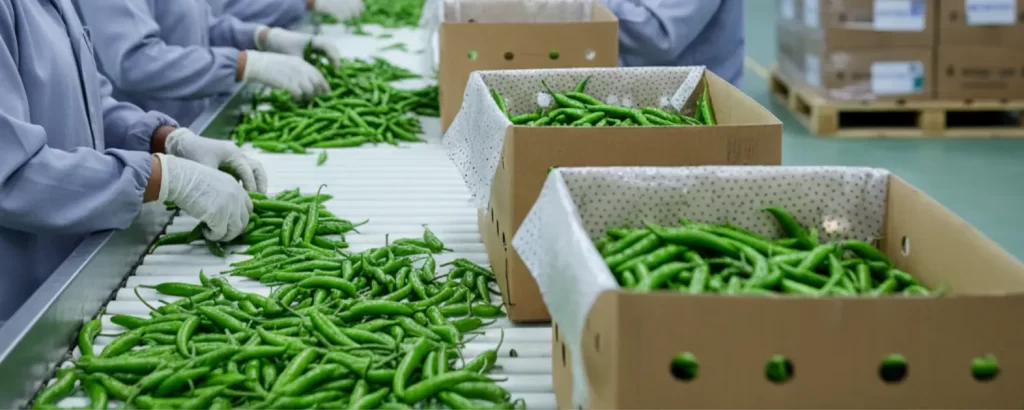
For importers of fresh produce, particularly a highly perishable item like green chillies, the greatest challenge isn’t just sourcing, but ensuring the product arrives in pristine condition with an extended shelf life. A successful green chilli exporter understands that quality extends far beyond the farm gate; it encompasses every meticulous step of the packing and cold chain process.
At Exim Internationals, based in Pune, Maharashtra, we have perfected the art and science of preparing green chillies for international markets, from farm to flight. Our commitment to maximizing freshness and minimizing spoilage is embedded in our expert packing protocols.
1. The Foundation: Optimal Harvest & Pre-Cooling
The journey to an extended shelf life begins even before packing.
Optimal Harvest: Chillies are hand-picked at their ideal maturity stage—firm, vibrant green, and free from physical damage or disease. Overripe or damaged chillies will compromise the entire batch.
Rapid Pre-Cooling: Immediately after harvest, chillies are moved to pre-cooling facilities. Rapidly reducing the field heat is crucial to slow down respiration, enzyme activity, and microbial growth. This step is non-negotiable for extending shelf life.
2. Meticulous Sorting & Grading
Once pre-cooled, chillies undergo a rigorous sorting and grading process.
Manual Inspection: Trained personnel visually inspect each chilli, removing any that show signs of blemishes, insect damage, softness, discoloration, or cuts. Only unblemished, top-quality chillies proceed.
Grading: Chillies are then graded by size and variety (e.g., G4 chilli or Jwala chilli) to ensure uniformity within each pack, meeting the specific requirements of the importer.
3. Specialized Packing Materials for Freshness
The choice of packing material directly impacts the chilli’s ability to “breathe” while staying protected.
Perforated Plastic Liners: Inside the carton, chillies are typically packed within perforated plastic liners (e.g., LDPE) or breathable mesh bags. These liners prevent moisture loss while allowing essential ventilation to avoid condensation build-up, which can lead to rot.
Corrugated Fiberboard Cartons: We use sturdy, food-grade corrugated cartons. These cartons are designed with vent holes to facilitate air circulation during cold chain logistics, preventing the accumulation of ethylene gas (a ripening agent) and ensuring consistent temperature throughout the package.
Ideal Weight: Cartons are packed to an ideal weight (e.g., 3-5 kg per carton) to prevent bruising from excessive weight while allowing for efficient handling and stacking.
Import products for your Needs

4. Cold Chain Management: From Packing House to Destination
Packing is just one part of the equation; maintaining a consistent temperature is paramount.
Controlled Environment Packing: All packing operations take place in a controlled, hygienic environment to minimize contamination and maintain cool temperatures.
Refrigerated Transport: From the packing house, the packed cartons are immediately transferred to refrigerated trucks, then to temperature-controlled holding areas at the airport.
Air Freight Advantage: For green chilli export, air freight is often the preferred mode of transport due to its speed. The entire journey, from packing to arrival, is meticulously monitored to ensure the chillies remain within their optimal temperature range (typically 7-10°C).
5. Essential Documentation: Phytosanitary & Quality Certificates
While not directly part of the packing, comprehensive documentation is critical for smooth international transit and validates the quality assurance.
Phytosanitary Certificate: A mandatory document issued by the plant protection authority, certifying that the chillies are free from pests and diseases, crucial for customs clearance.
Certificate of Analysis (COA): May be provided to detail specific quality parameters if requested.
Your Partner in Freshness
Successfully exporting green chillies demands more than just growing them; it requires a sophisticated, integrated approach to handling, sorting, packing, and cold chain logistics. As your dedicated green chilli exporter, Exim Internationals ensures that every step is optimized to deliver fresh, vibrant chillies with maximum shelf life to your global market.
Looking for a reliable partner for your fresh green chilli imports? Contact Exim Internationals today. We guarantee farm-fresh quality delivered with precision.
Frequently Asked Questions (FAQs)
1. What is the most critical factor for extending the shelf life of green chillies during export?
Maintaining an unbroken cold chain from harvest to delivery is the most critical factor. Rapid pre-cooling and consistent temperature control throughout transit are essential to slow down respiration and prevent spoilage.
2. What type of packing materials are used for green chilli exporter?
We use perforated plastic liners or breathable mesh bags within sturdy, well-vented corrugated fiberboard cartons. These materials are chosen to protect the chillies, allow ventilation, and prevent moisture build-up.
3. What is “pre-cooling” and why is it important for green chilli exporter?
Pre-cooling is the rapid removal of field heat from harvested chillies. It’s crucial because it significantly slows down the natural ripening and decay processes, thereby extending the shelf life of the product before it even leaves the farm.
4. What temperature range is ideal for shipping fresh green chillies?
The optimal temperature range for shipping fresh green chillies is typically between 7°C to 10°C (45°F to 50°F) with high humidity (90-95%).
5. How does a green chilli exporter ensure uniformity in size and quality?
After pre-cooling, chillies undergo rigorous manual sorting and grading. Trained personnel remove any damaged or substandard chillies and then categorize them by size and variety (e.g., G4 chilli or Jwala chilli) to meet specific export grade requirements.
6. Is a Phytosanitary Certificate required for green chilli exporter?
Yes, a Phytosanitary Certificate is a mandatory document for all fresh produce exports. It certifies that the green chillies have been inspected and are free from pests and diseases, complying with the import regulations of the destination country.
7. How long is the typical transit time for green chilli exporter by air freight?
By air freight, the transit time for green chilli exporter can range from 1 to 3 days, depending on the destination and flight connections. This speed is vital for a perishable commodity.
8. How does Exim Internationals manage the cold chain for green chilli exports?
Exim Internationals manages the cold chain by utilizing refrigerated transport from farms to packing houses, packing in temperature-controlled environments, and using air freight with strict temperature-monitored conditions, ensuring continuous coolness until delivery.

