
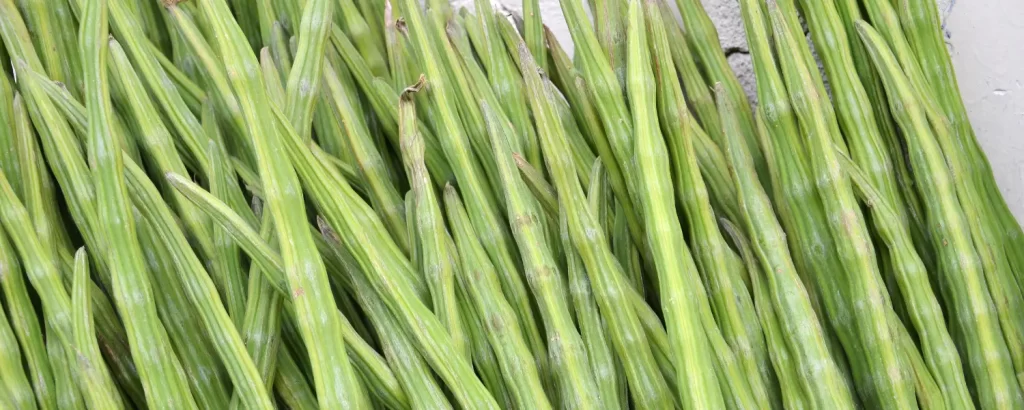
The global demand for healthy, plant-based superfoods is surging, and at the forefront of this trend is the Moringa Drumstick. For importers, this nutritious vegetable represents a significant market opportunity. However, sourcing a niche and perishable product like this from India comes with unique challenges.
Choosing the right drumsticks exporter is the single most important decision you will make. A great partner ensures profitability and quality; the wrong one can lead to costly disasters. As a specialist in exporting high-quality Moringa drumsticks (known as shevga in India), we’ve identified the critical mistakes buyers often make. Avoiding them will protect your investment and secure your supply chain.
Mistake 1: Overlooking Tenderness and Proper Grading
The Mistake: Assuming all drumsticks are the same and focusing only on size or price. The Cost: Receiving a shipment of tough, fibrous, and over-mature drumsticks that are unappetizing and unsellable to discerning consumers, leading to a total loss.
The Solution: Partner with an exporter who understands that tenderness is the number one quality metric. A professional drumsticks exporter will have a clear grading system based on the age, flexibility, and girth of the pods. They should be able to guarantee a shipment of tender, young drumsticks that are perfect for culinary use. Ask potential suppliers how they grade for tenderness and what their rejection criteria are at the farm level.
Mistake 2: Underestimating the Cold Chain Requirement
The Mistake: Treating fresh drumsticks like a semi-perishable commodity instead of the delicate, high-moisture vegetable they are. The Cost: A shipment arriving limp, discolored, dehydrated, or spoiled due to a broken or non-existent cold chain. This often results in the rejection of the entire container.
The Solution: Demand proof of a robust cold chain. Your drumsticks exporter must have a seamless process that includes immediate post-harvest pre-cooling, refrigerated transport from the farm, packing in a temperature-controlled facility, and transfer to the airport or seaport in a reefer container. This unbroken chain is non-negotiable for maximizing freshness and shelf life.
Mistake 3: Not Verifying Year-Round Supply Capability
The Mistake: Contracting with a supplier who has a limited, seasonal sourcing network. The Cost: Experiencing supply disruptions, stockouts during your peak demand periods, and losing your customers to competitors who have a more consistent supply.
The Solution: Choose a drumsticks exporter with a wide sourcing network across different agricultural zones in India. While Moringa has peak seasons, a well-connected exporter can leverage different regional climates to provide a consistent, year-round supply. Ask them directly about their off-season capabilities and how they manage supply continuity.
Import products for your Needs

Mistake 4: Ignoring Packaging and Handling Expertise
The Mistake: Focusing only on the product itself and not the specifics of how it is packed for a long journey. The Cost: Receiving a shipment with a high percentage of bruised, broken, or dehydrated drumsticks due to poor packaging.
The Solution: A professional drumsticks exporter will have a specialized packing protocol. This typically involves using sturdy, ventilated cartons, sometimes with absorbent lining to manage moisture. The drumsticks are cut to a uniform length and packed to a specific weight to prevent crushing and allow for proper air circulation within the carton. This expert handling is key to a longer shelf life upon arrival.
Mistake 5: Failing to Confirm Documentation and Compliance
The Mistake: Assuming the exporter will automatically provide all the correct paperwork required for your country’s customs. The Cost: Your shipment being delayed for days or even rejected at your port due to missing or incorrect documentation, leading to demurrage charges and spoilage.
The Solution: Confirm upfront that the drumsticks exporter will provide all necessary, correctly filled-out documentation as a standard part of their service. The most critical document for fresh produce is the Phytosanitary Certificate, which certifies the product is free from pests and diseases.
Choose a Partner, Not Just a Supplier
Avoiding these five critical mistakes boils down to one guiding principle: choose a drumsticks exporter who acts as a strategic partner. A true partner is transparent about their processes, prioritizes quality and logistics over simply offering the lowest price, and understands that their success is tied to yours.
Ready to partner with a drumsticks exporter who helps you avoid these pitfalls? Contact Exim Internationals today to discuss our quality assurance, cold chain logistics, and year-round supply capabilities.
Frequently Asked Questions (FAQs)
1. What are we referring to as “drumsticks” in this context?
We are referring to the vegetable drumstick, the long, slender seed pod of the Moringa oleifera tree. It is a highly nutritious superfood, also known as shevga in parts of India.
2. What is the most important quality factor to look for in fresh Moringa drumsticks?
Tenderness is the single most important quality factor. Young, tender drumsticks are desirable for their taste and texture, while over-mature pods become tough and fibrous.
3. Why is the cold chain so critical for drumstick export?
Moringa drumsticks are highly perishable with a high respiration rate. An unbroken cold chain (maintaining a cool temperature from farm to destination) is essential to slow down decay, preserve freshness, and maximize shelf life.
4. What is the typical shelf life of exported fresh drumsticks?
With proper cold chain management and packaging, fresh Moringa drumsticks can have a shelf life of approximately 2 to 3 weeks, which is why efficient logistics, often involving air freight, are crucial.
5. Can I get a year-round supply of Moringa drumsticks from India?
Yes. While there are peak seasons, a well-networked exporter with access to farms in different climatic zones of India can provide a consistent, year-round supply.
6. What is a Phytosanitary Certificate and is it required for importing drumsticks?
Yes, it is a mandatory document for customs clearance in almost every country. It is issued by the plant protection authority of the exporting country (India) and certifies that the vegetables are free from pests and diseases.
7. Do you also export IQF (frozen) Moringa drumsticks?
Yes, for clients who require a much longer shelf life and convenience, we also specialize in exporting IQF (Individually Quick Frozen) Moringa drumsticks. This is an excellent alternative to fresh export.
8. How does Exim Internationals help me avoid these common mistakes?
At Exim Internationals, we pride ourselves on transparency. We have a strict grading process for tenderness, a fully managed cold chain, a diverse sourcing network for year-round supply, expert export packaging, and we handle all required documentation meticulously. We act as your quality assurance partner on the ground in India.

