
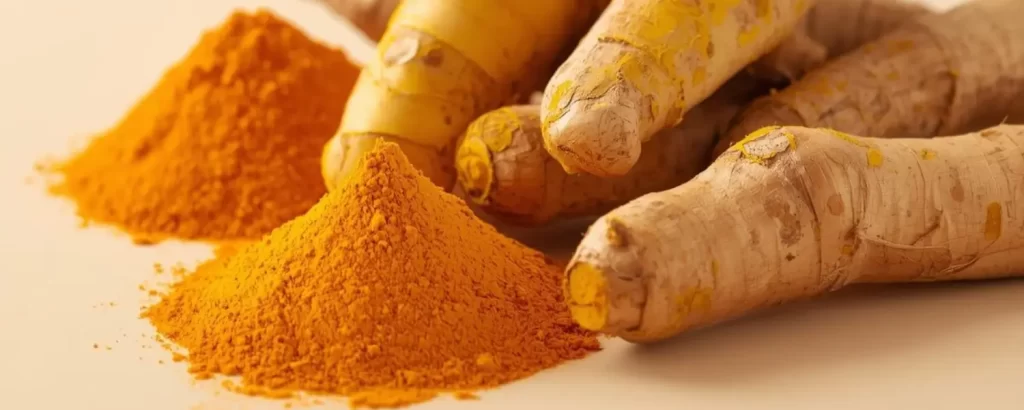
To the world, turmeric is known for its brilliant yellow hue. But for a global importer, food manufacturer, or nutraceutical brand, the true value of this golden spice lies “Beyond Yellow.” Sourcing export quality turmeric from a major producer like India is a science, one that relies on specific, measurable data to ensure consistency, potency, and safety.
The term “export quality” isn’t just a marketing phrase; it’s a guarantee backed by precise specifications. As a leading exporter of Indian spices from Pune, Maharashtra, we believe in empowering our partners with knowledge. This guide decodes the three most critical metrics that define a premium, export quality turmeric shipment.
Metric 1: Curcumin Content – The Measure of Potency
What it is: Curcumin is the primary active compound in turmeric. It belongs to a group of compounds called curcuminoids, which are responsible for the spice’s powerful anti-inflammatory, antioxidant, and medicinal properties.
Why it Matters:
For the Nutraceutical Industry: This is the single most important metric. A higher curcumin content means a more potent and effective health supplement. Nutraceutical-grade turmeric powder is often required to have a curcumin content of 5% or higher.
For the Food Industry: While colour is often the priority, a higher curcumin level also contributes to a richer, more robust, and slightly pungent flavour profile in food products.
How it’s Verified: Curcumin content is measured scientifically via High-Performance Liquid Chromatography (HPLC) testing. A reputable exporter must provide a Certificate of Analysis (COA) from a third-party laboratory verifying the exact percentage.
Sourcing Tip: Turmeric varieties like Alleppey Turmeric from Kerala are specifically prized for their naturally high curcumin content, often making them the top choice for health-focused applications.
Metric 2: ASTA Colour Value – The Measure of Vibrancy
What it is: The ASTA value, established by the American Spice Trade Association, is not a measure of the visual colour you see, but rather the spice’s colouring power and extractable colour. It’s a scientific measure of its ability to impart colour to a food product.
Why it Matters:
For Food Manufacturers: This is a critical metric for brand consistency. Whether in a curry powder, a mustard blend, a snack seasoning, or a beverage, the ASTA value ensures that the final product has the same vibrant and appealing colour, batch after batch.
For Retail Appeal: A high ASTA value corresponds to the deep, rich orange-yellow hue that consumers associate with high-quality, fresh turmeric.
What to Look For: For a good export quality turmeric powder, you should typically look for an ASTA value of 100-120 or higher.
Sourcing Tip: Major turmeric trading and processing hubs in India, such as Erode (known as “Turmeric City”), are experts at producing turmeric powder that meets specific ASTA requirements for global food brands.
Import products for your Needs

Metric 3: Moisture Level – The Measure of Stability
What it is: This is simply the percentage of water remaining in the dried turmeric fingers or powder after processing.
Why it Matters:
For Shelf Life & Safety: This is the most important factor for preventing the growth of mould and bacteria. High moisture is the enemy of shelf stability and can lead to the complete spoilage of a shipment.
For Profitability: When you buy turmeric, you want to pay for the spice, not for water. A lower moisture level means you are getting a more concentrated, stable product, ensuring better value for your investment.
What to Look For: The internationally accepted standard for export quality turmeric is a moisture level of below 12%, with many premium suppliers aiming for below 10%. This is achieved through scientific drying methods and proper storage.
Sourcing with Confidence
Understanding these three key metrics—Curcumin for Potency, ASTA for Colour, and Moisture for Stability—empowers you to source with confidence. When you evaluate a potential supplier, don’t just ask if they have “good quality” turmeric. Ask for their specification sheet. Ask for a Certificate of Analysis.
True export quality turmeric is defined by verifiable data. A transparent and knowledgeable partner will not only understand these metrics but will proudly use them to guarantee the quality of their product.
Ready to source turmeric that meets the highest international standards? Contact Exim Internationals today to request a full specification sheet and a COA for our premium export quality turmeric.
Frequently Asked Questions (FAQs)
1. What is the most important metric for nutraceutical-grade turmeric?
Without a doubt, curcumin content is the most critical metric for any health or supplement application. A level of 5% or higher is often the benchmark for high-potency, nutraceutical-grade turmeric.
2. What is a good ASTA colour value for turmeric powder?
A good ASTA value for high-quality turmeric powder intended for food manufacturing typically ranges from 100 to 120, with premium grades exceeding 120.
3. What is a Certificate of Analysis (COA) and why is it essential?
A COA is a laboratory report that verifies the key specifications of a product batch. For turmeric, it’s essential because it provides third-party proof of the curcumin content, ASTA value, moisture level, and checks for contaminants, giving the buyer complete confidence in the product’s quality.
4. What’s the difference between Alleppey turmeric and Erode turmeric?
Alleppey turmeric, from Kerala, is famous for its very high curcumin content (often 5-6.5%), making it ideal for nutraceuticals. Erode turmeric, from Tamil Nadu, is the most widely cultivated variety and is known for its vibrant colour and consistent quality, making it a staple for the food industry.
5. Why is a low moisture level (<12%) so important for export quality turmeric?
A low moisture level is crucial to prevent the growth of mould and bacteria during shipping and storage. It ensures the product remains safe, stable, and has a long shelf life.
6. Does polishing affect the quality of turmeric fingers?
Polishing is a process that removes the outer skin of the turmeric finger to give it a smoother, more uniform appearance. While it improves the look, it can slightly reduce the curcumin content. The choice between polished and unpolished often depends on the end-use and market preference.
7. How can I be sure a supplier’s curcumin claims are accurate?
Always insist on a Certificate of Analysis (COA) from an independent, accredited third-party laboratory. A reputable exporter will always provide this as proof of their claims.
8. How do I request a full specification sheet from Exim Internationals?
Simply contact us via our website form, email, or WhatsApp. Our team will be happy to provide you with a complete specification sheet for our different grades of export quality turmeric, along with a recent COA.
About us
Exim Internationals is a premier export company dedicated to delivering the finest products from India to international markets. Our mission is to establish India as a global export powerhouse, contributing to economic growth and showcasing the richness of Indian goods worldwide.
From the pashmina shawls and apples of the North to the spices of the South, the fruits and powders of the West, and the tea and bamboo of the East, we connect every corner of India with the global market.
Certification we have: FSSAI, APEDA, IEC, UDYAM, FIEO, Spices Board, Coconut
Contact us
Samin heritage, Sl building, Shop no. 19, Chandan wadi, Almeda road Thane west, Maharashtra, India-400601.
Email Us: support@eximinternationals.com
Call Us: +91 9820446601 | +91 9321559185
You need to know: Can Lemon Water Help You Lose Weight? Is it Myth or Magic?

