
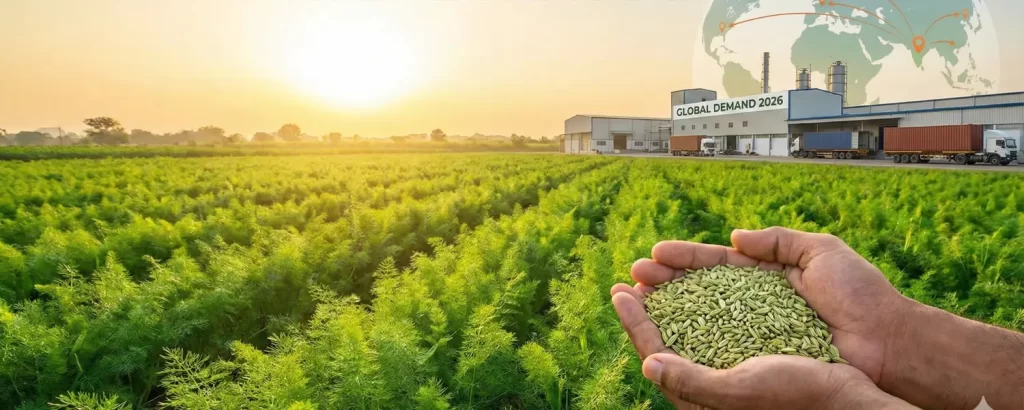
In the dynamic world of global food manufacturing, taste profiles are constantly evolving. As we approach 2026, one trend is unmistakable: the “Global Palate” is shifting towards authentic, complex, and functional ingredients. At the center of this shift is a humble seed with a powerful profile: Indian Fennel.
While fennel has always been a staple in South Asian cuisine, its role is rapidly expanding. From artisan bakeries in Europe to meat processors in the Americas, the demand for high-quality Indian fennel for foods is surging.
As a leading exporter of Indian spices, Exim Internationals is witnessing this transformation firsthand. Here is why food manufacturers worldwide are turning to Indian fennel as a key ingredient for their 2026 product lines.
1. The "Clean Label" Revolution & Natural Flavoring
The modern consumer demands transparency. They want “clean labels” free from artificial flavors and preservatives. This is where Indian fennel shines.
The Anethole Advantage: Indian fennel, particularly varieties like Lucknow Fennel, has a naturally high content of anethole. This compound provides a potent, sweet, liquorice-like flavor that is 13 times sweeter than sugar.
Application: Manufacturers are using fennel for foods—specifically in confectionery, chewing gums, and breath mints—as a natural flavoring agent that allows them to reduce artificial sweeteners while maintaining a premium taste profile.
2. The Bakery & Confectionery Boom
The bakery sector is perhaps the largest driver of this new demand. The traditional use of fennel in rye breads is expanding into premium cookies, digestive biscuits, and even artisanal chocolates.
Texture and Aroma: The Indian variety is prized for its smaller, greener seeds which offer a superior crunch and a more delicate aroma compared to coarser varieties from other origins.
Global Fusion: We are seeing a rise in fusion products, such as fennel-infused biscotti and spiced pastries, where the sweet-savory note of fennel provides a sophisticated edge.
Import products for your Needs

3. Meat Processing and Savory Snacks
In the savory sector, fennel for foods is becoming indispensable for its ability to cut through rich fats.
Italian Sausage & Cured Meats: The authentic flavor of Italian sausage relies heavily on fennel. As global demand for premium charcuterie grows, so does the need for high-quality, clean fennel seeds that are free from foreign matter.
Plant-Based Meats: Interestingly, the plant-based meat industry is a growing buyer. Fennel is used to mask “beany” off-notes in soy and pea protein, creating a more meat-like savory profile in vegan sausages and patties.
4. Functional Foods: Digestion as a Selling Point
In 2026, “functional foods”—products that offer health benefits beyond basic nutrition—will dominate the shelves. Fennel is historically renowned for its digestive properties.
Digestive Teas & Biscuits: Brands are explicitly marketing products containing fennel as “digestive aids.” Sourcing high-quality Indian fennel allows these manufacturers to make credible claims about the functional benefits of their products.
5. Why Indian Origin? The Quality Factor
Why are global buyers specifically requesting Indian fennel?
Two Harvests: India is one of the few countries with two fennel crops a year (Rabi and Kharif), ensuring a fresh, year-round supply that stabilizes prices for large-scale manufacturers.
Food Safety Standards: With the rise of strict EU and FDA regulations, Indian exporters have adapted. At Exim Internationals, we supply Steam Sterilized fennel that meets the strictest microbial limits, ensuring it is safe for ready-to-eat (RTE) applications without the use of chemical ETO sterilization.
A Strategic Ingredient for 2026
For food product developers and procurement managers, Indian fennel is no longer just a spice; it is a strategic ingredient. It offers natural sweetness, functional health benefits, and a premium flavor profile that aligns perfectly with the 2026 consumer trends.
As you plan your ingredient sourcing for the coming year, ensure your supply chain is ready.
Developing a new product line? Contact Exim Internationals today for samples of our premium, steam-sterilized Indian fennel suitable for all food applications.
Frequently Asked Questions (FAQs)
1. Why is Indian fennel preferred for food manufacturing over other origins?
Indian fennel is preferred due to its higher anethole content, which gives it a sweeter, more potent aroma. It also has a brighter green color and a cleaner appearance, which is visually appealing in bakery and confectionery applications.
2. What food safety standards apply when sourcing fennel for foods?
For global food manufacturing, safety is paramount. Key standards include Steam Sterilization to control microbial load (Salmonella/E. coli), purity levels (typically 99% or 99.5%), and compliance with maximum residue limits (MRLs) for pesticides, especially for EU and US markets.
3. Can fennel seeds be used as a natural preservative?
Yes. Fennel seeds contain antioxidant compounds that can help extend the shelf life of certain food products by preventing the oxidation of fats, making them a valuable ingredient for “clean label” preservation strategies.
4. What forms of fennel are available for food manufacturers?
We supply fennel for foods in various forms:
Whole Seeds: For bakery toppings and pickling.
Cracked/Coarse Grind: For sausages and spice rubs.
Fine Powder: For sauces, beverages, and confectionery.
5. Is Indian fennel suitable for the beverage industry?
Absolutely. It is widely used in the production of herbal teas, digestive infusions, and even in the distillation of spirits like gin and absinthe, where its aromatic profile is essential.
6. What is the harvest season for Indian fennel?
The main crop (Rabi) is sown in October-November and harvested in February-March. This is the best time for food manufacturers to contract for the freshest, most aromatic crop for the year ahead.
7. How does steam sterilization differ from ETO for food ingredients?
Steam sterilization uses only heat and water to kill bacteria, leaving no chemical residue. This is safe and accepted globally. ETO (Ethylene Oxide) is a chemical treatment that is banned or restricted in many countries (like the EU) due to health risks. We recommend steam sterilization for all food applications.
8. How can I get a sample of Indian fennel for my R&D team?
Simply contact us with your specific application (e.g., bakery, meat, beverage). We can provide samples of different grades (Lucknow vs. Regular) so your R&D team can evaluate the flavor profile and suitability for your product.
About us
Exim Internationals is a premier export company dedicated to delivering the finest products from India to international markets. Our mission is to establish India as a global export powerhouse, contributing to economic growth and showcasing the richness of Indian goods worldwide.
From the pashmina shawls and apples of the North to the spices of the South, the fruits and powders of the West, and the tea and bamboo of the East, we connect every corner of India with the global market.
Certification we have: FSSAI, APEDA, IEC, UDYAM, FIEO, Spices Board, Coconut
Contact us
Samin heritage, Sl building, Shop no. 19, Chandan wadi, Almeda road Thane west, Maharashtra, India-400601.
Email Us: support@eximinternationals.com
Call Us: +91 9820446601 | +91 9321559185

