
Blog

Your blog category

reefer temperature for cavendish bananas
Blog

What is the Ideal Reefer Temperature for Exporting Cavendish Bananas?

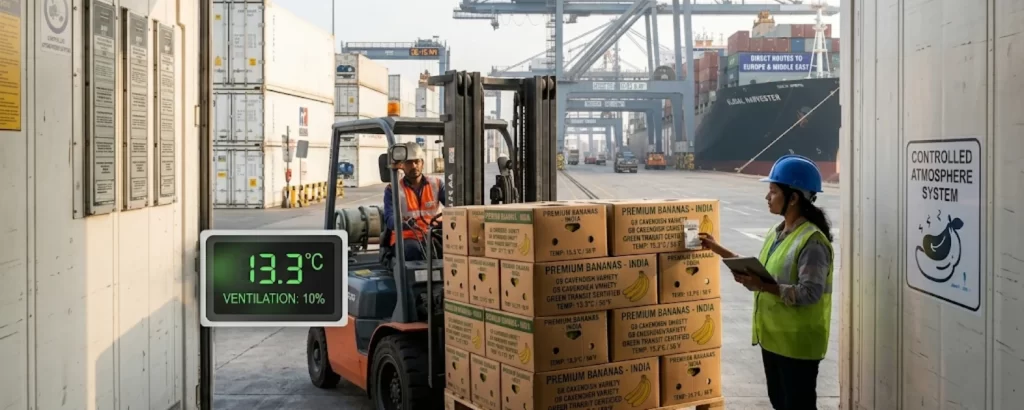
Export Banana Specifications For procurement managers setting up logistics contracts, here are the non-negotiable container settings for shipping G9 Cavendish bananas: Ideal Temperature Set-Point: +13.5°C to +14.0°C (56.3°F to 57.2°F). Relative Humidity: 85% to 95% (to prevent the peel from shriveling and losing weight). Ventilation (Fresh Air Exchange): 15 to 25 CBM/hour (to vent out ethylene gas and CO2). Container Type: 40ft High Cube (HC) Refrigerated (Reefer) Container. 1. Why the Export Banana Temperature Must Be Exact Bananas are harvested at 75% to 80% maturity. At this stage, they are entirely green, hard, and rich in starches. The goal of banana cold chain logistics is to put the fruit to “sleep” during the 10 to 30-day ocean transit, suspending the starch-to-sugar conversion. The target export banana temperature is precisely +13.5°C (+14.0°C in some trade lanes). If the temperature deviates from this narrow window, the biological consequences for the fruit are severe and irreversible. 2. The Risks of Temperature Fluctuations (Too Hot vs. Too Cold) Here is exactly what happens if the reefer temperature for cavendish bananas is set incorrectly by the shipping line or exporter: Container Temperature Biological Impact on Bananas Commercial Result Below +13.0°C Chilling Injury: The cellular structure breaks down. The peel turns dull grey or black, even while the flesh inside remains hard. Total Loss. Supermarkets will reject grey/black bananas, and they will fail to ripen properly in destination chambers. +13.5°C to +14.0°C Optimal Dormancy: Respiration slows dramatically. Ethylene production is minimized. Maximum Profit. Arrives perfectly green, ready for controlled ethylene ripening at the destination. Above +14.5°C Premature Ripening: Heat accelerates respiration. The fruit produces its own ethylene, triggering a chain reaction that ripens the whole container. High Shrinkage. Fruit arrives yellow, soft, or rotting, severely cutting down retail shelf life. 3. Banana Cold Chain Logistics: Beyond Just Temperature A. Continuous Ventilation (Removing Ethylene) Even while “asleep,” green bananas naturally emit small amounts of carbon dioxide (CO2) and ethylene gas. Ethylene is a natural ripening hormone. If it builds up inside the sealed container, it will trigger the bananas to ripen prematurely, regardless of the temperature. The Solution: The reefer container’s fresh air vents must be open and set to exchange 15 to 25 cubic meters (CBM) of air per hour. This flushes out the ethylene and brings in fresh oxygen. B. High Relative Humidity Bananas have a high water content. If the air inside the reefer container is too dry, it will pull moisture out of the fruit. The Solution: The relative humidity must be maintained between 85% and 95%. This prevents the bananas from losing weight (protecting your yield) and stops the peel from looking dehydrated and wrinkled upon arrival. 4. The Importance of Pre-Cooling A common mistake novice exporters make is loading warm bananas directly from the tropical field into the reefer container. A standard ocean reefer is designed to maintain temperature, not to rapidly bring down the core temperature of hot fruit. Professional exporters will always utilize a forced-air pre-cooling facility to bring the core temperature of the boxed bananas down to +13.5°C before they are stuffed into the shipping container. Secure Your Cold Chain with Exim Internationals When you are dealing with highly sensitive cargo, you cannot afford to work with suppliers who cut corners on logistics. Mastering the export banana temperature is what separates profitable importers from those facing massive transit losses. At Exim Internationals, we employ state-of-the-art banana cold chain logistics. From field harvest to pre-cooling and expert reefer container stuffing, we guarantee your G9 Cavendish bananas are shipped under flawless conditions, arriving green and blemish-free at your destination port. Would you like me to send you our complete logistics protocol and a CIF quote for a 40ft reefer container? Frequently Asked Questions (FAQs) 1. What is the ideal reefer temperature for cavendish bananas? The universally accepted ideal temperature for exporting green Cavendish bananas is +13.5°C to +14.0°C. Maintaining this exact temperature puts the fruit into a dormant state, extending its shelf life for long ocean voyages. 2. What happens if the export banana temperature drops below 13°C? If the temperature drops below +13.0°C, the bananas will suffer from “chilling injury.” This irreversibly damages the cell structure of the peel, causing it to turn an unappealing dull grey or black color, rendering the fruit unsellable to retail supermarkets. 3. Why is ventilation important when shipping green bananas? Ventilation is critical because bananas naturally release ethylene gas, a ripening hormone. If the reefer container’s vents are closed, the trapped ethylene will cause the entire container to ripen prematurely during transit. Vents should be set to 15-25 CBM/hour. 4. How long can green bananas survive in a reefer container? When perfect banana cold chain logistics are applied (strict +13.5°C, proper ventilation, vacuum-sealed packaging, and fungicidal crown treatments), green Cavendish bananas can safely remain in transit for 25 to 40 days depending on the packaging technology used. 5. What is the ideal humidity level for exporting bananas? The relative humidity inside the reefer container must be maintained at 85% to 95%. This high humidity level prevents the fruit from losing water weight, ensuring the peel remains smooth and the commercial yield is protected. About us Exim Internationals is a premier export company dedicated to delivering the finest products from India to international markets. Our mission is to establish India as a global export powerhouse, contributing to economic growth and showcasing the richness of Indian goods worldwide. From the pashmina shawls and apples of the North to the spices of the South, the fruits and powders of the West, and the tea and bamboo of the East, we connect every corner of India with the global market. Certification we have: FSSAI, APEDA, IEC, UDYAM, FIEO, Spices Board, Coconut Contact us Samin heritage, Sl building, Shop no. 19, Chandan wadi, Almeda road Thane west, Maharashtra, India-400601. Email Us: support@eximinternationals.comCall Us: +91 9820446601 | +91 9321559185

What is the Ideal Reefer Temperature for Exporting Cavendish Bananas? Read Post »

lemon export solution
Blog

From Indian Orchards to U.S. Shelves: The Lemon Export Solution You’ve Been Waiting For

Freshness You Can Taste, Reliability You Can Trust If you’re a U.S. produce buyer tired of inconsistent citrus quality or unpredictable delivery schedules, one phrase should be on your radar: lemon export. India’s sun‑soaked orchards are producing juicy, high‑acid lemons that arrive stateside firm, fragrant, and ready to delight consumers. Why India Is the New Go‑To Source Global demand for lemons has surged, driven by health‑conscious shoppers and mixologists alike. Yet many American importers still rely on traditional suppliers in Spain, Mexico, or South America—markets increasingly strained by climate challenges and logistical bottlenecks. Enter India’s rapidly modernizing citrus sector, where lemon export programs follow rigorous GAP and HACCP standards while taking advantage of shorter ocean transit routes through the Suez Canal. Indian growers have invested heavily in drip irrigation, integrated pest management, and cold‑chain infrastructure. This translates to better shelf life, consistent sizing, and fewer post‑harvest issues—qualities any U.S. distributor will appreciate. By pivoting part of your sourcing strategy toward India’s lemon export pipeline, you gain access to a crop calendar that complements, rather than competes with, other origins. Import products for your Needs Ready to Import What’s in It for U.S. Buyers? Year‑Round Volume Stability Multiple growing zones—from Maharashtra to Andhra Pradesh—stagger their harvests. Even when Mediterranean supply dips, India’s lemon export season keeps containers flowing. Competitive Landing Costs Favorable currency exchange rates and streamlined customs agreements reduce landed price per case, making an Indian lemon export program surprisingly budget‑friendly without compromising quality. Premium Shelf Appeal Indian varieties boast high juice content and bright, blemish‑free peels—ideal for retail displays, cocktail bars, and food‑service garnish trays. Sustainability Credentials Many orchards use solar‑powered packhouses and biodegradable packing materials, aligning with retailers’ growing ESG requirements. How the Supply Chain Works Orchard & Post‑Harvest Control Every crate destined for lemon export is traceable back to a Global G.A.P.‑certified block. Uniform pruning, soil testing, and natural pollination methods ensure consistent fruit size and flavor. State‑of‑the‑Art Packing Packers deploy forced‑air pre‑cooling and fungicide‑free wax coatings, locking in freshness during the two‑to‑three‑week voyage. Sensors inside reefer containers transmit real‑time temperature and humidity data so you can monitor your lemon export cargo from port to port.   Faster Transit, Smoother Customs Direct sailings from Nhava Sheva and Mundra reduce transit times to the U.S. East Coast by as much as six days. Dedicated USDA‑approved inspection teams pre‑clear phytosanitary documents, cutting clearance delays for each lemon export consignment. Distribution & Marketing Support Leading exporters provide bilingual POS materials, QR code traceability labels, and co‑op advertising budgets—helping buyers tell a compelling “farm‑to‑table” story that drives sales per square foot. Make Indian Lemons Your Competitive Edge Ready to diversify your citrus lineup and secure dependable volume? Start by requesting orchard audits and pre‑season crop forecasts. A reputable supplier will share laboratory test results, moisture‑loss studies, and historical arrival data—proof that their lemon export chain meets your exacting standards. Lock in trial pallets now, evaluate pack‑out on arrival, and position yourself ahead of next season’s buying curve. Import products for your Needs Ready to Import Frequently Asked Questions (FAQs) Q1. What certifications should I look for when selecting an Indian lemon supplier? Seek GlobalG.A.P., HACCP, and preferably ISO 22000. These benchmarks confirm safe growing and handling practices throughout the lemon export process. Q2. How long is transit from India to major U.S. ports? Average sailing times are 22–24 days to New York/New Jersey and 28–30 days to Los Angeles/Long Beach when routed via the Suez Canal. Q3. Will Indian lemons hold up in extended cold storage? Yes. With proper pre‑cooling to 8 °C and controlled‑atmosphere liners, shelf life often exceeds 45 days post‑harvest. Q4. Can exporters provide residue‑free or organic fruit? Many growers maintain separate organic blocks and can furnish NOP‑compliant certificates on request. Q5. Are there seasonal windows I should avoid? Peak monsoon (July–August) can cause minor cosmetic blemishes; however, savvy exporters reschedule harvests and employ rain covers to mitigate risk. About us Exim Internationals is a premier export company dedicated to delivering the finest products from India to international markets. Our mission is to establish India as a global export powerhouse, contributing to economic growth and showcasing the richness of Indian goods worldwide. From the pashmina shawls and apples of the North to the spices of the South, the fruits and powders of the West, and the tea and bamboo of the East, we connect every corner of India with the global market. Certification we have: FSSAI, APEDA, IEC, UDYAM, FIEO, Spices Board, Coconut Contact us Samin heritage, Sl building, Shop no. 19, Chandan wadi, Almeda road Thane west, Maharashtra, India-400601. Email Us: support@eximinternationals.comCall Us: +91 9820446601 | +91 9321559185

From Indian Orchards to U.S. Shelves: The Lemon Export Solution You’ve Been Waiting For Read Post »

export ginger
Blog Export Import Spices

Export Premium Ginger to the USA – Partner with a Trusted Supplier

Hidden Obstacles Between Farm and U.S. Port If you’re ready to export ginger from your fields to American shelves, you already know the U.S. market is lucrative—but also fiercely regulated. Importers demand root‐to‐retail traceability, buyers insist on year‑round consistency, and port authorities scrutinize every phytosanitary certificate. A single mislabelled pallet can trigger costly delays, storage fees, or an outright rejection of your shipment. Yet many growers still rely on ad‑hoc brokers or low‑cost forwarders who treat shipments like interchangeable cargo. Without a strategic plan to export ginger correctly, deadlines slip, freshness erodes, and the first impression you make on U.S. importers sours before your roots ever cross customs. The Real‑World Costs of a Mismanaged Shipment Imagine losing an entire container because soil residue exceeded U.S. tolerance levels or because the packing house failed to meet FDA hazard‑analysis standards. Not only do you eat the cost of freight and disposal; you also lose credibility with buyers who must explain empty shelves to their own customers. Now layer in today’s logistical pressures—ocean‑freight shortages, fluctuating fuel surcharges, and stricter transparency rules under the Food Safety Modernization Act. Every time a document is incomplete, every minute temperatures drift above the optimal 12 °C shipping threshold, your margin shrinks. Worse, competitors who correctly export ginger capture the shelf space and the repeat purchase contracts you were courting. Quality degradation is equally brutal. Ginger’s essential oils begin evaporating within days of harvest; if humidity dips below 65 %, the roots shrivel, sugars concentrate, and the fresh‑cut fragrance retailers pay a premium for vanishes. A trusted partner who understands how to export ginger with precision will pre‑cool produce, use vented cartons with micro‑perforated liners, and implement real‑time data logging so you have proof of cold‑chain integrity. Without that expertise, you gamble on guesswork—and the house usually wins. Import products for your Needs Ready to Import Partner Locally, Deliver Globally A proven, end‑to‑end export partner flips your risk into competitive advantage by weaving compliance, quality, and speed into one seamless pipeline. Here’s how the right ally helps you export ginger to the USA without costly surprises: Regulatory Roadmapping Before a single rhizome is packed, your partner audits farm inputs, certifies GAP (Good Agricultural Practices), and designs an FSMA‑ready Hazard Analysis and Risk‑Based Preventive Controls plan. That groundwork eliminates document scramble later and accelerates customs clearance when your ginger lands at LAX, Miami, or Newark. Harvest‑to‑Port Cold‑Chain Mastery You can’t revive wilted ginger. The solution is preventing heat stress altogether. Your export team installs forced‑air pre‑coolers at the pack house, calibrates container set‑points, and places RFID data loggers in every pallet. Should any reading deviate, corrective action is triggered before quality declines. This detail‑oriented approach is why elite growers export ginger that earns 20 % higher prices in American specialty markets. Predictive Logistics & Transparent Tracking A single missed connection at trans‑shipment hubs like Panama or Jebel Ali can extend transit times from 34 to 50 days. Trusted suppliers mitigate that risk with predictive routing software that selects vessels based on historical on‑time performance, then grants you 24/7 GPS‑enabled tracking. With live ETAs and automatic delay alerts, you can update buyers before they even ask. Marketing Support That Hits the Right Niche Success doesn’t end at the pier. Your partner supplies bilingual, FDA‑compliant labels, recipe cards for U.S. grocers, and high‑resolution images your distributors can deploy instantly on e‑commerce sites. By positioning your story—sustainable farming practices, fair‑wage labor, zero‑pesticide policy—you move from commodity supplier to preferred brand. Because they manage each step with measurable KPIs, you don’t just export ginger; you build a resilient value chain that buyers trust and reorder from quarter after quarter. Secure Your Spot in the U.S. Market Today U.S. demand for fresh ginger has surged 60 % in five years, driven by wellness trends and innovative beverage lines. There has never been a better time to export ginger—but only if you can deliver pristine quality on a predictable schedule. Contact our team now for a free lane‑assessment and cost‑per‑kilogram forecast. Let’s export ginger the smart way, protect your margins, and delight American buyers with every shipment. Import products for your Needs Ready to Import Frequently Asked Questions Q1. What certificates does the U.S. require for ginger imports? You need a phytosanitary certificate from your agricultural ministry, proof of HACCP or HARPC compliance, and (in many states) a Certificate of Origin to benefit from reduced tariffs under trade agreements. Q2. How long does sea freight from India or Vietnam to the U.S. typically take? Transit times vary by port pair, but expect 28–35 days to West Coast ports and 34–42 days to East Coast hubs. Choosing carriers with the most direct routes cuts risk of delays. Q3. What packaging best preserves ginger freshness? Use food‑grade, ventilated cartons with poly liners featuring micro‑perforations. Pallets should allow air circulation, and containers must be set to 12–14 °C at 90–95 % relative humidity to prevent dehydration. Q4. Can I ship by air to test‑launch my brand? Yes. While air freight costs are higher, a 48‑hour door‑to‑door transit is ideal for premium segments or seasonal promotions. Many exporters start with a 1‑ton mixed pallet to validate market response. Q5. How can I secure repeat contracts with U.S. buyers? Consistency is king. Maintain strict harvest schedules, share cold‑chain data, provide marketing collateral tailored to U.S. consumers, and be transparent about any logistical hiccups. Reliability turns first orders into annual supply agreements. About us Exim Internationals is a premier export company dedicated to delivering the finest products from India to international markets. Our mission is to establish India as a global export powerhouse, contributing to economic growth and showcasing the richness of Indian goods worldwide. From the pashmina shawls and apples of the North to the spices of the South, the fruits and powders of the West, and the tea and bamboo of the East, we connect every corner of India with the global market. Certification we have: FSSAI, APEDA, IEC, UDYAM, FIEO, Spices Board, Coconut Contact us Samin heritage, Sl building, Shop no. 19, Chandan wadi,

Export Premium Ginger to the USA – Partner with a Trusted Supplier Read Post »

fresh drumsticks
Blog

Low Energy? Uninspired Meals? Drumsticks Might Be the Tasty Fix You Need

Running on Empty and Stuck in a Meal Rut Do you often feel sluggish during the day, even after a full meal? You might be overlooking the power of fresh drumsticks—a nutrient-rich ingredient that could revive both your energy and your plate. Many people struggle with repetitive, bland meals that lack the flavor and nourishment needed to power through a busy schedule. When fatigue kicks in, we often turn to quick fixes—processed snacks, takeout, or carb-heavy comfort food. The problem? These choices may temporarily fill you up but don’t provide the lasting fuel your body craves. What you truly need are meals that are both energizing and exciting. And that’s where fresh drumsticks, also known as Moringa oleifera pods, come in. Packed with vitamins, minerals, and antioxidants, they’re an easy, affordable way to add variety, boost nutrition, and support sustained wellness—without sacrificing taste. Revitalized Health, Flavorful Dishes, and All-Day Energy Now imagine starting your day feeling refreshed and powering through your afternoons without that dreaded post-lunch crash. Picture enjoying hearty, delicious meals that not only satisfy your hunger but also energize your body naturally. That’s exactly what happens when you add fresh drumsticks to your diet. These slender green pods are nutritional powerhouses. Rich in vitamins A, C, calcium, iron, potassium, and antioxidants, drumsticks are known to boost energy levels, improve digestion, and support immunity. In fact, cultures in South Asia have revered them for generations as a healing food and wellness enhancer. Import products for your Needs Ready to Import Incorporating drumstick-based dishes like drumstick sambar, Moringa stir-fry, or drumstick lentil soup into your weekly meal plan introduces a wave of natural nutrition without compromising taste. Drumsticks bring a unique earthy flavor and soft texture to meals, transforming even simple dishes into delicious power-packed plates. People who regularly eat drumsticks report feeling more energized, less bloated, and even notice improvements in skin clarity and digestion. How Drumsticks Can Upgrade Both Your Meals and Your Energy Fresh drumsticks aren’t just another vegetable—they’re a daily health upgrade waiting to happen. Here’s how to make the most of them: Why Drumsticks Are Great for Energy Fresh drumsticks are loaded with iron and Vitamin C—a dynamic duo that supports better oxygen circulation in your blood, fights fatigue, and improves energy. They’re also high in B-vitamins, which are crucial for converting food into fuel efficiently. Rich in Antioxidants and Anti-inflammatory Compounds The pods contain natural anti-inflammatory agents, which can help reduce joint pain and post-meal inflammation. You’ll feel lighter and more agile with fewer digestion issues bogging you down. Supports Healthy Digestion With plenty of dietary fiber, fresh drumsticks help prevent constipation and support a healthy gut—key to nutrient absorption and sustained energy. Versatile and Easy to Cook From spicy curries to brothy soups and dry stir-fries, fresh drumsticks adapt well to various cooking styles. You don’t have to be a chef to start reaping their benefits. Affordable and Accessible In India and many parts of the world, drumsticks are widely available in markets and grocery stores at a low cost, making them one of the most budget-friendly superfoods around. Easy Ways to Add Drumsticks to Your Diet Drumstick Sambar: A South Indian classic with toor dal, tamarind, and spices. Drumstick Soup: A healing, immunity-boosting soup with garlic and turmeric. Stir-Fried Drumsticks: Lightly sautéed with mustard seeds, curry leaves, and onions. Drumstick Curry: Rich, coconut-based gravy perfect with rice or rotis. Drumstick and Mung Dal Stew: A protein-packed lunch option that’s satisfying and energizing. Pro Tip: Steam fresh drumsticks before adding them to dishes to reduce cooking time and retain more nutrients. Import products for your Needs Ready to Import Frequently Asked Questions (FAQs) Q1. What are drumsticks, and are they different from Moringa?Yes, drumsticks are the immature pods of the Moringa oleifera tree. Moringa leaves and pods are both edible, but the pods (drumsticks) are used mostly in cooking, while the leaves are often used as powders or supplements. Q2. Can drumsticks help with fatigue or low energy?Absolutely! fresh drumsticks are rich in iron, magnesium, and B-vitamins, all essential for energy production and reducing tiredness. Q3. Are drumsticks safe to eat daily?Yes, they are safe when cooked properly. Daily intake in moderate quantities can offer consistent health benefits, especially for digestion, energy, and immunity. Q4. How do I know if a drumstick is fresh?Fresh drumsticks are firm, green, and snap easily. Avoid limp, yellowing, or overly woody pods. Q5. Can I eat the whole drumstick pod?You eat the soft inner flesh and seeds. After cooking, scrape out the pulp with your teeth and discard the fibrous outer skin. About us Exim Internationals is a premier export company dedicated to delivering the finest products from India to international markets. Our mission is to establish India as a global export powerhouse, contributing to economic growth and showcasing the richness of Indian goods worldwide. From the pashmina shawls and apples of the North to the spices of the South, the fruits and powders of the West, and the tea and bamboo of the East, we connect every corner of India with the global market. Certification we have: FSSAI, APEDA, IEC, UDYAM, FIEO, Spices Board, Coconut Contact us Samin heritage, Sl building, Shop no. 19, Chandan wadi, Almeda road Thane west, Maharashtra, India-400601. Email Us: support@eximinternationals.comCall Us: +91 9820446601 | +91 9321559185

Low Energy? Uninspired Meals? Drumsticks Might Be the Tasty Fix You Need Read Post »

G4 green chillies
Blog

G4 Green Chillies in Action: From Barely Breaking Even to Thriving Harvests

Struggling with Low Yields and Unpredictable Returns For many small and medium-scale farmers, chilli cultivation was once an uncertain venture. G4 green chillies have since emerged as a game-changer, but before their introduction, growers faced rising input costs, unpredictable weather, frequent pest attacks, and low-quality seeds that made consistent yields nearly impossible. Months of hard work often resulted in limited output and poor returns, with profits quickly eroded by market volatility. Many farmers barely broke even—some even ran into losses. Take Ramesh, a farmer from Karnataka, as a case in point. Year after year, he planted traditional chilli varieties, hoping for better results. But his overused soil yielded weaker crops, pests ravaged his plants, and harvests failed to meet market expectations. Despite high investments in labor and inputs, the outcome was disheartening. Ramesh, like countless others, began to wonder if chilli farming had a future at all. This was the reality for many—until the introduction of G4 green chillies began reshaping chilli farming as we know it. Import products for your Needs Ready to Import The G4 Green Chillies Breakthrough—Yields That Matter Fast-forward to the present, and the scene has changed dramatically for thousands of chilli farmers. Enter G4 green chillies, a game-changing hybrid variety that’s transforming how chillies are grown, harvested, and sold. Farmers who once struggled to cover costs are now achieving high-yield harvests, stronger disease resistance, and premium market prices. What makes G4 green chillies stand out? High Productivity: G4 plants are known for their vigorous growth and higher fruit-bearing capacity. Even under semi-stressed conditions, the plants produce a robust yield. Uniformity & Shelf Life: These chillies offer consistent shape, color, and size—qualities that boost their appeal in wholesale and export markets. Plus, they stay fresher for longer. Resistance to Disease: G4 green chillies are more resilient to pests and common chilli diseases, which means reduced reliance on chemical pesticides and less crop loss. Market Demand: Due to their desirable look and heat level, G4 chillies command better prices in local and international markets. Ramesh, the once-disheartened farmer, made the switch to G4 chillies after consulting with a local agri-extension officer. The results were astounding. His per-acre yield increased by nearly 40%, and his produce attracted buyers from nearby cities offering premium rates. Within one season, Ramesh not only broke even—he profited significantly and reinvested in quality irrigation for the next cycle. Making the Shift to Profitable Chilli Farming If you’re a farmer or agri-entrepreneur tired of unpredictable outcomes, now’s the time to explore the potential of G4 green chillies. The transformation begins with a few strategic steps: Choose Quality Seeds Start with certified G4 green chilli seeds sourced from reputable suppliers. High germination rates and seed purity are essential for success. Optimize Soil & Inputs Conduct a soil test and apply balanced fertilizers. G4 chillies respond well to organic practices and drip irrigation, which conserve water and improve fruit quality. Protect Your Crop While G4 varieties offer strong disease resistance, integrated pest management (IPM) ensures that your plants remain healthy throughout the cycle. Connect with Buyers Early G4 chillies are in high demand among exporters, wholesalers, and FPOs. Plan ahead by building relationships with local markets or online agri-trade platforms. Import products for your Needs Ready to Import Leverage Government Schemes Take advantage of government subsidies on seeds, drip irrigation, and crop insurance tailored for chilli growers. Many agricultural departments support hybrid cultivation like G4. Farmers who have adopted G4 green chillies report increased stability in income, better post-harvest quality, and stronger buyer relationships. The bridge from survival to success isn’t out of reach—it’s rooted in smart decisions and hybrid innovation. Frequently Asked Questions (FAQs) Q1. What are G4 green chillies? These chillies are a high-yield hybrid chilli variety known for their heat, size uniformity, and strong resistance to pests. They are ideal for fresh markets and export purposes. Q2. How much yield can I expect from G4 green chillies? Under optimal conditions, farmers have reported yields of 10–12 tons per acre, depending on soil health, weather, and management practices. Q3. Are G4 green chillies suitable for all climates? They thrive in warm climates with good sunlight but can tolerate mild stress. States like Karnataka, Andhra Pradesh, Tamil Nadu, and Maharashtra see excellent results. Q4. How often should I irrigate G4 chilli plants? Drip irrigation is recommended for efficient water usage. Watering frequency depends on soil type and weather but is usually every 3–4 days during active growth. Q5. Can I sell G4 chillies directly to exporters? Yes, many exporters and FPOs specifically look for G4 chillies due to their market appeal. Partnering with a local agri-marketing board or using B2B agri-platforms can connect you with bulk buyers. About us Exim Internationals is a premier export company dedicated to delivering the finest products from India to international markets. Our mission is to establish India as a global export powerhouse, contributing to economic growth and showcasing the richness of Indian goods worldwide. From the pashmina shawls and apples of the North to the spices of the South, the fruits and powders of the West, and the tea and bamboo of the East, we connect every corner of India with the global market. Certification we have: FSSAI, APEDA, IEC, UDYAM, FIEO, Spices Board, Coconut Contact us Samin heritage, Sl building, Shop no. 19, Chandan wadi, Almeda road Thane west, Maharashtra, India-400601. Email Us: support@eximinternationals.comCall Us: +91 9820446601 | +91 9321559185

G4 Green Chillies in Action: From Barely Breaking Even to Thriving Harvests Read Post »

G9 Cavendish Bananas
Blog

Why Exporters Are Choosing G9 Cavendish for Stress-Free Supply and Growth

Exporters Struggling with Supply Inconsistency and Market Demands Banana exporters around the world often face a recurring set of challenges: irregular supply, inconsistent quality, limited shelf life, and poor communication from suppliers. G9 Cavendish bananas have emerged as a preferred solution, offering consistency and quality that meet international standards. These common issues don’t just affect profits—they also erode buyer trust and jeopardize long-term partnerships. When every shipment feels like a risk, scaling your export business becomes incredibly difficult. Delays, customs rejections, and dissatisfied customers become all too common. In such an unpredictable market, exporters need a dependable, high-performing variety they can count on. A Reliable, High-Quality Banana That Exporters Can Depend On That’s where the G9 Cavendish Banana comes in—and why it’s becoming the go-to choice for exporters worldwide. Known for its uniform size, long shelf life, disease resistance, and consistent year-round availability, the G9 Cavendish solves the supply headaches that have long plagued the banana trade. Import products for your Needs Ready to Import Indian suppliers specializing in G9 Cavendish bananas are now offering global exporters what they’ve always needed: Consistent quality and volume Compliance with international export standards Sturdy packaging for minimal damage during transit Responsive communication and end-to-end logistical support With these advantages, exporters are no longer stuck in survival mode—they’re growing confidently in competitive markets. G9 Cavendish—The Banana That’s Redefining Export Success Exporters aren’t choosing G9 Cavendish bananas by chance—they’re doing it because it solves real, pressing problems. Whether you’re supplying supermarkets, wholesalers, or distributors, G9 Cavendish gives you the edge with dependable harvest cycles, superior taste and texture, and visually appealing, uniform produce that global markets demand. If you’re looking to eliminate risk, increase buyer satisfaction, and unlock real growth in your banana export business, it’s time to join the shift. Choose G9 Cavendish for reliable supply, satisfied clients, and scalable profits. Import products for your Needs Ready to Import Frequently Asked Questions (FAQs) What makes G9 Cavendish bananas ideal for export? Cavendish bananas offer uniform size, long shelf life, high resistance to disease, and strong packaging suitability. These features make them reliable and profitable for exporters targeting international markets. How does G9 Cavendish ensure a consistent supply for exporters? The G9 Cavendish variety grows year-round in controlled agricultural environments. Indian suppliers typically follow systematic harvesting schedules, ensuring predictable availability for bulk export orders. Are G9 Cavendish bananas compliant with international export standards? Yes. Reputable suppliers of Cavendish bananas adhere to global quality and safety standards, including certifications like Global G.A.P., APEDA, and HACCP, making them suitable for markets in the Middle East, Europe, and Asia. What kind of packaging is used for exporting G9 Cavendish bananas? It is typically packed in 7-ply corrugated fiberboard boxes with ventilated holes to ensure airflow, maintain freshness, and prevent bruising during long-distance shipping. Which countries are importing G9 Cavendish bananas from India? India exports Cavendish bananas to countries like the UAE, Saudi Arabia, Iran, Iraq, Qatar, Oman, and Maldives, with growing interest from Southeast Asia, Europe, and East Africa due to their high quality and competitive pricing. About us Exim Internationals is a premier export company dedicated to delivering the finest products from India to international markets. Our mission is to establish India as a global export powerhouse, contributing to economic growth and showcasing the richness of Indian goods worldwide. From the pashmina shawls and apples of the North to the spices of the South, the fruits and powders of the West, and the tea and bamboo of the East, we connect every corner of India with the global market. Certification we have: FSSAI, APEDA, IEC, UDYAM, FIEO, Spices Board, Coconut Contact us Samin heritage, Sl building, Shop no. 19, Chandan wadi, Almeda road Thane west, Maharashtra, India-400601. Email Us: support@eximinternationals.comCall Us: +91 9820446601 | +91 9321559185

Why Exporters Are Choosing G9 Cavendish for Stress-Free Supply and Growth Read Post »

coconut water
Blog Fruits

Can Coconut Water Cause Diarrhea? The Truth You Need to Know

Coconut Water: The Health Drink That Might Be Hurting Your Gut It’s the go-to drink for athletes, fitness enthusiasts, and health-conscious consumers. Marketed as nature’s ultimate hydrator, this tropical beverage has surged in popularity thanks to its electrolyte-rich profile and natural sweetness. But despite its benefits, one question keeps popping up: Can coconut water cause diarrhea? If you’ve ever experienced stomach issues after drinking it, you’re not alone. Why Coconut Water Isn’t Always Gentle on Your Stomach For many, coconut water is more than just a drink—it’s a health ritual. It’s low in calories, rich in potassium, and often touted as a better alternative to sugary sports drinks. Athletes, dieters, and wellness enthusiasts swear by it. But what happens when this “super drink” seems to upset your stomach? Reports of stomach discomfort, bloating, or diarrhea after drinking coconut water aren’t uncommon. While it offers numerous health benefits, certain individuals may be more sensitive to its natural components. Could your favorite tropical beverage be the culprit behind your digestive troubles? Import products for your Needs Ready to Import What Really Happens When You Drink Too Much Coconut Water If you’re someone who enjoys this drink post-workout or as a daily refreshment, it’s important to understand why it might be giving you trouble. Let’s take a closer look at the reasons it could lead to digestive upset: Too Much Potassium A single 8-ounce serving contains about 600 mg of potassium. While great for electrolyte balance, consuming it in excess can disrupt that balance—especially if you’re already getting potassium from other dietary sources. This can lead to loose stools or cramping. Mild Laxative Effect Some people experience a mild laxative effect from coconut water. Its high magnesium content, paired with its hydrating nature, can stimulate bowel movement, which in turn may cause diarrhea in sensitive individuals. Sugars That Ferment Coconut water contains natural sugars like glucose and fructose. If not properly absorbed, these sugars may ferment in the gut, especially in people with fructose malabsorption, leading to gas, bloating, or diarrhea. Intolerance or Sensitivity Though not common, some individuals may have a mild allergy or intolerance to ingredients in the drink, leading to gastrointestinal reactions. Spoiled Product Risk Like any natural product, if it’s not stored properly or is past its expiry date, it can harbor bacteria. Consuming spoiled liquid can easily result in food poisoning and digestive issues. The Real Reasons Coconut Water May Trigger Diarrhea—and How to Avoid It Let’s be clear—most people can enjoy this drink without any issues, especially when it’s consumed in moderation. In fact, it’s often used to treat dehydration. But overconsumption or drinking poor-quality versions can lead to discomfort. Import products for your Needs Ready to Import Here are some practical tips to help reduce the risk of stomach upset: Stick to 1 serving (8–12 oz) per day if you’re new to it Choose products without added sugars or preservatives Sip slowly, especially after intense physical activity Avoid drinking it on an empty stomach if you’re prone to indigestion Introduce it gradually into your diet if you have IBS or other sensitivities Everyone’s digestive system is different. If you find that every time you enjoy a glass, you end up feeling uneasy or experiencing loose stools, it might be time to reconsider how and when you drink it. This hydrating beverage can still be a part of your healthy routine—you just need to understand your body and know your limits. So, can drinking coconut water cause diarrhea? Yes, but usually only under specific conditions or when consumed in excess. Most people tolerate it just fine and even benefit from it as a natural source of electrolytes. Want to enjoy it without the worry? Start with small amounts Buy from reliable sources Listen to your body If symptoms persist, consult your doctor. When consumed mindfully, this tropical beverage can still be a refreshing and beneficial part of your diet. 👉 Get the fresh coconut water with purest option—Request a Quote now. Import products for your Needs Ready to Import Frequently Asked Questions (FAQs) Q1. Can this drink cause diarrhea in children? A: Yes, especially when consumed in large amounts. Children are more sensitive to high potassium and magnesium levels, which may cause loose stools. Q2. Is diarrhea caused by it dangerous? A: Not typically. However, if symptoms are severe or persistent, it’s important to stop consuming it and consult a healthcare provider. Q3. Should I avoid it if it upsets my stomach? A: If you consistently experience issues, it’s a good idea to stop and observe whether your symptoms improve. Some people may be more sensitive than others. Q4. How can I make it easier on my stomach? A: Drink it in small quantities, avoid sugary versions, and don’t consume it on an empty stomach. Fresh and minimally processed options are best. Q5. Can it help treat diarrhea? A: In moderate amounts, yes. It can help rehydrate your body after fluid loss. But overuse may have the opposite effect. About us Exim Internationals is a premier export company dedicated to delivering the finest products from India to international markets. Our mission is to establish India as a global export powerhouse, contributing to economic growth and showcasing the richness of Indian goods worldwide. From the pashmina shawls and apples of the North to the spices of the South, the fruits and powders of the West, and the tea and bamboo of the East, we connect every corner of India with the global market. Certification we have: FSSAI, APEDA, IEC, UDYAM, FIEO, Spices Board, Coconut Contact us Samin heritage, Sl building, Shop no. 19, Chandan wadi, Almeda road Thane west, Maharashtra, India-400601. Email Us: support@eximinternationals.comCall Us: +91 9820446601 | +91 9321559185

Can Coconut Water Cause Diarrhea? The Truth You Need to Know Read Post »

Mango exporters from India
Blog Export Import Fruits

Partner with the Top Mango Exporter from India to USA to Grow Your Fruit Business

Are you ready to bring the taste of Indian sunshine to the U.S. market? Indian mangoes—rich, aromatic, and bursting with flavor—are in high demand across the globe, especially in the United States. But here’s the catch: importing mangoes successfully isn’t just about supply and demand. It’s about choosing the right mango exporter—one that offers premium quality, reliable delivery, and full compliance with U.S. regulations. If you’re in the fruit distribution or retail business in the USA, partnering with the top mango exporter from India could be your golden opportunity to stand out in a competitive market, increase your product offerings, and boost your bottom line. India is the world’s largest producer of mangoes, and Indian varieties like Alphonso, Kesar, Dasheri, and Langra have earned global recognition for their superior taste and texture. Consumers in the USA are actively seeking authentic Indian mangoes—not just any mangoes, but the kind that create loyal customers and repeat business. Import products for your Needs Ready to Import Partnering with a professional mango exporter gives you access to: Farm-fresh, certified export-quality mangoes Seasonal varieties tailored for U.S. consumer preferences HACCP, APEDA, and USDA-compliant supply chains End-to-end logistics from orchard to your doorstep Custom packaging and branding options The U.S. market is growing increasingly health-conscious and flavor-focused, and tropical fruits like mangoes are trending. This is the perfect time to capitalize on that trend—if you have the right exporter by your side. Imagine offering your customers the finest Alphonso mangoes—each one handpicked, naturally ripened, and packed with care. With a trusted Indian mango exporter Increase margins with high-demand, high-quality produce Enhance your brand image with premium imported mangoes Ensure freshness with cold-chain logistics and quality control Avoid regulatory hassles with a compliant and experienced partner Build lasting relationships with a consistent supply chain A reputable mango exporter also provides documentation, compliance with USDA standards, and support with FDA clearances—making your import process smooth, predictable, and risk-free. You get more than mangoes; you get a reliable partner who understands international trade. Don’t miss this mango season—act now to secure your first shipment. We are one of India’s leading mango exporters, with a strong track record of delivering top-tier mangoes to importers across the United States. From small retailers to large-scale distributors, our clients trust us for quality, transparency, and on-time delivery. Let’s grow your fruit business together—one mango at a time. Book a discovery call with our export team Request samples or pricing for the upcoming season Get guidance on U.S. import protocols Your customers deserve the best. You deserve a partner who delivers it Ready to import premium Indian mangoes? Partner with the us for U.S. businesses trust. Contact us today to get started with your first shipment. Import products for your Needs Ready to Import Frequently Asked Questions (FAQs) Q1. Why should I choose an Indian mango exporter over other countries? A: India is home to the most diverse and flavorful mango varieties. Indian mango exporters specialize in Alphonso, Kesar, and other unique varieties that have a loyal consumer base in the USA. Q2. What certifications should a reliable mango exporter have? A: Look for exporters with APEDA certification, HACCP compliance, USDA and FDA-approved processes, and proper cold-chain management. These ensure your shipments meet all U.S. import standards. Q3. How does the exporter ensure the mangoes remain fresh during transit? A: A professional mango exporter uses temperature-controlled logistics, careful packaging, and timely dispatch to preserve freshness and quality during the entire supply chain journey. Q4. When is the best season to import mangoes from India to the USA? A: The peak mango export season typically runs from April to July, although availability may vary slightly depending on the variety and region. Q5. Can I request customized packaging or branding for my U.S. retail market? A: Yes, a good mango exporter will offer custom packaging options tailored to your brand requirements, including labeling, box sizes, and handling instructions. About us Exim Internationals is a premier export company dedicated to delivering the finest products from India to international markets. Our mission is to establish India as a global export powerhouse, contributing to economic growth and showcasing the richness of Indian goods worldwide. From the pashmina shawls and apples of the North to the spices of the South, the fruits and powders of the West, and the tea and bamboo of the East, we connect every corner of India with the global market. Certification we have: FSSAI, APEDA, IEC, UDYAM, FIEO, Spices Board, Coconut Contact us Samin heritage, Sl building, Shop no. 19, Chandan wadi, Almeda road Thane west, Maharashtra, India-400601. Email Us: support@eximinternationals.comCall Us: +91 9820446601 | +91 9321559185

Partner with the Top Mango Exporter from India to USA to Grow Your Fruit Business Read Post »

Cumin seeds
Blog

Cumin Seeds to the Rescue: Banish Post-Meal Fatigue Naturally

Struggling with Post-Meal Fatigue and Digestive Discomfort? Do you often feel bloated, sleepy, or sluggish after eating? Cumin seeds could be the natural remedy your digestive system has been craving. That post-lunch energy crash can leave you reaching for caffeine instead of staying productive. You’re not alone—millions silently suffer from post-meal fatigue, bloating, and indigestion, turning a satisfying meal into an uncomfortable experience. Even healthy or light meals can lead to gas, heaviness, and low energy when digestion isn’t functioning optimally. The real culprits? Weak digestion, slow metabolism, and poor gut balance. While antacids or energy drinks may offer quick fixes, they don’t solve the underlying issue. What you need is a gentle, time-tested solution that supports your body—naturally. Import products for your Needs Ready to Import Why Ignoring Digestion Can Worsen Your Health Poor digestion does more than cause gas and bloating—it drains your energy, weakens your immunity, and leaves you feeling dull and tired. When food isn’t properly broken down, it ferments in the gut, leading to toxin buildup and inflammation. This can manifest as: Constant fatigue, even after full meals Brain fog and difficulty concentrating Irritable bowel symptoms like cramps or constipation Bad breath and skin issues due to internal toxicity And here’s the real issue—most modern diets are high in processed foods and low in digestive-supporting spices. This throws your gut out of balance and slows metabolism. Over time, what seems like a minor inconvenience can become a chronic problem. But don’t worry—there’s a natural remedy that’s been trusted for centuries, and it might already be in your kitchen. Cumin Seeds – A Time-Tested Remedy for Digestion and Energy Say hello to your new post-meal best friend: Cumin Seeds. Used in Ayurvedic and traditional medicine for thousands of years, cumin seed (Cuminum cyminum) are a powerhouse spice known to support digestion, reduce gas, and boost energy after meals. Here’s how cumin seeds naturally banish post-meal fatigue: Stimulates Digestive Enzymes Cumin seeds enhance the secretion of digestive enzymes, helping your body break down food more efficiently. This means less bloating, faster digestion, and improved nutrient absorption. Reduces Gas and Bloating With carminative properties, cumin seed prevent gas formation in the intestines. Just a small amount can ease discomfort and reduce that “stuffed” feeling after eating. Import products for your Needs Ready to Import Boosts Metabolism Cumin naturally increases metabolic rate, which not only aids digestion but also gives you a gentle energy lift—helping you stay active and alert after meals. Rich in Iron and Antioxidants Cumin is a great source of iron, supporting healthy red blood cell production and oxygen flow. Its antioxidant properties help combat internal inflammation, promoting overall gut health. Balances Blood Sugar Post-meal fatigue is often linked to blood sugar spikes and crashes. Cumin helps stabilize blood sugar levels, preventing those energy dips that make you feel sleepy or sluggish. How to Use Cumin Seeds for Best Results Adding cumin to your routine is easy and cost-effective. Here are a few powerful ways to include it in your daily diet: Cumin Water (Jeera Water) Soak 1 tsp of cumin seeds in a glass of water overnight. Boil and drink it on an empty stomach or 30 minutes after meals. It aids digestion and flushes out toxins. Cumin Tea Boil 1 tsp cumin seeds in 1.5 cups of water for 5–10 minutes. Strain and sip after meals for a warming, soothing digestive tonic. Dry Roasted Cumin Powder Roast cumin seeds and grind into a powder. Add a pinch to yogurt, buttermilk, soups, or salads for a digestion-friendly flavor boost. Mix with Other Digestive Spices Combine with fennel, ajwain, or coriander seeds to enhance digestive effects. These blends are great post-meal tonics. Import products for your Needs Ready to Import Real Benefits You’ll Notice Over Time Using cumin seeds regularly can transform your digestive health. People who incorporate cumin into their diets often report: Reduced gas and bloating Less heaviness after eating Improved regularity and gut function Higher energy levels throughout the day Clearer skin and better mood And the best part? It’s natural, affordable, and side-effect free. Backed by Science Modern studies back what ancient wisdom already knew: A study published in the journal Complementary Therapies in Clinical Practice showed cumin seed extract improved IBS symptoms. Another study found cumin helped regulate blood sugar and cholesterol in diabetic patients. Research from Phytotherapy Research highlights cumin’s antioxidant, antimicrobial, and digestive-enhancing effects. Frequently Asked Questions (FAQs) Q1. How quickly do cumin seeds work for digestion? Cumin can offer relief within 30–60 minutes after consumption, especially in tea or warm water form. Q2. Can I take cumin seeds daily? Yes, cumin is safe for daily use in moderate amounts. 1–2 tsp a day is generally beneficial. Q3. Is cumin safe during pregnancy or for children? While cumin is generally safe, pregnant women should consult their doctor before high doses. For children, small amounts in food are fine. Q4. Does cumin help with weight loss? Yes! By improving digestion and metabolism, cumin may support weight management as part of a healthy lifestyle. Q5. Can I take cumin supplements instead of seeds? Whole or ground cumin seeds are preferable, but standardized cumin supplements can be used under medical guidance. About us Exim Internationals is a premier export company dedicated to delivering the finest products from India to international markets. Our mission is to establish India as a global export powerhouse, contributing to economic growth and showcasing the richness of Indian goods worldwide. From the pashmina shawls and apples of the North to the spices of the South, the fruits and powders of the West, and the tea and bamboo of the East, we connect every corner of India with the global market. Certification we have: FSSAI, APEDA, IEC, UDYAM, FIEO, Spices Board, Coconut Contact us Samin heritage, Sl building, Shop no. 19, Chandan wadi, Almeda road Thane west, Maharashtra, India-400601. Email Us: support@eximinternationals.comCall Us: +91 9820446601 | +91 9321559185

Cumin Seeds to the Rescue: Banish Post-Meal Fatigue Naturally Read Post »

fennel seed
Blog

Ease Your Stomach Naturally—Try Fennel seed for Digestion Relief

Is Your Stomach Holding You Back? Do you often experience bloating, gas, or that heavy, uncomfortable feeling after meals? Fennel seed may be the gentle, natural solution your digestive system has been craving. Millions of people silently suffer from poor digestion—especially in today’s fast-paced world filled with processed foods, irregular eating habits, and constant stress. Common issues like indigestion, acid reflux, and abdominal discomfort have become so routine that many have simply learned to live with them. But these persistent symptoms aren’t just annoying—they’re warning signs from your body that something needs to change. And while over-the-counter medications might offer short-term relief, they rarely address the root cause. Worse still, long-term dependence on chemical-based remedies can lead to unwanted side effects and even more digestive problems down the road. Import products for your Needs Ready to Import Digestive Distress Is More Than Just a Minor Inconvenience Digestive issues do more than ruin your appetite—they impact your energy, mood, focus, and overall well-being. That post-meal bloating makes it hard to concentrate at work. Gas and cramping can make social situations awkward. Constant heartburn? It’s a sleep killer. If your stomach feels like it’s in charge of your life, it’s time to stop masking the symptoms and start addressing the cause. What if the answer isn’t a lab-made pill, but a simple, natural spice that’s been trusted for centuries? Say hello to fennel seed—a flavorful, fragrant seed with powerful digestive benefits. Why Fennel for Digestion Relief Works Wonders It isn’t just a tasty spice used in Indian or Mediterranean cooking. It’s a time-tested digestive remedy that offers real, natural relief without side effects. What Is Fennel? Fennel (Foeniculum vulgare) is a herb native to the Mediterranean, widely used for its seeds and essential oils. These seeds are packed with volatile compounds like anethole, fenchone, and estragole—all of which contribute to its powerful digestive properties. Whether chewed raw, brewed into tea, or added to food, fennel can work wonders for your gut. How Fennel Supports Digestion: Reduces Bloating and Gas Fennel seed relaxes the muscles in your gastrointestinal tract, preventing spasms and trapped gas. This makes it especially effective in relieving bloating and flatulence after meals. It acts as a natural carminative—helping to expel gas and ease pressure in your belly. Import products for your Needs Ready to Import Stimulates Digestive Enzymes Fennel seeds help your body produce the enzymes necessary to break down food efficiently. This improved digestion means nutrients are better absorbed, and you’re less likely to experience indigestion or sluggishness. Combats Acid Reflux Thanks to its antacid-like properties, fennel may help neutralize excess stomach acid. Drinking fennel tea or chewing the seeds post-meal can reduce acidity and soothe the burning sensation associated with heartburn. Eases Constipation and Regulates Bowel Movements Fennel’s mild laxative properties encourage smoother bowel movements, making it helpful for those who struggle with occasional constipation. It also helps restore a healthy rhythm to your digestive cycle. Soothes Inflammation in the Gut Fennel’s antioxidants and anti-inflammatory compounds help calm irritated digestive tissues. This is particularly useful for individuals with IBS or other inflammatory digestive conditions. Simple Ways to Use Fennel for Digestion You don’t need fancy supplements or complicated recipes—fennel is versatile and easy to add to your daily routine. Chew the Seeds: Traditionally, a pinch of roasted fennel seeds is chewed after meals. It freshens breath and promotes digestion. Fennel Tea: Steep 1–2 teaspoons of crushed fennel seeds in hot water for 5–10 minutes. Sip slowly after meals. Add to Cooking: Use fennel seeds in curries, soups, stews, or salad dressings. They add flavor while benefiting your gut. Fennel Water: Soak 1 tablespoon of fennel seeds in a glass of water overnight. Strain and drink the water on an empty stomach. Import products for your Needs Ready to Import Who Should Try Fennel seed? It is generally safe and gentle, making it ideal for: People with bloating, gas, or indigestion Those who overeat or eat too quickly Anyone trying to move away from chemical-based antacids Individuals seeking a natural remedy for IBS or mild constipation Frequently Asked Questions (FAQs) Q1. How does fennel seed help with digestion? A: It contains natural compounds like anethole, fenchone, and estragole, which help relax gastrointestinal muscles, reduce bloating, and support smoother digestion. It also stimulates the production of gastric enzymes, aiding in more efficient breakdown of food. Q2. Is fennel effective for bloating and gas? A: Yes, it is well-known for its carminative properties, which means it helps prevent the formation of gas and aids in expelling it from the digestive tract, providing relief from bloating and flatulence. Q3. Can fennel replace over-the-counter antacids? A: It can be a natural alternative to antacids for mild to moderate digestive discomfort. However, for severe or chronic digestive issues, it’s best to consult a healthcare professional. Q4. How should I consume fennel for digestion benefits? A: It can be consumed in several ways: chewing raw seeds after meals, making fennel tea, using it as a spice in cooking, or taking it in supplement form. Fennel tea is especially popular for soothing the stomach. Q5. Are there any side effects of consuming fennel? A: It is generally safe when consumed in moderate amounts. Excessive intake, especially in concentrated supplement form, may lead to allergic reactions or interfere with hormone-sensitive conditions. Always consult your doctor if you’re unsure. About us Exim Internationals is a premier export company dedicated to delivering the finest products from India to international markets. Our mission is to establish India as a global export powerhouse, contributing to economic growth and showcasing the richness of Indian goods worldwide. From the pashmina shawls and apples of the North to the spices of the South, the fruits and powders of the West, and the tea and bamboo of the East, we connect every corner of India with the global market. Certification we have: FSSAI, APEDA, IEC, UDYAM, FIEO, Spices Board, Coconut Contact us Samin heritage, Sl building, Shop no. 19, Chandan wadi, Almeda road Thane

Ease Your Stomach Naturally—Try Fennel seed for Digestion Relief Read Post »

Scroll to Top
exim international logo

Get Our Products Pricing

Fill out the form to download!