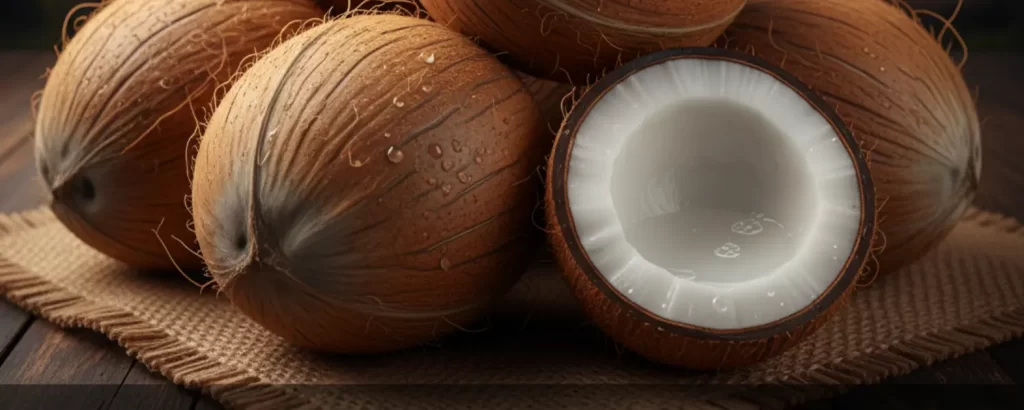
Fruits

quality coconuts
Export Import Fruits Spices Vegetables

The Semi-Husked Advantage: Why It’s the Gold Standard for Export Quality Coconuts

For international importers of fresh produce, success hinges on one word: quality. When sourcing coconuts, “quality” means more than just a good-tasting fruit; it means a product that can withstand the rigors of a long sea journey and arrive in perfect, sellable condition. This is why the semi-husked coconut has become the undisputed gold standard for export.   While a fully husked coconut might seem “cleaner,” the semi-husked format offers a powerful combination of logistical and protective advantages that directly impact your bottom line. As a specialist supplier of quality coconuts from India, we want to explain why this format is the most profitable and reliable choice for your business. Advantage 1: Drastically Reduced Freight Costs International shipping costs are a major factor in your final landed cost. The coconut husk, while natural, is mostly heavy, moist fiber. Removing a significant portion of it before shipping provides a massive financial advantage. Significant Weight Reduction: A semi-husked coconut is 25-30% lighter than its fully-husked counterpart. More Units Per Container: This weight and volume reduction means you can load substantially more coconuts into a standard 40ft container. A typical container might fit ~25,000 semi-husked coconuts, compared to only ~20,000 fully-husked ones. The bottom line: By shipping thousands more units for the same fixed container price, your freight cost per coconut is significantly lower. This saving goes directly to your profit margin. Advantage 2: Superior Protection and Longer Shelf Life The primary job of an export product is to arrive safely. The remaining husk on a semi-husked coconut acts as a natural, built-in protective cushion. Shock Absorption: During the bumps and shifts of a sea voyage, this fibrous layer protects the hard inner shell from direct impacts, drastically reducing the risk of hairline cracks. Reduced Spoilage: Cracks are the main entry point for bacteria and mold. By preventing them, the semi-husked format leads to a lower spoilage rate, meaning more of your inventory is sellable upon arrival. Longer Effective Shelf Life: A coconut that arrives undamaged will naturally have a longer shelf life in your warehouse and on the retail shelf. This protection is a core feature of high-quality coconuts destined for export. Advantage 3: A Sign of Professional Sourcing The semi-husking process itself is a mark of a professional export operation. It’s a value-added step that shows a supplier understands the needs of an international buyer. It demonstrates a commitment to providing a product that is not just grown well, but is also prepared well for the global market. When you source quality coconuts from prime growing regions like Pollachi, India, the semi-husked format is the standard for a reason. It is the culmination of best practices in both agriculture and logistics. Import products for your Needs Ready to Import The Smart Importer’s Choice Choosing semi-husked is not just a preference; it’s a strategic business decision. It is the format designed from the ground up to maximize your profitability by lowering costs and ensuring a higher-quality arrival. It is, simply, the defining standard for export quality coconuts.   Ready to experience the semi-husked advantage? Contact Exim Internationals today for a detailed quote on our premium, export-optimized coconuts. Frequently Asked Questions (FAQs) 1. What is the main benefit of choosing semi-husked over fully-husked coconuts for export? The main benefit is profitability. You can ship more units per container, which lowers your per-unit freight cost, and the product is better protected, which reduces spoilage and increases your sellable inventory. 2. How many semi-husked coconuts can fit in a 40-foot container? A standard 40-foot reefer container can typically hold approximately 25,000 semi-husked coconuts, but this can vary slightly based on the size and weight of the nuts. 3. Does the remaining husk really protect the coconut that much? Yes, absolutely. The fibrous husk is a natural shock absorber that provides crucial protection to the hard inner shell during loading, transit, and unloading, significantly reducing the risk of cracking. 4. Where in India are the best quality coconuts for export sourced from? The Pollachi region in Tamil Nadu is globally renowned as a hub for producing high-quality coconuts with sweet water and thick flesh, making it a prime sourcing location for exporters. 5. What is the typical shelf life of a semi-husked coconut after it arrives? When sourced fresh and transported correctly in a refrigerated container, semi-husked coconuts have an excellent shelf life. They can remain in good condition for over 60 days when stored in a cool, dry place. 6. How do I know if the coconuts I receive are high quality? High-quality coconuts should feel heavy for their size (indicating plenty of water), have three intact and dry “eyes,” and be free of any cracks, mold, or wet spots on the shell. 7. What is a Phytosanitary Certificate? It is a mandatory document for customs clearance issued by the Indian agricultural authorities. It certifies that the coconuts have been inspected and are free from pests and diseases, complying with your country’s import regulations. 8. How can I get a quote for a container of quality coconuts? Simply contact us with your company details, your required quantity (e.g., 1 x 40′ container), and your destination port. Our team will provide a detailed, no-obligation quote promptly.

The Semi-Husked Advantage: Why It’s the Gold Standard for Export Quality Coconuts Read Post »
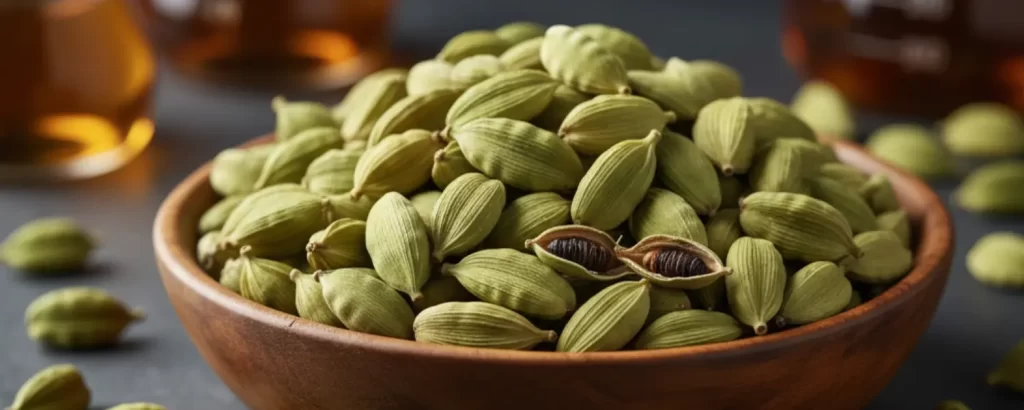
cardamom uses
Export Import Fruits Spices Vegetables

Beyond the Chai Latte: 5 Emerging Cardamom Uses in the Beverage Industry

For years, the warm, aromatic embrace of cardamom has been famously associated with the beloved chai latte. But in the innovative and fast-paced global beverage industry, this “Queen of Spices” is breaking new ground. Today’s beverage manufacturers, from craft distillers to wellness brands, are rediscovering the complex, versatile profile of cardamom, pushing its uses far beyond traditional milky tea.   As a leading exporter of premium Indian spices, we’re on the front lines of this trend. With the 2025-26 Indian cardamom harvest now in full swing, the market has access to a new crop bursting with the highest levels of volatile oil content—the very essence of flavour. This is inspiring a wave of innovation, and here are five emerging cardamom uses that are reshaping the beverage landscape. 1. The Botanical Heart of Craft Gins & Spirits The craft gin explosion has created a massive demand for high-quality botanicals, and cardamom is a star player. The Use: Distillers use whole green cardamom pods as a key botanical during infusion. Its complex profile adds warm, spicy, and slightly citrusy-eucalyptus notes that complement the juniper base, creating a more sophisticated and layered spirit. Why Indian Cardamom? Premium grades like Alleppey Green Extra Bold (AGEB) from the new harvest offer an unmatched aromatic intensity that is essential for a high-quality distillation. 2. The Aromatic Twist in Premium Coffee & Cold Brew Artisanal coffee shops and ready-to-drink (RTD) cold brew brands are looking for ways to differentiate their products, and cardamom is the perfect answer. The Use: Crushed green cardamom pods or a touch of cardamom extract is added to coffee grounds before brewing or infused into cold brew concentrate. It imparts a fragrant, exotic twist that elevates the coffee experience, reminiscent of traditional Middle Eastern gahwa. Why it Works: It offers a unique flavour profile that is both intriguing and complementary to the natural notes of the coffee bean. 3. The Functional Boost in Wellness Drinks & Juices The functional beverage market is booming, and consumers are seeking ingredients with tangible health benefits. Cardamom fits this need perfectly. The Use: Cardamom powder or extract is blended into cold-pressed juices, smoothies, and wellness shots. Its traditional use as a digestive aid and its calming, anti-inflammatory properties make it a powerful functional ingredient. Why Indian Cardamom? For functional foods, potency is key. Sourcing from a trusted exporter who can provide a Certificate of Analysis (COA) guarantees a high-quality product with verifiable properties. Import products for your Needs Ready to Import 4. The Sophisticated Spice in Artisanal Sodas & Tonics The craft soda movement has moved beyond simple sweetness, embracing complex, adult flavour profiles. The Use: Cardamom is used to create sophisticated syrups and infusions that form the base for artisanal sodas, premium tonic waters, and sparkling botanical drinks. Its unique flavour profile provides a refreshing alternative to standard fruit flavours. Why it Works: It adds a layer of warm spice that pairs beautifully with citrus, ginger, and other botanicals, creating a more memorable and premium beverage. 5. The Flavour Backbone of Non-Alcoholic Spirits As the “sober curious” movement grows, the demand for high-quality non-alcoholic spirits has skyrocketed. These products rely on complex botanical blends to replicate the sensory experience of traditional spirits. The Use: Cardamom is a foundational ingredient in many non-alcoholic gins and aperitifs. Its potent flavour helps create the “bite” and complexity that is often missing when alcohol is removed. Why Indian Cardamom? The high aromatic intensity of new-crop Idukki cardamom is essential to create a rich and satisfying flavour base that can stand on its own without alcohol. From a Simple Spice to a Beverage Innovator The diverse cardamom uses emerging in the beverage industry highlight a clear trend: consumers want more complex, authentic, and functional flavours. For beverage brands, the key to capitalizing on this trend is sourcing high-quality, aromatic cardamom. The fresh 2025-26 Indian harvest offers the most potent and flavourful raw material to bring these innovative ideas to life. Ready to explore how premium Indian cardamom can elevate your beverage line? Contact Exim Internationals today for a sample of the new crop and to discuss your sourcing needs. Frequently Asked Questions (FAQs) 1. What is the most important quality factor for cardamom uses in beverages? Volatile oil content is the most critical factor. This is the scientific measure of the cardamom’s aromatic oils, which directly translates to the intensity of its flavour and aroma in the final beverage. 2. What is the best grade of Indian cardamom for distilling gin? Premium distillers prefer high grades like AGEB (Alleppey Green Extra Bold), which are 8mm or larger. The large, whole pods from the new harvest provide the best and most complex aromatic infusion. 3. Is there a difference between green and black cardamom for beverage use? Yes, a huge difference. Green cardamom (Elettaria cardamomum) has a complex, sweet, and aromatic flavour suitable for all the uses listed. Black cardamom has a smoky, camphor-like flavour and is generally not used in these types of beverages. 4. When is the best time to source to get the most aromatic cardamom? The best time is during and immediately following the Indian harvest season, from October to February. This is when the “new crop” is available, which has the highest volatile oil content. 5. How can I be sure of the quality of a bulk cardamom shipment? Always partner with a reputable exporter who can provide a Certificate of Analysis (COA). This lab report will verify the volatile oil content, grade, and purity of the shipment. 6. Can cardamom be used in powdered form for beverages? Yes, for applications like wellness drinks or instant coffee mixes, high-quality cardamom powder is often used. However, for infusions like gin or cold brew, whole pods are preferred to prevent cloudiness. 7. What makes Indian cardamom the preferred choice for these uses? Indian cardamom, particularly varieties like Alleppey Green and Idukki, is globally renowned for having the highest levels of volatile oils, resulting in a superior aroma and

Beyond the Chai Latte: 5 Emerging Cardamom Uses in the Beverage Industry Read Post »

export coriander leaves
Export Import Fruits Spices Vegetables

Fresh, Dried, or IQF? Sourcing the Right Coriander Leaves for Your Application

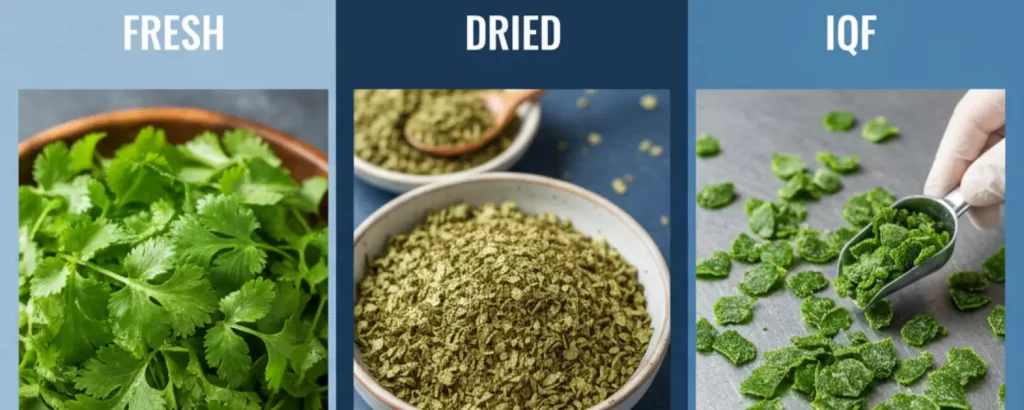
Coriander leaves, known as cilantro in North America and dhania in India, are a globally cherished herb, essential for delivering a fresh, citrusy note to countless dishes. For food manufacturers, importers, and the HORECA sector, the decision isn’t whether to use this vital herb, but how to source it effectively. The form you choose—fresh, dried, or IQF (Individually Quick Frozen)—has massive implications for your flavour profile, shelf life, and supply chain. As a specialist in the export of coriander leaves from Pune, India, we guide our partners through this critical decision every day. With the peak Indian growing season now upon us, here’s a breakdown to help you choose the right form for your business. The Gold Standard: Fresh Coriander Leaves (Cilantro) Fresh coriander offers an authentic, potent flavour that simply cannot be replicated. Flavour Profile: Intense, bright, zesty, and peppery. It is the truest expression of the herb. Best For: High-end restaurants, premium retail, and manufacturers of fresh salsas, chutneys, and dips where “farm-fresh” is the primary selling point. Business Considerations: Pros: Delivers the most authentic flavour and commands a premium price. Cons: Extremely short shelf life. The export process is a high-stakes race against time, demanding a flawless cold chain and the use of expensive air freight. The risk of spoilage is significant. The Convenient Workhorse: Dried Coriander Leaves Drying completely transforms the herb, offering a different flavour profile with maximum stability and ease of use. Flavour Profile: The bright, citrusy notes are lost, replaced by a more subtle, earthy, and herbaceous flavour, often compared to parsley. Best For: Dry spice blends, rubs, soup mixes, and snack seasonings where it serves as a background flavour note. Business Considerations: Pros: Extremely long shelf life (1-2 years). It is lightweight, ships easily via standard sea freight, and can be stored at ambient temperatures. This is the lowest-cost, lowest-risk logistical option. Cons: The flavour is fundamentally different from fresh cilantro. It is entirely unsuitable for any application that relies on the herb’s signature fresh taste. The Innovative Solution: IQF (Individually Quick Frozen) Coriander Leaves IQF technology provides a brilliant middle ground, preserving the essence of the fresh herb with the logistical benefits of a long shelf life. Flavour Profile: The rapid, individual freezing process of IQF technology locks in a remarkably high percentage of the original bright flavour, vibrant green colour, and fresh aroma. Best For: A vast range of food processors making sauces, pastes, dips, soups, marinades, and frozen ready-to-eat meals. It’s an ideal solution for the food service industry to reduce prep time and waste. Business Considerations: Pros: Excellent shelf life (12-18 months) in a commercial freezer. It retains a very high degree of freshness and nutritional value. The free-flowing nature of IQF makes it easy to portion and use in industrial recipes. Cons: Requires an unbroken frozen supply chain (from -18°C to 0°F). The initial cost is higher than dried, but the superior quality and convenience often provide a better overall value. Import products for your Needs Ready to Import Making the Right Sourcing Decision There is no single “best” form to export coriander leaves; the right choice depends entirely on your end product, production process, and supply chain. Fresh offers authenticity at a high logistical cost, dried provides convenience with an altered flavour, and IQF delivers an excellent balance of fresh quality and long-term stability. The most critical step is partnering with a versatile exporter who understands these nuances and can deliver high-quality options across all three categories. Ready to determine which form of coriander is right for your application? Contact Exim Internationals today for a consultation and a detailed quote. Frequently Asked Questions (FAQs) 1. What is IQF and how does it keep coriander fresh? IQF (Individually Quick Frozen) is a rapid freezing method that freezes each leaf separately. This prevents the formation of large ice crystals, preserving the cell structure, which in turn locks in the fresh flavour, colour, and nutrients far more effectively than standard freezing. 2. What is the biggest challenge when you export coriander leaves in fresh form? The biggest challenge is its extremely short shelf life. It requires a perfect, fast cold chain and is almost exclusively shipped via expensive air freight to ensure it arrives in a marketable condition. 3. Does dried coriander taste like fresh cilantro? No, they are very different. Fresh cilantro has a strong, bright, citrusy flavour. When dried, it loses these volatile compounds and develops a much milder, earthy, and herbaceous taste. 4. Which form of coriander is best for the HORECA sector? The HORECA (Hotel/Restaurant/Catering) sector often uses a combination. They use fresh for garnishing and premium dishes, and IQF for large-batch cooking of soups and sauces to ensure consistency and reduce labour. 5. What is the MOQ for exporting fresh coriander leaves? Due to the logistics of air freight, the Minimum Order Quantity (MOQ) for fresh coriander is typically between 500 kg and 1,000 kg (1 MT). 6. Is a Phytosanitary Certificate required for all forms of coriander export? Yes, a Phytosanitary Certificate is a mandatory document for all three forms—fresh, dried, and IQF. It certifies that the product is free from plant pests and diseases and is required for customs clearance. 7. How is bulk IQF coriander packaged for export? Bulk IQF coriander leaves are typically packed in food-grade poly-lined cartons or bags, commonly in 10kg or 20kg sizes, and must be shipped and stored in a frozen environment (-18°C / 0°F). 8. Can Exim Internationals supply all three forms of coriander leaves? Yes. As a versatile exporter with a wide network of growers and processors, we have the capability to source and deliver high-quality fresh, dried, and IQF coriander leaves to meet your specific business requirements.

Fresh, Dried, or IQF? Sourcing the Right Coriander Leaves for Your Application Read Post »

Turmeric Exporter
Export Import Fruits Spices Vegetables

A Turmeric Exporter’s Guide to Sourcing the Right Quality

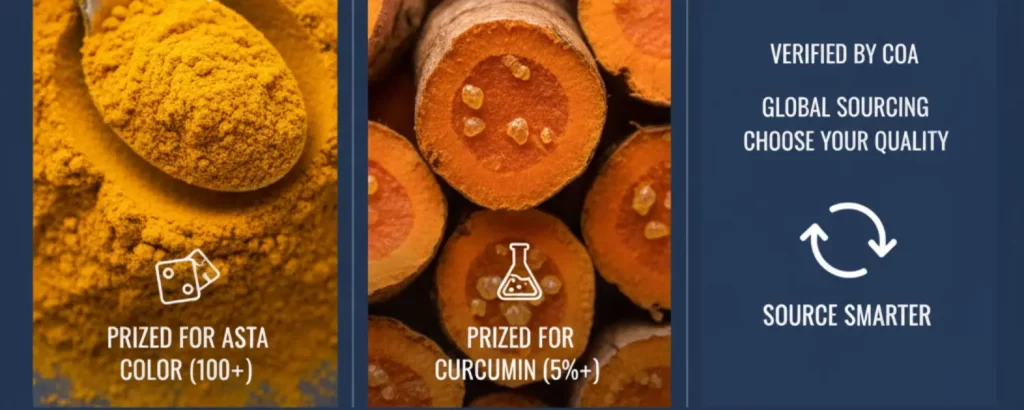
In the global spice trade, the term “quality” can be subjective. But when it comes to sourcing turmeric from India, “quality” is a precise science, defined by specific, measurable metrics. For an international buyer, understanding these metrics is the key to sourcing the right product for the right application—and avoiding costly mistakes. The most critical distinction a professional turmeric exporter will make is between Food-Grade and Nutraceutical-Grade turmeric. While they both come from the same plant, they are valued for entirely different reasons. As a specialist turmeric exporter based in Pune, Maharashtra, we’ve created this guide to help you source the perfect quality for your business needs. For the Food Industry: It’s All About Colour (ASTA Value) For food manufacturers, spice blenders, and the HORECA sector, the primary role of turmeric is to provide its signature vibrant, golden-yellow hue and a characteristic earthy flavour. Consistency is paramount. The Key Metric: ASTA Colour Value The ASTA value, set by the American Spice Trade Association, is the scientific measure of a spice’s colouring power. It doesn’t measure the visual colour, but its ability to impart colour to a food product. This ensures that every batch of your curry powder, snack seasoning, or mustard blend has the exact same colour profile. What to Look For: For a good food-grade turmeric powder, you should look for an ASTA value of 100-120 or higher. The Go-To Varieties Varieties grown in major trading hubs like Erode and Sangli (in Maharashtra, near our base in Pune) are prized for their excellent colour properties, making them the workhorse of the global food industry. For the Nutraceutical Market: Potency is King (Curcumin Content) The booming health and wellness market values turmeric for its powerful anti-inflammatory and antioxidant properties. This is driven by one key active compound. The Key Metric: Curcumin Content Curcumin is the primary bioactive compound in turmeric. For a health supplement, extract, or functional food, the curcumin percentage is the single most important measure of the product’s efficacy and value. What to Look For: High-potency, nutraceutical-grade turmeric is typically required to have a curcumin content of 5% or higher. The Gold Standard Variety Alleppey turmeric from Kerala is globally renowned as the “gold standard” for potency, naturally boasting a very high curcumin content. This makes it the top choice for any brand marketing the health benefits of turmeric. Import products for your Needs Ready to Import The Proof is in the Paperwork: The Certificate of Analysis (COA) How can you be sure of these numbers? A reputable turmeric exporter will never ask you to take their word for it. They will always provide a Certificate of Analysis (COA) from an accredited, independent third-party laboratory. This document is your guarantee. It will scientifically verify the curcumin content, ASTA colour value, moisture level, and other critical specifications for your specific batch. How a Professional Turmeric Exporter Guides Your Choice A true export partner is a consultant. When you work with us, we don’t just sell you turmeric; we ask the right questions: “What is your end product?” “Is your primary goal colour consistency or health benefit potency?” “What are the regulatory requirements in your market?” Based on your answers, we guide you to the right grade and provide the exact documentation you need. As we are currently in the sowing season (October 2025), we are already working with our farming partners to plan for the 2026 harvest, identifying the best crops for both high-ASTA and high-curcumin requirements. Source Smarter, Not Harder Sourcing the right quality of turmeric is about aligning the product’s scientific profile with your brand’s promise. By understanding the critical difference between food-grade and nutraceutical-grade, and by demanding a COA to verify the specs, you can build a more successful and profitable product line. Ready to source the perfect grade of Indian turmeric for your business? Contact Exim Internationals today to discuss your application and receive a tailored quote with a full specification sheet. Frequently Asked Questions (FAQs) 1. What is the main difference between food-grade and nutraceutical-grade turmeric? The main difference is the primary quality metric. Food-grade turmeric is valued for its high ASTA colour value (colouring power), while nutraceutical-grade is valued for its high curcumin content (potency). 2. What is a good curcumin content for a health supplement? A curcumin content of 5% or higher is generally considered the benchmark for high-potency, nutraceutical-grade turmeric. 3. What is a good ASTA value for a curry powder or spice blend? An ASTA colour value of 100-120 or higher ensures a vibrant, consistent golden-yellow colour in food products. 4. How can I verify a supplier’s claims about curcumin or ASTA? Always demand a Certificate of Analysis (COA) from an independent, third-party laboratory. A professional turmeric exporter will provide this as a standard part of their quality assurance. 5. Which Indian turmeric variety is best for high curcumin? Alleppey turmeric from Kerala is globally recognized as the premier variety for high curcumin content, making it ideal for the health and wellness industry. 6. Which variety is best for achieving a strong yellow colour in food? Varieties from major trading hubs like Erode and Sangli are the industry standard for food manufacturing due to their excellent and consistent colour properties. 7. When is the best time to plan my sourcing for the next turmeric season? The ideal time to plan and enter into contracts is during the pre-harvest period. The sowing season is in October-November, and the harvest is from January to March. Planning in Q4 of the preceding year is a smart strategy. 8. How does Exim Internationals help me choose the right turmeric? We act as your sourcing consultants. By understanding your end product and market, we recommend the appropriate grade (high-ASTA or high-curcumin), provide the necessary COA for verification, and manage the entire export process.

A Turmeric Exporter’s Guide to Sourcing the Right Quality Read Post »

Sourcing Bulk Red Chilli from India
Export Import Fruits Spices Vegetables

Price, Specs & Logistics: Your 2026 Guide to Sourcing Bulk Red Chilli from India

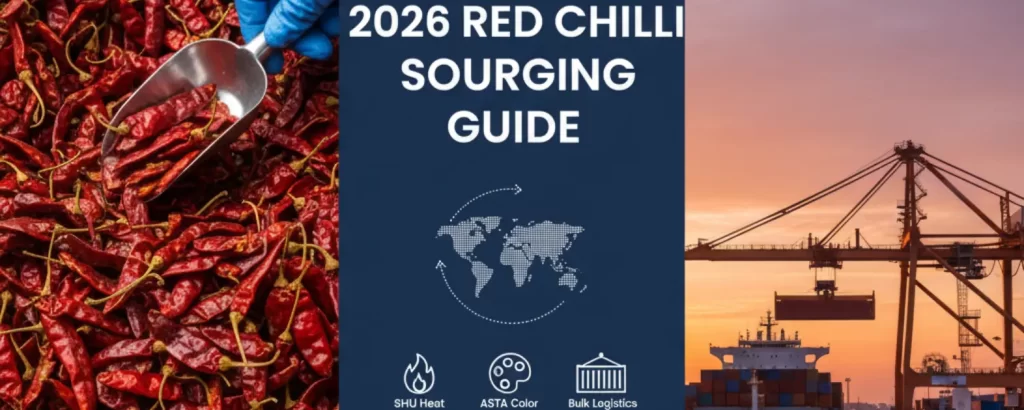
For global food manufacturers, spice blenders, and wholesalers, India is the undisputed hub for sourcing high-quality red chillies. However, a successful and profitable import operation is built on more than just finding a supplier; it requires a deep understanding of the market’s core components: Price, Specifications, and Logistics. As we are now in the key planning phase for the upcoming 2026 harvest season, this guide will serve as your essential resource. As a leading exporter based in Pune, India, we believe in empowering our partners with the knowledge to make strategic sourcing decisions. Part 1: Price – Understanding the 2026 Market Dynamics The price of bulk red chilli from India is dynamic. For your 2026 budget, consider these key factors: Monsoon & Harvest Outlook: The performance of the 2025 monsoon has a direct impact on the upcoming crop yield. Favourable rains in key growing regions like Andhra Pradesh and Karnataka point towards a stable supply for the 2026 harvest, which should help moderate price volatility. Variety & Grade: The price is highly dependent on the chilli variety. High-heat Guntur Sannam (S4) will have a different price point than the high-colour Byadgi chilli. Higher grades with fewer imperfections and less admixture will command a premium. Market Demand: Strong global demand, particularly from Asia and North America, provides solid price support. 2026 Price Forecast: We anticipate a stable-to-firm market for the 2026 season. Engaging with a supplier now, in the pre-harvest period, is the best strategy to get transparent pricing and lock in contracts before peak season demand. Part 2: Specs – Decoding Export Quality Export quality” is defined by data. Understanding these two scientific metrics is crucial when sourcing bulk red chilli from India:   1. SHU (Scoville Heat Units) – The Measure of Pungency   This metric defines the “hotness” of the chilli. It is critical for manufacturers of hot sauces, seasonings, and spicy snacks. High Heat Varieties: Guntur Sannam S4 is a world-renowned variety prized for its high pungency, typically ranging from 35,000 to 50,000 SHU. This is the go-to choice for products where a powerful kick is the primary feature.   2. ASTA Colour Value – The Measure of Vibrancy   This metric, set by the American Spice Trade Association, measures the extractable colour and colouring power of the chilli. It is essential for producers of curry powders, marinades, and natural food colourants. High Colour Varieties: The Byadgi chilli is the undisputed champion of colour. It has very low heat but boasts a very high ASTA colour value, often 150-250. This makes it the perfect natural ingredient for achieving a deep, rich red in food products without adding excessive heat. A professional exporter will always provide a detailed specification sheet and a Certificate of Analysis (COA) to verify these metrics for your specific shipment. Import products for your Needs Ready to Import Part 3: Logistics – Your Seamless Supply Chain Expert logistics ensure that the quality sourced at the farm is the quality that arrives at your warehouse. Packing: We pack our dried red chillies in new, clean jute or PP bags (typically 25 kg) to protect them from moisture and physical damage during transit. Options like “stemless” or “with stem” are packed as per your requirement. Container Load: For sourcing bulk red chilli from India, a container load is the most cost-effective method. 20-foot Container: Approx. 13-14 Metric Tons 40-foot Container: Approx. 25-28 Metric Tons Essential Documentation: A smooth customs clearance process depends on flawless paperwork. Every shipment includes: Bill of Lading Commercial Invoice & Packing List Certificate of Origin Phytosanitary Certificate (Mandatory for agricultural products) Certificate of Analysis (COA) Your Strategic Partner for the 2026 Season A successful import strategy for the 2026 season is built on a clear understanding of market prices, precise quality specifications, and reliable logistics. By aligning with a transparent and knowledgeable export partner now, you can secure a supply chain that is not just dependable, but also highly profitable. Ready to plan your 2026 red chilli procurement? Contact Exim Internationals today for a detailed quote based on your specific requirements. Frequently Asked Questions (FAQs) 1. What is the difference between SHU and ASTA for red chillies? SHU (Scoville Heat Units) measures the pungency or “heat” of the chilli. ASTA Colour Value measures its colouring power. A high-SHU chilli (like Guntur) is hot, while a high-ASTA chilli (like Byadgi) is a rich red. 2. Which red chilli variety should I source for making hot sauce? For hot sauce, you should source a variety with high SHU. The Guntur Sannam S4 from India is an excellent and globally popular choice for this application. 3. When is the best time to contract for the 2026 red chilli harvest? The ideal time to plan and enter into contracts is during the pre-harvest season (October – December 2025). This allows you to secure the best quality and pricing before peak market demand. 4. What is a Phytosanitary Certificate? It is a mandatory document for customs clearance issued by the Indian agricultural authorities. It certifies that the red chillies have been inspected and are free from pests and plant diseases, complying with your country’s import regulations. 5. How are bulk red chillies packed for export? They are typically packed in new, clean 25 kg jute bags or PP (Polypropylene) bags. This ensures the product is protected from moisture and contaminants during the sea voyage. 6. What is the minimum order quantity (MOQ) for a shipment? To be cost-effective with sea freight, the standard MOQ is a 20-foot container, which holds approximately 13-14 metric tons of dried red chillies. 7. Can I get a Certificate of Analysis (COA) with my shipment? Yes, absolutely. A reputable exporter will provide a COA from a third-party laboratory that scientifically verifies the key quality metrics of your shipment, including its SHU, ASTA value, and moisture content. 8. How do I get a precise quote for a container of red chilli? Simply contact us with your company details, the specific variety you

Price, Specs & Logistics: Your 2026 Guide to Sourcing Bulk Red Chilli from India Read Post »

lemon export to the uk
Export Import Fruits Spices Vegetables

How to Secure Your First Container: A Step-by-Step Guide to Lemon Export to the UK

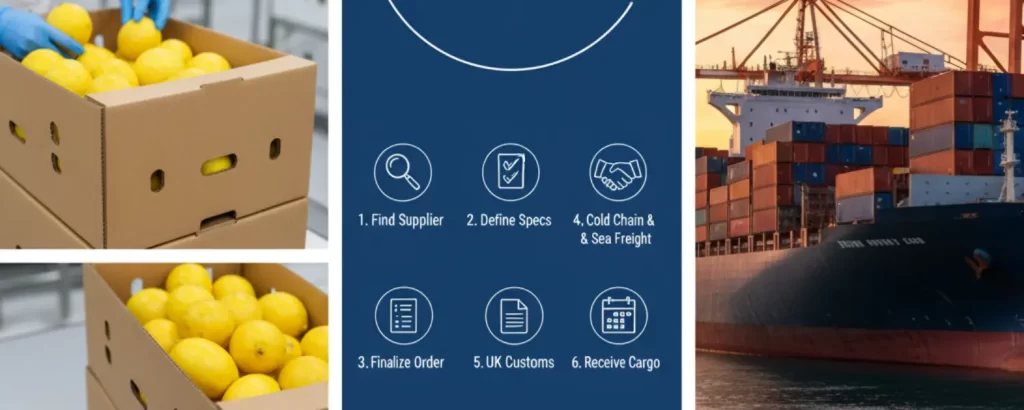
Adding fresh Indian lemons to your UK product portfolio is a fantastic business opportunity, driven by year-round demand from the HORECA sector, retailers, and food manufacturers. But for a first-time importer, the thought of sourcing a full container load from thousands of miles away can seem complex. Don’t worry. The process is straightforward when you have a clear roadmap and a reliable partner. As an experienced exporter of fresh produce to the UK, we’ve created this simple, step-by-step guide to demystify the process and give you the confidence to secure your first successful lemon export to the UK. Step 1: Partner with a UK-Compliant Exporter This is the most important decision you will make. Your exporter is not just a supplier; they are your logistical partner and your guide. For a lemon export to the UK, you must choose a partner with: Proven UK Experience: They must have a track record of shipping to the UK and a thorough understanding of the market’s quality expectations. Compliance Knowledge: They must be experts in the requirements of the UK’s Food Standards Agency (FSA) and be able to provide all necessary documentation without fail. Step 2: Define Your Product – Variety and Quality Specs Next, clearly define what you need. A professional exporter can help you choose the right product for your target market in the UK. Choose the Variety: Discuss the options. The thin-skinned, juicy Kagzi lime is popular in ethnic food markets, while the classic, thicker-skinned Eureka lemon might be better suited for general retail. Specify Quality: Work with your exporter to define the specifications for your export quality lemon. This includes size (e.g., count per box), juice content, colour, and blemish-free standards. Step 3: Understand the Quote and Commercials Your exporter will provide a Proforma Invoice (a preliminary quote). It should clearly state: The price per unit and total value. The shipping terms, such as CNF (Cost and Freight) to a UK port like Felixstowe. The payment terms. For a first order, this is often a percentage advance with the balance against documents, or a secure Letter of Credit (LC). Import products for your Needs Ready to Import Step 4: The Logistics – Mastering the Cold Chain This is the most critical technical step for a fresh lemon export to the UK. The cold chain is the unbroken flow of refrigeration from farm to destination. Pre-Cooling: Lemons are cooled immediately after harvest. Packing: They are packed in ventilated cartons to allow air to circulate. Reefer Container: The cartons are loaded into a reefer container, which is a large, mobile refrigerator. This container is set to the optimal temperature (8-10°C) for the long sea freight journey, which typically takes around 30 days. This process is essential to ensure the lemons arrive fresh and with a long shelf life. Step 5: The Paperwork – Ensuring Smooth UK Customs While your container is on its way, your exporter ensures all paperwork is perfectly in order. A reliable partner handles this seamlessly. The essential documents for UK customs include: Bill of Lading (the ticket for the cargo) Commercial Invoice & Packing List Certificate of Origin Phytosanitary Certificate (mandatory for fresh produce) Step 6: Arrival, Clearance, and Your First Container! After its journey, the vessel arrives at a UK port like Felixstowe or Southampton. Your designated customs agent in the UK will use the documents provided by your exporter to clear the shipment. Once cleared, your first container of fresh Indian lemons is ready to be transported to your warehouse for distribution. Your First of Many Successful Shipments Securing your first container for a lemon export to the UK is a major business milestone. While the process is detailed, it is not complicated when you are guided by an expert partner who prioritizes quality, compliance, and communication. Ready to take the first step? Contact Exim Internationals today. We specialize in helping new importers navigate their first shipment and build a long-term, profitable supply chain. Frequently Asked Questions (FAQs) 1. What is the minimum order for a first-time lemon export to the UK? To be cost-effective with sea freight, the minimum order is typically a 20-foot container. A 40-foot container offers a better per-unit shipping cost. 2. How long does a sea shipment of lemons from India to the UK take? The sea transit time from a west coast Indian port like Nhava Sheva to a UK port like Felixstowe is approximately 28-35 days. 3. What is a “reefer container” and is it necessary for lemons? Yes, it is absolutely necessary. A reefer container is a refrigerated container that maintains a constant cool temperature. It is essential for the cold chain and for preserving the freshness and shelf life of lemons during the long journey. 4. What are the most important documents I need for UK customs? The two most critical documents are the Bill of Lading and the Phytosanitary Certificate. Without a valid Phytosanitary Certificate, your shipment will be rejected by UK port health authorities. 5. What does “FSA” stand for and why is it important? FSA stands for the Food Standards Agency, the UK government body responsible for food safety. All food imports must comply with their standards and regulations, and your exporter must be aware of these rules. 6. What are the typical payment terms for a first-time importer? For a first shipment, common secure terms include a 30-50% advance payment to begin processing, with the remaining balance paid against a copy of the shipping documents. A Letter of Credit (LC) is also a very secure option. 7. How are the lemons packed to survive the long journey? Lemons are typically packed in strong, ventilated corrugated cardboard boxes. They may be individually wrapped or placed in trays to prevent bruising and allow for essential air circulation inside the reefer container. 8. How do I start the process of getting a quote for my first container? Simply contact us with your company details, your estimated quantity (e.g., 1 x 20ft container), and your

How to Secure Your First Container: A Step-by-Step Guide to Lemon Export to the UK Read Post »

ginger export from india
Export Import Fruits Spices Vegetables

The Gingerol Factor: Why Potency Defines a Premium Ginger Export from India

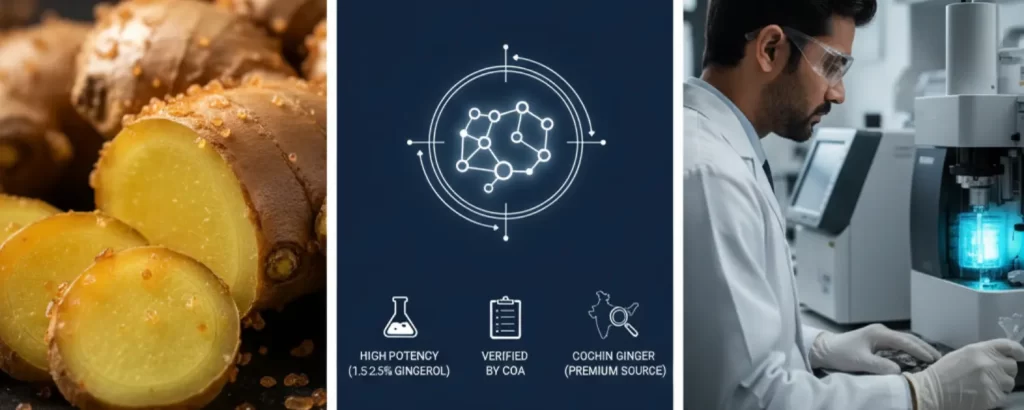
For centuries, ginger has been celebrated for its zesty, pungent flavour. But in today’s health-conscious global market, a growing and lucrative industry values ginger for something far more specific: its potent bioactive compounds. For nutraceutical companies, supplement manufacturers, and functional food brands, the true measure of a premium Ginger Export from India is not its size or appearance, but its gingerol content. This single metric is the scientific benchmark for potency and efficacy. As a specialist exporter of high-quality Indian spices, we understand that for our most demanding clients, sourcing ginger is a science. This guide explains why the gingerol factor is the defining characteristic of a truly premium product. What is Gingerol and Why Does It Matter? Gingerol, specifically a compound known as [6]-gingerol, is the primary bioactive component in fresh ginger. It is responsible for its characteristic pungent taste and, more importantly, its powerful, well-researched anti-inflammatory and antioxidant properties. For Product Efficacy: For a health supplement, herbal extract, or functional beverage, the effectiveness of the product is directly tied to the concentration of its active ingredients. A higher gingerol content means a more potent and efficacious product for the end consumer. For Brand Reputation: Health and wellness brands build their reputation on the tangible benefits and proven efficacy of their products. Sourcing raw materials with a high, verifiable gingerol content is fundamental to delivering on this brand promise. The Benchmark for a Premium Ginger Export from India In the world of B2B ingredient sourcing, claims must be backed by data. For a shipment of dried ginger to be considered high-potency and suitable for extraction or nutraceutical formulation, commercial buyers typically specify a gingerol content of 1.5% to 2.5% or higher. This is not an estimate. This percentage is a precise scientific measurement, confirmed in a laboratory via High-Performance Liquid Chromatography (HPLC) testing. Any professional Ginger Export from India intended for the nutraceutical market must be accompanied by a Certificate of Analysis (COA) from an accredited third-party lab to verify this crucial number. Import products for your Needs Ready to Import Sourcing for Potency: Variety and Post-Harvest Handling Achieving a high gingerol content is a result of careful sourcing and expert processing. Variety Matters: Certain Indian ginger varieties are naturally more potent. Cochin ginger, which originates from the Malabar Coast, is globally renowned for its lower fibre and higher gingerol content, making it the preferred choice for oil and oleoresin extraction. Drying Method is Crucial: Gingerol is most abundant in fresh ginger. During the drying process, some of it converts to other compounds like shogaols (which are also potent). The method of drying is critical. Gentle, controlled-temperature drying helps preserve the maximum amount of gingerol, whereas harsh, high-heat methods can degrade it. An expert exporter manages this process meticulously. What This Means for Your 2026 Sourcing Strategy As we are now in the pre-harvest period for the next major Indian ginger crop (harvesting Jan-Mar 2026), this is the ideal time for strategic planning. Specify Potency in Your Contracts: When you engage with a Ginger Export from India partner for the upcoming season, your contract should not just specify “dried ginger.” It must specify a minimum gingerol percentage. Choose the Right Partner: You need to work with a supplier who understands the nutraceutical market. They must have established relationships with growers of high-potency varieties and a proven system for providing guaranteed, lab-verified COAs with every shipment. From Commodity to High-Value Ingredient For a growing and profitable segment of the global market, ginger is no longer a simple spice but a high-value functional ingredient. In this context, the gingerol factor is the ultimate measure of quality, potency, and value. Sourcing a premium Ginger Export from India means sourcing a product defined by this verifiable, data-driven metric. Is your brand built on the promise of potency and efficacy? Contact Exim Internationals today to receive the technical specifications and a Certificate of Analysis for our high-gingerol content Indian ginger. Frequently Asked Questions (FAQs) 1. What is gingerol and why is it important for health products? Gingerol is the main bioactive compound in ginger, responsible for its pungent taste and its scientifically studied anti-inflammatory and antioxidant properties. For health products, a higher gingerol content means a more potent and effective final product. 2. What is a good gingerol percentage for a nutraceutical-grade Ginger Export from India? A gingerol content of 1.5% to 2.5% or higher in dried ginger is typically considered a strong benchmark for high-quality, nutraceutical-grade material suitable for extraction and supplements. 3. How is gingerol content officially verified in a shipment? It is verified by a third-party laboratory using a method called HPLC. The results are documented in a Certificate of Analysis (COA), which should be provided by your exporter as a guarantee of quality. 4. Which Indian ginger variety is known for high gingerol content? Cochin ginger is a well-known Indian variety that is highly preferred for the extraction industry due to its characteristic low fibre and high gingerol content. 5. Does the drying process affect the potency of ginger? Yes, significantly. Improper or overly aggressive high-heat drying can degrade the gingerol compounds. A professional exporter will use controlled drying methods to preserve the maximum potency. 6. What is the difference between gingerol and shogaol? Gingerol is the primary pungent compound in fresh ginger. When ginger is dried, some gingerol is dehydrated and transforms into shogaol, which is actually more pungent. A good COA may list both. 7. As a buyer, how can I ensure I receive high-gingerol ginger? The most effective way is to make it a contractual obligation. Your purchase agreement with your Ginger Export from India partner should specify a minimum gingerol percentage, to be verified by a third-party COA. 8. How can I get the technical specifications for your high-potency ginger? Simply contact us with your company details and intended application. Our team will provide you with a full technical data sheet and a recent Certificate of Analysis (COA) for our high-potency Ginger Export from India.

The Gingerol Factor: Why Potency Defines a Premium Ginger Export from India Read Post »

export drumstick from india
Export Import Fruits Spices Vegetables

Price, Logistics & MOQ: Your 2026 Quote Guide for Drumstick Export from India

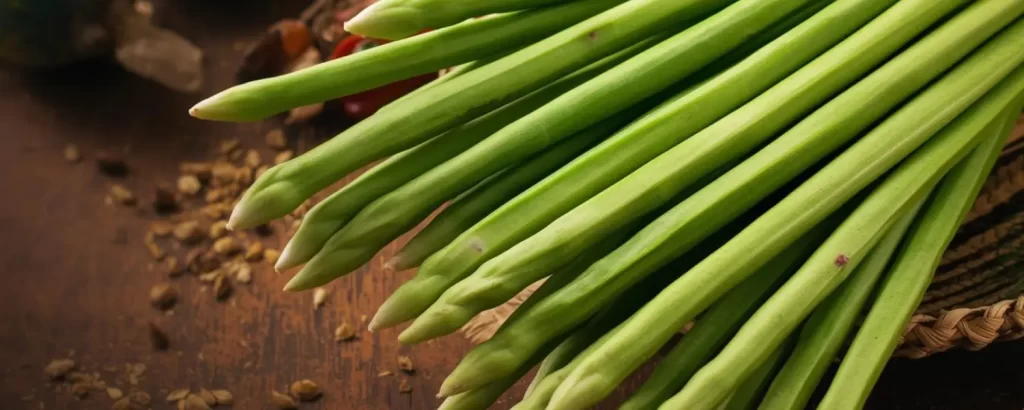
The demand for fresh drumsticks (Moringa oleifera), a nutritious superfood vegetable, is growing rapidly in international markets. For importers, wholesalers, and the food service sector, securing a consistent supply of this delicate produce from India requires a clear understanding of pricing, logistics, and minimum order quantities. As a specialized exporter of fresh produce from India, we’ve prepared this 2026 quote guide to demystify the process of a successful Export Drumstick  from India. Part 1: Understanding Pricing for Drumstick Export from India The price of fresh drumsticks is dynamic, influenced by several factors that savvy buyers need to consider for their 2026 procurement. Seasonality: While India produces drumsticks year-round from various regions (primarily Tamil Nadu, Andhra Pradesh, and Karnataka), peak seasons (typically November to March) usually offer more competitive pricing due to higher yields. Off-season sourcing might incur slightly higher costs. Variety & Quality: Premium, tender, straight, and blemish-free drumsticks will command a better price. Quality parameters like uniform length (e.g., 25-35 cm) and lack of maturity (fibrousness) are key. Market Demand & Supply: Global demand and local harvest success directly impact daily market rates. Your exporter’s ability to source from diverse regions helps mitigate price spikes. Exchange Rates: Fluctuations in the Indian Rupee (INR) against your local currency will also play a role in the final landed cost. Pro-Tip for 2026: Engage with your exporter now to discuss forward pricing options or volume contracts that can offer more stability against market volatility throughout the year. Part 2: The Logistics Imperative – Cold Chain & Air Freight Drumsticks are highly perishable. Their successful export from India hinges entirely on an unbroken cold chain and rapid transit. Pre-Cooling & Packing: Immediate Cooling: After harvest, drumsticks are immediately moved to a pre-cooling unit to remove field heat, a critical step to extend shelf life. Specialized Packing: They are then carefully packed in well-ventilated corrugated fibreboard (CFB) boxes, typically 5 kg or 7 kg, designed to protect the delicate pods and allow for air circulation. Each pod is often cushioned to prevent bruising. Refrigerated Transport to Airport: The packed boxes are transported from the packhouse to the airport in refrigerated (reefer) trucks, maintaining an optimal temperature of 5-8°C. Air Freight for Freshness: Due to their short shelf life (typically 7-10 days under ideal conditions), fresh drumsticks are almost exclusively exported via air freight. This ensures the product reaches your destination within 24-72 hours of dispatch, preserving maximum freshness and quality. Essential Documentation: A reliable exporter will handle all necessary paperwork, including Commercial Invoice, Packing List, Airway Bill (AWB), Certificate of Origin, and the mandatory Phytosanitary Certificate. Import products for your Needs Ready to Import Part 3: Minimum Order Quantity (MOQ) For Export Drumstick from India, particularly via air freight, there are practical MOQs to ensure cost-effectiveness for both parties. Standard MOQ: Typically, the minimum order quantity for air freight is between 500 kg to 1,000 kg (1 Metric Ton). This volume is generally required to efficiently utilize air cargo space and manage associated handling costs. Trial Orders: Some exporters may accommodate smaller trial orders for new clients, but these might come at a slightly higher per-kg cost due to fixed overheads. Discuss this with your exporter. Partnering for a Profitable 2026 Drumstick Supply Navigating the complexities of Export Drumstick from India requires meticulous planning, an understanding of quality, and a robust logistical chain. By clarifying price factors, prioritizing cold chain expertise, and understanding MOQs, you can secure a consistent supply of this valuable vegetable. Ready to plan your 2026 procurement of fresh Indian drumsticks? Contact Exim Internationals today for a detailed quote tailored to your specific requirements and destination. Frequently Asked Questions (FAQs) 1. What is the typical shelf life of fresh drumsticks exported from India? With an expertly managed cold chain (pre-cooling, refrigerated transport, and air freight), fresh drumsticks can have a shelf life of 7 to 10 days upon arrival at the destination. 2. Why is air freight mandatory for fresh drumstick export? Fresh drumsticks are highly perishable. Air freight is essential because it provides the fastest transit time, ensuring the product reaches international markets quickly and in optimal condition, preserving its freshness and market value. 3. What is the optimal temperature for shipping fresh drumsticks? The ideal temperature for maintaining the freshness and shelf life of drumsticks during transit is typically between 5°C to 8°C (41°F to 46°F). 4. What is a Phytosanitary Certificate, and why do I need it for drumsticks? A Phytosanitary Certificate is a mandatory document issued by the exporting country’s agricultural authority. It certifies that the fresh drumsticks have been inspected and are free from pests and diseases, complying with the import regulations of your country. 5. What is the typical MOQ for exporting drumsticks by air freight? The Minimum Order Quantity (MOQ) for air freighted drumsticks is generally between 500 kg to 1,000 kg (1 Metric Ton) to ensure efficient use of cargo space and cost-effectiveness. 6. Which regions in India are major producers of drumsticks for export? Key drumstick-producing states in India include Tamil Nadu, Andhra Pradesh, Karnataka, and Maharashtra. An exporter with a network across these regions can offer a more consistent supply. 7. How are drumsticks packed for international shipment? Drumsticks are carefully packed in well-ventilated corrugated fibreboard (CFB) boxes, typically in 5 kg or 7 kg packs. Individual cushioning or protective layers may be used to prevent bruising. 8. How do I request a quote for 2026 drumstick supply from Exim Internationals? Simply contact us with your company details, the approximate quantity you require per shipment (e.g., 1 MT weekly), your desired quality specifications, and your destination airport. Our team will provide a detailed quote and discuss a supply program for 2026. About us Exim Internationals is a premier export company dedicated to delivering the finest products from India to international markets. Our mission is to establish India as a global export powerhouse, contributing to economic growth and showcasing the richness of Indian goods worldwide. From the pashmina shawls and apples

Price, Logistics & MOQ: Your 2026 Quote Guide for Drumstick Export from India Read Post »

Green Chilli from India
Export Import Fruits Spices Vegetables

How to Source Green Chilli from India: A Step-by-Step Guide

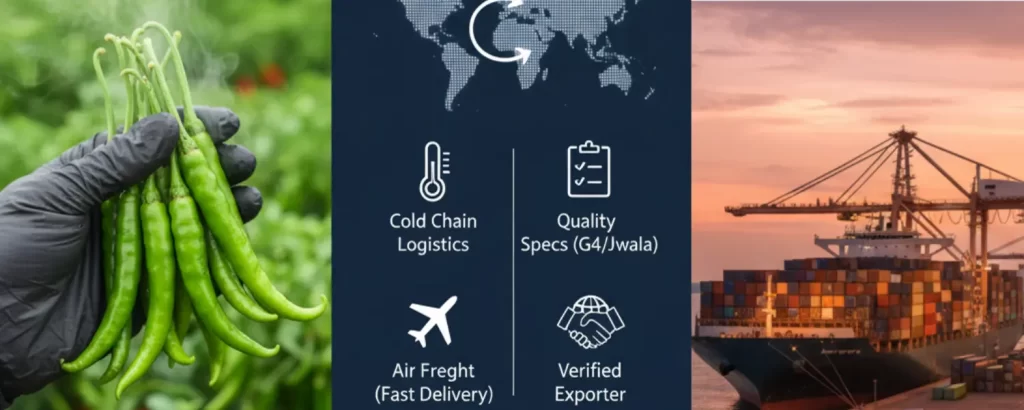
The demand for the authentic, vibrant heat of fresh Indian green chillies is a year-round constant in global cuisine. For importers, wholesalers, and the HORECA sector, having a reliable supply of this essential ingredient is key. However, sourcing a highly perishable product from thousands of miles away requires expertise and a meticulous process. As a leading exporter of fresh produce from Pune, India, we believe in making this process transparent and seamless for our partners. This is your practical, step-by-step guide on how to successfully source Green Chilli from India. Step 1: Partner with an Expert Fresh Produce Exporter This is the most critical decision you will make. Unlike dried spices, fresh chillies are unforgiving of logistical errors. Your partner must be a specialist in fresh produce. What to look for: Seek a green chilli exporter with proven experience in cold chain logistics. They must have a deep understanding of post-harvest management, air freight protocols, and the specific import regulations of your country. A generalist trader may not have the necessary expertise to prevent spoilage. Step 2: Define Your Quality Specifications “Green chilli” is a broad term. To ensure you receive a product that meets your market’s needs, you must be specific. Choose Your Variety: India offers several commercial varieties. The most popular for export are: G4 Green Chilli: A versatile, medium-hot variety, prized for its ideal size, vibrant green colour, and good shelf life. It’s the workhorse for most culinary applications. Jwala Chilli: A longer, more slender, and fiery chilli, perfect for pickles and hot sauces where a significant kick is desired. Specify Key Metrics: A professional exporter will understand and meet your requirements for: Length and Girth: To ensure uniformity. Colour: A consistent, vibrant green. Pungency: A desired heat range, measured in Scoville Heat Units (SHU). Condition: Firm, crisp, and free from blemishes, spots, or damage. Import products for your Needs Ready to Import Step 3: Understand the Critical Cold Chain Logistics This is the heart of a successful fresh Green Chilli from India export operation. The goal is to move the product from farm to flight as quickly as possible while maintaining a consistent cool temperature. Pre-Cooling: Immediately after harvest, the chillies’ field heat is removed. This step is non-negotiable as it dramatically slows down the ripening and decay process. Expert Packing: Chillies are packed in well-ventilated corrugated fibreboard (CFB) boxes, often in 3-4 kg capacities. This prevents crushing and allows cool air to circulate. Refrigerated Transit: The packed boxes are transported to the airport in refrigerated (“reefer”) trucks, maintaining the cold chain. Air Freight: Due to its short shelf life, fresh green chilli is almost exclusively exported via air freight. This ensures it reaches your market within days of harvest, not weeks. Step 4: Navigating Documentation and Compliance Flawless paperwork is essential for a fast customs clearance process. A reliable exporter will manage all necessary documentation seamlessly. This includes: Commercial Invoice Packing List Airway Bill (AWB) Certificate of Origin Phytosanitary Certificate: This is a mandatory document issued by Indian agricultural authorities, certifying that the chillies are free from pests and diseases and are safe for import. Step 5: Placing Your Order (MOQ and Lead Time) Once you have a trusted partner, placing an order is straightforward. MOQ: For air freight shipments, the Minimum Order Quantity (MOQ) is typically around 500 kg to 1 Metric Ton, depending on the destination. Lead Time: The entire process, from order confirmation to having the goods ready for flight, typically takes 5 to 7 days. Your Direct Source for Freshness Sourcing Green Chilli from India is a precise operation that blends agricultural expertise with sophisticated logistics. By partnering with a specialist exporter who masters the cold chain, understands quality specifications, and handles compliance meticulously, you can build a reliable and profitable supply line for this in-demand product. Ready to source farm-fresh, high-quality green chillies directly from India? Contact Exim Internationals today to discuss your specific requirements. Frequently Asked Questions (FAQs) 1. What is the most important factor when sourcing Green Chilli from India? The most critical factor is the exporter’s expertise in cold chain logistics. An unbroken cold chain from farm to destination is essential to preserve freshness and maximize the product’s shelf life. 2. What is the G4 green chilli variety? The G4 is one of the most popular commercial green chilli varieties exported from India. It is prized for its uniform size, vibrant colour, medium heat level, and relatively good shelf life, making it suitable for a wide range of culinary uses. 3. Why is air freight used for exporting fresh green chillies? Due to their highly perishable nature and short shelf life (typically 7-14 days under optimal conditions), fresh green chillies must be transported quickly. Air freight ensures they can reach international markets within a few days of harvest, which is not possible with sea freight. 4. What is a Phytosanitary Certificate and is it mandatory? Yes, it is mandatory. A Phytosanitary Certificate is an official document that certifies the fresh produce has been inspected and is free from harmful pests and diseases, as required by the importing country’s customs and agricultural authorities. 5. What is the minimum order quantity (MOQ) to source green chilli from India? For air freight shipments, the MOQ is typically between 500 kg and 1,000 kg (1 MT). This is the minimum volume required to make the shipment logistically and economically viable. 6. How are fresh green chillies packed for export? They are typically packed in 3-4 kg ventilated corrugated cardboard boxes. This type of packaging protects the chillies from being crushed while allowing for crucial air circulation to prevent moisture buildup and heat retention. 7. What is the shelf life of exported fresh green chillies? With an expertly managed cold chain, fresh green chillies can have a shelf life of 7 to 14 days upon arrival at the destination. 8. How do I start the process to source green chilli from India with Exim Internationals? Simply contact us with your company

How to Source Green Chilli from India: A Step-by-Step Guide Read Post »

Export Quality Cavendish Banana
Export Import Fruits Spices Vegetables

How to Secure a Year-Round Supply of Export Quality Cavendish Banana

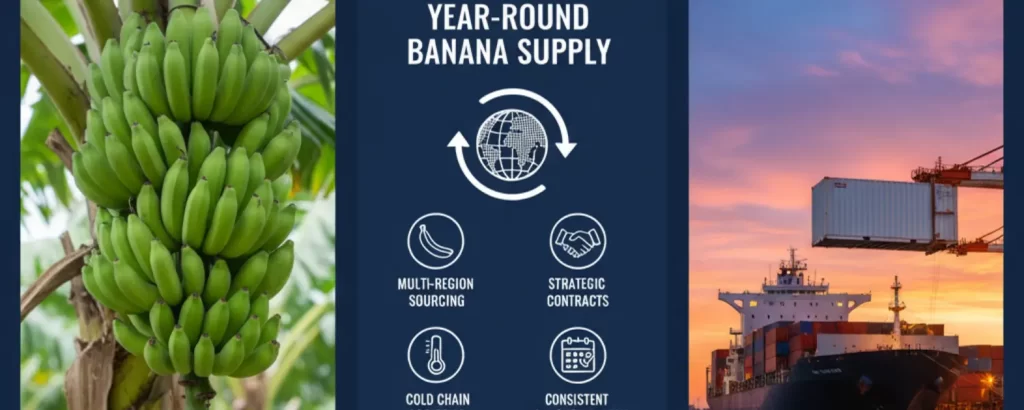
For large-scale fruit importers, distributors, and supermarket chains, consistency is king. While many fruits are seasonal, the global demand for bananas is relentless, every single day of the year. This creates a significant challenge: how do you secure a stable, uninterrupted, year-round supply of Export Quality Cavendish Banana? The secret lies in a strategic sourcing approach and a partnership with an exporter who has a deep, geographically diverse network. As a leading exporter of fresh produce from India, we’ve mastered the art of creating a seamless, year-round supply chain for our international partners. The Myth of a Single “Banana Season” in India Unlike many countries that have a single, defined harvesting season, India’s vast and varied agro-climatic zones are its greatest strength. Geographic Diversity: Banana cultivation is spread across multiple states, from Maharashtra and Gujarat in the west to Andhra Pradesh and Tamil Nadu in the south. Staggered Harvests: These different regions have slightly different peak harvesting cycles. A professional exporter leverages this by sourcing from one region as its season peaks, and then seamlessly transitioning to another. This ability to draw from a wide geographic portfolio is the foundational secret to a year-round supply of Export Quality Cavendish Banana. It transforms a “seasonal” product into a consistent, 12-month commodity. The Strategy: Proactive Contracting and Volume Planning Waiting to place an order month-by-month is a recipe for supply disruption. The key to securing your supply is proactive, long-term planning. Forward Contracting: The most effective strategy is to enter into a forward contract with your export partner. By committing to a certain volume over a 6 or 12-month period, you allow your exporter to plan their sourcing, allocate production from their network of farms, and secure logistics well in advance. Volume Guarantees: These contracts provide you with a volume guarantee. While market prices may fluctuate, your supply itself is secured. This protects your business from stockouts and allows you to confidently meet the demands of your clients. Import products for your Needs Ready to Import The Partner: Choosing an Exporter with a Wide Network The success of a year-round strategy depends entirely on the capability of your exporter. A small, single-region supplier simply cannot offer this level of consistency. What to Look For: You need a partner with a proven, multi-state sourcing network. Ask them directly: “Which regions do you source from?” and “How do you manage supply during the off-peak season in a particular region?” A top-tier exporter will have a clear and confident answer. Quality Consistency: An expert exporter also ensures that the quality remains consistent, regardless of the source. This means the calibration (girth), finger length, and adherence to Global G.A.P. standards for every shipment of Export Quality Cavendish Banana will be the same, batch after batch. The Execution: Mastering Year-Round Logistics Securing the fruit is only half the battle. A year-round supply requires flawless, repeatable logistics. Consistent Shipping Schedules: A professional exporter will have established relationships with shipping lines, allowing them to book reefer container space on a consistent, scheduled basis. Unbroken Cold Chain: The cold chain must be perfect for every single shipment. From the packhouse to the port to the vessel, the temperature must be meticulously managed to maintain the banana’s “green life” and ensure it arrives at your destination in optimal condition, ready for ripening. From Seasonal Commodity to Stable Supply Securing a year-round supply of Export Quality Cavendish Banana is not about luck; it’s about a deliberate, strategic partnership. By leveraging India’s diverse growing seasons and partnering with an exporter who has the network and logistical expertise to manage it, you can transform a seasonal product into a stable, profitable, and reliable pillar of your business. Ready to build a resilient, year-round supply chain for your banana imports? Contact Exim Internationals today to discuss our multi-region sourcing capabilities and long-term partnership programs. Frequently Asked Questions (FAQs) 1. Is it truly possible to get a consistent supply of Cavendish bananas 12 months a year from India? Yes. By sourcing from a network of farms across different states with staggered harvesting cycles, a well-managed exporter can provide a continuous, year-round supply. 2. What is “forward contracting” and why is it important for bananas? Forward contracting is a formal agreement to purchase a specific volume of bananas over a future period. It’s important because it guarantees your supply, helps stabilize pricing, and allows the exporter to plan their sourcing and logistics on your behalf. 3. What is the G9 Cavendish cultivar? The G9 Cavendish is the primary variety of banana grown for the export market. It is prized for its long “green life” (the time it can be held before ripening), its robust nature for transport, and its uniform ripening characteristics. 4. How do you ensure the quality is the same if the bananas are coming from different regions? We apply a single, stringent set of quality standards to all our packing houses, regardless of location. Every shipment of our Export Quality Cavendish Banana is graded to the same calibration, length, and cosmetic standards. 5. What is a “reefer container” and why is it essential? A reefer container is a refrigerated shipping container. It is absolutely essential for maintaining the cold chain and preserving the freshness of perishable products like bananas during the long sea voyage. 6. What does “calibration” mean for a banana? Calibration refers to the girth or thickness of the banana finger, measured in millimeters. It is a key quality specification for ensuring uniformity in a box. 7. How does a partnership with a multi-region exporter reduce my business risk? If a single growing region is affected by a weather event or a local issue, an exporter with a multi-region network can shift sourcing to another region, ensuring your supply chain remains uninterrupted. This diversification is a powerful risk mitigation tool. 8. How do I start the process of setting up a year-round supply contract? Simply contact us with your estimated monthly or annual volume requirements. Our team will schedule a consultation

How to Secure a Year-Round Supply of Export Quality Cavendish Banana Read Post »

Scroll to Top
exim international logo

Get Our Products Pricing

Fill out the form to download!