Spices

Exported Vegetable from India
Export Import Fruits Spices Vegetables

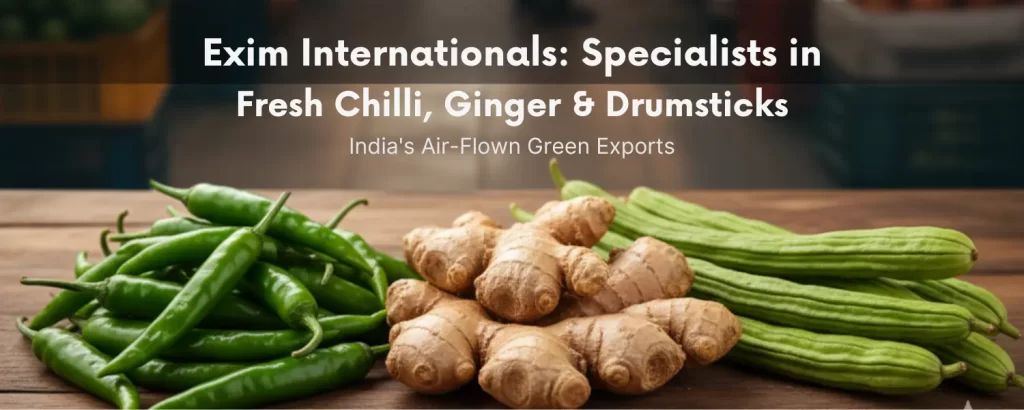
What is the Most Exported Vegetable from India? (And Why We Choose Fresh Greens)

If you look at the raw data for Indian agriculture, the answer to “What is the most exported vegetable from India?” is the Onion. By volume, onions (specifically from Nashik) dominate the trade routes.   However, volume isn’t everything. For premium importers who value freshness over bulk storage, the real treasure in the Indian export basket lies in Fresh Green Vegetables. At Exim Internationals, we have strategically chosen to move away from the bulk onion/potato trade. Instead, we specialize in the high-demand, high-value “Fresh Green” sector. Here is why the world is turning to India for Green Chilli, Ginger, and Drumsticks in 2026. 1. The Volume Leader: Onions (The Market Context) To answer the primary question: Yes, Onions are historically India’s #1 vegetable export. The Stat: India exports over 1.5 million tonnes annually to Malaysia, Bangladesh, and the UAE. The Reality: While onions are a commodity staple, they are often subject to volatile government bans and price fluctuations. The Exim Difference: We focus on stability and quality. Rather than bulk commodities, we export the essential flavor agents of Indian cuisine that are flown daily to fresh markets in Europe and the Middle East. 2. Our Top Export #1: Green Chilli (G4 Variety) While onions travel by sea, our Green Chillies fly by air. Why India? India is the largest producer of chillies in the world. The Variety: We exclusively export the G4 Green Chilli. Known for its vibrant dark green color, smooth skin, and high heat levels, it is the preferred variety for the UK and Dubai markets. Our Standard: We pack them in ventilated boxes to ensure they arrive crisp, not shriveled. 3. Our Top Export #2: Fresh Ginger Indian Ginger is prized for its intense aroma and high essential oil content compared to Chinese varieties. The Demand: In 2026, demand for fresh Indian ginger has spiked in the wellness and pharmaceutical sectors, as well as for culinary use in Asian cuisines. Our Standard: Exim Internationals supplies fresh, washed ginger free from mud and soil, ensuring it meets strict phytosanitary norms for global entry. 4. Our Top Export #3: Drumsticks (Moringa) Once a niche vegetable, the Drumstick is now a global “Superfood” (Moringa). The Market: We see massive demand from the Indian diaspora in the UK and USA, as well as health-conscious consumers in Europe. Our Standard: We select only tender, fleshy green pods. Unlike older, woody drumsticks, ours are harvested young to ensure they remain soft and flavorful upon arrival. 5. Other Key Exports: Lemon & Curry Leaves To complete the “Fresh Basket,” we also export: Lemon: Juicy, thin-skinned Indian lemons perfect for garnishing and juices. Curry Leaves: The aromatic signature of South Indian cooking, shipped air-fresh to retain their potent smell. 6. Why Buy from Exim Internationals? We don’t try to sell everything. By focusing on this specific basket-Chilli, Ginger, Drumsticks, Lemon—we ensure: Faster Turnaround: These perishables require speed. We are experts in air-cargo logistics where timing is everything. Better Quality Control: We hand-pick fresh produce rather than bulk-loading storage crops. Consistent Supply: We source from specific belts in Maharashtra and Karnataka that produce year-round. While the Onion may be the “King of Volume,” Green Chilli and Ginger are the “Kings of Flavor.” If you are a wholesaler looking for premium, fresh, air-flown vegetables that define authentic taste, Exim Internationals is your dedicated partner. Frequently Asked Questions (FAQs) 1. Does Exim Internationals export Onions or Potatoes? No. We have specialized our operations to focus strictly on Fresh Green Vegetables like Green Chilli, Ginger, Drumsticks, and Lemons. This allows us to maintain higher quality standards for highly perishable items. 2. What variety of Green Chilli do you export? We primarily export the G4 Variety. It is famous for its dark green color, high pungency (spiciness), and excellent shelf life, making it ideal for export to the Middle East and Europe. 3. How do you ship Drumsticks to prevent drying? Drumsticks are highly sensitive to moisture loss. We pack them in specialized 5-ply corrugated boxes with proper ventilation and ship them via air cargo to ensure they reach the destination while still tender and fresh. 4. What is the minimum order quantity (MOQ)? Since we specialize in air shipments for these perishables, our MOQ is typically 500 kg to 1,000 kg (approx. 100-200 boxes), which can be a mixed consignment of Chilli, Ginger, and Drumsticks. 5. Are your vegetables suitable for the UK/EU market? Yes. We adhere to strict phytosanitary standards. Our Ginger is washed and soil-free, and our Chillies are checked for pests to meet the rigorous import regulations of the UK and European Union. About us Exim Internationals is a premier export company dedicated to delivering the finest products from India to international markets. Our mission is to establish India as a global export powerhouse, contributing to economic growth and showcasing the richness of Indian goods worldwide. From the pashmina shawls and apples of the North to the spices of the South, the fruits and powders of the West, and the tea and bamboo of the East, we connect every corner of India with the global market. Certification we have: FSSAI, APEDA, IEC, UDYAM, FIEO, Spices Board, Coconut Contact us Samin heritage, Sl building, Shop no. 19, Chandan wadi, Almeda road Thane west, Maharashtra, India-400601. Email Us: support@eximinternationals.comCall Us: +91 9820446601 | +91 9321559185

What is the Most Exported Vegetable from India? (And Why We Choose Fresh Greens) Read Post »

Coconut Sugar vs. Regular Sugar
Export Import Fruits Spices Vegetables

Coconut Sugar vs. Regular Sugar: Advantages for Middle Eastern Food Producers

For decades, refined white cane sugar has been the undisputed king of industrial food production due to its low cost and neutral flavor. However, the modern Middle Eastern consumer is changing. With governments in the region actively combating rising obesity and diabetes rates through sugar taxes and awareness campaigns, manufacturers must adapt. The debate of Coconut Sugar vs. Regular Sugar is no longer just a niche health trend; it is a mainstream commercial reality. Here is the technical breakdown for buyers and R&D managers choosing between these two sweeteners for the 2026 market 1. The Head-to-Head Technical Comparison At a molecular level, both are primarily sucrose. However, the difference lies in the processing and what is left behind.   Feature Regular White Sugar (Refined Cane) Organic Coconut Sugar (Indian Origin) Source Sugarcane or Sugar Beet Flower bud sap of the Coconut Palm Processing Highly processed, bleached, stripped of nutrients. Unrefined. Sap is boiled and dehydrated. Glycemic Index (GI) High (65 – 100) causes rapid spikes. Low (35 – 54) slower absorption. Flavor Profile Neutral sweetness. No aroma. Rich, warm, caramel/butterscotch notes. Color & Texture Fine white crystals. Golden-brown granules (similar to raw sugar). Nutrients “Empty calories” (zero trace minerals). Contains Potassium, Iron, Zinc, and Inulin fiber. 2. Advantage #1: Tapping into the “Low-GI” & Wellness Market The primary advantage of coconut sugar for Middle Eastern producers is marketing positioning. The Diabetes Concern: With high diabetes prevalence in the GCC, products marketed as “Lower GI” or “No Refined Sugar” command a premium price and deeper consumer loyalty. The “Natural” Claim: unlike artificial sweeteners (aspartame, sucralose) which some consumers avoid, coconut sugar is a natural, plant-based sweetener. It allows for “Clean Label” packaging—a major trend in Dubai and Riyadh retail sectors. By substituting refined sugar with coconut sugar in products like energy bars, healthy biscuits, or modern Arabic sweets, producers can authentically target the wellness demographic. 3. Advantage #2: Flavor Enhancement in Traditional Sweets A common misconception is that coconut sugar tastes like coconut. It does not. Indian coconut sugar, particularly from the Pollachi region, has a distinct caramel and butterscotch flavor profile, similar to brown sugar but with greater depth. Application in Sweets: This profile complements traditional Middle Eastern ingredients like pistachios, walnuts, cardamom, and rose water. In recipes like basbousa or date-based ma’amoul, coconut sugar enhances the richness rather than just providing flat sweetness. Color Impact: It will impart a golden-brown hue. While not suitable for pure white meringues, it is excellent for baked goods, sauces, and dark chocolates. 4. Advantage #3: Strategic Sourcing from India For buyers in the Middle East, sourcing Coconut Sugar vs. Regular Sugar also involves logistics. India offers distinct advantages over competitors like Indonesia or the Philippines. Proximity & Logistics: Shipping times from Indian ports (like Cochin or Chennai) to Jebel Ali (UAE) or Jeddah (KSA) are significantly shorter than from Southeast Asia, reducing transit inventory costs. Quality & Purity: Indian coconut sugar is renowned for its purity. Leading exporters like Exim Internationals ensure the product is free from adulteration with cane sugar—a common issue in cheaper alternative markets. Halal Suitability: Our production processes are strictly vegetarian and free from alcohol or animal derivatives, making certification easy for Halal compliance. Future-Proofing Your Product Line The shift in the debate of Coconut Sugar vs. Regular Sugar is clear. While regular sugar remains cheaper, it is increasingly viewed as a liability on an ingredient label. Coconut sugar offers a functional, flavorful, and marketable alternative that aligns with the future of food in the Middle East. At Exim Internationals, we supply bulk, organic certified Indian Coconut Sugar tailored for industrial food producers across the GCC. Ready to test the difference in your recipes? Contact us today for specification sheets and industrial samples. Frequently Asked Questions (FAQs) 1. Is Coconut Sugar a 1:1 replacement for Regular Sugar in formulations? Yes, by weight, it is generally a 1:1 replacement in terms of sweetness level. However, because it is slightly more hygroscopic (attracts moisture) and has a darker color, minor adjustments to baking times or liquid ratios in precise industrial recipes may be needed by your R&D team. 2. Does Coconut Sugar melt the same way as Regular Sugar? It dissolves readily in liquids but behaves slightly differently when caramelized due to its mineral content and impurities. It burns faster than refined white sugar, so cooking temperatures may need lowering. 3. Why is Indian Coconut Sugar preferred over Indonesian? Many GCC buyers prefer Indian origins (specifically Pollachi/Kerala grades) due to stricter quality controls against adulteration with cane jaggery, lower moisture content (better shelf life), and reliable shipping routes to the Gulf. 4. What is the shelf life for bulk storage? When stored in proper multilayer industrial packaging (which we provide) in cool, dry conditions, our organic coconut sugar has a shelf life of 24 months. 5. Is your product Halal certified? While coconut sugar is naturally Halal, we can provide necessary documentation and support to ensure your final product meets all regional Halal certification requirements. About us Exim Internationals is a premier export company dedicated to delivering the finest products from India to international markets. Our mission is to establish India as a global export powerhouse, contributing to economic growth and showcasing the richness of Indian goods worldwide. From the pashmina shawls and apples of the North to the spices of the South, the fruits and powders of the West, and the tea and bamboo of the East, we connect every corner of India with the global market. Certification we have: FSSAI, APEDA, IEC, UDYAM, FIEO, Spices Board, Coconut Contact us Samin heritage, Sl building, Shop no. 19, Chandan wadi, Almeda road Thane west, Maharashtra, India-400601. Email Us: support@eximinternationals.comCall Us: +91 9820446601 | +91 9321559185

Coconut Sugar vs. Regular Sugar: Advantages for Middle Eastern Food Producers Read Post »

Alphonso Mango Season
Export Import Fruits Spices Vegetables

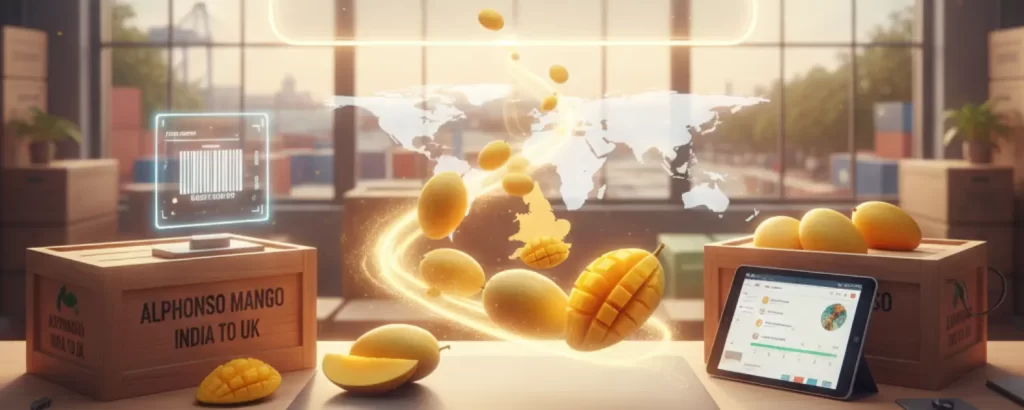
2026 Alphonso Mango Season: When to Pre-Book for Shipments to UK

In the world of fresh fruit exports, timing is revenue. For the 2026 season, the Alphonso mango (Hapus) harvest from Ratnagiri and Devgad has shown early signs of maturity due to a cooler-than-average winter in Maharashtra. For UK buyers, this shifts the procurement strategy. The race to secure premium Grade A+ export-quality fruit has already begun. Here is everything you need to know to lock in your supply chain. 1. The 2026 Harvest Timeline: A Shift in Schedule Unlike 2024-25, where unseasonal rains delayed crops, 2026 is seeing a “timely to early” start. Pre-Season Arrivals: Small batches began hitting Pune markets as early as mid-January 2026, signaling a robust flowering stage. Export Launch: Full-scale export volumes are expected to commence from March 15, 2026. Peak Volume: The “Glut Period” (highest volume, best price) will likely fall between April 10 and May 20, 2026. Buying Advice: To guarantee stock for the critical April retail window (Easter/Ramadan), pre-booking must be finalized by late February. 2. Logistics: Air vs. Sea Freight to the UK Exporting to the UK requires navigating strict post-Brexit phytosanitary rules. Sea Freight: Transit Time: 20-25 days. Risk: Only recommended for green, hard fruit. The risk of ripening during transit is high without controlled atmosphere (CA) containers. 3. Compliance Checklist for UK Entry (2026 Update) The UK mandates strict checks for fruit flies and weevils. Your Indian exporter must provide: Phytosanitary Certificate: Issued by Indian Plant Quarantine authorities. VHT/HWT Treatment: Vapour Heat Treatment or Hot Water Treatment is often mandatory to ensure the fruit is pest-free. Global GAP Certificate: Proof of “Good Agricultural Practices” is now a standard requirement for major UK retailers like Tesco or Sainsbury’s. Traceability: Every crate must be traceable back to the registered APEDA orchard (Mangonet). 4. Cost Analysis: What to Expect? Early Season (March): Prices will be premium. Expect FOB rates to be 20-30% higher due to scarcity. Mid-Season (April): Prices stabilize. This is the “sweet spot” for bulk importers to lock in contracts. Freight Rates: Air freight charges from Mumbai (BOM) to London (LHR) typically spike in April. Booking cargo space in advance is as important as booking the fruit itself. 5. Ratnagiri vs. Devgad: Which to Choose? Ratnagiri Alphonso: Known for its golden-yellow skin and incredibly thin peel. It is the most famous variety but more delicate to ship. Devgad Alphonso: Slightly thicker skin and often sweeter. Its robustness makes it slightly better suited for the rigors of international transport. Don’t Wait for April The 2026 season rewards the early bird. By pre-booking your volume in February, you secure not just the price, but the “Grade A” size (250g+) that UK consumers demand. Exim Internationals has opened its 2026 Export Order Book. We source directly from Global GAP-certified orchards in Ratnagiri. Frequently Asked Questions (FAQs) 1. When does the 2026 Alphonso mango season start for export? Export-quality harvesting begins around March 15, 2026. However, limited “early bird” shipments may be available from late February for premium air-freight orders. 2. What is the shelf life of Alphonso mangoes during export? Fresh Alphonso mangoes have a shelf life of 7-10 days once ripe. For export, we ship them in a “semi-ripe” (green-hard) stage, giving them about 15-20 days of total life from harvest to retail shelf. 3. Do you provide Phytosanitary Certificates for UK customs? Yes. Every single shipment from Exim Internationals comes with a government-issued Phytosanitary Certificate and passes through APEDA-approved packhouses to ensure compliance with UK import laws. 4. What is the minimum order quantity (MOQ) for air freight to the UK? For air shipments, the standard MOQ is usually 500 kg to 1,000 kg (approx. 100-200 boxes). This ensures the freight cost per kg remains viable. 5. Why are 2026 prices expected to be high in March? Early-season fruit is always limited. In 2026, high domestic demand in India combined with export pre-orders creates a supply crunch in March, driving up FOB prices until full harvest arrives in April. About us Exim Internationals is a premier export company dedicated to delivering the finest products from India to international markets. Our mission is to establish India as a global export powerhouse, contributing to economic growth and showcasing the richness of Indian goods worldwide. From the pashmina shawls and apples of the North to the spices of the South, the fruits and powders of the West, and the tea and bamboo of the East, we connect every corner of India with the global market. Certification we have: FSSAI, APEDA, IEC, UDYAM, FIEO, Spices Board, Coconut Contact us Samin heritage, Sl building, Shop no. 19, Chandan wadi, Almeda road Thane west, Maharashtra, India-400601. Email Us: support@eximinternationals.comCall Us: +91 9820446601 | +91 9321559185

2026 Alphonso Mango Season: When to Pre-Book for Shipments to UK Read Post »

Indian spices
Export Import Fruits Spices Vegetables

What are the 7 Main Indian Spices? (The Global “Masala Dabba” List)

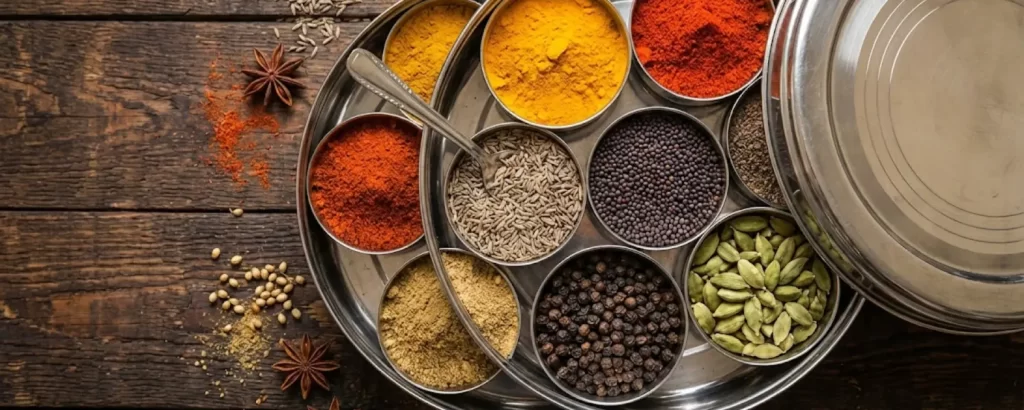
If you ask a chef in New Delhi or a bulk spices exporter from India what the most important spices are, you might get slightly different answers based on region. However, seven spices are universally acknowledged as the “pillars” of Indian flavor. These seven are not only culinary staples but also the top-performing commodities in India’s $4.72 Billion export market. 1. Turmeric (Haldi) – The Golden Healer No Indian dish is complete without this vibrant yellow root. Role: Adds color, earthiness, and acts as a natural preservative. Export Fact: India produces 80% of the world’s turmeric. In 2026, high-curcumin varieties like Lakadong and Salem are in peak demand for pharmaceutical and latte blends in the West. 2. Cumin (Jeera) – The Flavor Base Cumin is the first spice to hit the hot oil. Its distinct nutty, smoky flavor forms the “tempering” (tadka) base for curries and dals. Role: Digestive aid and primary flavor builder. Export Fact: Cumin is currently India’s top-grossing spice export by value, with huge demand from the USA and China for processed food seasoning. 3. Coriander (Dhania) – The Body Builder While Cumin provides the top notes, Coriander powder provides the “body” or texture to sauces. It has a mild, citrusy, and sweet profile. Role: Thickening agent and flavor balancer. Export Fact: Indian coriander seeds (especially from Rajasthan/Madhya Pradesh) are preferred globally for their golden color and high essential oil content. 4. Red Chilli (Lal Mirch) – The Heat From the fiery Guntur Teja to the mild, colorful Kashmiri, Indian chillies define the “heat” level of the cuisine. Role: Heat (Capsaicin) and deep red color. Export Fact: India is the largest exporter of dry red chillies. In 2026, the demand for “low-heat, high-color” varieties (like Byadgi) is surging in the European natural food colorant market. 5. Black Pepper (Kali Mirch) – The King of Spices Native to the Malabar coast of Kerala, Black Pepper is arguably India’s most famous contribution to the world. Role: Sharp, biting heat and aroma. Export Fact: Known as “Black Gold,” Indian Malabar pepper commands a premium over Vietnamese varieties due to its complex, floral aroma. It is a crucial black pepper spice for meat curing and seasoning industries. 6. Cardamom (Elaichi) – The Queen of Spices Often found in both savory biryanis and sweet chai, Cardamom is the aromatic crown jewel. Role: Intense, sweet-floral aroma. Export Fact: With recent crop shortages in Guatemala, Indian Green Cardamom (Alleppey Grade) is seeing a massive resurgence in 2026, prized for its superior oil content and size. 7. Mustard Seeds (Rai/Sarson) – The Pungent Kick Essential in South and East Indian cooking, these tiny black or brown seeds release a nutty, pungent flavor when popped in hot oil. Role: Sharpness and texture. Export Fact: Beyond cooking, Indian Black Mustard is heavily exported for oil extraction and as a pickling agent in the US and Germany. Why Source These 7 from India? India is the only country that produces all 7 of these spices in export-ready volumes year-round. Standardization: With 2026 trends focusing on safety, Indian exporters now offer Steam Sterilized and Sortex Cleaned options to meet EU/USA limits. Variety: You can buy a mixed container of all 7 spices from a single Indian spices supplier like Exim Internationals, saving on logistics. Looking to import the “Big 7” in bulk? Contact Exim Internationals for our 2026 Catalogue. Frequently Asked Questions (FAQs) 1. What is the most exported spice from India in 2026? Cumin (Jeera) and Red Chilli are currently the top spices by value and volume, driven by high demand in China, Bangladesh, and the USA. 2. Which Indian spice is known as “Black Gold”? Black Pepper is historically known as “Black Gold” because it was once used as currency and sparked the age of exploration. 3. What is a “Masala Dabba”? A Masala Dabba is a traditional circular spice box found in every Indian home, typically containing 7 small bowls with the daily essential spices (Turmeric, Cumin, Coriander, Chilli, Mustard, etc.). 4. Can I import mixed spice containers from India? Yes. Exim Internationals specializes in consolidated shipments. We can load Turmeric, Black Pepper, Cumin, and Cardamom all in one 20ft or 40ft container to optimize your shipping costs. 5. What is the difference between Green and Black Cardamom? Green Cardamom (The Queen) is sweet and floral, used in desserts and tea. Black Cardamom is larger, smoky, and camphor-like, used almost exclusively in savory meat curries and rice dishes. About us Exim Internationals is a premier export company dedicated to delivering the finest products from India to international markets. Our mission is to establish India as a global export powerhouse, contributing to economic growth and showcasing the richness of Indian goods worldwide. From the pashmina shawls and apples of the North to the spices of the South, the fruits and powders of the West, and the tea and bamboo of the East, we connect every corner of India with the global market. Certification we have: FSSAI, APEDA, IEC, UDYAM, FIEO, Spices Board, Coconut Contact us Samin heritage, Sl building, Shop no. 19, Chandan wadi, Almeda road Thane west, Maharashtra, India-400601. Email Us: support@eximinternationals.comCall Us: +91 9820446601 | +91 9321559185

What are the 7 Main Indian Spices? (The Global “Masala Dabba” List) Read Post »

spices
Export Import Fruits Spices Vegetables

Which Country is No.1 in Spices? (2026 Global Ranking)

In the competitive world of agri-commodities, rankings often shift. However, when it comes to spices, India holds the No.1 rank globally in three critical categories: Production, Consumption, and Export. While countries like China and Vietnam are major players in specific sectors (like ginger or pepper), India’s dominance covers the entire spectrum of the spice trade. 1. Production: The 6 Million Tonne Giant India is the world’s largest producer of spices, contributing approximately 44% of the global supply. 2025-26 Estimate: India’s annual spice production is estimated to reach 6.2 million metric tons. Variety: Of the 109 spice varieties listed by the International Organization for Standardization (ISO), India produces 75 different types. This immense variety allows importers to source everything from Turmeric and Cumin to rare Herbal Extracts from a single country. 2. Export: A $4.7 Billion Powerhouse India is not just growing spices; it is shipping them to over 180 countries. Export Value: In the fiscal year 2024-25, India’s spice exports hit a record high of approximately $4.72 billion. Top Importers: The biggest buyers of Indian spices include China, the USA, UAE, Bangladesh, and Thailand. Lead Products: The top revenue generators are Chili, Cumin, Turmeric, and Spice Oleoresins (extracts used in food processing). 3. India vs. The World: A Quick Comparison While India is the overall leader, other nations specialize in specific niches. Here is how they compare in 2026: Feature India (Rank #1) China (Rank #2) Vietnam (Rank #3) Primary Strength Variety (75+ types) & Volume Ginger, Garlic, Star Anise Black Pepper & Cinnamon Global Market Share ~44% of Production ~12-15% Dominated by Pepper Key Export Chili, Cumin, Turmeric, Oils Ginger, Garlic Black Pepper Best For Buyers? One-Stop Shop for all spices Specific bulk sourcing Price-competitive pepper 4. Why “Indian Spices” Are the Gold Standard For a bulk spices exporter from India like Exim Internationals, quality is just as important as volume. High Curcumin Turmeric: Indian Lakadong Turmeric is world-famous for having 7-12% Curcumin content, compared to 2-3% in other varieties. Malabar Black Pepper: Known as “Black Gold,” Indian Malabar pepper is preferred for its balanced heat and complex aroma compared to the sharper Vietnamese pepper. Strict Standards: The Spices Board of India mandates strict testing for exports, aligning with ISO standards for cleanliness, pesticide residues, and aflatoxin levels. 5. The Rise of Value-Added Exports In 2026, buyers aren’t just buying raw seeds. India has become the global hub for Spice Oils and Oleoresins—concentrated liquid spices used by multinational food brands. India commands a massive 60-70% share of this global market. The Choice for Global Buyers If you are asking “Which country is No.1 in spices?” to decide where to source your next container, the answer is clear. India offers the unbeatable combination of variety, volume, and value-added quality. At Exim Internationals, we connect you directly to this vast market, supplying premium Indian spices like Black Pepper, Cardamom, and Chili with full traceability. Ready to source from the world’s No.1 spice producer? Contact Exim Internationals for our 2026 Product Catalog. Frequently Asked Questions (FAQs) 1. Who is the largest exporter of spices in the world? India is the largest exporter of spices by volume and value, with exports valued at approx. $4.7 billion in 2024-25. China and Vietnam follow in second and third place. 2. Which state is known as the “Spice Garden of India”? Kerala is historically known as the “Spice Garden of India” due to its rich production of Black Pepper, Cardamom, and Clove. However, states like Madhya Pradesh and Rajasthan are now the largest producers by total volume (focusing on Chilli, Cumin, and Coriander). 3. What is the most exported spice from India? Chili is the most exported spice from India in terms of value, followed by Cumin and Spice Oils/Oleoresins. 4. How many ISO spice varieties does India produce? India produces 75 of the 109 varieties listed by the ISO (International Organization for Standardization), making it the most diverse spice producer in the world. 5. Is Vietnam the largest producer of Black Pepper? Yes, Vietnam is the world’s largest producer and exporter of Black Pepper specifically, accounting for over 30% of global production. However, India ranks highly for quality (Malabar grade) and consumes most of its own pepper domestically. About us Exim Internationals is a premier export company dedicated to delivering the finest products from India to international markets. Our mission is to establish India as a global export powerhouse, contributing to economic growth and showcasing the richness of Indian goods worldwide. From the pashmina shawls and apples of the North to the spices of the South, the fruits and powders of the West, and the tea and bamboo of the East, we connect every corner of India with the global market. Certification we have: FSSAI, APEDA, IEC, UDYAM, FIEO, Spices Board, Coconut Contact us Samin heritage, Sl building, Shop no. 19, Chandan wadi, Almeda road Thane west, Maharashtra, India-400601. Email Us: support@eximinternationals.comCall Us: +91 9820446601 | +91 9321559185

Which Country is No.1 in Spices? (2026 Global Ranking) Read Post »

Biggest Producer of Mustard
Export Import Fruits Spices Vegetables

Which Country is the Biggest Producer of Mustard? (2026 Update)

For import-export businesses, the mustard market is split into two distinct categories. Understanding this distinction is critical because the “top producer” changes depending on which seed you are tracking. 1. The Rapeseed-Mustard Giant: India When we talk about total volume of mustard (specifically the Brassica juncea or Brown/Black varieties used for oil), India is the world’s largest producer by a massive margin. Production Volume: India produces approximately 12 to 13 million tonnes of Rapeseed-Mustard annually. Primary Use: 90% of this is crushed for Mustard Oil, a staple cooking medium in South Asia. The remaining “oil cake” is a high-protein animal feed. Key Varieties: Brown Sarson, Black Mustard (Kali Sarson), and Taramira. 2. The Condiment King: Canada If you are looking for Yellow Mustard (Sinapis alba) used to make Dijon, mayonnaise, or table mustard, Canada is the global leader. Export Dominance: While Canada’s total production is lower than India’s (approx. 130,000 – 170,000 tonnes of condiment mustard), it accounts for nearly 28% to 57% of the global export trade. Key Buyer: Canada exports the vast majority of its crop to the USA and Europe for processing into sauces. 3. The Hidden Contender: Nepal Interestingly, some agricultural datasets list Nepal as a top producer of mustard seeds. This is because Nepal dedicates a huge percentage of its arable land to mustard for local sustenance. The Data: Nepal produces around 220,000 tonnes annually. While impressive for its size, it does not match India’s industrial scale, but it remains a key regional player. 4. India vs. Canada: Which Origin Should You Choose? Feature Sourcing from India Sourcing from Canada Mustard Type Black / Brown (Spicy, High Oil) Yellow (Mild, Low Oil) Best Used For Oil Extraction, Pickles, Spice Blends Table Sauces, Hotdog Mustard Pungency High (Strong “Kick”) Low to Medium Pricing Competitive (Massive Scale) Premium (Export Focused) 5. 2026 Market Forecast India is rapidly modernizing its export capabilities. With the Indian government pushing for higher oilseed exports, we are seeing a surge in “Sortex Clean” Black Mustard shipments to the Middle East and Southeast Asia. Opportunity: Buyers looking for intense flavor profiles for spicy cuisines (Mexican, Indian, Thai) are increasingly switching to Indian Black Mustard due to its superior essential oil content. The Verdict For Yellow Mustard (Sauce): Canada is the leader. For Black/Brown Mustard (Oil & Spices): India is the true volume leader. At Exim Internationals, we specialize in the finest Indian Black and Brown Mustard Seeds, machine-cleaned and packed for global export.   Need a quote for Indian Black Mustard? Contact us for today’s FOB prices. Frequently Asked Questions (FAQs) 1. Is “Rapeseed” the same as “Mustard”? They are cousins in the Brassica family. In India, they are often grouped together as “Rapeseed-Mustard” because they are grown in the same season and used similarly for oil. However, globally, “Rapeseed” usually refers to Canola (for oil), while “Mustard” refers to the spice/condiment seed. 2. Why is Indian mustard more pungent than Canadian mustard? Indian mustard is typically the Brassica juncea variety, which has a higher content of Allyl Isothiocyanate—the compound responsible for the sharp, nose-tingling heat. Canadian yellow mustard (Sinapis alba) has a different enzyme profile, making it milder. 3. Which state in India produces the most mustard? Rajasthan is the largest producer, accounting for nearly 40-45% of India’s total output, followed by Haryana and Madhya Pradesh. 4. What is the HS Code for Mustard Seeds? The HS Code for mustard seeds is 120750. For export from India, specific sub-codes like 12075010 may apply depending on the variety. 5. Does Exim Internationals export Mustard Oil? Yes. In addition to raw seeds, we export cold-pressed (Kachi Ghani) mustard oil, which is highly demanded in the UAE, Bangladesh, and Nepal for its authentic flavor. About us Exim Internationals is a premier export company dedicated to delivering the finest products from India to international markets. Our mission is to establish India as a global export powerhouse, contributing to economic growth and showcasing the richness of Indian goods worldwide. From the pashmina shawls and apples of the North to the spices of the South, the fruits and powders of the West, and the tea and bamboo of the East, we connect every corner of India with the global market. Certification we have: FSSAI, APEDA, IEC, UDYAM, FIEO, Spices Board, Coconut Contact us Samin heritage, Sl building, Shop no. 19, Chandan wadi, Almeda road Thane west, Maharashtra, India-400601. Email Us: support@eximinternationals.comCall Us: +91 9820446601 | +91 9321559185

Which Country is the Biggest Producer of Mustard? (2026 Update) Read Post »

banana export
Export Import Fruits Spices Vegetables

What is the Rank of India in Banana Export? (2026 Update)

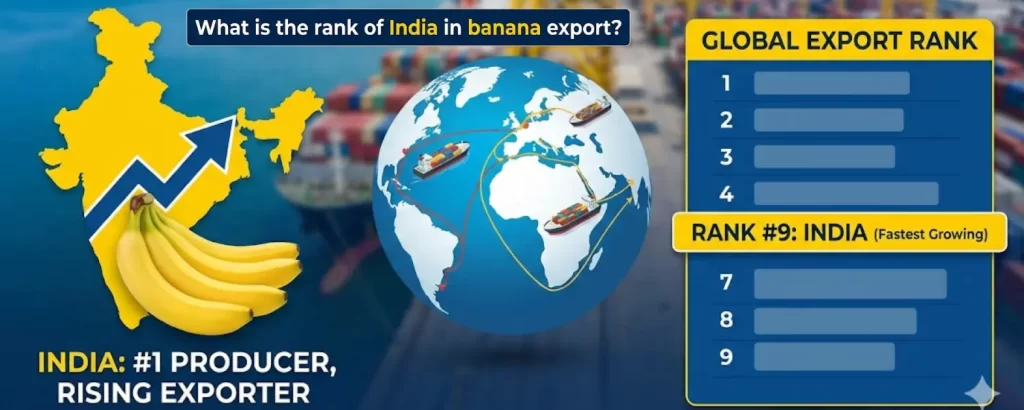
As of early 2026, India holds a unique dual position in the global banana industry: Rank #1 in Production: India is the undisputed world leader, producing over 37 million tonnes annually (approx. 26-30% of global output). Rank #9 to #12 in Exports: While it dominates production, India currently ranks between 9th and 12th in global exports by value. But here is the catch: The “Rank” doesn’t tell the full story. India is currently the fastest-growing banana exporter in the world. In the last fiscal cycle alone, export volumes surged by over 54%, driven by new demand from the Middle East and Russia. 1. The “Sleeping Giant” Wakes Up Historically, India consumed nearly all of its bananas domestically. This kept its export rank low compared to countries like Ecuador (#1) and the Philippines (#2), which are dedicated export economies. However, in 2026, the scenario has shifted: Government Focus: The Indian government has set a target to reach $1 Billion in banana exports. Sea Shipments: Previously, Indian bananas were mostly air-freighted to the Gulf. Now, successful sea-shipment trials to Rotterdam (Netherlands) and Novorossiysk (Russia) have opened up massive high-volume markets. 2. Why Global Buyers Are Switching to India If you are an importer in Dubai, Moscow, or London, why should you look at India (Rank #9) instead of Ecuador (Rank #1)? Year-Round Availability: Unlike Latin American producers who face seasonal hurricanes, India’s diverse climate (Tamil Nadu, Maharashtra, Gujarat) ensures a 365-day harvest cycle. The Cavendish G9 Quality: Indian exporters primarily supply the Grand Naine (G9) variety. It has a high sugar content, robust skin for transit, and is perfectly sized for retail shelves. Price Competitiveness: Due to massive production scale, Indian FOB prices remain highly competitive, especially for the Middle Eastern market. 3. Top Destinations for Indian Bananas (2026) While traditional markets remain strong, new players are emerging: Middle East (The Core Market): UAE, Iran, Saudi Arabia, and Iraq absorb nearly 80% of India’s current exports. Russia (The New Frontier): With supply chain issues affecting Ecuador, Russia has begun actively sourcing Indian bananas to meet its massive demand. Europe: Initial successful shipments to the Netherlands suggest India will soon crack the top 5 suppliers to the EU. 4. Export Specifications (B2B Standard) Feature Specification Variety Cavendish G9 (Grand Naine) Origin Maharashtra / Andhra Pradesh / Tamil Nadu Finger Length 18 cm to 25 cm (Premium Grade) Packing 7kg / 13kg / 18kg Corrugated Box (Vacuum Packed) Shelf Life 45+ Days (Reefer at 13.5°C) A Rank on the Rise India might be ranked #9 today, but with its “Production Power” now aligning with “Export Infrastructure,” it is projected to enter the Top 5 Global Exporters by 2030. For buyers, this is the perfect time to build relationships with reliable Indian suppliers before the global rush begins. Looking for premium Cavendish G9 Bananas? Contact Exim Internationals for our 2026 harvest schedule and sea-freight quotes. Frequently Asked Questions (FAQs) 1. Who is the largest exporter of bananas in the world? Ecuador remains the world’s largest banana exporter, accounting for over 26% of global trade. The Philippines and Costa Rica typically follow in the top 3. 2. Why is India not the #1 exporter if it is the #1 producer? India consumes most of its own bananas due to a large population. Additionally, until recently, logistics for long-distance sea transport (cold chain) were developing. This has now improved significantly. 3. Which state in India is the largest banana producer? Andhra Pradesh is often the top producer, followed closely by Maharashtra and Tamil Nadu. Maharashtra is particularly famous for its export-quality Cavendish bananas. 4. Can Indian bananas be shipped to Europe? Yes. Recent technological advancements in cold storage and shelf-life extension have made it possible to ship Indian bananas via sea to Europe (20-25 days transit) without spoilage. 5. What is the HS Code for fresh bananas? The HS Code for fresh bananas is 08039010. About us Exim Internationals is a premier export company dedicated to delivering the finest products from India to international markets. Our mission is to establish India as a global export powerhouse, contributing to economic growth and showcasing the richness of Indian goods worldwide. From the pashmina shawls and apples of the North to the spices of the South, the fruits and powders of the West, and the tea and bamboo of the East, we connect every corner of India with the global market. Certification we have: FSSAI, APEDA, IEC, UDYAM, FIEO, Spices Board, Coconut Contact us Samin heritage, Sl building, Shop no. 19, Chandan wadi, Almeda road Thane west, Maharashtra, India-400601. Email Us: support@eximinternationals.comCall Us: +91 9820446601 | +91 9321559185

What is the Rank of India in Banana Export? (2026 Update) Read Post »

Export Import Fruits Spices Vegetables

Organic Coconut Sugar from India: The Natural Sweetener of 2026

While refined sugar faces global scrutiny, Organic Coconut Sugar has emerged as the “Gold Standard” for health-conscious consumers. Unlike standard cane sugar, this unrefined sweetener is derived from the sap of the coconut palm blossom (Neera), retaining vital minerals and a unique caramel flavor that synthetic alternatives cannot match.   For B2B importers, India is rapidly becoming the preferred origin over traditional suppliers like Indonesia, thanks to stricter organic certification standards (NPOP/USDA) and advanced processing techniques in hubs like Pollachi. 1. Why Sourcing from India is the Strategic Choice India is the world’s third-largest coconut producer, but its value proposition lies in quality over quantity. The Pollachi Advantage: Located in Tamil Nadu, the Pollachi region is known as the “Coconut Capital.” The soil here is naturally rich in minerals, producing sap with a distinctively rich, caramel-like taste profile that is less acidic than other varieties. Ethical Production: Indian coconut sugar is often produced by farmer collectives (FPOs) using traditional methods that do not harm the tree. The tree can continue producing sap for over 20 years, making it a highly sustainable crop. Certified Purity: Exim Internationals sources from partners who hold USDA NOP, EU Organic, and India Organic (NPOP) certifications, ensuring zero pesticide residue—a critical requirement for European and North American markets. 2. Health Benefits Driving Global Demand The surge in export demand is driven by the product’s nutritional profile, which appeals to the diabetic-friendly and paleo markets. Low Glycemic Index (GI): Indian coconut sugar typically has a GI of 35–54, significantly lower than refined sugar (GI 65+). This prevents rapid blood sugar spikes. Nutrient Density: Unlike empty-calorie white sugar, it contains trace amounts of Zinc, Iron, Calcium, and Potassium, along with Inulin (a prebiotic fiber) that supports gut health. No “Bone Char”: It is 100% vegan and unrefined, processed without the use of bone char (animal bone ash), which is commonly used to whiten cane sugar. 3. Production Process: From Sap to Granule Understanding the process helps buyers verify authenticity. Tapping: Skilled tappers collect fresh sap from the flower bud. Evaporation: The sap is heated in large woks at controlled temperatures to evaporate water content. Granulation: As it thickens, it is manually stirred to form granules rather than a hard block. Drying & Sieving: The final granules are dried to below 2% moisture and sieved to ensure a uniform “fine crystal” texture suitable for retail packing. 4. Export Specifications (2026 Standard) Feature Specification Product Name Organic Coconut Sugar (Granular) Origin Pollachi / Kerala, India Color Light Brown to Golden Brown Moisture < 2% (Crucial for anti-caking) Solubility 100% Soluble in Water Shelf Life 18 – 24 Months Certifications USDA, NPOP, FSSAI, Non-GMO 5. Packaging & Logistics For bulk buyers, moisture control is the biggest logistical challenge. Bulk Packing: 25kg HDPE Bags with an inner food-grade poly liner to prevent moisture absorption. Retail Packing: Private labeling is available for 250g, 500g, and 1kg Stand-Up Pouches (Kraft Paper or Plastic). Shipping: It is a non-perishable dry cargo, but we recommend using silica gel packets in containers if shipping to high-humidity destinations like the UK or Southeast Asia. Sweeten Your Supply Chain With the global organic sugar market expanding, securing a reliable supply of Indian Organic Coconut Sugar positions your brand as a leader in quality and sustainability. Whether you are a bakery chain in London or a health food distributor in Dubai, the “Pollachi Grade” delivers the taste and certification your customers demand. Want a sample of our USDA-certified Organic Coconut Sugar? Contact Exim Internationals today for our 2026 price list. Frequently Asked Questions (FAQs) 1. Is Indian coconut sugar the same as palm sugar? Technically, no. While both come from palm trees, Coconut Sugar is specifically from the Coconut Palm (Cocos nucifera) blossom. “Palm Sugar” often refers to sugar from the Palmyra or Date Palm, which has a smokier flavor. Coconut sugar is preferred for its caramel-like taste similar to brown sugar. 2. What is the shelf life of bulk organic coconut sugar? When stored correctly in airtight packaging away from humidity, it has a shelf life of 18 to 24 months. The low moisture content (<2%) is key to preventing clumping. 3. Can I use it as a 1:1 replacement for white sugar? Yes. It substitutes 1:1 in baking, coffee, and cooking. However, because it is brown, it will darken the color of light cakes or sponges slightly. 4. Does Exim Internationals provide private labeling? Yes. We offer end-to-end private labeling services. You can order 500g or 1kg retail pouches with your brand logo, barcode, and nutritional information printed directly. 5. Is your coconut sugar suitable for vegans? Absolutely. Our production process uses zero animal by-products. Unlike some refined white sugars that use bone char for bleaching, our coconut sugar is naturally brown and 100% vegan certified. About us Exim Internationals is a premier export company dedicated to delivering the finest products from India to international markets. Our mission is to establish India as a global export powerhouse, contributing to economic growth and showcasing the richness of Indian goods worldwide. From the pashmina shawls and apples of the North to the spices of the South, the fruits and powders of the West, and the tea and bamboo of the East, we connect every corner of India with the global market. Certification we have: FSSAI, APEDA, IEC, UDYAM, FIEO, Spices Board, Coconut Contact us Samin heritage, Sl building, Shop no. 19, Chandan wadi, Almeda road Thane west, Maharashtra, India-400601. Email Us: support@eximinternationals.comCall Us: +91 9820446601 | +91 9321559185

Organic Coconut Sugar from India: The Natural Sweetener of 2026 Read Post »

semi husked coconut
Export Import Fruits Spices Vegetables

Fresh Semi Husked Coconut Price 2026: Market Trends & FOB Rates from India

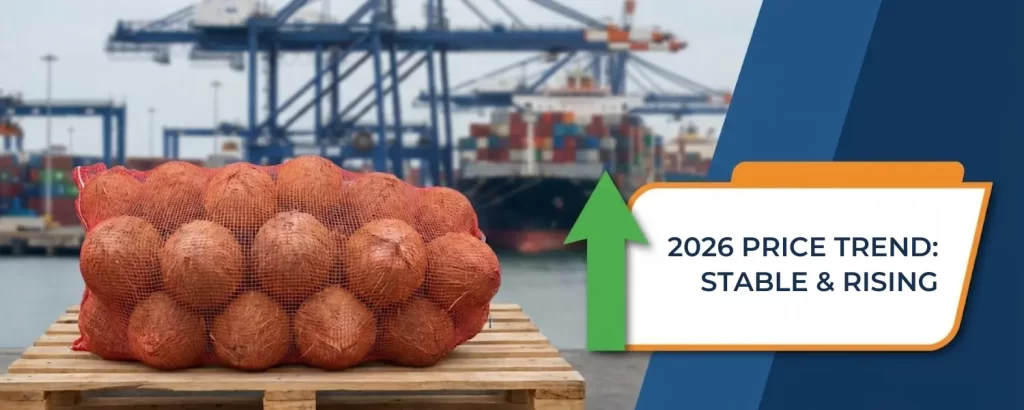
As we enter 2026, the global demand for fresh semi husked coconut continues to outpace supply. For importers in the UAE, UK, and Europe, understanding the current FOB (Free On Board) rates from India is critical for calculating landed costs and protecting margins.   Unlike the fluctuations seen in previous years, 2026 is shaping up to be a year of “Premium Stability”- where higher quality commands a firmer price. Here is the detailed breakdown. 1. Current FOB Price Trends (January 2026) The price of Indian coconuts varies based on the port of loading (Chennai vs. Cochin) and the specific grade (weight per nut). As of early 2026, export rates are hovering in the following ranges: Product Specification Avg. FOB Price (USD) Avg. FOB Price (INR) 13kg PP Bag (25 Nuts) $9.80 – $10.50 / Bag ₹840 – ₹900 / Bag Per Kilogram Rate $0.76 – $0.81 / Kg ₹65 – ₹70 / Kg Per Ton (Metric Ton) $760 – $810 / MT ₹65,000 – ₹70,000 / MT 2. Why Are Prices Rising in 2026? While India remains a cost-effective source compared to Sri Lanka or the Philippines, three key factors are driving a slight uptick in export prices this year: Supply Constraints: Climate anomalies and pest issues in rival producing nations (like Vietnam and the Philippines) have redirected global buyers to India, tightening the available stock. Domestic Consumption: There is a growing internal demand in India for tender coconut water and virgin coconut oil, meaning fewer mature nuts are left for export. Quality Standardization: More Indian exporters are now adopting strict APEDA and FSSAI grading standards, investing in better cleaning and packing facilities, which adds a small premium to the final cost. 3. The “Pollachi” Benchmark: What Are You Paying For? When you see a quote from Exim Internationals, you aren’t just paying for a nut; you are paying for the Pollachi Grade. Weight: 550g – 650g per nut (Heavy, water-rich). Shelf Life: 50 to 75 days (perfect for long sea voyages to Rotterdam or Felixstowe). Packing: We use 13kg or 13.5kg PP Mesh Bags (approx. 25 nuts), ensuring breathability to prevent fungal growth during transit. 4. Cost Calculation for Importers To calculate your final “Landed Cost,” you must add the following to the FOB price: Ocean Freight: Rates for Reefer Containers (13°C) vary by destination. Insurance: Mandatory for perishable goods. Local Clearance: Import duties and port handling at your destination. Lock in Your Price Today With the 2026 harvest season underway, prices are currently stable but are expected to rise as demand peaks before Ramadan and summer. Securing a contract now protects you from future volatility. Exim Internationals offers transparent, daily-updated FOB quotes directly from our Pollachi packhouse. Frequently Asked Questions (FAQs) 1. What is the minimum order quantity (MOQ) for export? For export, the standard MOQ is one 20ft or 40ft Reefer Container. A 20ft container holds approx. 950–1,000 bags (13 MT), while a 40ft holds approx. 2,150–2,200 bags (28 MT). 2. Why do you use “Semi Husked” instead of “Fully Husked”? “Fully Husked” (bald) coconuts spoil faster because the “eyes” are exposed to air and bacteria. Semi Husked leaves a protective fiber tuft over the eyes, extending shelf life to 60+ days, which is essential for sea export. 3. Can I get a fixed price contract for 6 months? Commodity prices change daily. However, we can offer short-term fixed contracts (1-3 months) or “Spot Rates” based on the current market. Contact us for specific contract terms. 4. What are the payment terms for new buyers? Standard B2B export terms are typically 30% to 50% Advance (to cover harvesting and packing) and the Balance against Scanned BL (Bill of Lading). 100% LC (Letter of Credit) is also accepted for large contracts. 5. How do you ensure the weight doesn’t drop during transit? Fresh coconuts naturally lose some water weight. To compensate, we pack 13.5kg gross weight for a 13kg net target, ensuring you receive the full weight you paid for. About us Exim Internationals is a premier export company dedicated to delivering the finest products from India to international markets. Our mission is to establish India as a global export powerhouse, contributing to economic growth and showcasing the richness of Indian goods worldwide. From the pashmina shawls and apples of the North to the spices of the South, the fruits and powders of the West, and the tea and bamboo of the East, we connect every corner of India with the global market. Certification we have: FSSAI, APEDA, IEC, UDYAM, FIEO, Spices Board, Coconut Contact us Samin heritage, Sl building, Shop no. 19, Chandan wadi, Almeda road Thane west, Maharashtra, India-400601. Email Us: support@eximinternationals.comCall Us: +91 9820446601 | +91 9321559185

Fresh Semi Husked Coconut Price 2026: Market Trends & FOB Rates from India Read Post »

best quality cardamom
Export Import Fruits Spices Vegetables

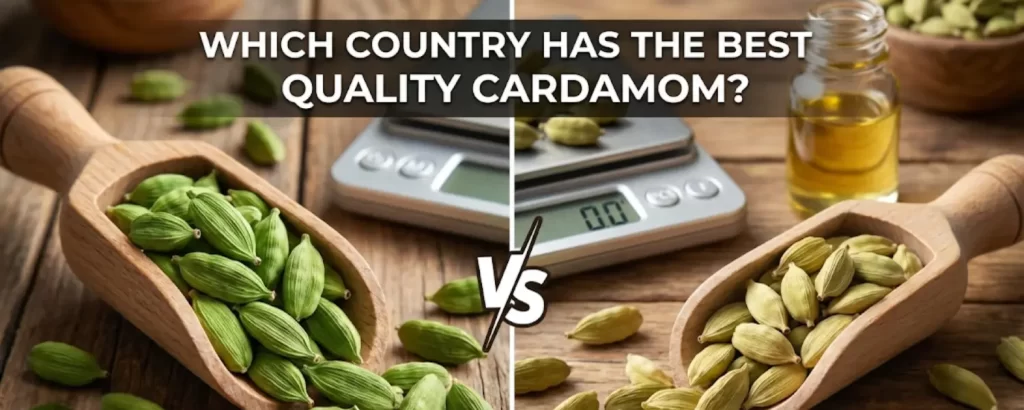
Which Country Has the Best Quality Cardamom? The Battle of the “Queen of Spices”

In the global spice trade, there is often a confusion between “biggest producer” and “best producer.” While Guatemala dominates the market in terms of sheer volume (exporting over 35,000 tonnes annually), India retains the crown for the highest intrinsic quality. For B2B buyers and premium food manufacturers in 2026, understanding the difference between Indian and Guatemalan cardamom is the key to pricing your product correctly. Here is the definitive breakdown. 1. India: The Quality Leader (Alleppey Green) Indian cardamom, particularly grown in the Idukki and Malabar regions of Kerala, is prized for its high oil content and sensory profile. The “Alleppey Green” Grade: This is the premium export grade. It is distinct for its deep, vibrant green color and three-cornered ribbed appearance. Oil Content: Indian varieties typically contain 6.6% to 10.6% volatile oils, which is significantly higher than cardamom from other regions. This high oil content is what gives it a powerful, lingering aroma. Flavor Profile: It is rich in 1,8-cineole and α-terpinyl acetate, giving it a balanced “camphor-like” yet sweet and spicy flavor that is essential for authentic Chai and Nordic baking. 2. Guatemala: The Volume Leader Guatemala is the world’s largest exporter, accounting for over 50% of global supply. Production: Grown in the Alta Verapaz region, Guatemalan cardamom is often larger in pod size but slightly lighter in color and density compared to Indian varieties. Usage: Because it is generally more affordable, it is the standard choice for the mass-market extraction industry and bulk spice blends where subtle flavor nuances are less critical. 2026 Trend: Recent climatic challenges (droughts and pest attacks) in Guatemala have reduced their 2026 yield, driving more buyers back to Indian sources for reliability. 3. The Quality Showdown: India vs. Guatemala Feature Indian Cardamom (Alleppey Green) Guatemalan Cardamom Aroma Intense, long-lasting (High Oil) Floral, fruity, milder Oil Content High (High Cineole levels) Moderate Color Deep, Vibrant Green Pale / Yellowish Green Pod Density Heavy, full of seeds Lighter, sometimes airy Best For Premium Retail, Gourmet Food Essential Oils, Mass Market 4. How to Identify “Best Quality” Cardamom? If you are sourcing best quality cardamom, look for these physical indicators: Color: A uniform “parrot green” indicates proper curing. Pale or brown pods suggest they were over-dried or harvested late. Size (Diameter): In the trade, “Bold” is best. Look for pods with a diameter of 8mm or above (often graded as “Extra Bold”). These pods have the most mature seeds. The “Squeeze” Test: A high-quality pod should feel firm and not crumble. If it breaks easily, it is too dry or old. Weight: Indian cardamom has a higher “Bulk Density” (approx 384 g/l) compared to Guatemalan (approx 338 g/l), meaning you get more flavor per sack. Why Origin Matters If your priority is low cost for a mass-produced item, Guatemala is a strong option. However, if your brand promise is “Best Flavor” or “Premium Aroma,” Indian Alleppey Green Cardamom is the undisputed winner. At Exim Internationals, we source 8mm+ graded cardamom directly from the auctions in Kerala, ensuring you get the “Queen of Spices” in her truest form. Looking for a container of 8mm Alleppey Green Cardamom? Contact Exim Internationals for today’s spot prices. Frequently Asked Questions (FAQs) 1. Why is Indian cardamom more expensive than Guatemalan? Indian cardamom commands a premium due to its higher volatile oil content and superior sensory qualities (aroma and taste). Additionally, domestic demand in India is huge, which keeps local prices firm compared to export-focused Guatemala. 2. What is the highest grade of Green Cardamom? The highest grade is often referred to as “Alleppey Green Extra Bold” (AGEB). These pods are 8mm or larger in diameter and have the highest seed-to-husk ratio. 3. Which country is the largest producer of cardamom in 2026? Guatemala remains the largest producer by volume, despite recent crop shortages. India ranks second but leads in high-value premium exports. 4. Does pod color affect the taste? Yes. A vibrant green pod indicates the volatile oils are intact. Yellow or bleached pods (White Cardamom) have lost much of their original flavor profile and are often used only for aesthetics in light-colored sauces. 5. What is the HS Code for Green Cardamom? The general HS Code for cardamoms (neither crushed nor ground) is 090831. Always check for country-specific suffix codes for accurate import duties. About us Exim Internationals is a premier export company dedicated to delivering the finest products from India to international markets. Our mission is to establish India as a global export powerhouse, contributing to economic growth and showcasing the richness of Indian goods worldwide. From the pashmina shawls and apples of the North to the spices of the South, the fruits and powders of the West, and the tea and bamboo of the East, we connect every corner of India with the global market. Certification we have: FSSAI, APEDA, IEC, UDYAM, FIEO, Spices Board, Coconut Contact us Samin heritage, Sl building, Shop no. 19, Chandan wadi, Almeda road Thane west, Maharashtra, India-400601. Email Us: support@eximinternationals.comCall Us: +91 9820446601 | +91 9321559185

Which Country Has the Best Quality Cardamom? The Battle of the “Queen of Spices” Read Post »

Scroll to Top
exim international logo

Get Our Products Pricing

Fill out the form to download!