For any international importer of fresh produce, the ultimate goal is to maximize the return on every single shipment. When it comes to sourcing fresh coconuts from a major production hub like India, one of the most critical decisions you’ll make is choosing the right product form. The choice between fully husked and semi husked coconuts might seem minor, but it has a direct and significant impact on your freight costs, spoilage rates, and ultimately, your profit margin.
So, which option is truly more profitable? As a leading exporter of premium Indian coconuts from hubs like Pollachi, we’ve run the numbers. This profitability analysis will break down the key factors to help you make the smartest choice for your business.
Understanding the Products: A Quick Comparison
First, let’s clarify the two forms:
Fully Husked Coconuts: The entire thick, fibrous outer husk is removed, leaving only the hard inner shell (endocarp).
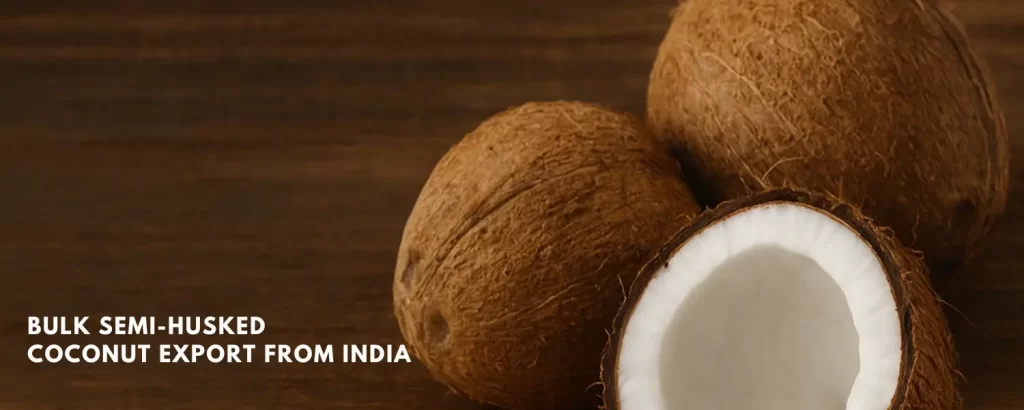
Semi Husked Coconuts: A portion of the husk is skillfully removed, typically in a tuft around the “eyes,” while the rest remains. This process significantly reduces weight but keeps a protective layer.
The Critical Factor: Freight Costs and Container Load
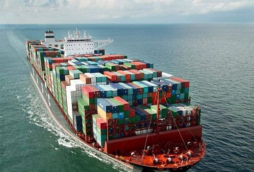
International shipping costs are calculated by volume and weight. This is where the most significant difference in profitability emerges. The coconut husk is surprisingly heavy and bulky, consisting mostly of fiber and moisture.
Weight Reduction: A semi husked coconut can be 20-30% lighter than its fully husked counterpart.
Units Per Container: This weight and slight size reduction means you can load significantly more units into a standard 40ft container.
A typical 40ft container load might fit approximately 25,000 semi husked coconuts.
The same container might only fit around 20,000 fully husked coconuts.
The Profitability Impact: The freight cost for the container is a fixed expense. By shipping 5,000 more units in the same container, the shipping cost per coconut is drastically reduced. This saving goes directly to your bottom line, making your landed cost per unit significantly lower before you’ve even sold a single nut.
Import products for your Needs
The Shelf Life Equation: Spoilage vs. Protection
The second pillar of profitability is minimizing product loss. Every spoiled coconut is a direct loss of revenue.
Fully Husked Coconuts: While the shell is hard, it is fully exposed to the bumps and impacts of a long sea journey. A direct impact can cause hairline cracks, which are entry points for bacteria and mould, leading to spoilage.
Semi Husked Coconuts: The remaining fibrous husk acts as a natural, shock-absorbent cushion. It provides a vital layer of protection for the inner shell, significantly reducing the risk of impact damage and cracking during transit.
The Profitability Impact: A lower spoilage rate means more sellable inventory upon arrival. A 2-3% reduction in spoilage across a full container load translates into hundreds of extra units sold, directly boosting your final profit margin. This protective layer also contributes to a longer effective shelf life at the wholesale and retail levels.
Market Appeal and Handling
While less of a direct cost factor, market perception matters. The semi husked coconut has a distinct, export-ready appearance that many international markets have come to associate with quality. The tuft provides a natural handle, making it easier for retailers and consumers to manage.
Make the Profitable Choice
For the vast majority of international importers, the numbers don’t lie. The strategic decision to source semi husked coconuts leads to a lower landed cost per unit, a higher volume of sellable product, and ultimately, a more profitable business.
Ready to improve the profitability of your coconut import business? Contact Exim Internationals today for a detailed quote on our premium, export-optimized semi husked coconuts from India’s best growing regions.
Frequently Asked Questions (FAQs)
1. What is the main physical difference between a fully husked and a semi husked coconut?
A fully husked coconut has the entire outer fiber layer removed, leaving only the hard shell. A semi husked coconut has a portion of this husk removed, making it lighter while keeping a protective cushion.
2. How many semi husked coconuts can typically fit in a 40ft container?
Approximately 25,000 semi husked coconuts can fit in a 40ft refrigerated (reefer) container, though this can vary slightly based on the size of the nuts.
3. How much weight is saved by choosing semi husked coconuts?
On average, a semi husked coconut is about 20-30% lighter than a fully husked coconut, which leads to significant savings on freight costs when shipping in bulk.
4. Does the remaining husk on a semi husked coconut actually improve shelf life?
Yes, it improves the effective shelf life by acting as a protective cushion during transit, reducing the risk of cracks and spoilage. A nut that arrives intact will naturally have a longer shelf life.
5. Are there any situations where fully husked coconuts might be preferred?
Some specific food processing applications where the shell is immediately cracked upon arrival may not require the extra protection, but for the fresh wholesale and retail markets, semi-husked is almost always superior.
6. What is the “Pollachi” region and why is it significant for coconuts?
Pollachi in Tamil Nadu, India, is one of the largest and most famous coconut-growing regions in the world, renowned for producing high-quality coconuts with sweet water and thick flesh.
7. From a cost perspective, what is the biggest advantage of importing semi husked coconuts?
The biggest advantage is the lower “landed cost per unit.” Because you can fit more nuts in a single container for the same freight price, your total cost for each individual coconut that arrives at your warehouse is significantly lower.
8. How does Exim Internationals ensure the quality of its semi husked coconuts for export?
We source directly from top-tier farms in regions like Pollachi, implement strict quality checks for size, age, and defects, and use expert techniques for the semi-husking process to ensure maximum protection and a clean, export-ready appearance.