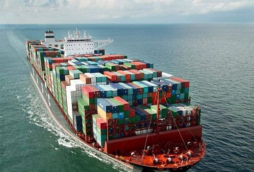

India is the global powerhouse of coconut production, with the export semi-husked coconut sector leading the charge. Unlike fully husked coconuts which dry out quickly, or green coconuts which are heavy and expensive to ship, the semi-husked variety is the “Goldilocks” of the industry—perfectly balanced for durability and weight efficiency.
As we move through 2026, new trade protocols and digital customs clearances have made the process faster, but the quality standards remain rigorous. Here is your definitive guide to successfully navigating the export journey.
Step 1: Legal Framework & Registrations
Before you source your first nut, your business must be legally “Export-Ready.”
IEC (Import Export Code): Your 10-digit passport to international trade, issued by the DGFT.
RCMC (Registration-cum-Membership Certificate): For coconuts, you should register with APEDA (Agricultural and Processed Food Products Export Development Authority) or the Coconut Development Board (CDB).
GST & Bank Setup: A dedicated current account with an AD (Authorized Dealer) code is mandatory for inward foreign remittances.
Step 2: Sourcing the "Export Grade" Nut
Not every coconut is fit for the 30-day sea voyage to Europe or the 5-day trip to Dubai.
The Origin: Most top-tier exporters source from the Pollachi (Tamil Nadu) or Kochi (Kerala) belts.
Weight Specifications: The standard export weight is 500g to 650g per nut.
Maturity: Ensure the nuts are “Matured Brown.” Immature nuts have a soft shell that cracks under pressure, leading to spoilage.
Step 3: The Semi-Husking & Sorting Process
This is where the value is added.
Husking: The outer green husk is removed, leaving a small “tuft” of fiber over the three eyes of the coconut.
Cleaning: The shell is cleaned of excess hair and debris to prevent fungal growth.
Grading: Coconuts are sorted by size and weight to ensure uniformity in the bags.
Import products for your Needs

Step 4: Packing for High-Volume Transit
To export semi-husked coconut successfully, your packaging must breathe.
Bags: Most buyers prefer PP (Polypropylene) Mesh Bags.
Count: The standard is 25 nuts per bag or 13kg to 15kg per bag.
Labeling: Bags must clearly state “Product of India,” the net weight, and the exporter’s details.
Step 5: Managing the Cold Chain & Shipping
For a 2026 shipment, temperature control is non-negotiable.
The Container: Use a 40ft High Cube Reefer Container.
Temperature Setting: Maintain between 13°C and 15°C with a ventilation setting of 10% to 15%. This prevents the “sweating” that causes mold.
Capacity: A 40ft container can typically hold 2,000 to 2,200 bags (approx. 27-28 Metric Tons).
Step 6: The "Final Four" Documents
Your shipment won’t clear customs without these:
Commercial Invoice & Packing List.
Phytosanitary Certificate: Proving the nuts are pest-free.
Certificate of Origin: Usually issued by the Chamber of Commerce.
Bill of Lading (BL): Your title document for the goods.
Partnering for Success
The export semi-husked coconut business is built on trust and consistency. A single bad shipment can ruin a multi-year contract. At Exim Internationals, we combine traditional sourcing from Pollachi with modern cold-chain tracking to ensure every nut arrives as fresh as the day it was picked.
Ready to start your first container shipment? Contact Exim Internationals today for a detailed feasibility report and 2026 pricing.
Frequently Asked Questions (FAQs)
1. What is the HS Code for semi-husked coconut?
The primary HS Code is 08011910. Always verify the specific sub-classification based on the latest DGFT 2026 notifications.
2. How long is the shelf life of an Indian semi-husked coconut?
When transported in a reefer container and stored in a cool, dry place, these coconuts have a shelf life of 60 to 70 days.
3. Why do we leave a “tuft” of husk on the eyes?
The “tuft” protects the three germination pores (eyes). If these are exposed, they can easily be punctured or infected by mold, causing the coconut water to leak and the nut to rot.
4. What are the major ports for coconut export in India?
The most efficient ports for this trade are Tuticorin, Cochin, and Chennai, as they have regular feeder lines to major global hubs like Jebel Ali and Rotterdam.
5. What is the most common payment term in this industry?
Most exporters work on a 30% Advance and 70% against Scanned Shipping Documents, or an Irrevocable Letter of Credit (LC) for large, long-term contracts.
About us
Exim Internationals is a premier export company dedicated to delivering the finest products from India to international markets. Our mission is to establish India as a global export powerhouse, contributing to economic growth and showcasing the richness of Indian goods worldwide.
From the pashmina shawls and apples of the North to the spices of the South, the fruits and powders of the West, and the tea and bamboo of the East, we connect every corner of India with the global market.
Certification we have: FSSAI, APEDA, IEC, UDYAM, FIEO, Spices Board, Coconut
Contact us
Samin heritage, Sl building, Shop no. 19, Chandan wadi, Almeda road Thane west, Maharashtra, India-400601.
Email Us:support@eximinternationals.com
Call Us: +91 9820446601 | +91 9321559185