
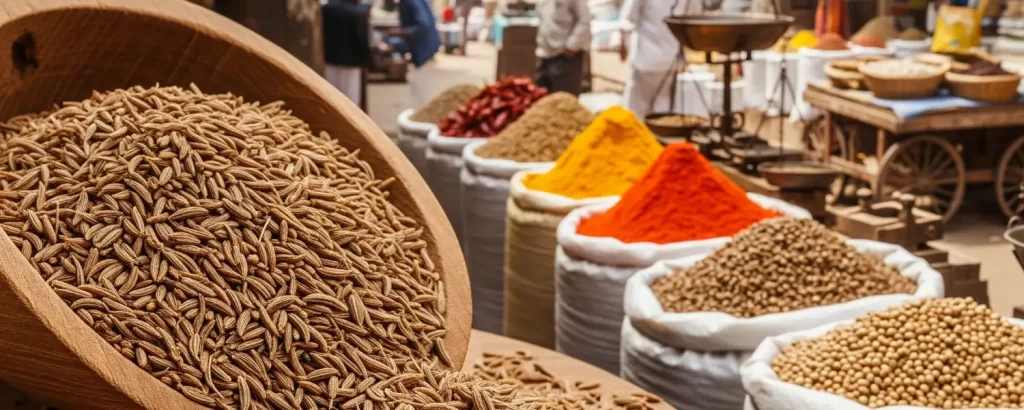
From the smoky depths of a Mexican mole to the aromatic heart of a Middle Eastern tagine and the earthy foundation of an Indian curry, cumin is an undisputed global culinary staple. For food manufacturers, spice blenders, and international importers, securing a reliable supply of high-quality cumin is not just a necessity—it’s a competitive advantage. And when it comes to quality and volume, the global market looks to one place: India.
Sourcing from the world’s largest producer and exporter of cumin seeds, known locally as jeera, can be a highly rewarding venture. But navigating the market requires insider knowledge. This ultimate guide provides a clear roadmap for any business looking to import Indian Cumin Seeds successfully.
Why Source Cumin from India? The Gujarat & Unjha Advantage
India’s dominance in the cumin trade is rooted in its ideal agro-climatic conditions. The state of Gujarat, in particular, is the heartland of cumin production, renowned for producing seeds with a superior aromatic profile and high volatile oil content.
Within Gujarat lies the town of Unjha, the single most important location in the global cumin trade. The Unjha market is the world’s largest for cumin, acting as the primary hub for price discovery and supply aggregation. Any serious Indian cumin seeds exporter has deep connections and a strong presence in this market, which is essential for sourcing the best quality at the right price.
Decoding the Quality: Singapore Grade vs. Europe Grade
When you decide to buy Indian cumin seeds bulk, you will encounter two primary quality classifications. Understanding them is crucial for getting the right product for your market.
Singapore Grade Cumin: This is the most widely traded standard. It typically specifies 99% purity, meaning the consignment is 99% whole cumin seeds, with a 1% allowance for admixture (foreign matter). This grade is suitable for a wide range of applications and markets.
Europe Grade Cumin: As the name suggests, this grade is destined for markets with more stringent food safety and quality regulations. It requires a higher purity level, typically 99.5% or greater. The seeds also undergo more rigorous cleaning and sorting processes.
Beyond these grades, a detailed specification sheet will also include parameters like moisture content (ideally below 10%), and volatile oil content, which dictates the intensity of the flavour.
Import products for your Needs
The Import Process: A Step-by-Step Guide
Importing from India is a streamlined process when you work with the right partner. Here’s a typical walkthrough:
Step 1: Partner with a Verified Exporter Your most critical step is choosing a reliable exporter. A good partner will not only be your supplier but your guide to the Unjha market, providing crucial intelligence on pricing and quality.
Step 2: Specify Your Grade and Quantity Clearly define your needs. Do you require Singapore or Europe grade? What quantity (in metric tons) do you need? What are your packaging requirements (e.g., 25/50 kg PP bags)?
Step 3: Navigate Commercials Your exporter will provide a Proforma Invoice with all terms. Payment is often handled via an advance payment and the balance against documents, or a Letter of Credit (LC) for larger volumes.
Step 4: Essential Documentation A professional exporter will manage all necessary paperwork, which is vital for smooth customs clearance. This includes:
Commercial Invoice & Packing List
Bill of Lading (B/L)
Phytosanitary Certificate
Certificate of Origin (COO)
Certificate of Analysis (COA) detailing the quality specifications
Step 5: Logistics from Unjha to Your Port Once the deal is confirmed, your exporter manages the logistics: sourcing from the Unjha market, cleaning and grading the seeds at their facility, stuffing them into containers, and transporting them to a major port like Mundra or Pipavav in Gujarat for shipment.
Understanding the Cumin Seasonality
Cumin is a Rabi crop, a winter-sown crop in India. Understanding its seasonal cycle is key for strategic sourcing:
Sowing Season: October – November
Harvesting Season: February – March
Peak Market Arrivals: The new season’s crop floods the Unjha market from late March to May.
As we are currently in August, this is the perfect time for buyers to analyze the market and begin planning their procurement strategy for the 2026 harvest.
Import products for your Needs
Your Strategic Partner in the Cumin Trade
Importing Indian Cumin Seeds is a straightforward process when you are armed with the right knowledge. By understanding the importance of Gujarat and the Unjha market, knowing the difference between quality grades, and partnering with an expert exporter, you can build a resilient and profitable supply chain for this essential global spice.
Ready to plan your sourcing strategy for the upcoming cumin season? Contact Exim Internationals today for expert insights and a direct line to the heart of the Indian cumin market.
Frequently Asked Questions (FAQs)
1. What is the Unjha market and why is it important for cumin?
The Unjha market in Gujarat, India, is the world’s largest trading hub for cumin seeds. It sets the benchmark for global cumin prices and is the primary center for sourcing and supply in the industry.
2. What is the main difference between Singapore Grade and Europe Grade cumin?
The primary difference is purity. Singapore Grade typically requires 99% purity, while Europe Grade demands a higher standard of 99.5% purity or more, making it suitable for markets with stricter regulations.
3. When is the best time of year to contract for Indian cumin seeds?
The best time to contract is often just before or during the peak arrival season (March-May) to secure the new crop. However, planning and making inquiries in the months prior (like now, in Q3) is a smart strategy.
4. What is “jeera” and is it the same as cumin?
Yes, “Jeera” is the common Hindi name for cumin seeds. The terms are used interchangeably in the Indian market.
5. What key documents are needed to import cumin from India?
The essential documents include the Bill of Lading, Commercial Invoice, Packing List, Certificate of Origin, and a Phytosanitary Certificate to ensure the product is free from pests and diseases.
6. Which Indian state is the biggest producer of cumin seeds?
Gujarat is the largest cumin-producing state in India, followed by Rajasthan. Gujarat is considered the heartland of the Indian cumin industry.
7. What is volatile oil content and why does it matter?
Volatile oil content is what gives cumin its characteristic warm, aromatic flavour. A higher percentage indicates a more potent and higher-quality seed, which is crucial for flavour-driven applications.
8. As an international buyer, can I buy directly from the Unjha market?
It is not feasible for an international buyer to purchase directly from the auction-based, highly localized Unjha market. You require a licensed Indian cumin seeds exporter to act as your agent for sourcing, quality control, payment, and logistics.