
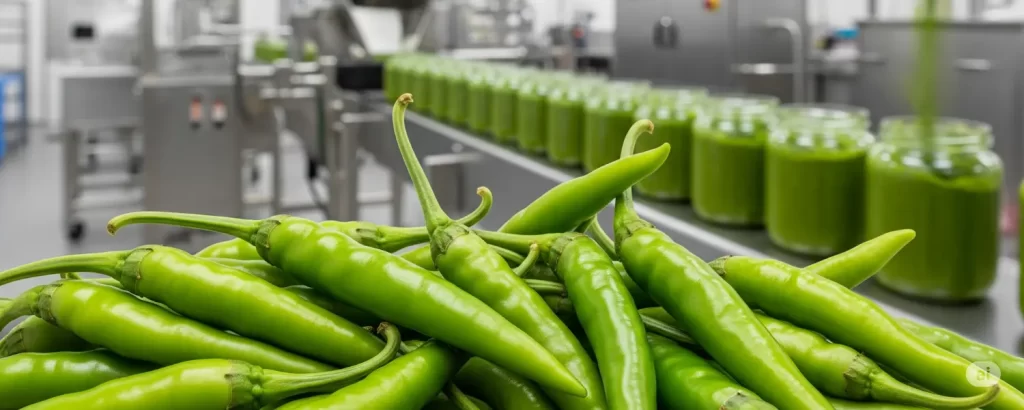
In today’s global food market, consumer demand for authentic, vibrant, and spicy flavours has never been higher. From fiery hot sauces and tangy pickles to complex curry pastes and ready-to-eat meals, the fresh, sharp heat of the green chilli is a core ingredient. For food processors tasked with creating these products, the choice of raw material is a critical decision that impacts flavour, consistency, and the bottom line.
While green chillies are grown worldwide, discerning global food processors consistently turn to India as their preferred sourcing destination. As a leading fresh green chilli exporter from India, based in Pune, we understand the specific factors that drive this choice. It’s a decision based not just on tradition, but on a powerful combination of quality, variety, and supply chain reliability.
Here are the key reasons why India is the go-to source for this essential ingredient.
Reason 1: The Perfect Balance of Heat and Flavour
Food processing is a science of precision. A product’s flavour profile must be replicable in every single batch. Indian green chillies offer a consistent and desirable balance of heat and flavour that is ideal for large-scale production.
Varieties like the renowned G4 Green Chilli are prized for their predictable pungency and bright, vegetal flavour notes. This allows R&D teams to formulate recipes with a consistent heat level, measured in Scoville Heat Units (SHU), ensuring that the final product always meets brand standards. The heat is sharp and clean, not flat or overpowering, making it a versatile ingredient.
Reason 2: A Diverse Portfolio for Every Application
India’s diverse agro-climatic zones allow for the cultivation of numerous green chilli varieties, each with unique characteristics. This provides food processors with a portfolio of options to perfectly match their product needs.
The G4 (or Guntur Sannam): A versatile, medium-sized chilli with a consistent heat profile, perfect for sauces, pastes, and general use.
The Jwala Chilli: A long, slender, and intensely pungent chilli, ideal for pickles and hot sauces where a significant fiery kick is desired.
A knowledgeable exporter can guide processors to the specific variety that will best complement their product, whether it requires a subtle warmth or an intense, fiery experience.
Reason 3: Year-Round Availability and Unmatched Scalability
Production lines cannot afford to stop. One of the most significant advantages of sourcing from India is the assurance of a year-round supply. Due to staggered cultivation across different states, fresh green chillies are harvested throughout the year.
This consistent availability allows food processors to procure bulk green chilli without the fear of seasonal shortages, ensuring their manufacturing schedules remain uninterrupted. India’s sheer scale of production means it can reliably meet the high-volume demands of even the largest global food companies.
Import products for your Needs

Reason 4: Expertise in the Fresh Produce Cold Chain
Exporting a perishable product like fresh green chilli across continents is a logistical challenge. India’s established export industry has developed a robust cold chain to meet this challenge and deliver a product with maximum freshness.
The process involves:
Rapid Post-Harvest Cooling: Chillies are quickly cooled after harvesting to remove field heat and slow down the ripening process.
Optimized Packaging: They are packed in ventilated corrugated boxes that protect the produce while allowing for air circulation.
Refrigerated Transport: From the packing house to the airport, the chillies are kept in a temperature-controlled environment.
Air Freight: For fresh delivery, air freight is the primary mode of transport, ensuring the product reaches its destination within days of harvest, preserving its colour, crunch, and flavour.
This expertise in cold chain logistics gives food processors the confidence that they will receive a high-quality, fresh raw material, minimizing spoilage and waste.
Your Strategic Partner for Authentic Flavour
The decision by global food processors to source Indian green chilli is a strategic one, based on a reliable supply of high-quality, flavourful, and diverse varieties. The combination of ideal agricultural products and a mature, sophisticated export supply chain makes India the definitive source for this vital ingredient.
Looking to source consistent, high-qualityIndian green chillies for your food processing needs? Contact Exim Internationals today to learn more about our varieties, specifications, and year-round supply capabilities.
Frequently Asked Questions (FAQs)
1. What is the G4 Green Chilli and why is it popular with food processors? The G4 Green Chilli is a commercial variety widely grown in India, known for its ideal medium size, smooth green skin, consistent heat level, and good shelf life. These predictable characteristics make it a reliable and versatile choice for sauces, pastes, and other processed foods.
2. How is the heat level (SHU) of green chillies measured and guaranteed for bulk orders? The heat level is measured in Scoville Heat Units (SHU) using a laboratory method called High-Performance Liquid Chromatography (HPLC). For bulk orders, exporters can provide a Certificate of Analysis (COA) for a batch, specifying the SHU range to ensure consistency.
3. What is a “cold chain” and why is it essential for exporting fresh green chillies? A cold chain is a temperature-controlled supply chain. It’s essential for fresh green chillies to slow down ripening, prevent spoilage, and maintain freshness, flavour, and texture during the journey from the Indian farm to the international processor.
4. Can I get a year-round, consistent supply of green chillies from India? Yes. Due to India’s diverse climates and staggered growing seasons across different states, fresh green chillies are available for export throughout the year, ensuring a consistent supply for production lines.
5. What are the best forms of green chilli for food processing (fresh, paste, frozen)? While we specialize in exporting fresh green chillies, the best form depends on the final product. Fresh chillies are ideal for products where a vibrant, sharp flavour is key. Pastes offer convenience, while frozen (IQF) chillies preserve freshness for longer-term storage.
6. What kind of packaging is used to protect fresh green chillies during air freight? Green chillies are typically packed in 3-4 kg corrugated cardboard boxes that are properly ventilated to allow air circulation and prevent moisture buildup. This ensures the product remains fresh and firm during transit.
7. What is a Phytosanitary Certificate and is it provided with shipments? A Phytosanitary Certificate is an official document issued by the plant protection authority of the exporting country. It certifies that the fresh produce is free from pests and diseases and complies with the importing country’s regulations. It is a mandatory document for all fresh produce exports.
8. How does the flavour of Indian green chilli differ from varieties from other countries? Indian green chillies, like the G4 and Jwala, are often prized for their sharp, immediate heat and a bright, slightly fruity or vegetal flavour profile, which is distinct from the flavour profiles of, for example, Thai or Latin American varieties.