For international importers of fresh produce, success hinges on one word: quality. When sourcing coconuts, “quality” means more than just a good-tasting fruit; it means a product that can withstand the rigors of a long sea journey and arrive in perfect, sellable condition. This is why the semi-husked coconut has become the undisputed gold standard for export.
While a fully husked coconut might seem “cleaner,” the semi-husked format offers a powerful combination of logistical and protective advantages that directly impact your bottom line. As a specialist supplier of quality coconuts from India, we want to explain why this format is the most profitable and reliable choice for your business.
Advantage 1: Drastically Reduced Freight Costs
International shipping costs are a major factor in your final landed cost. The coconut husk, while natural, is mostly heavy, moist fiber. Removing a significant portion of it before shipping provides a massive financial advantage.
Significant Weight Reduction: A semi-husked coconut is 25-30% lighter than its fully-husked counterpart.
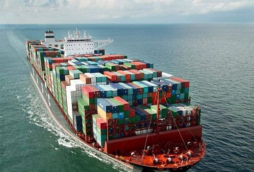
More Units Per Container: This weight and volume reduction means you can load substantially more coconuts into a standard 40ft container. A typical container might fit ~25,000 semi-husked coconuts, compared to only ~20,000 fully-husked ones.
The bottom line: By shipping thousands more units for the same fixed container price, your freight cost per coconut is significantly lower. This saving goes directly to your profit margin.
Advantage 2: Superior Protection and Longer Shelf Life
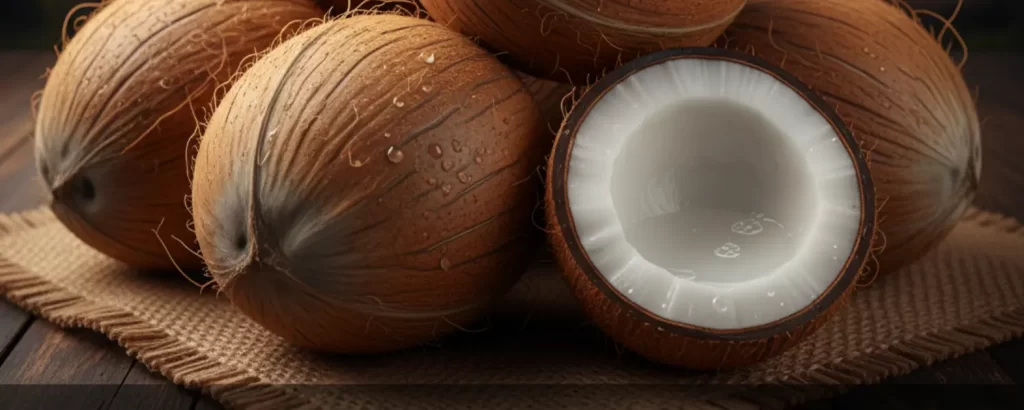
The primary job of an export product is to arrive safely. The remaining husk on a semi-husked coconut acts as a natural, built-in protective cushion.
Shock Absorption: During the bumps and shifts of a sea voyage, this fibrous layer protects the hard inner shell from direct impacts, drastically reducing the risk of hairline cracks.
Reduced Spoilage: Cracks are the main entry point for bacteria and mold. By preventing them, the semi-husked format leads to a lower spoilage rate, meaning more of your inventory is sellable upon arrival.
Longer Effective Shelf Life: A coconut that arrives undamaged will naturally have a longer shelf life in your warehouse and on the retail shelf. This protection is a core feature of high-quality coconuts destined for export.
Advantage 3: A Sign of Professional Sourcing
The semi-husking process itself is a mark of a professional export operation. It’s a value-added step that shows a supplier understands the needs of an international buyer. It demonstrates a commitment to providing a product that is not just grown well, but is also prepared well for the global market.
When you source quality coconuts from prime growing regions like Pollachi, India, the semi-husked format is the standard for a reason. It is the culmination of best practices in both agriculture and logistics.
Import products for your Needs

The Smart Importer's Choice
Choosing semi-husked is not just a preference; it’s a strategic business decision. It is the format designed from the ground up to maximize your profitability by lowering costs and ensuring a higher-quality arrival. It is, simply, the defining standard for export quality coconuts.
Ready to experience the semi-husked advantage? Contact Exim Internationals today for a detailed quote on our premium, export-optimized coconuts.
Frequently Asked Questions (FAQs)
1. What is the main benefit of choosing semi-husked over fully-husked coconuts for export?
The main benefit is profitability. You can ship more units per container, which lowers your per-unit freight cost, and the product is better protected, which reduces spoilage and increases your sellable inventory.
2. How many semi-husked coconuts can fit in a 40-foot container?
A standard 40-foot reefer container can typically hold approximately 25,000 semi-husked coconuts, but this can vary slightly based on the size and weight of the nuts.
3. Does the remaining husk really protect the coconut that much?
Yes, absolutely. The fibrous husk is a natural shock absorber that provides crucial protection to the hard inner shell during loading, transit, and unloading, significantly reducing the risk of cracking.
4. Where in India are the best quality coconuts for export sourced from?
The Pollachi region in Tamil Nadu is globally renowned as a hub for producing high-quality coconuts with sweet water and thick flesh, making it a prime sourcing location for exporters.
5. What is the typical shelf life of a semi-husked coconut after it arrives?
When sourced fresh and transported correctly in a refrigerated container, semi-husked coconuts have an excellent shelf life. They can remain in good condition for over 60 days when stored in a cool, dry place.
6. How do I know if the coconuts I receive are high quality?
High-quality coconuts should feel heavy for their size (indicating plenty of water), have three intact and dry “eyes,” and be free of any cracks, mold, or wet spots on the shell.
7. What is a Phytosanitary Certificate?
It is a mandatory document for customs clearance issued by the Indian agricultural authorities. It certifies that the coconuts have been inspected and are free from pests and diseases, complying with your country’s import regulations.
8. How can I get a quote for a container of quality coconuts?
Simply contact us with your company details, your required quantity (e.g., 1 x 40′ container), and your destination port. Our team will provide a detailed, no-obligation quote promptly.