
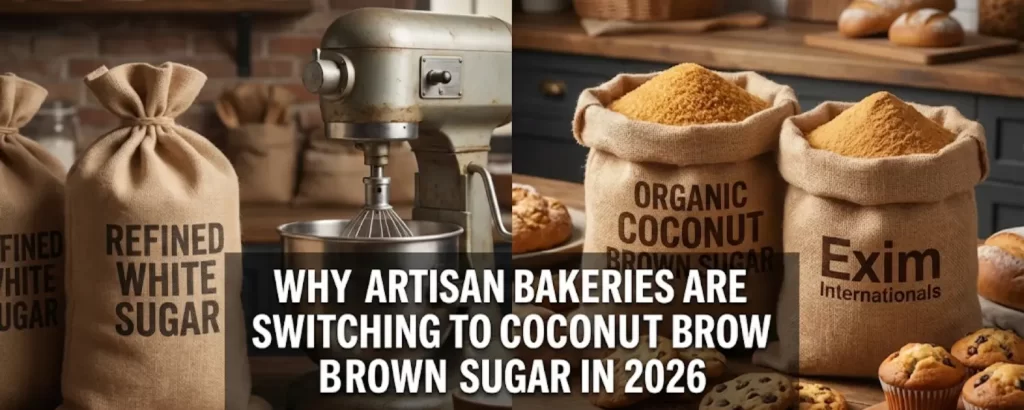
In the world of artisan baking, 2026 is the year of the “Clean Label.”
Customers no longer just want a cookie that tastes good; they want to know exactly what is in it. They are scanning ingredient lists for “high fructose corn syrup” and refined white sugar—and they are putting those products back on the shelf.
This shift has driven a massive surge in demand for Coconut Brown Sugar. Once a niche health food store item, it is now the secret weapon for top pastry chefs and sourdough bakeries across Europe and the USA.
But is it just a trend? Or does it actually perform better in the oven? Here is why your bakery should consider switching to bulk coconut sugar this year.
1. The Flavor Profile: It’s Not Coconut, It’s Caramel
One of the biggest misconceptions is that coconut sugar tastes like coconut. It does not.
The Taste: It has a deep, earthy sweetness with distinct notes of butterscotch, toffee, and caramel.
The Bakery Advantage: Unlike refined white sugar, which provides “flat” sweetness, coconut brown sugar adds complexity. It pairs perfectly with chocolate, coffee, and warm spices (cinnamon, nutmeg), making it the best coconut sugar choice for brownies, carrot cakes, and gingerbread.
2. Superior Moisture Retention
For an artisan bakery, shelf life is a constant battle. You want your muffins to stay moist without using artificial preservatives.
Hygroscopic Nature: Like regular brown sugar, organic coconut sugar is naturally hygroscopic (it attracts and holds moisture).
The Result: Cookies baked with coconut sugar tend to be chewier and stay soft for 24-48 hours longer than those made with white sugar.
3. The "Low-GI" Marketing Edge
In 2026, health-conscious indulgence is a massive market segment.
Glycemic Index (GI): Regular sugar has a GI of ~65. Coconut sugar has a lower GI of ~35-54.
The Claim: By using organic coconut sugar, bakeries can market their treats as “Diabetic-Friendly” or “No Refined Sugar.” This allows you to charge a premium price while offering a product that doesn’t spike blood sugar as aggressively as traditional desserts.

4. Texture Versatility: Granular vs. Powdered
Switching sugars used to be a headache for production managers due to dissolving issues. That has changed. At Exim Internationals, we supply two specific grades to solve this:
Granular: Excellent for toppings on muffins or crumbles where you want a bit of crunch.
Powdered Coconut Sugar: This fine mesh grade dissolves instantly. It is perfect for meringues, frostings, and delicate sponge cakes where you need a smooth texture without the grit.
5. Sustainability as a Brand Value
Modern consumers care about the planet.
Eco-Friendly: The Food and Agriculture Organization (FAO) named coconut sugar the “most sustainable sweetener in the world.” Coconut trees produce sap for 20+ years with minimal water, unlike cane sugar which is a water-intensive crop.
Ethical Sourcing: displaying the “Sustainably Sourced” badge on your packaging builds trust.
Future-Proof Your Menu
The switch to coconut brown sugar is not just about health; it is about offering a premium, complex flavor that refined sugar simply cannot match.
Whether you need bulk coconut sugar for a factory run or a palette for a chain of cafes, Exim Internationals ensures you get consistent, unadulterated quality from the heart of India’s coconut belt.
Ready to test the difference? Request a Free Sample of Our Bakery-Grade Coconut Sugar
Frequently Asked Questions (FAQs)
1. Can I substitute coconut brown sugar 1:1 for regular sugar?
Yes, in most recipes (cookies, cakes, muffins), it is a direct 1:1 substitute. However, because it is slightly less sweet than white cane sugar, some bakers prefer to add 10% more if they want a very sweet result.
2. Does coconut sugar melt like regular sugar?
Yes, it melts and caramelizes beautifully. It has a slightly lower burning point than refined sugar, so we recommend lowering your oven temperature by 5-10°C when baking delicate items like meringues.
3. What is the difference between “Coconut Sugar” and “Coconut Brown Sugar”?
They are usually the same product. It is often called “Coconut Brown Sugar” because of its rich brown color and similarity to traditional brown cane sugar. Always check the ingredient label to ensure it says “100% Coconut Flower Sap.”
4. Why is powdered coconut sugar better for frosting?
Regular granular coconut sugar can be gritty in cold mixtures like buttercream or whipped cream because it doesn’t dissolve easily without heat. Powdered coconut sugar is ground into a fine dust, ensuring your frosting is silky smooth.
5. How do I store bulk coconut sugar in my bakery?
Coconut sugar is highly sensitive to moisture (it will turn into a hard rock if left open). Always store your bulk coconut sugar bags in a cool, dry place, and keep them tightly sealed or transferred to airtight bins immediately after opening.
About us
Exim Internationals is a premier export company dedicated to delivering the finest products from India to international markets. Our mission is to establish India as a global export powerhouse, contributing to economic growth and showcasing the richness of Indian goods worldwide.
From the pashmina shawls and apples of the North to the spices of the South, the fruits and powders of the West, and the tea and bamboo of the East, we connect every corner of India with the global market.
Certification we have: FSSAI, APEDA, IEC, UDYAM, FIEO, Spices Board, Coconut
Contact us
Samin heritage, Sl building, Shop no. 19, Chandan wadi, Almeda road Thane west, Maharashtra, India-400601.
Email Us:support@eximinternationals.com
Call Us: +91 9820446601 | +91 9321559185