Fruits

best quality cardamom
Export Import Fruits Spices Vegetables

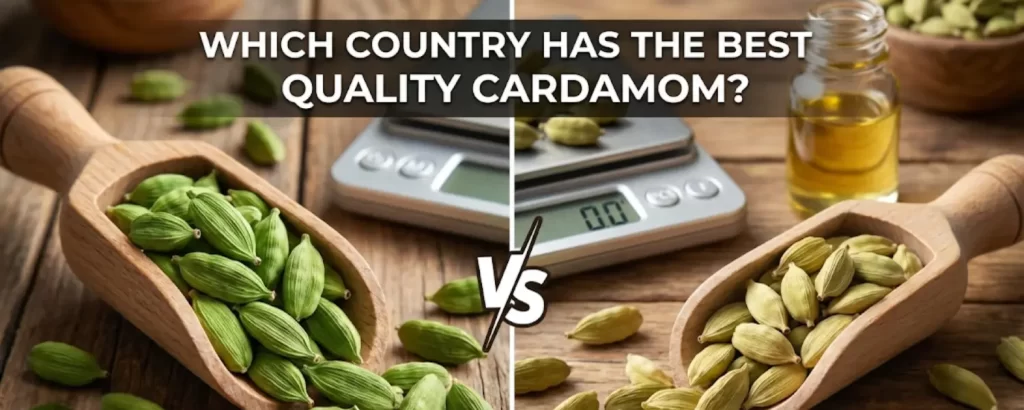
Which Country Has the Best Quality Cardamom? The Battle of the “Queen of Spices”

In the global spice trade, there is often a confusion between “biggest producer” and “best producer.” While Guatemala dominates the market in terms of sheer volume (exporting over 35,000 tonnes annually), India retains the crown for the highest intrinsic quality. For B2B buyers and premium food manufacturers in 2026, understanding the difference between Indian and Guatemalan cardamom is the key to pricing your product correctly. Here is the definitive breakdown. 1. India: The Quality Leader (Alleppey Green) Indian cardamom, particularly grown in the Idukki and Malabar regions of Kerala, is prized for its high oil content and sensory profile. The “Alleppey Green” Grade: This is the premium export grade. It is distinct for its deep, vibrant green color and three-cornered ribbed appearance. Oil Content: Indian varieties typically contain 6.6% to 10.6% volatile oils, which is significantly higher than cardamom from other regions. This high oil content is what gives it a powerful, lingering aroma. Flavor Profile: It is rich in 1,8-cineole and α-terpinyl acetate, giving it a balanced “camphor-like” yet sweet and spicy flavor that is essential for authentic Chai and Nordic baking. 2. Guatemala: The Volume Leader Guatemala is the world’s largest exporter, accounting for over 50% of global supply. Production: Grown in the Alta Verapaz region, Guatemalan cardamom is often larger in pod size but slightly lighter in color and density compared to Indian varieties. Usage: Because it is generally more affordable, it is the standard choice for the mass-market extraction industry and bulk spice blends where subtle flavor nuances are less critical. 2026 Trend: Recent climatic challenges (droughts and pest attacks) in Guatemala have reduced their 2026 yield, driving more buyers back to Indian sources for reliability. 3. The Quality Showdown: India vs. Guatemala Feature Indian Cardamom (Alleppey Green) Guatemalan Cardamom Aroma Intense, long-lasting (High Oil) Floral, fruity, milder Oil Content High (High Cineole levels) Moderate Color Deep, Vibrant Green Pale / Yellowish Green Pod Density Heavy, full of seeds Lighter, sometimes airy Best For Premium Retail, Gourmet Food Essential Oils, Mass Market 4. How to Identify “Best Quality” Cardamom? If you are sourcing best quality cardamom, look for these physical indicators: Color: A uniform “parrot green” indicates proper curing. Pale or brown pods suggest they were over-dried or harvested late. Size (Diameter): In the trade, “Bold” is best. Look for pods with a diameter of 8mm or above (often graded as “Extra Bold”). These pods have the most mature seeds. The “Squeeze” Test: A high-quality pod should feel firm and not crumble. If it breaks easily, it is too dry or old. Weight: Indian cardamom has a higher “Bulk Density” (approx 384 g/l) compared to Guatemalan (approx 338 g/l), meaning you get more flavor per sack. Why Origin Matters If your priority is low cost for a mass-produced item, Guatemala is a strong option. However, if your brand promise is “Best Flavor” or “Premium Aroma,” Indian Alleppey Green Cardamom is the undisputed winner. At Exim Internationals, we source 8mm+ graded cardamom directly from the auctions in Kerala, ensuring you get the “Queen of Spices” in her truest form. Looking for a container of 8mm Alleppey Green Cardamom? Contact Exim Internationals for today’s spot prices. Frequently Asked Questions (FAQs) 1. Why is Indian cardamom more expensive than Guatemalan? Indian cardamom commands a premium due to its higher volatile oil content and superior sensory qualities (aroma and taste). Additionally, domestic demand in India is huge, which keeps local prices firm compared to export-focused Guatemala. 2. What is the highest grade of Green Cardamom? The highest grade is often referred to as “Alleppey Green Extra Bold” (AGEB). These pods are 8mm or larger in diameter and have the highest seed-to-husk ratio. 3. Which country is the largest producer of cardamom in 2026? Guatemala remains the largest producer by volume, despite recent crop shortages. India ranks second but leads in high-value premium exports. 4. Does pod color affect the taste? Yes. A vibrant green pod indicates the volatile oils are intact. Yellow or bleached pods (White Cardamom) have lost much of their original flavor profile and are often used only for aesthetics in light-colored sauces. 5. What is the HS Code for Green Cardamom? The general HS Code for cardamoms (neither crushed nor ground) is 090831. Always check for country-specific suffix codes for accurate import duties. About us Exim Internationals is a premier export company dedicated to delivering the finest products from India to international markets. Our mission is to establish India as a global export powerhouse, contributing to economic growth and showcasing the richness of Indian goods worldwide. From the pashmina shawls and apples of the North to the spices of the South, the fruits and powders of the West, and the tea and bamboo of the East, we connect every corner of India with the global market. Certification we have: FSSAI, APEDA, IEC, UDYAM, FIEO, Spices Board, Coconut Contact us Samin heritage, Sl building, Shop no. 19, Chandan wadi, Almeda road Thane west, Maharashtra, India-400601. Email Us: support@eximinternationals.comCall Us: +91 9820446601 | +91 9321559185

Which Country Has the Best Quality Cardamom? The Battle of the “Queen of Spices” Read Post »

Fresh Semi Husked Coconut
Export Import Fruits Spices Vegetables

Why Global Buyers Prefer Indian Fresh Semi Husked Coconut Over Others

The global market for coconuts is vast, with major suppliers like Indonesia, Vietnam, and the Philippines vying for market share. Yet, when it comes to the Fresh Semi Husked Coconut, India-and specifically the Pollachi region-has emerged as the undisputed leader for discerning buyers. In 2026, the preference isn’t accidental. It is the result of specific agricultural advantages that make the Indian coconut superior in size, flavor, and, most importantly, shelf life. At Exim Internationals, we have seen firsthand why our clients in the UK and UAE switch to Indian origin and never look back. 1. The “Pollachi” Advantage: High Oil & Thick Meat The heart of India’s coconut export industry lies in Pollachi, Tamil Nadu. The unique red soil and consistent tropical climate here produce a fresh semi husked coconut that is denser and richer than its counterparts. Thick Kernel: Indian coconuts typically boast a meat thickness of 15mm to 20mm, significantly higher than the 10mm average found in some Southeast Asian varieties. High Oil Content: For buyers in the oil extraction or desiccated coconut industry, Indian coconuts offer a higher yield, making them more cost-effective per ton. Sweet Water: The natural sweetness (Brix value) of the water makes these coconuts dual-purpose—perfect for fresh consumption and processing. 2. Superior Shelf Life (60+ Days) For an importer, spoilage is the enemy. The Indian fresh semi husked coconut is harvested at the precise “Mature Brown” stage, ensuring the shell is hard and the meat is fully developed. The Semi-Husking Technique: Unlike fully husked nuts which are prone to cracking, or whole nuts which are bulky, the Indian semi-husked method leaves a protective “tuft” of fiber over the sensitive “eyes” of the coconut. Result: This natural barrier prevents fungal infections and oxidation, allowing the coconuts to stay fresh for 60 to 75 days when stored at the recommended 13°C during transit. 3. Size Consistency and Grading International retail chains demand uniformity. You cannot sell a 300g nut alongside a 600g nut on the same shelf. Strict Grading: At Exim Internationals, we adhere to strict export grading. A standard export-quality Indian coconut weighs between 500g and 650g, with a uniform circumference of 12–13 inches. Visual Appeal: The bright, clean husk color and uniform round shape make them visually appealing in supermarkets, driving higher consumer sales. 4. Year-Round Availability While many competitor nations struggle with seasonal dips in production due to monsoons or typhoons, India’s diverse agro-climatic zones (spanning Tamil Nadu, Kerala, and Karnataka) ensure a steady supply 365 days a year. Reliability: This consistency allows global buyers to maintain stable contracts without the volatility of “off-season” price spikes. 5. Sustainable & Ethical Sourcing In 2026, supply chain transparency is non-negotiable. The Indian Coconut Development Board (CDB) has implemented rigorous standards for sustainable farming. Chemical-Free: Most export-grade coconuts from the Pollachi belt are grown using traditional farming methods with minimal synthetic pesticides, aligning with the “Clean Label” requirements of EU markets. Specifications for Importers (2026 Standard) Feature Export Specification Product Fresh Semi Husked Coconut Origin Pollachi / Kerala, India Weight 500gms – 650gms (Regular Grade) Nut Size 12 – 13 inches Shelf Life 60 – 75 Days (Reefer Container) Packing 25 Nuts per PP Mesh Bag (approx. 13.5kg) The Smart Business Choice Choosing Indian fresh semi husked coconut isn’t just a preference; it’s a strategic decision. You get a larger, sweeter, and longer-lasting product that ensures better margins and happier end-consumers. At Exim Internationals, we bridge the gap between the lush farms of Pollachi and your warehouse. Our strict quality control ensures that only the finest, crack-free nuts make it into the container. Ready to upgrade your supply chain? Contact Exim Internationals today for a quote on our premium Pollachi coconuts. Frequently Asked Questions (FAQs) 1. What is the difference between “Semi Husked” and “Fully Husked” coconut? “Semi Husked” leaves a small amount of fiber covering the three eyes of the coconut to protect it from spoilage. “Fully Husked” (or bald) coconuts have no fiber, making them lighter but significantly reducing their shelf life as the eyes are exposed to air and bacteria. 2. How many coconuts fit in a 40ft container? A standard 40ft High Cube Reefer container can hold approximately 27 to 28 Metric Tons, which translates to roughly 2,000 to 2,100 PP bags (approx. 50,000 to 52,000 nuts). 3. Why is the “Pollachi” variety so famous? Pollachi is known as the “Coconut Capital” of India. The region’s soil and groundwater are ideal for coconut palms, resulting in nuts that are naturally bigger, heavier, and tastier than those from other regions. 4. What is the HS Code for Fresh Semi Husked Coconut? The HS Code generally used for export is 08011910. However, always confirm with your local customs authority as codes can vary slightly by destination country. 5. Does Exim Internationals provide Private Label packing? Yes. While we standardly use high-quality PP Mesh bags, we can attach customized tags or labels with your brand name and barcode upon request. About us Exim Internationals is a premier export company dedicated to delivering the finest products from India to international markets. Our mission is to establish India as a global export powerhouse, contributing to economic growth and showcasing the richness of Indian goods worldwide. From the pashmina shawls and apples of the North to the spices of the South, the fruits and powders of the West, and the tea and bamboo of the East, we connect every corner of India with the global market. Certification we have: FSSAI, APEDA, IEC, UDYAM, FIEO, Spices Board, Coconut Contact us Samin heritage, Sl building, Shop no. 19, Chandan wadi, Almeda road Thane west, Maharashtra, India-400601. Email Us: support@eximinternationals.comCall Us: +91 9820446601 | +91 9321559185

Why Global Buyers Prefer Indian Fresh Semi Husked Coconut Over Others Read Post »

sweetest mango
Vegetables Export Import Fruits Spices

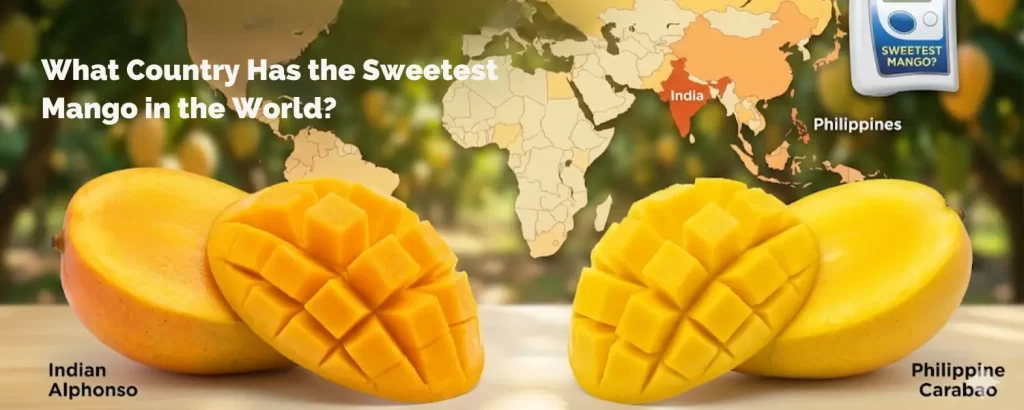
What Country Has the Sweetest Mango in the World?

If you ask a fruit connoisseur about the sweetest mango, you will likely hear two names: the Carabao from the Philippines and the Alphonso from India. While taste is subjective, the Guinness World Records and modern refractometers (tools that measure sugar) provide a more objective answer. The Current Record Holder: The Philippines For decades, the Philippines has laid claim to the title. The Carabao mango, specifically the “Sweet Elena” strain from Zambales and the world-renowned mangoes from Guimaras Island, has historically held the Guinness World Record for sweetness. Brix Level: High-quality Carabao mangoes often reach a Brix score of 24–26°. The Flavor Profile: It is known for its silky, fiber-free texture and a sweetness that is often described as “pure honey.” It lacks the complex spicy or acidic notes found in other varieties, offering a straightforward, intense sugar hit. The Contender: India’s “King of Mangoes” While the Philippines may hold the record for pure sugar, many argue that India’s Alphonso (Hapus) is the superior fruit because of its Brix-to-Acid ratio. Brix Level: A perfectly ripe Alphonso typically scores between 22–24° Brix. The Flavor Profile: The Alphonso isn’t just sweet; it is aromatic. It carries notes of saffron, honey, and a hint of citrus. This complexity is why the Alphonso remains the most sought-after variety for premium export markets in the US and Europe. The Global Sweetness Scale (Brix Chart) Variety Country of Origin Average Brix Level Flavor Note Carabao Philippines 24 – 26° Intense Honey Benika (Miyazaki) Japan 23 – 25° Tropical Candy Alphonso India 22 – 24° Saffron & Honey Chaunsa Pakistan/India 22 – 23° Creamy Nectar Nam Dok Mai Thailand 19 – 22° Floral & Delicate Why Indian Mangoes Dominate the Global Trade Even if the Carabao is technically “sweeter” on a sugar scale, the Alphonso and Kesar varieties from India are the preferred choice for international B2B buyers at Exim Internationals. Here’s why: Complexity: The slight acidity in Indian mangoes balances the sugar, making the flavor linger longer on the palate. Shelf Life: Indian varieties like Kesar have a more robust skin, allowing them to survive international air-freight and sea-freight much better than the delicate Carabao. Culinary Versatility: The rich, buttery pulp of Indian mangoes is the global industry standard for premium purees, sorbets, and high-end desserts. Sweetness is Just the Beginning The Philippines may win the record for the sweetest mango by pure sugar content, but India wins the crown for the most balanced and luxurious flavor profile. For the 2026 season, whether you are in Dubai or New York, the “Gold Standard” for a premium mango experience remains the Indian Alphonso. Are you looking to source the world’s most flavorful mangoes for your retail chain? Contact Exim Internationals to pre-book our 2026 Alphonso and Kesar harvests. Frequently Asked Questions (FAQs) 1. What is a “Brix” level in mangoes? Brix is a measurement of the sugar content in a liquid solution. In mangoes, a higher Brix degree means more natural sugars (fructose and sucrose) are present in the pulp. 2. Is the most expensive mango also the sweetest? Not necessarily. The Japanese Miyazaki mango (Taiyo no Tamago) is the most expensive in the world, often selling for over $3,000 per pair. While it is very sweet (15° Brix or higher is guaranteed), its price is driven by the precision of its greenhouse cultivation and flawless appearance. 3. Does the sweetness of a mango change after it is picked? Mangoes are climacteric fruits, meaning they continue to ripen after being harvested. As they ripen, starches convert into sugars, so a mango will get significantly sweeter as it softens. 4. Why are some mangoes sour even when they look yellow? Some varieties, like the Totapuri from India, retain a higher level of acidity even when ripe. This makes them perfect for processing into juices and chutneys but less ideal for fresh eating if you prefer pure sweetness. 5. Which Indian mango is the sweetest? While Alphonso is the most famous, many consider the Chaunsa and Imam Pasand to be the sweetest varieties grown in the Indian subcontinent, often rivaling the sugar levels of the Philippine Carabao. About us Exim Internationals is a premier export company dedicated to delivering the finest products from India to international markets. Our mission is to establish India as a global export powerhouse, contributing to economic growth and showcasing the richness of Indian goods worldwide. From the pashmina shawls and apples of the North to the spices of the South, the fruits and powders of the West, and the tea and bamboo of the East, we connect every corner of India with the global market. Certification we have: FSSAI, APEDA, IEC, UDYAM, FIEO, Spices Board, Coconut Contact us Samin heritage, Sl building, Shop no. 19, Chandan wadi, Almeda road Thane west, Maharashtra, India-400601. Email Us: support@eximinternationals.comCall Us: +91 9820446601 | +91 9321559185

What Country Has the Sweetest Mango in the World? Read Post »

Indian turmeric powder
Vegetables Export Import Fruits Spices

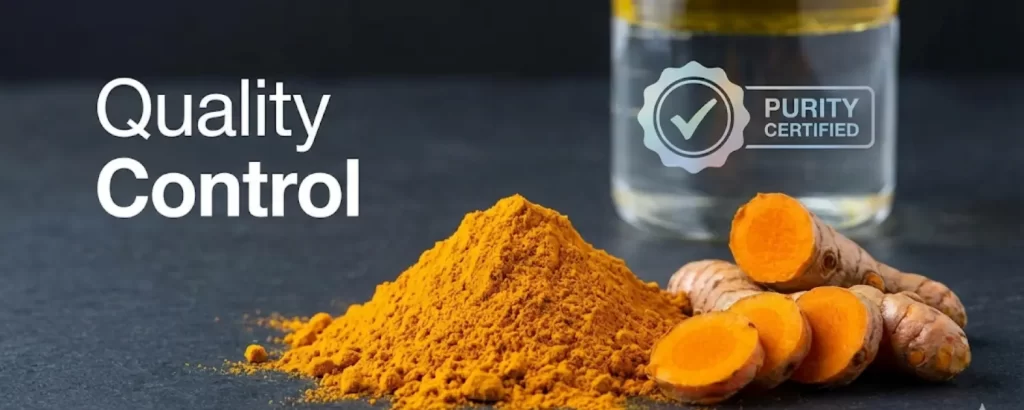
How to identify pure Indian turmeric powder

India produces nearly 80% of the world’s turmeric. While Indian turmeric powder is celebrated for its high curcumin content and medicinal properties, the market is unfortunately flooded with “adulterated” versions mixed with starch, chalk powder, or even toxic synthetic dyes like Metanil Yellow. At Exim Internationals, we believe that transparency is the best policy. Here are five scientific and home-based methods to ensure the turmeric you are sourcing or consuming is 100% pure. 1. The Water Solubility Test (The Gold Standard) Pure turmeric is naturally dense and behaves in a specific way when mixed with water. The Test: Take a glass of lukewarm water and add a teaspoon of turmeric powder on the surface. Do not stir it. Leave it for 15–20 minutes. The Result: If it is pure, the powder will slowly settle at the bottom, and the water will remain a clear, transparent yellow. If the water becomes cloudy or the powder stays floating, it likely contains added starches or chalk. 2. The Metanil Yellow Check (The Safety Test) Metanil Yellow is a prohibited synthetic dye often used to give low-grade turmeric a “premium” bright yellow look. It is highly carcinogenic. The Test: Add a few drops of Hydrochloric Acid (HCl) to a small amount of turmeric mixed with water. The Result: If the mixture turns pink or violet, it indicates the presence of Metanil Yellow. Pure Indian turmeric powder will not change color under these conditions. 3. The Palm Rub Test (The Aroma & Texture Check) Pure turmeric has a distinct physical profile that is hard to replicate. The Test: Put a pinch of turmeric on your palm and rub it vigorously with your thumb for 10 seconds. The Result: Pure turmeric will leave a deep, stubborn yellow stain on your skin and will feel slightly oily (due to natural essential oils). It should have a mild, earthy, and peppery aroma. If it smells like sawdust or leaves no stain, it’s highly diluted. Import products for your Needs Ready to Import 4. Understanding Curcumin Levels In 2026, the value of Indian turmeric powder is measured by its Curcumin percentage. Standard Grade: 2% to 3% Curcumin (Good for general cooking). Premium/Medicinal Grade: 5% to 7% Curcumin (Sourced from Lakadong or Salem varieties). Pro Tip: Pure turmeric with high curcumin will always have a slightly darker, “golden-orange” hue rather than a bright, fluorescent yellow. 5. Laboratory Certification (B2B Requirement) If you are an importer, manual tests aren’t enough. Always demand a Certificate of Analysis (COA) from an NABL-accredited lab. Look for: Starch Content: Should be natural to the root, not added. Lead & Heavy Metals: Must be within international food safety limits. Ash Content: Total ash should not exceed 9%. Purity Starts at the Source Identifying pure Indian turmeric powder is about protecting your health and your brand’s reputation. At Exim Internationals, we bridge the gap between organic farmers in Erode and Salem and the global market, ensuring that every batch is Sortex-cleaned and lab-verified before it leaves Indian shores. Would you like a sample of our 5% Curcumin “Salem Grade” turmeric powder for your own quality testing? Frequently Asked Questions (FAQs) 1. Why does my turmeric powder look orange instead of yellow? A deeper orange-yellow color is actually a sign of high curcumin content. Very bright, pale yellow turmeric often has lower medicinal value or may have been diluted with cornflour. 2. Can I identify pure turmeric just by looking at the packaging? Not entirely, but look for the FSSAI logo, the Agmark seal, and “Organic” certifications (NPOP/NOP). Avoid buying unbranded, loose powder from unverified sources. 3. Does pure Indian turmeric powder dissolve in water? No. Turmeric is not water-soluble. It is a fibrous root powder. In the water test, it should settle at the bottom, leaving the water clear but colored. 4. What is the shelf life of pure turmeric powder? When stored in an airtight container in a cool, dark place, pure turmeric retains its potency for 12 to 18 months. 5. Which region in India produces the best turmeric powder? Nizamabad (Telangana) and Erode (Tamil Nadu) are the hubs for commercial high-quality turmeric, while Lakadong (Meghalaya) is world-famous for the highest natural curcumin levels. About us Exim Internationals is a premier export company dedicated to delivering the finest products from India to international markets. Our mission is to establish India as a global export powerhouse, contributing to economic growth and showcasing the richness of Indian goods worldwide. From the pashmina shawls and apples of the North to the spices of the South, the fruits and powders of the West, and the tea and bamboo of the East, we connect every corner of India with the global market. Certification we have: FSSAI, APEDA, IEC, UDYAM, FIEO, Spices Board, Coconut Contact us Samin heritage, Sl building, Shop no. 19, Chandan wadi, Almeda road Thane west, Maharashtra, India-400601. Email Us: support@eximinternationals.comCall Us: +91 9820446601 | +91 9321559185

How to identify pure Indian turmeric powder Read Post »

Red Chilli
Export Import Fruits Spices Vegetables

The Most Expensive Red Chilli in the World: The “Caviar of Spices”

When we talk about red chilli, we usually think of the bulk sacks found in Indian spice markets—vibrant, pungent, and affordable. However, in the high-end culinary world of New York, Dubai, and London, there is a tiny pepper that sells for more than the price of a luxury car per kilogram. Meet the Aji Charapita. 1. The $25,000 Pepper: Aji Charapita Originating from the northern Amazonian jungle of Peru, the Aji Charapita is a tiny, pea-sized chilli that has taken the luxury market by storm. While it is naturally yellow, the red variety is considered an even rarer find among collectors and high-end botanists. The Price Tag: In the premium dried format, Aji Charapita has been known to fetch between $25,000 and $35,000 per kilogram. Why so expensive? Its rarity is the primary factor. Because the peppers are so small (barely 0.5 cm in diameter), it takes thousands of hand-picked fruits to make just one kilogram. The Flavor Profile: It isn’t just about the heat (which sits at a respectable 30,000 to 50,000 Scoville units). It is prized for its intense fruity and floral aroma, which adds a “tropical” top note to dishes that standard chillies cannot replicate. 2. How It Compares to Indian “Powerhouse” Varieties While the Aji Charapita holds the title for price, India produces the world’s most commercially valuable red chilli varieties. For bulk B2B trade, these are the true “Red Gold”: Bhoot Jolokia (Ghost Pepper): For a long time the hottest in the world, this Northeast Indian variety remains a high-value export for its pharmaceutical and extreme-heat applications. Byadgi Chilli: While not as expensive as the Charapita, Byadgi is the most lucrative for the oleoresin industry. Its deep red pigment is used globally in everything from high-end food coloring to luxury lipsticks. Teja (S17): The backbone of the Indian export market, known for its consistent heat and high capsaicin content, which drives the global hot sauce industry. Import products for your Needs Ready to Import 3. Why Global Buyers are Investing in Luxury Chillies In 2026, the “Premiumization” trend has hit the spice aisle. High-end restaurants are moving away from generic chilli powders and are now requesting variety-specific whole chillies. At Exim Internationals, we understand that whether you are sourcing the world’s most expensive pepper or a high-volume container of Guntur Teja, purity and traceability are the only things that matter. Frequently Asked Questions (FAQs) 1. Can Aji Charapita be grown in India? Yes. In recent years, specialized organic farms in India have begun cultivating Aji Charapita. While the soil profile differs from the Amazon, Indian-grown Charapita maintains its signature size and fruity flavor. 2. Is the red chilli variety hotter than the yellow one? Generally, they sit in the same heat range (30k–50k SHU). The red variety is often preferred for its visual appeal in gourmet plating and slightly more “earthy” sweetness. 3. What is the shelf life of such an expensive spice? When vacuum-sealed and stored in a cool, dark place, dried Aji Charapita can retain its potency and aroma for 18 to 24 months. 4. Why is Byadgi chilli considered “valuable” if it’s not the most expensive? Byadgi’s value lies in its ASTA color value. Because it provides an intense red color with very low heat, it is the primary source for natural red food dyes globally. 5. How can I verify the authenticity of premium chillies? Always look for a Phytosanitary Certificate and a Certificate of Analysis (COA) that specifies the SHU (heat) and ASTA (color) levels. About us Exim Internationals is a premier export company dedicated to delivering the finest products from India to international markets. Our mission is to establish India as a global export powerhouse, contributing to economic growth and showcasing the richness of Indian goods worldwide. From the pashmina shawls and apples of the North to the spices of the South, the fruits and powders of the West, and the tea and bamboo of the East, we connect every corner of India with the global market. Certification we have: FSSAI, APEDA, IEC, UDYAM, FIEO, Spices Board, Coconut Contact us Samin heritage, Sl building, Shop no. 19, Chandan wadi, Almeda road Thane west, Maharashtra, India-400601. Email Us: support@eximinternationals.comCall Us: +91 9820446601 | +91 9321559185

The Most Expensive Red Chilli in the World: The “Caviar of Spices” Read Post »

coconut sugar
Export Import Fruits Spices Vegetables

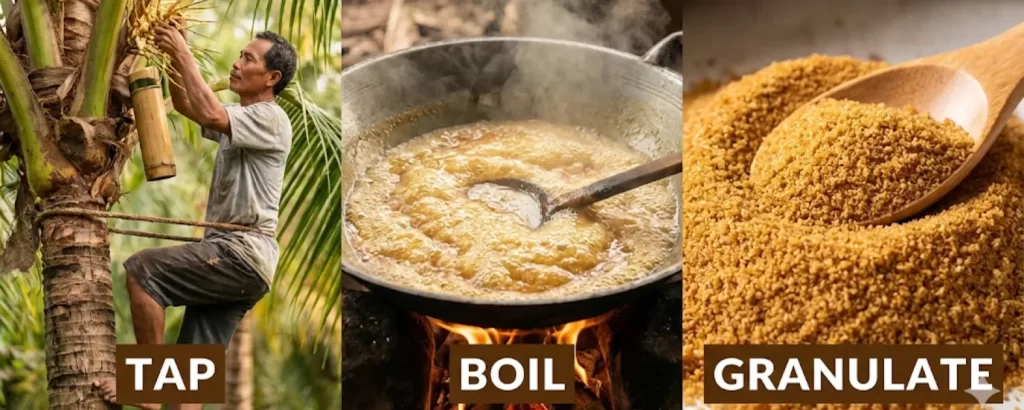
How is Coconut Sugar Produced? The Journey from Palm to Pantry

In 2026, coconut sugar has moved from niche health stores to mainstream global markets. But unlike the fruit-based products we usually export—like mangoes or bananas—this sweetener doesn’t come from the coconut fruit itself. Instead, it begins with the “blood” of the tree: the flower sap. Here is the step-by-step process of how this “Golden Granule” is made. 1. Tapping the Inflorescence (The Flower) The process begins high in the canopy of the coconut palm (Cocos nucifera). Skilled harvesters, known as “tappers,” climb the trees to reach the inflorescence—the unopened flower buds. The Technique: The tapper makes a precise incision in the flower stalk. The Yield: A clear, sweet liquid called sap (or “Neera”) begins to drip. A healthy tree can provide 1 to 2 liters of sap every day. 2. Collection and Stabilization The sap is highly susceptible to natural fermentation due to the wild yeasts in tropical air. To prevent it from turning into coconut vinegar or alcohol, it must be collected every 12 hours. Filtration: Once collected, the raw sap is immediately filtered through fine mesh to remove any natural debris, like bark or fibers. Natural Preservatives: In organic production, a small amount of lime (mangosteen husk) may be added to the collection vessel to maintain the sap’s pH and prevent early fermentation. 3. Evaporation: From Sap to Syrup The filtered sap is roughly 80% water. To concentrate the sugars, the water must be removed through heat. Traditional Method: Small-scale farmers boil the sap in large open woks over controlled wood fires. Modern Export Method: At Exim Internationals, we often use Vacuum Evaporators. By lowering the atmospheric pressure, we can boil the sap at a lower temperature (60°C – 80°C). This preserves more of the vitamins and minerals compared to high-heat boiling. The Result: The sap thickens into a viscous, amber-colored liquid known as Coconut Nectar. Import products for your Needs Ready to Import 4. Granulation: The Transformation This is the most critical stage. As the syrup reaches a sugar concentration of about 80%, it is removed from the heat. Continuous Stirring: As the syrup cools, it is stirred vigorously. This aeration promotes the formation of tiny crystals. Solidification: Within minutes of intense stirring, the liquid syrup “magically” transforms into solid, moist granules. 5. Drying, Sieving, and Grading To make the product shelf-stable for international export, the final moisture content must be extremely low. Drying: The sugar is dried (often in solar dryers or industrial ovens) until the moisture content drops below 2%. Sieving: The sugar is passed through various mesh sizes to create uniform granules. Quality Check: For B2B export, the sugar passes through metal detectors and color-grading sensors to ensure a “Clean Label” premium product. Sustainability Spotlight: The “Green” Sugar Coconut sugar is frequently cited by the FAO (Food and Agriculture Organization) as the most sustainable sweetener in the world. Longevity: A single coconut palm can produce sap for 20+ years without being cut down. Resource Efficiency: It requires significantly less water and soil nutrients than sugarcane to produce the same amount of sweetness. The production of coconut sugar is a testament to the harmony between nature and traditional craftsmanship. By choosing coconut sugar, you aren’t just opting for a lower-GI sweetener; you are supporting a sustainable ecosystem that protects the very trees it harvests from.   Are you interested in sourcing bulk Organic Coconut Sugar for your 2026 production line? Contact Exim Internationals for our latest technical specification sheets. Frequently Asked Questions (FAQs) 1. Does tapping the sap kill the coconut tree? No. Tapping is a non-destructive process. However, a tree used for sap production will generally not produce coconuts, as the flower buds are used for the sap instead of being allowed to turn into fruit. 2. Is coconut sugar “Raw”? Technically, no. All coconut sugar must be heated to evaporate the water. However, it is considered “unrefined” because it doesn’t undergo the bleaching or chemical carbonization used in white sugar. 3. Why is some coconut sugar lighter than others? This depends on the heat and duration of the evaporation. “Blonde” coconut sugar is processed at lower temperatures for a shorter time, while darker sugar has a more intense, caramelized toffee flavor. 4. Can I use coconut sugar for 1:1 replacement in baking? Yes. It behaves very similarly to brown sugar. It provides excellent structure and a rich flavor to cookies, cakes, and brownies. 5. How should I store coconut sugar to prevent clumping? Since it is a natural product with trace amounts of inulin (fiber), it can absorb moisture. Always store it in an airtight container in a cool, dry place. About us Exim Internationals is a premier export company dedicated to delivering the finest products from India to international markets. Our mission is to establish India as a global export powerhouse, contributing to economic growth and showcasing the richness of Indian goods worldwide. From the pashmina shawls and apples of the North to the spices of the South, the fruits and powders of the West, and the tea and bamboo of the East, we connect every corner of India with the global market. Certification we have: FSSAI, APEDA, IEC, UDYAM, FIEO, Spices Board, Coconut Contact us Samin heritage, Sl building, Shop no. 19, Chandan wadi, Almeda road Thane west, Maharashtra, India-400601. Email Us: support@eximinternationals.comCall Us: +91 9820446601 | +91 9321559185

How is Coconut Sugar Produced? The Journey from Palm to Pantry Read Post »

export semi-husked coconut
Export Import Fruits Spices Vegetables

How to Export Semi-Husked Coconut from India: A 2026 Step-by-Step Guide

India is the global powerhouse of coconut production, with the export semi-husked coconut sector leading the charge. Unlike fully husked coconuts which dry out quickly, or green coconuts which are heavy and expensive to ship, the semi-husked variety is the “Goldilocks” of the industry—perfectly balanced for durability and weight efficiency. As we move through 2026, new trade protocols and digital customs clearances have made the process faster, but the quality standards remain rigorous. Here is your definitive guide to successfully navigating the export journey. Step 1: Legal Framework & Registrations Before you source your first nut, your business must be legally “Export-Ready.” IEC (Import Export Code): Your 10-digit passport to international trade, issued by the DGFT. RCMC (Registration-cum-Membership Certificate): For coconuts, you should register with APEDA (Agricultural and Processed Food Products Export Development Authority) or the Coconut Development Board (CDB). GST & Bank Setup: A dedicated current account with an AD (Authorized Dealer) code is mandatory for inward foreign remittances. Step 2: Sourcing the “Export Grade” Nut Not every coconut is fit for the 30-day sea voyage to Europe or the 5-day trip to Dubai. The Origin: Most top-tier exporters source from the Pollachi (Tamil Nadu) or Kochi (Kerala) belts. Weight Specifications: The standard export weight is 500g to 650g per nut. Maturity: Ensure the nuts are “Matured Brown.” Immature nuts have a soft shell that cracks under pressure, leading to spoilage. Step 3: The Semi-Husking & Sorting Process This is where the value is added. Husking: The outer green husk is removed, leaving a small “tuft” of fiber over the three eyes of the coconut. Cleaning: The shell is cleaned of excess hair and debris to prevent fungal growth. Grading: Coconuts are sorted by size and weight to ensure uniformity in the bags. Import products for your Needs Ready to Import Step 4: Packing for High-Volume Transit To export semi-husked coconut successfully, your packaging must breathe. Bags: Most buyers prefer PP (Polypropylene) Mesh Bags. Count: The standard is 25 nuts per bag or 13kg to 15kg per bag. Labeling: Bags must clearly state “Product of India,” the net weight, and the exporter’s details. Step 5: Managing the Cold Chain & Shipping For a 2026 shipment, temperature control is non-negotiable. The Container: Use a 40ft High Cube Reefer Container. Temperature Setting: Maintain between 13°C and 15°C with a ventilation setting of 10% to 15%. This prevents the “sweating” that causes mold. Capacity: A 40ft container can typically hold 2,000 to 2,200 bags (approx. 27-28 Metric Tons). Step 6: The “Final Four” Documents Your shipment won’t clear customs without these: Commercial Invoice & Packing List. Phytosanitary Certificate: Proving the nuts are pest-free. Certificate of Origin: Usually issued by the Chamber of Commerce. Bill of Lading (BL): Your title document for the goods. Partnering for Success The export semi-husked coconut business is built on trust and consistency. A single bad shipment can ruin a multi-year contract. At Exim Internationals, we combine traditional sourcing from Pollachi with modern cold-chain tracking to ensure every nut arrives as fresh as the day it was picked. Ready to start your first container shipment? Contact Exim Internationals today for a detailed feasibility report and 2026 pricing. Frequently Asked Questions (FAQs) 1. What is the HS Code for semi-husked coconut? The primary HS Code is 08011910. Always verify the specific sub-classification based on the latest DGFT 2026 notifications. 2. How long is the shelf life of an Indian semi-husked coconut? When transported in a reefer container and stored in a cool, dry place, these coconuts have a shelf life of 60 to 70 days. 3. Why do we leave a “tuft” of husk on the eyes? The “tuft” protects the three germination pores (eyes). If these are exposed, they can easily be punctured or infected by mold, causing the coconut water to leak and the nut to rot. 4. What are the major ports for coconut export in India? The most efficient ports for this trade are Tuticorin, Cochin, and Chennai, as they have regular feeder lines to major global hubs like Jebel Ali and Rotterdam. 5. What is the most common payment term in this industry? Most exporters work on a 30% Advance and 70% against Scanned Shipping Documents, or an Irrevocable Letter of Credit (LC) for large, long-term contracts. About us Exim Internationals is a premier export company dedicated to delivering the finest products from India to international markets. Our mission is to establish India as a global export powerhouse, contributing to economic growth and showcasing the richness of Indian goods worldwide. From the pashmina shawls and apples of the North to the spices of the South, the fruits and powders of the West, and the tea and bamboo of the East, we connect every corner of India with the global market. Certification we have: FSSAI, APEDA, IEC, UDYAM, FIEO, Spices Board, Coconut Contact us Samin heritage, Sl building, Shop no. 19, Chandan wadi, Almeda road Thane west, Maharashtra, India-400601. Email Us: support@eximinternationals.comCall Us: +91 9820446601 | +91 9321559185

How to Export Semi-Husked Coconut from India: A 2026 Step-by-Step Guide Read Post »

organic ginger from India
Export Import Fruits Spices Vegetables

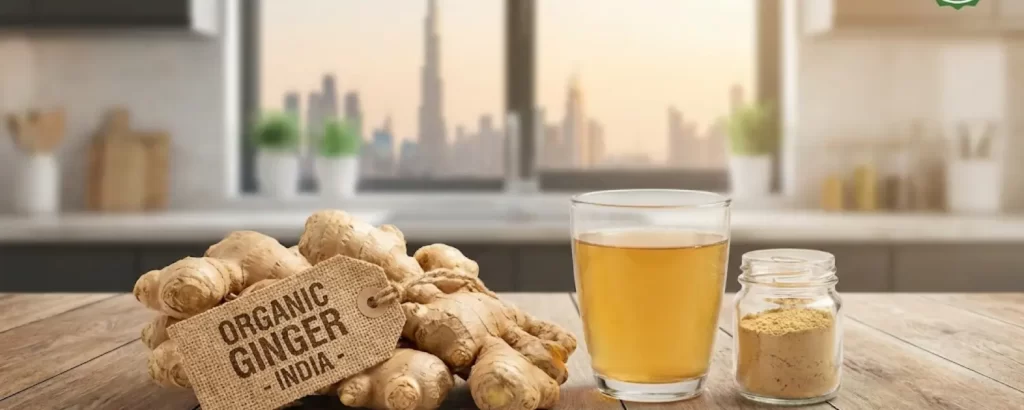
Where Can I Buy Organic Ginger from India to UAE?

Ginger is more than just a spice in the Middle East; it is a vital part of “Zanjabil” tea and various traditional remedies. In 2026, the demand for the organic variety has skyrocketed as consumers move away from conventional ginger that may contain pesticide residues. But where can you find the genuine article? India’s diverse agro-climatic zones, particularly the Northeast and the Western Ghats, produce organic ginger that meets the strict UAE MOIAT (Ministry of Industry and Advanced Technology) standards. 1. For Retail Consumers (Small Quantities) If you are looking for fresh organic ginger for your home kitchen, these major UAE retailers and platforms are currently leading the market: LuLu Hypermarket: A consistent supplier of “Organic India” ginger. They offer 250g and 500g pre-packed trays that are ESMA-certified. Grandiose Supermarket: Known for their high-end organic sections, Grandiose stocks premium Indian organic ginger that is often air-freighted for maximum freshness. Kibsons & QualityFood.ae: These online giants are the best for home delivery. They source directly from Indian organic cooperatives, ensuring the ginger is firm, juicy, and free from synthetic fertilizers. Barakat Fresh: Ideal for those who prefer bulk “home-use” boxes (3kg to 4kg) of fresh Indian ginger at wholesale-style retail prices. 2. For B2B Importers & Wholesalers (Bulk Supply) For businesses looking to source 1 metric ton or more, the procurement process shifts to international exporters who specialize in the India-UAE corridor. Exim Internationals: We specialize in sourcing NPOP/NOP certified organic ginger directly from farmers in Kerala and Meghalaya. We handle the entire process—from sorting and cleaning to UAE customs clearance. Nuragro & Om Shree International: Established players in the Dubai spice market (often found at Gulfood) that supply bulk dry and fresh ginger to local distributors. Import products for your Needs Ready to Import 3. How to Identify “Genuine” Organic Ginger In a crowded market, how do you know if the ginger is truly organic? The Certification Mark: Look for the “Organic UAE” logo (the green falcon/leaf) or the Indian Organic (NPOP) logo on the packaging. Visual Texture: Organic ginger is typically smaller and more “gnarled” than chemically-grown ginger. Its skin is thinner, and the aroma is significantly more pungent when broken. The Price Point: Organic ginger usually costs 25% to 40% more than conventional ginger due to the lower yields and higher certification costs involved. Logistics: From Indian Farms to Dubai Ports Transporting organic ginger from India requires a strict “Chain of Custody” to ensure it doesn’t get mixed with conventional stock. Air Freight: Best for “Fresh Ginger.” It lands at DXB or DWC airports within 4 hours of departure from Mumbai or Kochi. Sea Freight (Reefer): Best for “Dry Ginger” or high-volume fresh shipments. We use refrigerated containers maintained at 10°C to 12°C with 65% humidity to prevent sprouting or mold. Sourcing Quality in 2026 The UAE market is discerning. Whether you are buying from a shelf at Spinneys or importing a 20ft container, the focus must remain on purity and potency. Indian organic ginger, with its high volatile oil content, remains the gold standard for the Gulf. Are you an importer in the UAE looking for lab-certified organic ginger? Contact Exim Internationals today for our latest inspection reports and 2026 shipping schedule. Frequently Asked Questions (FAQs) 1. Is all Indian ginger in the UAE organic? No. Most ginger in the UAE is conventional. To ensure it is organic, you must specifically look for the organic certification seal on the label or the shelf tag. 2. What is the shelf life of organic fresh ginger? In the UAE’s climate, organic ginger should be stored in the refrigerator. It will stay fresh for 3 to 4 weeks. For longer storage, it can be peeled and frozen. 3. Does Indian organic ginger contain lead? Authentic organic ginger is tested for heavy metals. Exim Internationals provides COA (Certificate of Analysis) reports ensuring that lead and arsenic levels are well below the permissible limits set by UAE food authorities. 4. Why is Indian ginger preferred over Chinese ginger in the UAE? Indian ginger is generally considered more flavorful and “spicier” due to its higher gingerol concentration. Chinese ginger is often larger and waterier, which some find less potent for cooking and medicine. 5. What is the HS Code for exporting organic ginger? The HS Code for fresh ginger is 09101110, while for dried ginger, it is 09101120. About us Exim Internationals is a premier export company dedicated to delivering the finest products from India to international markets. Our mission is to establish India as a global export powerhouse, contributing to economic growth and showcasing the richness of Indian goods worldwide. From the pashmina shawls and apples of the North to the spices of the South, the fruits and powders of the West, and the tea and bamboo of the East, we connect every corner of India with the global market. Certification we have: FSSAI, APEDA, IEC, UDYAM, FIEO, Spices Board, Coconut Contact us Samin heritage, Sl building, Shop no. 19, Chandan wadi, Almeda road Thane west, Maharashtra, India-400601. Email Us: support@eximinternationals.comCall Us: +91 9820446601 | +91 9321559185

Where Can I Buy Organic Ginger from India to UAE? Read Post »

Drum Stick Vegetables
Export Import Fruits Spices Vegetables

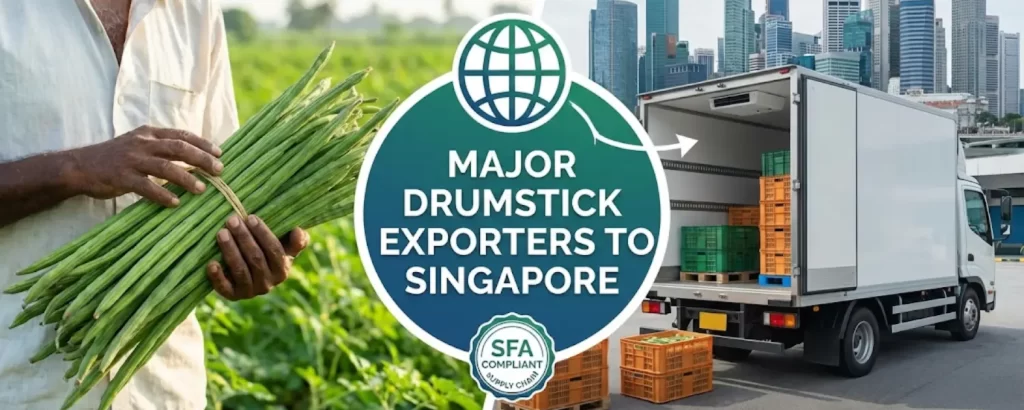
Who Are the Major Exporters of Drum Stick Vegetables to Singapore?

In the bustling wet markets of Geylang Serai and the premium aisles of NTUC FairPrice, the drum stick vegetable is a high-demand staple. Known for its medicinal properties and its essential role in sambar and fish curries, this vegetable is a logistical marvel—travelling from Indian farms to Singaporean tables in less than 24 hours. If you are a wholesaler or retail buyer in Singapore, understanding who the major players are and how the supply chain works is crucial for your procurement strategy. 1. India: The Undisputed Global Supplier India accounts for nearly 80% of the world’s drumstick production. For Singapore, India is the most strategic partner due to the short air-transit time from South Indian hubs. Tamil Nadu (The Production Hub): Over 60% of Singapore’s drumsticks originate here. Regions like Oddanchatram and Theui are famous for high-yield, premium varieties. Andhra Pradesh & Karnataka: These states serve as the secondary supply belt, ensuring that even during monsoon fluctuations in Tamil Nadu, Singapore’s supply remains uninterrupted. 2. Leading Exporting Varieties for the 2026 Market Top exporters focus on specific cultivars that withstand the pressure of air travel and maintain their “snap” on the shelf: PKM-1 & PKM-2: These are the “Gold Standard” for export. They are known for their uniform length (typically 25-35 cm), fleshy pulp, and dark green color. Coimbatore-1: Prized for its long shelf life and resistance to bruising during packing. 3. Key Industry Players & Exporters While the market is fragmented, a few names stand out for their consistent “Class A” quality: Exim Internationals: Specializing in the India-to-Singapore corridor, providing daily air-freight shipments of Sortex-cleaned, pre-cooled Moringa pods. Yeshraj Agro Exports & White Feather: Large-scale players focusing on bulk volumes for Singapore’s major distribution hubs. Indimax Global Impex: A leader in sourcing specifically from the Oddanchatram belt in Tamil Nadu. Import products for your Needs Ready to Import 4. Singapore’s Top Importers (The Reception End) Once the pods land at Changi Airport, they are quickly absorbed by major local wholesalers who control the distribution: Chai Ong Vegetable Trading: A major wholesaler in the Pasir Panjang Wholesale Centre. Superme Vegetables Trading: Known for distributing fresh Indian perishables across the island. Lip Keong Supplies: A key player in the supply chain for hypermarkets and catering services. Logistics & Quality Standards for Singapore To successfully export drum stick vegetables to Singapore, exporters must comply with the Singapore Food Agency (SFA) regulations: Pesticide Residue Limits: Singapore has some of the world’s strictest limits on pesticide residues. Top exporters conduct batch-testing to ensure compliance with the Ninth Schedule of the Food Regulations. The Cold Chain (5°C to 8°C): Drumsticks are highly perishable. They must be pre-cooled immediately after harvest to remove field heat and transported in reefer trucks to the airport. Labelling: Every carton (usually 5kg or 7kg CFB boxes) must be labelled with the producer’s name, address, product description, and date of packing. Sourcing for the Singapore Market The Singapore market values tenderness and freshness. For 2026, the trend is moving toward Organic Moringa pods, which fetch a 30% premium in gourmet retailers. Finding an exporter who can navigate the SFA’s “TradeNet” permit system and provide daily fresh arrivals is the key to retail success.   Looking for a consistent supply of fresh PKM-1 Drumsticks for the Singapore market? Contact Exim Internationals today for our daily air-freight rates from Chennai and Trichy. Frequently Asked Questions (FAQs) 1. How long does it take for drumsticks to reach Singapore from India? Via air freight, the total time from the packhouse in Tamil Nadu to the Changi Cargo Complex is approximately 12 to 18 hours. 2. What is the typical shelf life of drum stick vegetables in Singapore? When stored correctly at 5-8°C, fresh drumsticks have a shelf life of 7 to 10 days. At room temperature in a humid environment like Singapore, they should be consumed within 3 days. 3. Do drumsticks require a Phytosanitary Certificate for Singapore? Yes. A Phytosanitary Certificate is mandatory for all fresh vegetables from India entering Singapore to ensure they are free from pests like fruit flies. 4. Can I import frozen drumsticks to Singapore? Yes. While the demand for fresh is higher, frozen drumsticks are increasingly popular for the food processing industry and carry a longer shelf life (up to 12 months). 5. What is the MOQ for drumstick exports to Singapore? Due to the high cost of air freight, most exporters require a Minimum Order Quantity (MOQ) of 500 kg to 1,000 kg per shipment. About us Exim Internationals is a premier export company dedicated to delivering the finest products from India to international markets. Our mission is to establish India as a global export powerhouse, contributing to economic growth and showcasing the richness of Indian goods worldwide. From the pashmina shawls and apples of the North to the spices of the South, the fruits and powders of the West, and the tea and bamboo of the East, we connect every corner of India with the global market. Certification we have: FSSAI, APEDA, IEC, UDYAM, FIEO, Spices Board, Coconut Contact us Samin heritage, Sl building, Shop no. 19, Chandan wadi, Almeda road Thane west, Maharashtra, India-400601. Email Us: support@eximinternationals.comCall Us: +91 9820446601 | +91 9321559185

Who Are the Major Exporters of Drum Stick Vegetables to Singapore? Read Post »

vegetables from India
Export Import Fruits Spices Vegetables

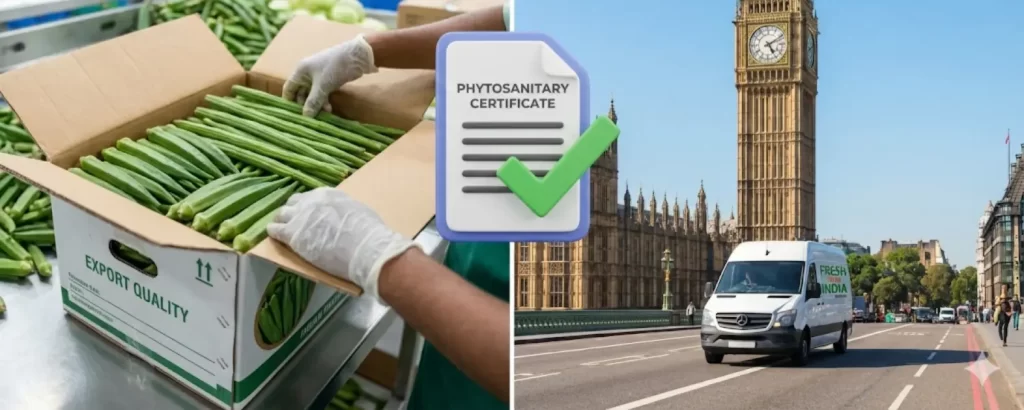
How to Import Fresh Vegetables from India to the UK: The 2026 Step-by-Step Guide

The UK market has a deep-rooted demand for authentic Indian produce. From the “Ladyfingers” (Okra) of Gujarat to the “Drumsticks” (Moringa) of Tamil Nadu, fresh vegetables from India are essentials for both the massive South Asian diaspora and the growing mainstream health sector. However, importing perishables across 4,500 miles requires more than just a good supplier. It requires a mastery of the UK’s digital border systems. Here is the definitive guide to getting your produce into British kitchens. 1. Mandatory UK Business Registration Before a single box leaves India, the UK importer must be legally registered. EORI Number: You must have an Economic Operator Registration and Identification (EORI) number starting with GB. IPAFFS Registration: You must register on IPAFFS (Import of Products, Animals, Food and Feed System). This is the UK’s portal for notifying authorities of incoming “High-Risk Food of Non-Animal Origin” (HRFNAO). 2. Identifying the Risk Category In 2026, the UK categorizes vegetables from India based on risk levels. High-Risk (Increased Controls): Vegetables like Okra (Ladyfinger), Green Chillies, and Curry Leaves are often subject to a 10% to 50% physical check rate due to historical pesticide residue concerns. Medium-Risk: Most other fresh vegetables require a Phytosanitary Certificate and pre-notification. Low-Risk: Very few fresh vegetables fall here; most require at least a basic plant health check. Import products for your Needs Ready to Import 3. Essential Documentation from the Indian Side Your exporter (such as Exim Internationals) must provide: Phytosanitary Certificate (PC): Issued by the NPPO (National Plant Protection Organization) in India within 13 days of the shipment leaving. This proves the veg is free from pests like fruit flies. Certificate of Conformity: Required if the vegetables are subject to “Specific Marketing Standards” (SMS). Lab Reports: Specifically for Okra and Chillies, you need reports proving pesticide levels are within UK MRL (Maximum Residue Limits). 4. The Logistics: Why “Air Freight” Wins For fresh vegetables from India, speed is the only way to maintain “Landed Quality.” Transit Time: Air freight from Mumbai (BOM) or Delhi (DEL) to London Heathrow (LHR) takes less than 10 hours. Pre-Notification: You must notify UK customs via IPAFFS at least 4 working hours before the flight lands. Cold Chain: From the packhouse in India to the “Cool Chain” facility at Heathrow, the temperature must stay between 8°C and 12°C. 5. Customs, VAT, and Clearance VAT: Most fresh vegetables are zero-rated (0% VAT) in the UK, but you must still declare them correctly to avoid delays. Customs Duty: Check the UK Global Tariff. Many Indian vegetables enjoy preferential rates under the UK-India trade dialogues, but a “Certificate of Origin” is required to claim these. Top Indian Vegetables in Demand for UK (2026) Okra (Ladyfinger): The #1 most imported fresh Indian vegetable. Drumsticks (Moringa): High demand for its “Superfood” status. Bitter Gourd (Karela): A staple for the health-conscious diaspora. Green Chillies (G4/Teja): Essential for the UK’s massive curry industry. Fenugreek Leaves (Methi): High demand during the winter months. Success is in the Detail The UK border is efficient but unforgiving. A single missing digit on a Phytosanitary Certificate can lead to an entire shipment being destroyed. Successful importers partner with exporters who have a proven track record of UK compliance. At Exim Internationals, we specialize in the “UK-Specific” packhouse protocols—ensuring every piece of produce is graded, cleaned, and documented to pass APHA (Animal and Plant Health Agency) inspections on the first attempt. Are you a UK wholesaler looking for a reliable supply of fresh okra or green chillies? Contact Exim Internationals today for our 2026 shipping schedule. Import products for your Needs Ready to Import Frequently Asked Questions (FAQs) 1. Can I import fresh vegetables from India by sea? It is possible for hardy vegetables like Onions or Potatoes using Reefer containers. However, for “green” vegetables like Okra or Spinach, the 20-25 day sea journey is too long; air freight is highly recommended. 2. What happens if my shipment fails a pesticide test in the UK? The APHA may order the shipment to be re-exported or destroyed at the importer’s expense. This is why sourcing from APEDA-certified exporters who conduct pre-departure lab tests is vital. 3. Do I need an import license for Indian vegetables? You don’t need a “license” in the traditional sense for most veg, but you must be registered on IPAFFS and have an EORI number. 4. How is the “Marketing Standard” checked? The UK’s Horticultural Marketing Inspectorate (HMI) checks for grading (Class I or II), sizing, and labeling (Country of Origin must be clearly marked). 5. What is the best way to handle the 20% VAT on shipping costs? While the vegetables are 0% VAT, the shipping services are not. Most businesses use Postponed VAT Accounting (PVA) to manage this on their VAT return without impacting cash flow. About us Exim Internationals is a premier export company dedicated to delivering the finest products from India to international markets. Our mission is to establish India as a global export powerhouse, contributing to economic growth and showcasing the richness of Indian goods worldwide. From the pashmina shawls and apples of the North to the spices of the South, the fruits and powders of the West, and the tea and bamboo of the East, we connect every corner of India with the global market. Certification we have: FSSAI, APEDA, IEC, UDYAM, FIEO, Spices Board, Coconut Contact us Samin heritage, Sl building, Shop no. 19, Chandan wadi, Almeda road Thane west, Maharashtra, India-400601. Email Us: support@eximinternationals.comCall Us: +91 9820446601 | +91 9321559185

How to Import Fresh Vegetables from India to the UK: The 2026 Step-by-Step Guide Read Post »

Scroll to Top
exim international logo

Get Our Products Pricing

Fill out the form to download!