Spices

Mango Exporter from India
Export Import Fruits Spices Vegetables

Planning for 2026: A Buyer’s Guide to Contracting with a Mango Exporter from India

For those in the global fruit trade, the Indian mango season is a much-anticipated highlight of the year. The unparalleled taste of varieties like Alphonso and Kesar is in high demand worldwide. However, success in the mango trade isn’t secured in April when the fruit ripens; it’s built in October of the preceding year. The fresh mango season is short and intense. Waiting until the harvest begins is often too late to secure the best quality and volume. As a leading Mango Exporter from India, we know that the off-season is the most critical period for strategic planning. This is your buyer’s guide to contracting now for a successful and profitable 2026 mango season. Why Plan in Q4 2025 for the 2026 Mango Season? Proactive planning is the key to mitigating risk and maximizing opportunity in the fresh produce market. Here’s why savvy importers start their conversations now: Secure Premium Varieties: The global demand for prime varieties like the Alphonso mango (“King of Mangoes”) and the sweet Kesar mango far exceeds the available supply. The best way to guarantee an allocation of these top-tier fruits is to contract with your export partner well in advance. Lock in Capacity: A reliable Mango Exporter from India has finite capacity for sourcing, sorting, packing, and, most importantly, booking air freight cargo space. Early contracts secure your spot in their priority pipeline during the hectic harvest season. Better Strategic Planning: Early discussions allow for better logistical planning and can lead to more stable pricing structures before the season’s speculative rush begins. It allows your export partner to plan their sourcing from the best orchards. Your Q4 2025 Contracting Checklist Here are the actionable steps to take in the coming months to prepare for the 2026 season (April-July). Step 1 (October – November): Define Your Needs & Vet Your Exporter Product: Decide on the variety (alphonso for premium markets, kesar for sweetness and pulp), estimated volume (in metric tons), and quality specifications (Brix level, size, blemish standards). Partner: Start conversations with potential exporters. Ask them about their sourcing regions, APEDA certification, and their process for mandatory phytosanitary treatments like hot water treatment. Step 2 (December – January): Finalize Contracts & Terms Based on your discussions, select your partner and finalize the terms. This includes agreeing on a pricing structure (which may have some market-linked flexibility), payment terms, and a rough shipment schedule. A professional Mango Exporter from India will provide clear, comprehensive contracts. Import products for your Needs Ready to Import What to Look for in a Long-Term Mango Export Partner Your chosen exporter should be more than just a seasonal supplier. Look for a true partner. Year-Round Engagement: Do they disappear after July? A great partner discusses the market year-round and can also supply you with processed products like mango pulp and puree to keep your business running. Logistical Expertise: Do they have proven, verifiable experience with the complexities of air freight and the cold chain for a highly perishable, high-value fruit like the mango? Compliance & Transparency: Are they experts in the phytosanitary requirements for your specific country? Do they provide clear communication, quality reports, and shipment tracking? Beyond Fresh: Planning Your Year-Round Mango Strategy While contracting for the 2026 fresh mango season, talk to your exporter about your year-round needs. High-quality Indian mango pulp (especially from the Alphonso and Kesar varieties) is a stable, in-demand product for the beverage, dairy, and confectionery industries. Integrating pulp into your portfolio can turn a seasonal opportunity into a year-long revenue stream. Build Your 2026 Success Story Today The groundwork for a profitable 2026 mango season is laid now, in the strategic planning phase. By defining your needs early, vetting your partners thoroughly, and contracting in advance, you position your business to receive the best quality fruit when the harvest arrives. Ready to start planning your 2026 mango import strategy? Contact Exim Internationals today. As your expert Mango Exporter from India, we are ready to discuss your volume requirements and help you secure your contract for the upcoming season. Frequently Asked Questions (FAQs) 1. Why is it important to plan for the 2026 mango season now, in late 2025? Planning now allows you to secure an allocation of premium, high-demand varieties like Alphonso and Kesar. It also helps lock in capacity with a reliable exporter for critical services like packing and air freight before the seasonal rush. 2. What’s the main difference between Alphonso and Kesar mangoes for export? Alphonso mangoes are prized for their unique aroma, creamy texture, and complex flavour, making them a premium “eating” mango. Kesar mangoes are known for their intense sweetness and vibrant saffron colour, making them excellent for both eating and processing into pulp and juices. 3. What is “hot water treatment” and why is it required for mango export? Hot water treatment is a mandatory phytosanitary process where mangoes are briefly submerged in hot water to eliminate fruit flies and other pests. It is a critical requirement for export to many countries, including the USA, Europe, and Japan, to meet their biosecurity standards. 4. What is the typical lead time for contracting with a Mango Exporter from India? Most serious importers finalize their contracts between December and January for the season that begins in April. The initial vetting and discussion process should ideally start in October or November. 5. Can I also source mango pulp during the off-season? Yes, absolutely. High-quality mango pulp and puree are processed during the harvest season and are available for export year-round. This is an excellent way to maintain a mango product line outside the fresh season. 6. What does APEDA certification mean for a mango exporter? APEDA (Agricultural and Processed Food Products Export Development Authority) is the key government body for promoting Indian agricultural exports. An APEDA-certified exporter is recognized, compliant with government standards, and has access to the necessary resources and protocols for a successful export operation. 7. How are fresh mangoes packed to survive air freight? Fresh mangoes are typically

Planning for 2026: A Buyer’s Guide to Contracting with a Mango Exporter from India Read Post »
fresh semi husked coconut
Export Import Fruits Spices Vegetables

How to Order a Container Load of Fresh Semi Husked Coconut: A Step-by-Step Guide

For importers and large-scale distributors, ordering a full container load of produce can seem complex. However, when you partner with an experienced exporter, the process is straightforward, transparent, and secure. This guide breaks down the simple, step-by-step journey to getting a shipment of premium, fresh semi husked coconut from the farms of India to your destination port. As a leading exporter based in Pune, India, we’ve perfected this process to ensure a seamless experience for our B2B clients. Step 1: Your Inquiry & Defining Your Requirements The process begins with you. The first step is to send a clear inquiry to our team. To help us provide a fast and accurate quote, please include the following: Your Company Details: Name, location, and contact information. Product: Fresh Semi Husked Coconut. Quantity: Specify the container size you need (e.g., 1 x 40′ Reefer Container). Destination Port: The seaport where you will receive the shipment. Our team will respond within 24 hours to confirm your requirements and move to the next step. Step 2: Receiving and Approving the Proforma Invoice Once we have your requirements, we will issue a detailed Proforma Invoice (PI). This is a preliminary bill of sale that outlines all the terms of the agreement. Your PI will include: A full breakdown of our export quality specifications (e.g., nut weight 500-650g, origin: Pollachi). The price per unit and the total value of the shipment. The agreed-upon payment and delivery terms. The estimated shipping timeline. Review the PI carefully. Once you approve it and confirm the payment terms, the production process begins. Step 3: Quality Sourcing and Expert Packing This is where our team on the ground gets to work. Sourcing: We procure the coconuts from our network of trusted farms in prime growing regions like Pollachi. Grading & Packing: The coconuts are meticulously sorted for quality and then semi-husked. They are packed into durable PP bags (typically 25 nuts per bag) designed to protect them during transit. Import products for your Needs Ready to Import Step 4: Managing the Cold Chain for Optimal Freshness For a “fresh” product, this is the most critical stage. We manage a seamless cold chain to maximize shelf life. Pre-Cooling: The coconuts are pre-cooled to remove field heat. Reefer Container: The packed bags are carefully loaded (“stuffed”) into a reefer container, which is a refrigerated container set to the optimal temperature (around 13-15°C) to keep the coconuts fresh. Step 5: Documentation and Dispatch While your container is being prepared, we handle all the necessary paperwork for a smooth customs clearance process at your end. Key Documents: This includes the Bill of Lading, Commercial Invoice, Packing List, Certificate of Origin, and the mandatory Phytosanitary Certificate. Dispatch: Once the container is sealed and all documents are prepared, it is transported to the port (e.g., Nhava Sheva, Mumbai) and loaded onto the vessel for its journey to you. Step 6: Shipment Tracking and Arrival We provide you with all the shipping details, allowing you to track the vessel’s progress. Upon arrival at your destination port, your clearing agent will use the documents we provided to clear the shipment through customs. You are then ready to receive your container load of fresh semi husked coconut. A Simple Process with a Trusted Partner Ordering a full container may seem daunting, but with a transparent, step-by-step process and an expert partner, it’s a straightforward path to securing a high-quality, profitable product for your market. Ready to start the process? Contact Exim Internationals today to begin Step 1 and receive a detailed quote for your first container. Frequently Asked Questions (FAQs) 1. What is the minimum order quantity (MOQ) for a shipment? The standard MOQ for a cost-effective shipment is a full container load. We can accommodate a 20-foot container for a trial order, but a 40-foot container offers the best value in terms of per-unit shipping cost. 2. How many coconuts are in a 40-foot container? A 40-foot reefer container typically holds approximately 25,000 fresh semi husked coconuts. 3. What is a ‘reefer container’ and why is it necessary? A reefer container is a refrigerated shipping container. It is absolutely necessary for maintaining the cold chain and preserving the freshness of perishable products like coconuts during the sea voyage. 4. What payment terms do you offer? We offer secure, standard international trade payment terms. For new clients, this is often an Irrevocable Letter of Credit (LC) or a percentage of advance payment with the balance against shipping documents. 5. How long does it take from confirming my order to the container being shipped? Typically, the lead time from order confirmation to dispatch from the port is between 10 to 15 days. This includes sourcing, grading, packing, and inland transportation. 6. What is a Phytosanitary Certificate? It is a mandatory certificate for customs clearance issued by the Indian agricultural authorities. It certifies that the coconuts have been inspected and are free from pests and diseases, complying with the import regulations of your country. 7. Where are your coconuts sourced from? We source our premium, export quality coconuts from the Pollachi region in Tamil Nadu, India, which is globally renowned for its high-quality coconuts. 8. Can I track my shipment while it is in transit? Yes. Once the container is on board the vessel, we provide you with the Bill of Lading and all necessary details to track the shipment’s progress online until it reaches your destination port. About us Exim Internationals is a premier export company dedicated to delivering the finest products from India to international markets. Our mission is to establish India as a global export powerhouse, contributing to economic growth and showcasing the richness of Indian goods worldwide. From the pashmina shawls and apples of the North to the spices of the South, the fruits and powders of the West, and the tea and bamboo of the East, we connect every corner of India with the global market. Certification we have: FSSAI, APEDA, IEC, UDYAM, FIEO, Spices Board, Coconut Contact

How to Order a Container Load of Fresh Semi Husked Coconut: A Step-by-Step Guide Read Post »

Export Quality Fenugreek Seeds
Vegetables Export Import Fruits Spices

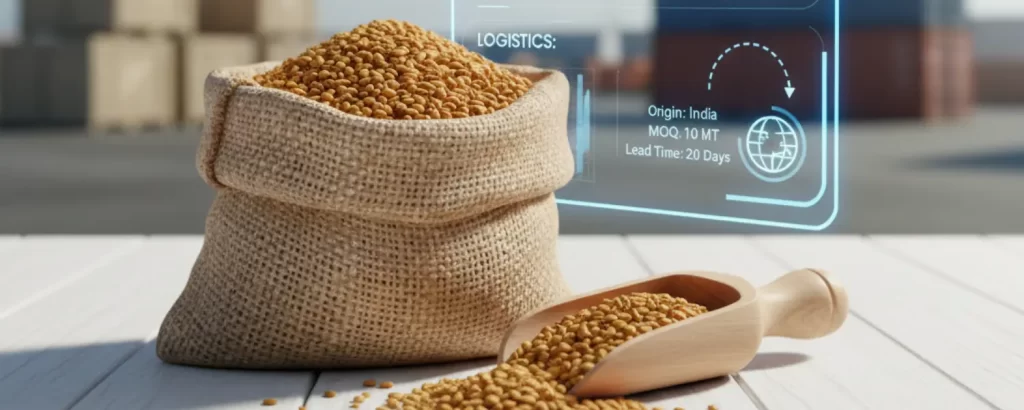
Specs & Logistics: Your Guide to Buying Bulk Export Quality Fenugreek Seeds

For international importers, food manufacturers, and nutraceutical companies, sourcing fenugreek seeds from India is a strategic decision. India is the world’s largest producer, offering a consistent supply of this versatile seed. However, a successful import operation is built on two fundamental pillars: understanding the Specifications that define quality and mastering the Logistics that ensure a reliable delivery. As a leading exporter of Indian commodities, we believe in empowering our partners with knowledge. This guide will provide a clear, concise breakdown of the essential specs and logistics for sourcing bulk Export Quality Fenugreek Seeds. Part 1: The ‘Specs’ – Decoding Quality Metrics “Export quality” is not a vague term; it’s a set of measurable standards. When you place a bulk order for fenugreek (methi dana), here are the key specifications you need to define and verify. Purity & Grade This is the measure of cleanliness. A professional supplier uses advanced machine-cleaning and sortex technology to achieve high purity levels. 99% Purity (Standard Grade): The most common grade for a wide range of culinary applications. 99.5% Purity (Premium Grade): Often required by markets with stricter regulations or for specific food processing and nutraceutical applications. Moisture Content This is the most critical factor for shelf life and safety. The Benchmark: Export Quality Fenugreek Seeds must have a moisture content below 10-12%. Anything higher risks mould and spoilage during the long transit. Seed Characteristics Colour: A uniform, clean yellowish-brown or amber colour is the sign of a properly dried and stored crop. Size & Aroma: Look for bold, uniform seeds with the characteristic strong, slightly sweet, and bitter aroma that indicates a high-quality product. The Proof: Certificate of Analysis (COA) A reputable exporter will always provide a COA from an independent laboratory. This document is your guarantee, verifying all the key specifications of the batch you are purchasing. Part 2: The ‘Logistics’ – Your Seamless Supply Chain Expert logistics ensure that the high-quality product sourced in India is the same high-quality product that arrives at your warehouse. Sourcing & Timing Understanding the agricultural cycle is key to strategic sourcing. The Source: The majority of India’s high-quality fenugreek is sourced from the state of Rajasthan. The Season: Fenugreek is a Rabi crop, sown in October-November and harvested in February-March. The current period is the prime time for buyers to discuss requirements and enter into contracts for the upcoming 2026 harvest. Expert Packing Proper packing is your first line of defense during transit. Method: We pack Export Quality Fenugreek Seeds in new, clean, and durable Polypropylene (PP) or jute bags. Standard Weight: Bags are typically available in 25 kg or 50 kg sizes, as per the buyer’s requirement. This standardisation makes handling and inventory management easy. Containerization & Shipping The journey from India is managed with precision. Loading: The bags are carefully loaded (“stuffed”) into a clean, dry 20-foot or 40-foot container load. Fumigation: As a standard best practice, the container is fumigated to protect against pests during the sea voyage, and a certificate is issued. Shipping: We manage the booking with reliable shipping lines from major Indian ports like Nhava Sheva or Mundra to your destination port. Essential Documentation Flawless paperwork is non-negotiable for smooth customs clearance. Every shipment is accompanied by: Commercial Invoice & Packing List Bill of Lading Certificate of Origin Phytosanitary Certificate (mandatory for agricultural products) Certificate of Analysis (COA) Import products for your Needs Ready to Import The Pillars of a Reliable Partnership A successful import of Export Quality Fenugreek Seeds depends on these two pillars: clearly defined specifications and expertly managed logistics. By choosing a partner who masters both, you build a supply chain that is not only reliable and safe but also highly profitable. Ready to build a secure supply chain for high-quality Indian fenugreek? Contact Exim Internationals today for a detailed specification sheet and a competitive quote. Frequently Asked Questions (FAQs) 1. What are the most important specifications for export quality fenugreek seeds? The three most critical specs are Purity (typically 99% or 99.5%), Moisture Content (below 12%), and a clean, uniform color and size. 2. What is the difference between 99% and 99.5% purity grades? The 99% grade is a standard, machine-cleaned product suitable for most culinary uses. The 99.5% grade undergoes an additional level of cleaning (often sortex) to remove nearly all impurities, making it ideal for stricter markets or nutraceutical applications. 3. What documents are required for customs clearance of fenugreek seeds? You will need a Bill of Lading, Commercial Invoice, Packing List, Certificate of Origin, and a mandatory Phytosanitary Certificate. A Certificate of Analysis (COA) is also highly recommended. 4. How are bulk fenugreek seeds packed for export? They are typically packed in new, clean 25 kg or 50 kg PP (Polypropylene) or jute bags. This ensures the product is protected and easy to handle. 5. When is the best time to contract for the Indian fenugreek harvest? The ideal time to plan and enter into contracts is during the pre-sowing and sowing season (September – November). This allows your export partner to secure the best quality and price for the upcoming harvest (Feb-March). 6. Which region in India is the main source of fenugreek? Rajasthan is the largest and most important fenugreek-producing state in India, renowned for its high-quality crops. 7. What is a Certificate of Analysis (COA)? A COA is a lab report from a third-party testing agency that scientifically verifies the key quality specifications of the fenugreek shipment, such as its purity, moisture content, and other parameters. 8. How do I get a quote based on specific specs and logistics requirements? Simply contact us with your required grade (e.g., 99.5% purity), total quantity (in metric tons), and your destination port. Our team will provide a detailed quote covering both the product specifications and the logistics to your destination. About us Exim Internationals is a premier export company dedicated to delivering the finest products from India to international markets. Our mission is to establish India as a global export powerhouse, contributing

Specs & Logistics: Your Guide to Buying Bulk Export Quality Fenugreek Seeds Read Post »

bulk cumin exporter
Export Import Fruits Spices Vegetables

Inside the Unjha Market: An Indian Bulk Cumin Exporter’s Perspective

For anyone involved in the global spice trade, all roads eventually lead to a single, bustling town in Gujarat, India: Unjha. While cumin, or jeera, is used in kitchens worldwide, its commercial heart beats in the Unjha market. This is the largest trading hub for cumin on the planet, an epicenter of price discovery, quality grading, and global supply. As a leading bulk cumin exporter from India, our presence and expertise in the Unjha market are not just an advantage—they are essential. To our partners, we offer more than just a product; we offer a direct line to the core of the cumin trade. Here is our insider’s perspective on what makes this market so critical. Unjha: The Global Price Setter First and foremost, the Unjha market sets the global benchmark for cumin prices. The daily auctions, driven by the constant interplay of supply from farmers and demand from exporters and domestic traders, create the price signals that ripple across the world. For a bulk cumin exporter, having a deep understanding of these daily fluctuations is crucial. It allows us to advise our clients on the best times to buy, to forecast price trends for the upcoming season, and to execute purchases at the most competitive levels. The Hub of Quality and Grading The Unjha market is where the vast, unorganized supply from thousands of farms is transformed into a standardized, graded commodity ready for international trade. When you contract for a specific grade of cumin, the process of achieving that specification happens here. The two most recognized international grades are: Singapore Grade (99% Purity): This is the most common standard, allowing for a maximum of 1% admixture. It’s the workhorse of the global food industry. Europe Grade (99.5% Purity): This grade is destined for markets with stricter regulations. It undergoes an additional cleaning and sorting process to achieve a minimum of 99.5% purity. An expert bulk cumin exporter has the facilities and partnerships within the Unjha ecosystem to process raw cumin into these precise, machine-cleaned grades, ensuring every container load meets the buyer’s exact requirements. A Timely Perspective: The 2025 Sowing Season As we are currently in October 2025, the Unjha market is abuzz with speculation and analysis about the sowing season for the next Rabi crop. The performance of the recent monsoon, current soil moisture levels, and farmer sentiment are all being fiercely debated. This is the information that drives future contracting. Our team on the ground gathers this intelligence to create forecasts for the 2026 harvest. This allows us to guide our partners on their procurement strategy months in advance, helping them decide when to lock in contracts for the new season’s crop. Import products for your Needs Ready to Import Why You Need a Partner on the Ground It is practically impossible for an international buyer to navigate the complex, relationship-driven Unjha market directly. The language, the auction system, and the sheer scale are formidable. This is why your choice of a bulk cumin exporter is so critical. Your partner acts as your: Eyes and Ears: Providing real-time intelligence on price and quality trends. Quality Controller: Ensuring the raw material sourced is of high quality before it’s even processed. Logistics Manager: Handling everything from cleaning and packing to inland transport and customs, ensuring a seamless journey from Unjha to a major port like Mundra or Nhava Sheva. Your Direct Source to the Cumin Capital The Unjha market is the engine of the global cumin trade. Understanding its role is key to a successful sourcing strategy. By partnering with an experienced bulk cumin exporter who has deep roots in this market, you gain more than just a supplier—you gain a strategic advantage.   Ready to leverage our Unjha market expertise for your business? Contact Exim Internationals today for the latest crop insights and to plan your procurement for the 2026 season. Frequently Asked Questions (FAQs) 1. What is the Unjha market? The Unjha market in Gujarat, India, is the world’s largest wholesale market for cumin seeds (jeera). It is the primary global center for price discovery and trading of this spice. 2. What is the difference between Singapore Grade and Europe Grade cumin? The primary difference is purity. Singapore Grade guarantees 99% purity, making it a standard for many applications. Europe Grade is a higher specification, guaranteeing 99.5% purity, and is required for markets with stricter food import regulations. 3. As an international buyer, can I buy directly from the Unjha market? No, it is not feasible. The market operates on a complex, localized auction system. International buyers must partner with a licensed bulk cumin exporter to source, process, and handle the logistics and documentation. 4. When is the harvest season for the cumin I would be contracting for now? The current period (October 2025) is the sowing season. The crop that is being planted now will be harvested from February to March 2026. Contracting now allows you to secure your supply from this upcoming harvest. 5. What is a “Rabi crop”? Rabi crops are agricultural crops that are sown in the winter (October-December) and harvested in the spring (February-March) in India. Cumin is a major Rabi crop. 6. How does a bulk cumin exporter ensure the quality of the product from Unjha? A professional exporter has their own quality control team or partners with trusted processors in Unjha. They oversee the multi-stage cleaning, sorting, and grading process and verify the final product against the buyer’s specifications, often providing a Certificate of Analysis (COA). 7. How much cumin fits in a standard shipping container? A 20-foot container typically holds 13-14 metric tons of bulk cumin seeds, while a 40-foot container can hold approximately 25-27 metric tons. 8. How do I get started with importing cumin from Unjha? The first step is to contact a reliable bulk cumin exporter like Exim Internationals. Provide us with your required grade (e.g., Europe Grade 99.5%), quantity, and destination port. We will provide a detailed quote and guide you through the

Inside the Unjha Market: An Indian Bulk Cumin Exporter’s Perspective Read Post »

semi husked coconut to Bangladesh
Spices Export Import Fruits Vegetables

Sourcing Guide: How to Get a Container of Semi Husked Coconut to Bangladesh

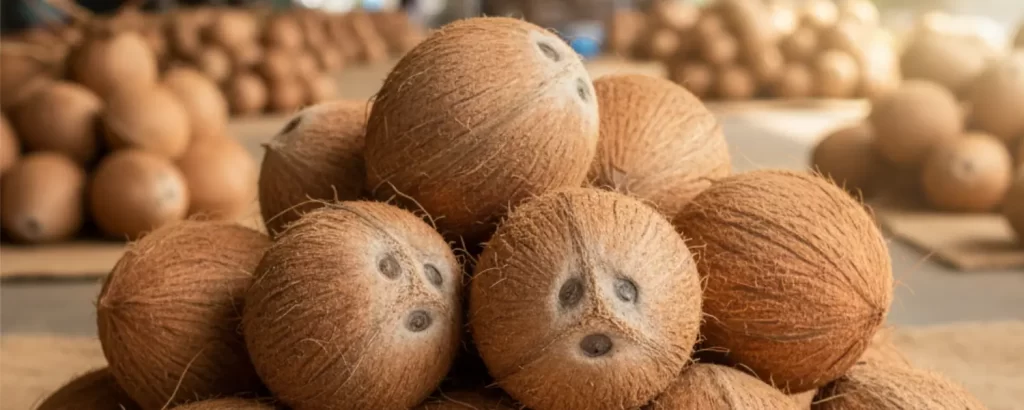
The demand for high-quality coconuts in Bangladesh, for everything from festive cuisine to daily consumption, is consistently high. For savvy importers, sourcing directly from India offers a significant advantage in quality, freshness, and price. The ideal product for this trade route is the Semi Husked Coconut to Bangladesh—perfectly optimized for transport with a longer shelf life. But how do you actually get a full container load or truck load from an Indian farm to your warehouse in Bangladesh? As a leading exporter with extensive experience in the India-Bangladesh trade lane, we’ve created this simple, step-by-step sourcing guide. Step 1: Partner with a Verified Indian Exporter This is your most important step. A reliable exporter is more than a supplier; they are your logistics partner. Look for an exporter with proven experience shipping semi husked coconut to Bangladesh. They will understand the nuances of both sea and land routes and have a transparent process for quality control and documentation. Step 2: Define Your Quality Specifications Not all coconuts are created equal. To ensure you receive a premium product, be clear about your specifications. We source our export-grade coconuts from the famed Pollachi region of India, known for producing nuts with sweet water and thick flesh. A typical high-quality specification includes: Size: 12-13 inches in circumference Weight: 500g to 650g per nut Quality: Mature, brown, and free from cracks or damage. Lorem ipsum dolor sit amet, consectetur adipiscing elit. Ut elit tellus, luctus nec ullamcorper mattis, pulvinar dapibus leo. Step 3: Choose Your Logistics – Sea Freight or Land Transport? The India-Bangladesh trade route offers unique logistical flexibility. Choosing the right one depends on your location, urgency, and volume. Option A: Sea Freight to Chattogram Port This is the standard for large-volume shipments. We pack a 20ft or 40ft container and ship it from a major Indian port like Nhava Sheva (Mumbai) directly to Chattogram Port. This method is highly cost-effective for a full container load. Option B: Land Transport via Benapole Port For faster transit times, land transport is an excellent option. Coconuts are loaded onto a truck load and transported across the border via major land ports like Benapole. This can significantly reduce shipping time and is a very popular choice for fresh produce. Import products for your Needs Ready to Import Step 4: Navigating Payment and Documentation A professional exporter will make this process seamless. Payment: The most common, secure, and widely accepted payment method for trade with Bangladesh is an Irrevocable Letter of Credit (LC) at Sight. This protects both the buyer and the seller. Documentation: We handle all necessary paperwork. This includes the Bill of Lading (for sea) or Truck Receipt (for land), Invoice, Packing List, and the mandatory Phytosanitary Certificate. We also provide a Certificate of Origin, which is essential for availing potential duty benefits under the SAFTA (South Asian Free Trade Area) agreement. Step 5: Expert Packing and Dispatch To ensure the coconuts arrive in perfect condition, we use a proven packing method. The coconuts are packed in durable PP bags, typically 25 coconuts per bag. These bags are then carefully loaded to ensure stability and ventilation. After your LC is confirmed, we can typically dispatch your shipment within 7-14 days. Your Seamless Supply Chain to Bangladesh Importing a container of semi husked coconut to Bangladesh is a straightforward process when you work with an experienced partner. By understanding your options for logistics, ensuring clear quality specs, and using secure payment methods, you can build a reliable and profitable supply chain. Ready to source your next shipment? Contact Exim Internationals today for a detailed quote for both sea and land freight options to Bangladesh. Frequently Asked Questions (FAQs) 1. What’s the best way to ship coconuts to Bangladesh from India, by sea or land? It depends on your needs. Sea freight to Chattogram Port is often more cost-effective for very large, 40-foot container loads. Land transport to ports like Benapole is typically faster and offers more flexibility, making it a popular choice. 2. What is an LC payment and why is it used for Bangladesh trade? An LC (Letter of Credit) is a secure payment method where a bank guarantees payment on behalf of the importer once the exporter meets the conditions of the agreement (like providing shipping documents). It is the standard and most trusted method for B2B trade in Bangladesh. 3. What is SAFTA and how does it help me as an importer in Bangladesh? SAFTA (The South Asian Free Trade Area) is an agreement between South Asian nations, including India and Bangladesh. By providing a Certificate of Origin, importers can often avail reduced customs duties on eligible products, making imports from India more cost-effective. 4. How many coconuts are in a standard container or truck load? A 40-foot container holds approximately 25,000 coconuts. A standard full truck load for land transport can vary but typically holds between 15,000 to 20,000 coconuts. 5. What is the minimum order quantity (MOQ) for a shipment to Bangladesh? For sea freight, the MOQ is a 20-foot container (approx. 12,500 coconuts). For land transport, we can discuss flexible truck load options. 6. Where are your coconuts sourced from in India? We source our premium export-grade coconuts from the Pollachi region in Tamil Nadu, which is globally renowned for its high-quality coconuts. 7. What is a Phytosanitary Certificate? It is a mandatory certificate for customs clearance in Bangladesh that is issued by Indian agricultural authorities. It certifies that the coconuts have been inspected and are free from pests and diseases. 8. How do I start the process of getting a container of semi husked coconut to Bangladesh? Simply contact us with your company details, the quantity you require, and your preferred mode of transport (sea or land). Our team will provide a comprehensive proforma invoice and guide you through the next steps. About us Exim Internationals is a premier export company dedicated to delivering the finest products from India to international markets. Our mission is to establish

Sourcing Guide: How to Get a Container of Semi Husked Coconut to Bangladesh Read Post »

fennel export to UK
Export Import Fruits Spices Vegetables

How We Preserve Aroma in Fennel Shipments to the UK

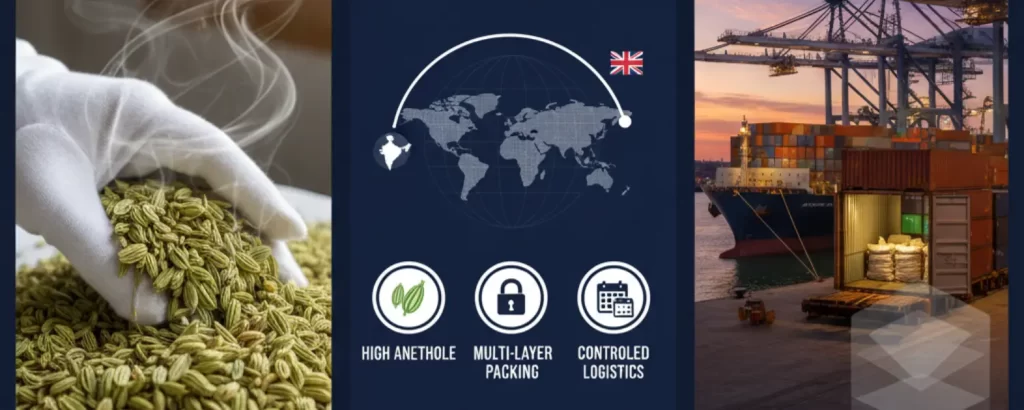
For a tea blender crafting a delicate herbal infusion or a master distiller perfecting a botanical gin, the value of fennel seed lies not in its weight, but in its soul: its aroma. The characteristic sweet, warm, liquorice-like scent is the signature of high-quality Indian Fennel. But how is that delicate aroma preserved during the long sea journey from the fields of India to a port like Felixstowe in the UK? The challenge of a successful fennel export to the UK is a battle against time, moisture, and temperature. At Exim Internationals, we have developed a meticulous, science-backed process designed to lock in the potency and preserve the aromatic integrity of every seed. Step 1: It Starts at the Source with High-Aroma Varieties Aroma preservation begins with selection. We don’t just source any fennel; we target specific varieties known for their superior aromatic profiles. Targeting High Volatile Oil Content: We prioritize varieties like the famed Lucknow fennel, which is prized for its naturally high concentration of volatile oils, particularly anethole. Anethole is the organic compound that gives fennel its signature sweet scent. Harvesting at Peak Potency: Sourcing from the main Rabi crop harvest (February-March) ensures the seeds are picked at their peak maturity when the volatile oil content is at its highest. Step 2: The Critical Lock-In: Scientific Drying and Curing This is the most crucial stage where the seed’s aroma is either secured or lost. Controlled Temperature: Rapid, high-heat drying can “burn off” the delicate aromatic compounds. Our partner farms employ slow, careful sun-drying or mechanical drying at controlled low temperatures. Optimal Moisture Level: The goal is to reduce the moisture content to a stable level (typically below 12%) without compromising the volatile oils. This careful process ensures the seeds are shelf-stable for the long journey and retain their powerful scent. Step 3: Multi-Layer Packing – A Fortress for Flavour Once dried, the seeds are packed in a multi-layer system designed as a barrier against the elements that degrade aroma: oxygen, moisture, and light. Inner Layer: We use food-grade, high-density poly-liners. This initial layer is crucial as it acts as a primary barrier against moisture ingress and oxygen exposure, effectively sealing in the aroma. Outer Layer: The poly-lined bags are then placed in strong, breathable outer sacks. This can be new jute bags or multi-wall paper sacks, which provide robust physical protection against punctures and damage during handling. This two-layer system creates a micro-environment that protects the seeds and prevents their precious aroma from escaping. Import products for your Needs Ready to Import Step 4: Containerization and Transit to the UK The final stage is preparing the container for its 30-day journey. Clean & Odour-Free Containers: We ensure every shipping container is clean, dry, and completely free from any residual odours that could taint the delicate fennel. Strategic Loading: The sacks are loaded (“stuffed”) to ensure stability and prevent crushing, which could break the seeds and accelerate the loss of volatile oils. Fumigation & Compliance: The container is fumigated according to international standards to prevent pests, a key requirement for meeting UK Food Standards Agency (FSA) regulations and obtaining a phytosanitary certificate. Delivering Aroma, Not Just a Commodity The journey of a fennel export to the UK is long, but it doesn’t have to diminish the product’s quality. By focusing on sourcing high-aroma varieties, employing scientific drying methods, and using a robust multi-layer packing system, we ensure that the Indian Fennel that arrives at your facility is as potent and aromatic as possible. For UK businesses where aroma is non-negotiable, you need more than a supplier; you need a preservation expert.   Ready to experience the aromatic difference? Contact Exim Internationals today for a sample of our premium Indian fennel and a detailed quote for your business in the UK. Frequently Asked Questions (FAQs) 1. What is the most critical factor for preserving fennel’s aroma during export to the UK? Proper drying to the correct moisture level while retaining volatile oils, followed by multi-layer barrier packaging, are the two most critical factors. 2. What are “volatile oils” in fennel seeds? Volatile oils are the natural aromatic compounds within the seed that create its distinctive smell and taste. The main volatile oil in fennel is anethole, which gives it its characteristic sweet, liquorice-like scent. 3. Which Indian fennel variety is best for aromatic applications like gin and tea? Lucknow fennel is highly sought after by tea blenders and gin distillers due to its reputation for a sweeter aroma and high anethole content, making it ideal for premium blends and botanical infusions. 4. What is the typical shelf life of your fennel seeds when they arrive in the UK? Thanks to our preservation process, our fennel seeds arrive with an excellent shelf life. When stored correctly in a cool, dark, and dry place, they can maintain their potent aroma for 18-24 months. 5. How does the long sea journey from India to the UK affect the fennel’s quality? While the journey is long (~30 days), our multi-layer barrier packing and clean, secure containerization are specifically designed to protect the seeds from moisture, oxygen, and contaminants, ensuring quality is maintained throughout transit. 6. Do your fennel export shipments meet UK Food Standards Agency (FSA) requirements? Yes. We ensure all our shipments comply with FSA standards, including providing all necessary documentation like the mandatory Phytosanitary Certificate and adhering to regulations regarding purity and contaminants. 7. What is the best way to store bulk fennel seeds upon arrival in the UK to maintain aroma? Store the sacks in a cool, dark, and dry warehouse, away from direct sunlight and strong odours. Keeping the product in its original protective packaging until it’s needed for production is the best practice. 8. How can I get a sample to evaluate the aroma of your Indian fennel? Simply contact us with your company details and address in the UK. We would be happy to send you a sample of our current crop so you can experience the

How We Preserve Aroma in Fennel Shipments to the UK Read Post »

bulk black pepper spice export
Export Import Fruits Spices Vegetables

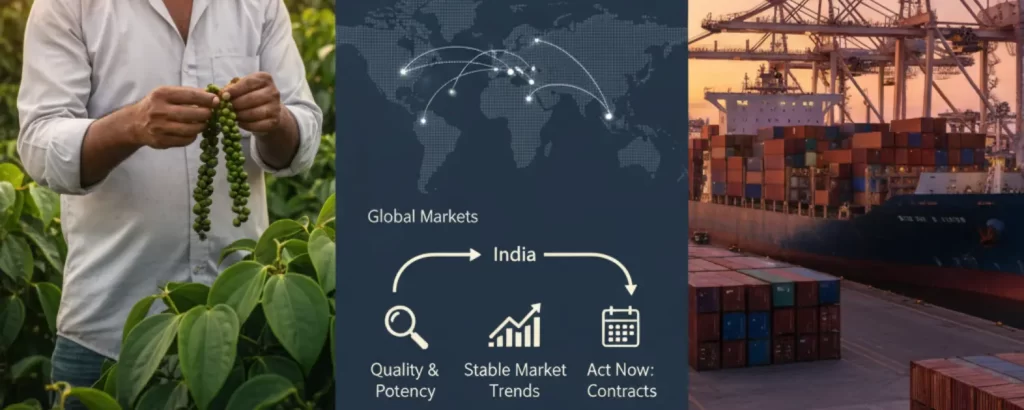
A Buyer’s Forecast for the 2026 Bulk Black Pepper Spice Export Season

As we move into the final quarter of 2025, the attention of the global spice market turns decisively towards the upcoming Indian harvest. For importers, food manufacturers, and commodity traders involved in the bulk black pepper spice export market, this is the most critical time of the year—a period for analysis, planning, and strategic sourcing. As an expert exporter on the ground in Pune, India, we offer this essential forecast for the 2026 black pepper season (harvesting from Dec 2025 to Mar 2026) to help our partners make informed decisions and secure their supply chain for the year ahead. Monsoon Performance & Crop Outlook The foundation for the 2026 pepper crop was laid during the 2025 Southwest Monsoon. Key growing regions in Kerala and Karnataka have reported largely favourable rainfall, leading to healthy flowering and good soil moisture conditions. Crop Size: While it is still early, the positive weather patterns suggest a stable to slightly increased yield compared to the previous year. Barring any unforeseen climatic events, we anticipate a healthy crop size, which is good news for buyers planning large-volume, bulk black pepper spice export orders. Quality & Grade Expectations for the New Crop A good monsoon and favourable growing conditions traditionally correlate with high-quality output. For the 2026 harvest, we have a positive outlook on the key quality metrics. Piperine & Potency: We expect the new crop to have a robust piperine content, the active compound responsible for pepper’s signature pungency. This is a crucial parameter for both the nutraceutical industry and food manufacturers seeking potent flavour. Access to Premium Grades: The new harvest is the best, and often only, time to secure significant quantities of India’s premium grades. Buyers looking for Tellicherry Garbled Extra Bold (TGEB) or high-grade Malabar Garbled (MG-1) should be acting now. Early contracting is essential to secure allocations of these top-tier grades before they are claimed by the market. Price Trends & Market Dynamics Several factors will influence the price for the 2026 bulk black pepper spice export season: Stable Crop Outlook: A healthy crop size should prevent the sharp price spikes associated with shortages. Global Demand: Demand for high-quality Indian black pepper remains strong and is expected to grow, particularly from the US and European markets. Carry-over Stock: Modest carry-over stocks from the previous season mean the market will be keenly focused on the output of the new harvest. Forecast: We anticipate a stable-to-firm market for the 2026 season. While the good crop may prevent a bull run, strong global demand will provide solid price support. Buyers should not expect significant price drops, especially for high-quality, graded material. Locking in prices during the pre-harvest contracting window (Q4 2025) is a prudent strategy to hedge against in-season volatility. Import products for your Needs Ready to Import Logistics for Bulk Black Pepper Spice Export For large-volume orders, understanding the logistics is key. Container Loads: The standard for bulk black pepper spice export is the Full Container Load (FCL). A 20-foot container typically holds 13-15 metric tons, while a 40-foot container can hold 25-28 metric tons. Packing & Preservation: For bulk shipments, pepper is packed in new, clean jute or PP bags. Proper fumigation of the container is a standard procedure to protect the cargo during transit. Documentation: Every shipment is accompanied by a mandatory phytosanitary certificate and other key documents to ensure smooth customs clearance. Strategic Recommendations for Bulk Buyers To make the most of the 2026 season, we recommend the following: Act Now: The October-November period is the prime contracting window. Engage with your export partner immediately to discuss your annual volume requirements. Define Your Specifications: Be clear about the grade, piperine content, and other quality parameters your business requires. Partner with an Expert: Choose an exporter who can provide on-the-ground market intelligence and has a proven track record in handling large-scale commodity trading and logistics. Preparing for a Successful 2026 Season The forecast for the 2026 Indian bulk black pepper spice export season is positive, with strong indicators for both quality and volume. For global buyers, the time for strategic planning and action is now. By understanding the market dynamics and partnering with a reliable exporter, you can secure a successful and profitable sourcing year.   Ready to plan your 2026 black pepper procurement? Contact Exim Internationals today for the latest crop insights and to secure your bulk contract for the upcoming harvest. Frequently Asked Questions (FAQs) 1. What is the general outlook for the 2026 Indian black pepper harvest? The outlook is positive. A favorable monsoon season suggests a stable to slightly increased crop size with good quality potential, particularly regarding piperine content and berry size. 2. When is the best time to place a bulk order for the new 2026 crop? The ideal time to negotiate and enter into contracts is during the pre-harvest period, from October to December 2025. This allows you to secure supply and potentially better pricing before peak season demand. 3. What is the quality difference between Tellicherry and Malabar black pepper? Tellicherry (TGEB) is a higher grade, consisting of larger, more mature berries with a more complex, nuanced aroma. Malabar (MG-1) is the standard high-quality grade, known for its consistent size and sharp pungency. 4. What is “piperine content” and why is it important for bulk buyers? Piperine is the active compound that gives black pepper its heat and health benefits. For food manufacturers, it ensures consistent flavour potency. For nutraceutical companies, it is the primary measure of the product’s medicinal quality. 5. What is the expected price trend for the 2026 bulk black pepper export season? We forecast a stable-to-firm market. Strong global demand is likely to balance out a healthy crop size, so significant price drops are not anticipated for high-quality grades. 6. How many metric tons of black pepper can fit in a standard shipping container? A 20-foot container typically holds 13-15 metric tons of bulk black pepper, while a 40-foot container holds 25-28 metric tons. 7. What is a phytosanitary

A Buyer’s Forecast for the 2026 Bulk Black Pepper Spice Export Season Read Post »

export quality mustard
Export Import Fruits Spices Vegetables

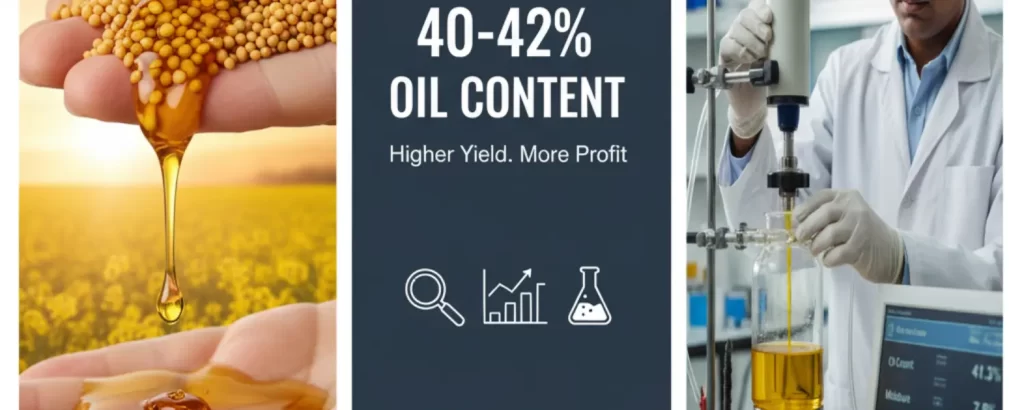
Why High Oil Content Defines Export Quality Mustard

In the global commodity trade, every product has a defining metric of value. For coffee, it might be the origin and bean score. For diamonds, it’s the 4Cs. But for the vast majority of the international mustard export market, the single most important characteristic that separates standard grade from premium, export quality mustard is a simple, powerful number: the oil content percentage. While factors like purity and moisture are crucial for stability, the oil content is the primary driver of profitability and end-product quality, especially for oil millers and large-scale food manufacturers. As a leading exporter of Indian agricultural commodities, we at Exim Internationals want to shed light on why this metric is the king of all specifications. What is Oil Content and Why Does it Directly Impact Profitability? Simply put, oil content is the percentage of oil by weight that can be extracted from the mustard seed. For a commercial oil miller, the math is straightforward: Higher Oil Content = Higher Yield Per Metric Ton = Higher Profitability Consider this: a 2% increase in oil content can result in an additional 20 kilograms of valuable mustard oil extracted from every metric ton of seed processed. When dealing with bulk shipments of hundreds of tons, this difference translates into a significant increase in revenue, often far outweighing a small difference in the initial purchase price. This is why experienced importers prioritize yield over simple cost-per-ton. The Benchmark: What is a “High” Oil Content Percentage? While numbers can vary based on crop season and variety, the international market has clear expectations. For a shipment to be considered high-grade export quality mustard, buyers typically look for an oil content percentage of 40% to 42% or higher. This is not a subjective measure. It is a scientific fact, verified by an independent third-party laboratory using solvent extraction methods. This data is then presented in a Certificate of Analysis (COA) that accompanies the shipment, giving the buyer complete confidence in the product’s quality and yield potential. Factors Influencing High Oil Content Achieving a high oil content is a result of a combination of nature and nurture. Geography (The Rajasthan Advantage): India’s largest mustard-producing state, Rajasthan, has an agro-climatic environment that is exceptionally well-suited for cultivating mustard seeds (Brassica juncea) with naturally high oil content. Farming Practices: A good Rabi crop season, supported by favourable weather, timely irrigation, and harvesting the seeds at their peak maturity, all contribute to maximizing the oil within the seed. Sourcing Expertise: A knowledgeable exporter has “boots on the ground” and works with farmer groups and processors who are known for producing high-yield crops. With the 2025 sowing season currently underway, these are the exact factors we are monitoring for the upcoming 2026 harvest. Import products for your Needs Ready to Import Don’t Forget the Byproduct: High-Quality Mustard Cake The profitability equation doesn’t end with the oil. After extraction, the remaining solid meal is known as mustard cake. This material is a valuable commodity in its own right, widely sold as a protein-rich ingredient for the animal feed industry. Seeds with a higher initial oil content often produce a higher quality, more nutrient-dense mustard cake. This allows oil millers to generate additional revenue from the byproduct, further enhancing the overall profitability of sourcing high-yield seeds. Sourcing for Yield is Sourcing for Profit For the majority of the bulk mustard market, the conclusion is clear: high oil content is the definitive measure of export quality mustard. It is the primary driver of yield, influences the quality of byproducts, and is the most reliable indicator of a profitable investment. When you source from a partner who understands, verifies, and guarantees a high oil content percentage, you are not just buying a seed; you are securing a better return for your business.   Ready to source high-yield Indian mustard for the upcoming season? Contact Exim Internationals today to receive our latest specification sheets and to discuss your requirements for the 2026 harvest. Frequently Asked Questions (FAQs) 1. What is the single most important metric for export quality mustard intended for oil extraction? The oil content percentage is, without question, the most critical metric. It directly determines the yield and profitability of the oil milling process. 2. What is a good oil content percentage to look for in Indian mustard seeds? A high-quality batch of Indian mustard seeds, suitable for export, will typically have an oil content of 40% to 42% or even higher. 3. How is the oil content of a mustard shipment verified? It is verified scientifically by an independent laboratory. The results are presented in a Certificate of Analysis (COA) that should be provided by your exporter. 4. Which region in India is known for producing high oil content mustard? Rajasthan is the largest mustard-producing state in India and is renowned for its crops that consistently yield a high oil content percentage. 5. What is “mustard cake” and why is it valuable? Mustard cake is the solid material left over after the oil has been extracted from the seeds. It is rich in protein and is a valuable commodity sold for use in the animal feed industry. 6. Does a higher oil content affect the flavour of the final mustard oil? Yes, the oil is the carrier of the mustard’s characteristic pungent flavour compounds. Seeds with a higher oil content generally produce a more robust and flavourful oil. 7. When is the best time to contract for high oil content mustard from the new crop in India? The best time to begin discussions and enter into contracts is during the pre-sowing and sowing season (September – November). This allows your export partner to plan and secure the best quality crop for you from the upcoming harvest (Feb-March). 8. How does Exim Internationals guarantee the oil content of its mustard exports? We guarantee oil content by sourcing from reputable producers in high-yield regions like Rajasthan and by providing a third-party Certificate of Analysis (COA) with every shipment, which transparently states the

Why High Oil Content Defines Export Quality Mustard Read Post »

cardamom export to usa
Export Import Fruits Spices Vegetables

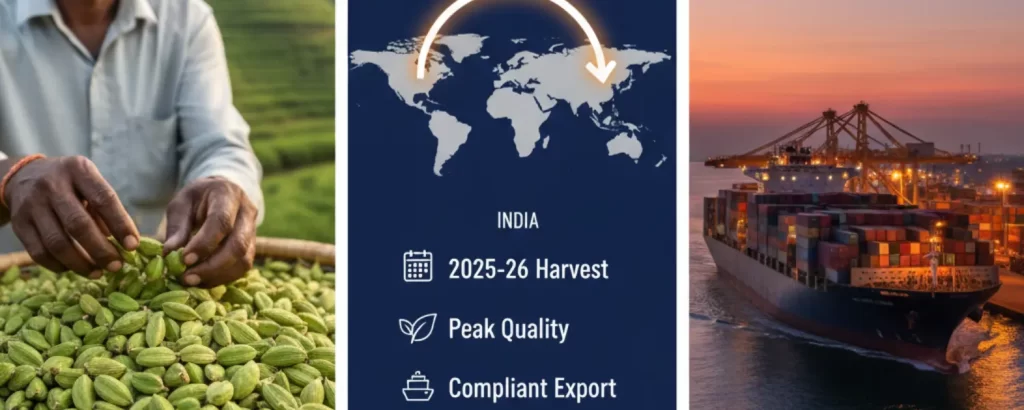
The 2025-26 Harvest is Here: Why US Importers are Sourcing New Crop Indian Cardamom

As the monsoon rains recede in the spice-laden hills of Southern India, a much-anticipated season begins: the annual cardamom harvest. From now through early 2026, the world’s most aromatic and potent “Queen of Spices” will be picked, cured, and graded. For savvy US importers, this isn’t just another agricultural cycle; it’s a critical window of opportunity. The demand for authentic, high-quality spices in the United States is at an all-time high. And as a leading specialist in cardamom export to the USA, we’re seeing a marked increase in inquiries from American businesses looking to source the new crop directly from India. This is a strategic move, and here’s why. 1. The Unmatched Quality of the New Crop There is a tangible, measurable difference between freshly harvested cardamom and stock that has been sitting in a warehouse. Peak Aroma & Flavour: The new crop of cardamom boasts the highest volatile oil content. This means the flavour is more complex, the aroma is more pungent, and the overall sensory experience is far superior. For a gourmet brand in the US, this is the ultimate quality marker. Vibrant Colour: Freshly processed green cardamom has a vibrant, uniform green hue—a key visual indicator of quality and freshness that is highly prized on retail shelves. Maximum Potency: For the burgeoning US nutraceutical market, potency is key. The active compounds in cardamom are at their peak in the new harvest, making it the ideal choice for supplements and extracts. 2. Access to India’s “Crown Jewel” Varieties Sourcing during the harvest season gives US importers first-pick access to India’s most prestigious cardamom varieties, which are essential for differentiating in a competitive market. Alleppey Green Cardamom (AGEB): This GI-tagged variety is the “Champagne” of cardamom. Known for its extra-bold size (8mm+), striking green colour, and superior flavour, Alleppey Green is the benchmark for premium quality. Securing a lot from the new harvest is a top priority for gourmet brands. Idukki Cardamom: Sourced from the high-altitude district of Idukki in Kerala, this cardamom is renowned for its rich aroma and is a staple for those seeking authentic, high-grade spice. 3. The Strategic Advantage for US Importers Beyond quality, sourcing the new crop offers significant business advantages. Supply Chain Diversification: Relying on a single source or region for any commodity is risky. By establishing a partnership for Indian cardamom, US importers can build a more resilient and diversified supply chain. Meeting Consumer Demand: The American consumer is more educated about food origins than ever before. Offering single-origin, new-season Indian cardamom meets the growing demand for authentic, traceable, and high-quality ingredients. Securing the Best Grades: The highest grades of cardamom are the first to be sold. Engaging with an exporter during the harvest ensures you can secure your allocation of the most desirable grades before they become scarce. Import products for your Needs Ready to Import 4. A Proven Partner for Navigating the Path to the USA Sourcing this premium spice is only half the battle; a successful cardamom export to the USA requires navigating a complex regulatory landscape. This is where a knowledgeable Indian exporter becomes an invaluable asset. Compliance Expertise: We manage the entire compliance process, ensuring adherence to FDA food safety standards and meeting all USDA-APHIS import protocols for agricultural products. Flawless Documentation: We provide a comprehensive set of documents, including the mandatory Phytosanitary Certificate and any necessary declarations for smooth customs clearance at US ports. Logistical Prowess: We handle the details, from proper fumigation practices to secure packing and managing the ocean freight, ensuring the quality of the new crop is perfectly preserved on its journey. Seize the Harvest Opportunity The 2025-26 Indian cardamom harvest is more than just an agricultural event; it’s a strategic sourcing opportunity for American businesses. The new crop offers superior quality, access to premium varieties, and a chance to build a more robust supply chain. The window to secure the best of this year’s harvest is now. Are you a US importer ready to elevate your spice portfolio? Contact Exim Internationals today to get the latest crop report and a quote for the premium new-season Indian cardamom, fully compliant for export to the USA. Frequently Asked Questions (FAQs) 1. What is special about “new crop” cardamom compared to older stock? New crop cardamom has a significantly higher volatile oil content, which translates to a more vibrant aroma, a more complex flavour, and a richer green colour. It is the most premium quality available on the market. 2. What is Alleppey Green Cardamom and is it available for export to the USA? Alleppey Green is a GI-tagged (Geographical Indication) cardamom from Kerala, India, prized for its large size and superior quality. Yes, it is a premier product for cardamom export to the USA, especially for the gourmet market. 3. What are the key US regulations (FDA/USDA) for importing cardamom from India? Key regulations include adherence to the FDA’s Food Safety Modernization Act (FSMA) to prevent contamination, and meeting the USDA-APHIS requirements for plant health, which often involves inspections and a Phytosanitary Certificate. 4. What is a Phytosanitary Certificate and is it required for a cardamom export to the USA? Yes, it is a mandatory document. It is issued by Indian authorities to certify that the cardamom has been inspected and is free from harmful pests and diseases, as required by US import law. 5. What is the best time to buy to get the highest quality from the 2025-26 harvest? The best time to inquire and place contracts is from September to December 2025, during the peak of the harvest season. This ensures you get first access to the highest grades. 6. How is cardamom graded for the US market? Cardamom is graded primarily by the size of the pod (e.g., 8mm, 7.5mm), colour (vibrant green is best), and physical condition (whole, unsplit pods). Premium grades include AGEB (Alleppey Green Extra Bold). 7. How is the cardamom packed to preserve freshness during the long transit to the US? Cardamom is packed in

The 2025-26 Harvest is Here: Why US Importers are Sourcing New Crop Indian Cardamom Read Post »

export quality turmeric
Export Import Fruits Spices Vegetables

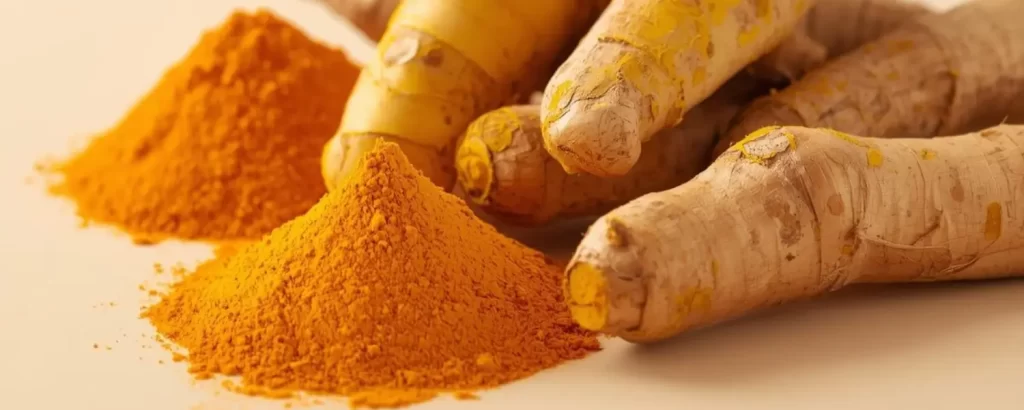
Beyond Yellow: Decoding the 3 Key Metrics of Export Quality Turmeric

To the world, turmeric is known for its brilliant yellow hue. But for a global importer, food manufacturer, or nutraceutical brand, the true value of this golden spice lies “Beyond Yellow.” Sourcing export quality turmeric from a major producer like India is a science, one that relies on specific, measurable data to ensure consistency, potency, and safety. The term “export quality” isn’t just a marketing phrase; it’s a guarantee backed by precise specifications. As a leading exporter of Indian spices from Pune, Maharashtra, we believe in empowering our partners with knowledge. This guide decodes the three most critical metrics that define a premium, export quality turmeric shipment. Metric 1: Curcumin Content – The Measure of Potency What it is: Curcumin is the primary active compound in turmeric. It belongs to a group of compounds called curcuminoids, which are responsible for the spice’s powerful anti-inflammatory, antioxidant, and medicinal properties. Why it Matters: For the Nutraceutical Industry: This is the single most important metric. A higher curcumin content means a more potent and effective health supplement. Nutraceutical-grade turmeric powder is often required to have a curcumin content of 5% or higher. For the Food Industry: While colour is often the priority, a higher curcumin level also contributes to a richer, more robust, and slightly pungent flavour profile in food products. How it’s Verified: Curcumin content is measured scientifically via High-Performance Liquid Chromatography (HPLC) testing. A reputable exporter must provide a Certificate of Analysis (COA) from a third-party laboratory verifying the exact percentage. Sourcing Tip: Turmeric varieties like Alleppey Turmeric from Kerala are specifically prized for their naturally high curcumin content, often making them the top choice for health-focused applications. Metric 2: ASTA Colour Value – The Measure of Vibrancy What it is: The ASTA value, established by the American Spice Trade Association, is not a measure of the visual colour you see, but rather the spice’s colouring power and extractable colour. It’s a scientific measure of its ability to impart colour to a food product. Why it Matters: For Food Manufacturers: This is a critical metric for brand consistency. Whether in a curry powder, a mustard blend, a snack seasoning, or a beverage, the ASTA value ensures that the final product has the same vibrant and appealing colour, batch after batch. For Retail Appeal: A high ASTA value corresponds to the deep, rich orange-yellow hue that consumers associate with high-quality, fresh turmeric. What to Look For: For a good export quality turmeric powder, you should typically look for an ASTA value of 100-120 or higher. Sourcing Tip: Major turmeric trading and processing hubs in India, such as Erode (known as “Turmeric City”), are experts at producing turmeric powder that meets specific ASTA requirements for global food brands. Import products for your Needs Ready to Import Metric 3: Moisture Level – The Measure of Stability What it is: This is simply the percentage of water remaining in the dried turmeric fingers or powder after processing. Why it Matters: For Shelf Life & Safety: This is the most important factor for preventing the growth of mould and bacteria. High moisture is the enemy of shelf stability and can lead to the complete spoilage of a shipment. For Profitability: When you buy turmeric, you want to pay for the spice, not for water. A lower moisture level means you are getting a more concentrated, stable product, ensuring better value for your investment. What to Look For: The internationally accepted standard for export quality turmeric is a moisture level of below 12%, with many premium suppliers aiming for below 10%. This is achieved through scientific drying methods and proper storage. Sourcing with Confidence Understanding these three key metrics—Curcumin for Potency, ASTA for Colour, and Moisture for Stability—empowers you to source with confidence. When you evaluate a potential supplier, don’t just ask if they have “good quality” turmeric. Ask for their specification sheet. Ask for a Certificate of Analysis. True export quality turmeric is defined by verifiable data. A transparent and knowledgeable partner will not only understand these metrics but will proudly use them to guarantee the quality of their product.   Ready to source turmeric that meets the highest international standards? Contact Exim Internationals today to request a full specification sheet and a COA for our premium export quality turmeric. Frequently Asked Questions (FAQs) 1. What is the most important metric for nutraceutical-grade turmeric? Without a doubt, curcumin content is the most critical metric for any health or supplement application. A level of 5% or higher is often the benchmark for high-potency, nutraceutical-grade turmeric. 2. What is a good ASTA colour value for turmeric powder? A good ASTA value for high-quality turmeric powder intended for food manufacturing typically ranges from 100 to 120, with premium grades exceeding 120. 3. What is a Certificate of Analysis (COA) and why is it essential? A COA is a laboratory report that verifies the key specifications of a product batch. For turmeric, it’s essential because it provides third-party proof of the curcumin content, ASTA value, moisture level, and checks for contaminants, giving the buyer complete confidence in the product’s quality. 4. What’s the difference between Alleppey turmeric and Erode turmeric? Alleppey turmeric, from Kerala, is famous for its very high curcumin content (often 5-6.5%), making it ideal for nutraceuticals. Erode turmeric, from Tamil Nadu, is the most widely cultivated variety and is known for its vibrant colour and consistent quality, making it a staple for the food industry. 5. Why is a low moisture level (<12%) so important for export quality turmeric? A low moisture level is crucial to prevent the growth of mould and bacteria during shipping and storage. It ensures the product remains safe, stable, and has a long shelf life. 6. Does polishing affect the quality of turmeric fingers? Polishing is a process that removes the outer skin of the turmeric finger to give it a smoother, more uniform appearance. While it improves the look, it can slightly reduce the curcumin content. The choice between polished

Beyond Yellow: Decoding the 3 Key Metrics of Export Quality Turmeric Read Post »

Scroll to Top
exim international logo

Get Our Products Pricing

Fill out the form to download!