Spices

drumsticks vegetable exporter
Export Import Fruits Spices Vegetables

A Drumsticks Vegetable Exporter’s Guide to Quality Grades

The Moringa drumstick (Moringa oleifera), also known as shevga, has emerged from traditional kitchens to become a global superfood in high demand. For international importers, wholesalers, and food processors, it represents a unique and profitable market opportunity. However, unlike a standardized commodity like wheat, sourcing fresh drumsticks is fraught with risk. The difference between a premium, sellable product and a container of worthless, unsellable stock comes down to one critical factor: quality grading. As a specialist drumsticks vegetable exporter based in Pune, India, we believe in total transparency. A successful import relies on you knowing exactly what you are buying. Here is our guide to the quality grades that define a successful drumstick shipment. The 1 Quality Metric: Tenderness vs. Fibrousness Before we discuss grades, we must establish the primary metric of quality. For a drumstick, quality is synonymous with tenderness. As the drumstick pod matures on the tree, its outer skin hardens, and its inner flesh becomes tough, stringy, and fibrous. A fibrous drumstick is a quality failure. It is unpalatable, difficult to cook, and will lead to 100% customer rejection. Therefore, the entire quality grading system is based on identifying and sorting the pods by their maturity and tenderness. The Official Quality Grades for Drumstick Export A professional drumsticks vegetable exporter doesn’t just buy and pack. We meticulously sort every shipment into clear grades based on intended use. Grade A: Premium Fresh (Tender Grade) This is the highest quality, representing the top tier of the harvest. What It Is: Young, supple, and perfectly tender pods. Visual Test: They are typically bright green, slender (1-2 cm in diameter), and free from major blemishes. Physical Test: The pod is flexible and can be easily “snapped” in half with a clean break. Best For: This is the only grade suitable for fresh export via air freight. It is destined for high-end supermarkets and the HORECA (Hotel/Restaurant/Catering) sector, where consumers demand a premium eating experience. This grade requires a flawless cold chain to preserve its shelf life. Grade B: Processing Grade (Firm Grade) This grade is a versatile B2B workhorse, representing mature but still high-quality pods. What It Is: Firmer, more mature pods that are past the peak tenderness of Grade A. They are not yet overly fibrous but are no longer ideal for fresh eating. Visual Test: The pods are larger in girth, may be a lighter green, and might have minor cosmetic skin marks. Physical Test: The pod is less flexible and may bend before it snaps. Best For: This grade is the perfect raw material for processing. Its flavour is fully developed, making it the ideal choice for creating IQF (Individually Quick Frozen) drumsticks, powders, and pastes. Rejection Grade (Fibrous / Over-Mature) What It Is: Old, hard, and woody pods. Physical Test: The pod cannot be snapped by hand. It is tough and stringy. Our Policy: A reputable drumsticks vegetable exporter culls this grade at the farm. It is never packed and should never be part of an export shipment. Import products for your Needs Ready to Import How We Guarantee Your Grade Understanding grades is the first step. The second is trusting your partner to deliver. As your drumsticks vegetable exporter, here is how we ensure you get the quality you contracted for: Direct Farm Sourcing: We don’t just buy from open markets. We have partnerships with farms, guiding them on the precise time to harvest for optimal tenderness. Meticulous Hand-Sorting: Our packhouse team is expertly trained to sort every single drumstick by hand. They check for flexibility, blemishes, and size, separating the batch into Grade A and Grade B. Expert Packing: Quality preservation continues with packing. We use strong, ventilated cartons that protect the delicate pods from being bruised or broken during air freight, ensuring what you receive is what we shipped. A Note on Sourcing (November 2025) As we are currently in a peak growing and harvesting season in India, this is the best time of year to source high volumes of Grade A (Premium Fresh) drumsticks. The supply of tender, young pods is at its most abundant, ensuring we can meet your demand with the highest possible quality. Source with Confidence Don’t let a bad shipment of fibrous pods ruin your import program. Sourcing fresh Moringa drumsticks isn’t a gamble when you partner with an exporter who understands and can guarantee quality grades. By being clear on your intended use—Fresh Retail or Processing—we can provide you with the perfect, consistent-quality product every time.   Ready to source premium, tender drumsticks for your market? Contact Exim Internationals today for a detailed specification sheet and to discuss your requirements. Frequently Asked Questions (FAQs) 1. What is the vegetable “drumstick”? The “drumstick vegetable” is the long, slender seed pod of the Moringa oleifera tree, also known as shevga in India. It is a highly nutritious “superfood” used in soups, curries, and stews. 2. What is the most important quality factor for fresh drumsticks? Tenderness. Over-mature, fibrous drumsticks are considered a major quality defect. A premium drumstick must be young and tender. 3. What is the difference between Grade A and Grade B drumsticks? Grade A is the premium, tender grade, ideal for fresh consumption and exported via air freight. Grade B is a firmer grade, perfect for processing into IQF drumsticks, powders, or pastes. 4. Why are fresh drumsticks so perishable? They have a high respiration rate and high moisture content, which means they can dehydrate and become limp very quickly. They have a short shelf life of only 7-10 days, even in a perfect cold chain. 5. How must fresh drumsticks be exported? Due to their short shelf life, all fresh drumstick exports must be shipped via air freight in an unbroken cold chain (typically 5-8°C). 6. What are IQF drumsticks? IQF (Individually Quick Frozen) drumsticks are Grade B pods that have been cut and rapidly frozen. This process locks in the nutrition and flavour and gives them a shelf life of over a year, making

A Drumsticks Vegetable Exporter’s Guide to Quality Grades Read Post »

export quality green chilli
Export Import Fruits Spices Vegetables

How to Guarantee Freshness in Export Quality Green Chilli

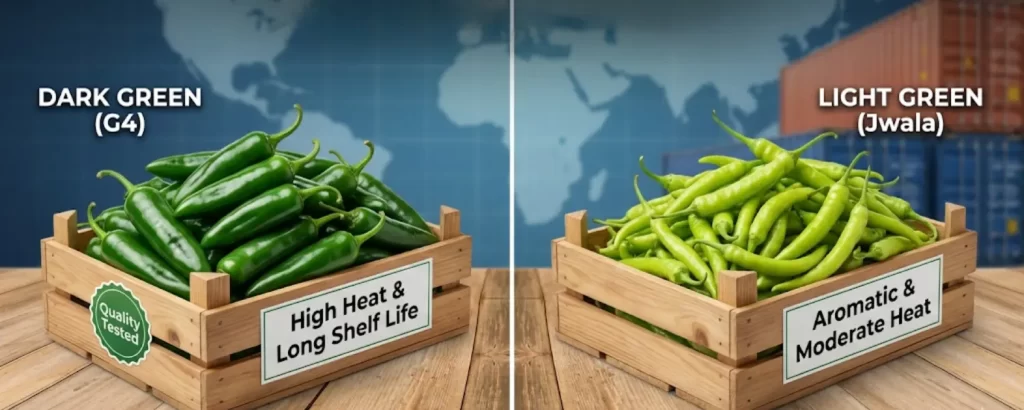
For international importers, wholesalers, and the HORECA sector, the demand for the vibrant, sharp heat of fresh green chillies is year-round. India, with its diverse climate, is a premier source. But when you’re sourcing a product that is harvested one day and can spoil the next, “quality” is defined by one thing: freshness on arrival.   An export quality green chilli that arrives limp, discolored, or spoiled is worthless. The secret to success is not in the chilli itself, but in the process. Freshness cannot be “inspected” into the product at the end; it must be preserved from the moment of harvest. As a specialist exporter of fresh produce from India, we’ve perfected this process. This is our expert guide to how we guarantee freshness. Step 1: The Source (Harvesting the Right Chilli) The process begins before the chillies ever see a box. It starts with sourcing the right product. Variety Selection: We prioritize robust, commercially viable varieties known for their flavour and relative hardiness, such as the G4 green chilli or the Jwala chilli. Harvest Timing: The chillies are harvested at the peak of maturity—fully-grown and crisp, but not yet beginning to ripen (which shortens the shelf life). Any damaged, over-ripe, or diseased chillies are culled at the farm itself. Step 2: The “Golden Hour” – Immediate Pre-Cooling This is the single most critical step in the entire chain. Freshly picked chillies carry “field heat,” which causes them to continue respiring and ripening at a rapid rate. This heat must be removed immediately. Within hours of being picked, the chillies are rushed to a pre-cooling facility. This process rapidly brings the core temperature of the chillies down, effectively “pausing” the aging process and dramatically slowing down decay. Any green chilli exporter who skips this step is risking your entire shipment. Step 3: Expert Sorting and Packing for Protection Once cooled, the chillies are moved to a clean, temperature-controlled packhouse for sorting and packing. Sorting & Grading: A team of trained workers sorts the chillies by hand, grading them for size, uniform colour, and removing any remaining blemishes. This ensures the final product is consistent and meets the “export quality” standard. Protective Packing: The chillies are packed into well-ventilated, corrugated fibreboard (CFB) boxes. These cartons are engineered to be strong enough to stack without crushing the product, while the vent holes allow the cold chain air to circulate freely. Import products for your Needs Ready to Import Step 4: The Unbroken Cold Chain The term “cold chain” refers to the unbroken, temperature-controlled supply line from the packhouse to the aircraft. Refrigerated Transport: The packed cartons are loaded into a refrigerated (“reefer”) truck, which is set to the optimal temperature (typically 7-10°C) for green chillies. Airport Handling: This reefer truck transports the shipment directly to a specialized cold-storage facility at the airport. The product is never left sitting on a hot tarmac. It is held in the cold room until the moment it is moved to the aircraft for loading. This unbroken cold chain is the lifeline of your product. Step 5: The Final Dash – Air Freight Logistics Due to their extremely short shelf life, fresh export quality green chilli cannot be shipped by sea. The 20-30 day transit time is simply too long. Speed is Key: Air freight is the only viable method. By shipping via air, we can ensure that the chillies harvested on Day 1 can be on a flight by Day 2 and in your warehouse in another 1-2 days. Documentation: We ensure all documentation, especially the mandatory Phytosanitary Certificate, is prepared in advance for immediate customs clearance upon arrival. Freshness is a Process, Not a Promise A successful exporter of fresh green chillies is, in reality, a high-speed logistics expert. Guaranteeing freshness is an active, meticulous process that requires investment in infrastructure, deep-rooted partnerships with farms, and zero compromises. As we are currently in India’s peak growing season (November), the quality of fresh chillies is at its best. By partnering with an exporter who masters this process, you can confidently source green chilli from India and deliver a farm-fresh product to your customers.   Ready to source premium, fresh-by-air green chillies? Contact Exim Internationals today to discuss our cold chain process and get a quote for the peak season. Frequently Asked Questions (FAQs) 1. Why is air freight necessary for exporting fresh green chillies? Fresh green chillies are highly perishable, with a short shelf life. Air freight is the only method fast enough (1-3 days) to transport them from India to international markets while they are still fresh. Sea freight takes several weeks, which is far too long. 2. What is a “cold chain”? A cold chain is an unbroken, temperature-controlled supply chain. For green chillies, this means keeping them at a consistent, cool temperature (e.g., 7-10°C) from the moment they are pre-cooled at the farm to the moment they are loaded onto the plane and received by the importer. 3. What is the typical shelf life of an exported green chilli? When handled with a perfect cold chain, you can expect a shelf life of 7 to 14 days after the product arrives at your facility, giving you a safe window for distribution. 4. What is the minimum order quantity (MOQ) for an air freight shipment? The MOQ for air freight is typically based on weight. To be cost-effective, most exporters have an MOQ of 500 kg to 1,000 kg (1 Metric Ton), depending on the destination. 5. What is a G4 Green Chilli? The G4 green chilli is one of the most popular commercial varieties exported from India. It is prized for its uniform size and shape, vibrant green colour, medium heat (SHU), and relatively good shelf life, making it a reliable choice for importers. 6. What is a Phytosanitary Certificate? This is a mandatory document for all fresh produce exports. It is issued by the Indian government’s agricultural authority to certify that the green chillies have been inspected and are free

How to Guarantee Freshness in Export Quality Green Chilli Read Post »

uses of the Cavendish banana
Export Import Fruits Spices Vegetables

Beyond the Fruit Bowl: 5 Major Commercial Uses of the Cavendish Banana

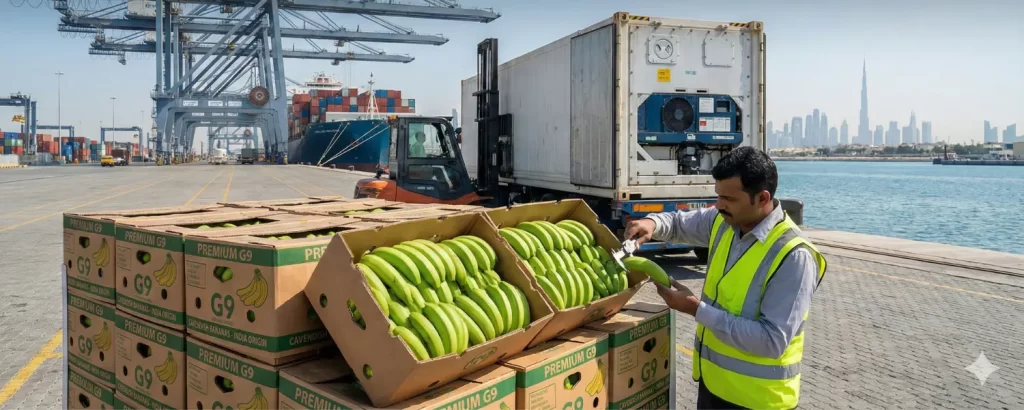
When you think of the uses of the Cavendish banana, you likely picture the world’s most popular fruit: a simple, healthy snack. The Cavendish dominates the “fruit bowl” category, and for good reason. It’s consistent, nutritious, and available year-round. But for a global importer, distributor, or food manufacturer, the Cavendish banana isn’t just a fruit; it’s one of the most versatile, high-demand raw materials on the market. Its commercial applications extend far beyond fresh consumption. As a leading exporter of fresh produce from India, we handle the primary application of this fruit daily. This B2B guide explores the five major commercial uses that drive the global banana trade. 1. Fresh Export for Global Retail The single largest commercial “use” of the Cavendish banana is, without a doubt, its export as a fresh, green fruit to supermarkets worldwide. This is a high-volume, logistically complex business that relies on a specific cultivar: the G9 Cavendish. Application: This is the standard yellow banana found in retail chains across Europe, the Middle East, North America, and Asia. Why it’s a Major Use: The G9 Cavendish was specifically bred for this purpose. It has a long “green life” (allowing it to be transported for weeks), a tough, blemish-resistant skin, and ripens uniformly when exposed to ethylene gas at its destination. B2B Requirement: This use demands the highest export quality Cavendish banana. It requires an unbroken cold chain (reefer containers), strict adherence to specifications (like calibration and finger length), and GlobalG.A.P. certification to be successful. 2. Banana Puree (Aseptic Pulp) This is the largest processed use for bananas and a cornerstone of the food processing industry. Application: Banana puree is the primary base for a vast range of products, including: Baby food Juices, nectars, and smoothies Yogurts, ice creams, and dairy desserts Why it’s a Major Use: It provides a consistent, natural fruit base that is easy to transport, store, and mix in an industrial setting. The product is pasteurized and stored in aseptic packing, giving it a long, stable shelf life without refrigeration. 3. Banana Powder & Flakes For the health food and nutraceutical industry, banana powder offers a shelf-stable way to add nutrition and natural sweetness. Application: The powder is used as a functional ingredient in: Health supplements and protein mixes Cereals, granola, and snack bars Infant formula Natural flavouring agents Why it’s a Major Use: Banana powder is a concentrated source of potassium and other nutrients. It acts as a natural sweetener and a binder, making it a “clean label” ingredient for manufacturers looking to remove artificial additives. Import products for your Needs Ready to Import 4. Dried Banana Chips A globally recognized and popular snack, dried banana chips are a massive B2B commodity. Application: Sliced bananas (often Cavendish or specific local varieties) are fried or dehydrated and lightly sweetened. They are sold in bulk to: Snack food manufacturers for repackaging Cereal companies Producers of trail mixes and muesli Why it’s a Major Use: This “use” transforms a perishable fruit into a high-demand, shelf-stable snack with a long shelf life and global appeal. 5. Banana Flour (Gluten-Free Trend) This is one of the fastest-growing uses of the Cavendish banana, driven by the gluten-free and functional food trends. Application: Green, unripe bananas are peeled, dried, and ground into a fine powder that resembles wheat flour. It is used as: A gluten-free baking alternative A natural thickening agent for sauces and soups A source of resistant starch for the health food market Why it’s a Major Use: It provides a grain-free solution for bakers and a high-fiber, gut-health ingredient for nutraceutical brands, tapping into a powerful consumer health movement. A Versatile Ingredient for Every Industry The Cavendish banana is a true chameleon of the food industry. Its uses span from the high-stakes, fast-paced world of fresh logistics to the scientific, shelf-stable applications of processed powders and purees. Whether you are a retail importer needing pristine, export quality Cavendish bananas or a food processor looking to source high-quality raw material, a reliable supply partner is key.   Ready to source this versatile fruit for your specific application? Contact Exim Internationals today to discuss our premium G9 Cavendish bananas and our expertise in global export logistics. Frequently Asked Questions (FAQs) 1. What is the G9 Cavendish banana? The G9 is the primary cultivar (or variety) of Cavendish banana grown for the international export market. It is prized for its long shelf life (green life), uniform size, and ability to withstand the rigors of long-distance sea transport in reefer containers. 2. What is the main commercial use of Cavendish bananas? The main use by volume and value is for fresh export to the global retail market (supermarkets). The bananas are shipped green and ripened at their destination. 3. What is the difference between bananas used for fresh export vs. for puree? Bananas for fresh export (like our G9) must be of the highest grade: cosmetically perfect, with no blemishes, and cut to precise specifications. Bananas for puree can be of a different grade (often fruit that is cosmetically imperfect but perfectly ripe), making it a separate, specialized supply chain. 4. How are fresh bananas exported to keep them from ripening? They are exported via a meticulously managed cold chain. They are kept at a specific cool temperature (around 13-14°C) in a reefer container, which suspends the ripening process for the 3-4 week sea journey. 5. What is banana puree used for in the food industry? Banana puree is a major ingredient for the beverage industry (smoothies, juices), the dairy industry (yogurts, ice cream), and, most commonly, for producing baby food. 6. Is banana powder the same as banana flour? No. Banana powder is typically made from ripe bananas and is used as a flavouring or natural sweetener. Banana flour is made from unripe green bananas and is used as a gluten-free flour substitute for baking and as a source of resistant starch. 7. What is “aseptic packing”? Aseptic packing is a sterilization technique used for banana puree.

Beyond the Fruit Bowl: 5 Major Commercial Uses of the Cavendish Banana Read Post »

bulk mango export
Export Import Fruits Spices Vegetables

Alphonso vs. Kesar: A Bulk Mango Exporter’s Guide to India’s Premier Varieties

In the world of international fruit trade, few products command the same reverence as the Indian mango. But for a commercial importer, not all mangoes are created equal. The key to a profitable season lies in sourcing the right variety for your specific market. The two undisputed leaders in India’s bulk mango export are the “King of Mangoes,” the Alphonso, and the “Queen of Mangoes,” the Kesar.   As we are now in November 2025, the 2025 fresh season is long past. Smart importers are now actively planning and contracting for the upcoming 2026 harvest (April-July). As a leading fresh mango exporter from India, we’ve crafted this guide to help you make the most strategic choice for your business. Meet the “King”: The Alphonso Mango The Alphonso, or Hapus, is the most famous and sought-after Indian mango. It is a premium product that commands the highest price on the global market. Origin: Primarily grown in the coastal Ratnagiri and Devgad regions of Maharashtra (our home state). Profile: Known for its deep saffron-colored, non-fibrous, creamy flesh and a complex, rich aroma that is second to none. Key Specs: High Brix level (sweetness) and a perfect size (250g-300g) for premium retail packs. Best B2B Use Cases: Premium Fresh Export: This is the ultimate “eating mango” for high-end retailers in the EU, Middle East, and USA. It’s a high-value, low-volume product shipped exclusively by air freight. Gourmet Mango Pulp: The unique flavour of Alphonso makes it the top choice for gourmet ice creams, patisserie, and high-end beverages. Meet the “Queen”: The Kesar Mango The Kesar mango is a formidable competitor to the Alphonso, prized for its intense sweetness and vibrant, uniform color. It is often considered the more versatile of the two for commercial applications. Origin: Primarily grown in the Gir region of Gujarat. Profile: Distinctive bright orange pulp (its namesake, Kesar means “saffron”) and an intensely sweet, aromatic flavour. Key Specs: Excellent pulp-to-stone ratio and a very high Brix level. Best B2B Use Cases: Fresh Export: A popular choice for retailers, offering a more accessible price point than the Alphonso. Also shipped exclusively by air freight. Commercial Mango Puree: Kesar is the “gold standard” for the beverage industry. Its brilliant, stable color and sweet taste make it the #1 choice for mango juices, nectars, and lassis worldwide. Import products for your Needs Ready to Import Alphonso vs. Kesar: A Head-to-Head Guide for Importers Feature Alphonso Mango Kesar Mango Primary Market Premium/Luxury Retail Mass Retail & Beverage Processing Texture Deep Creamy, Non-Fibrous Fleshy, Uniform Pulp Flavor Profile Complex, Rich, Aromatic Intensely Sweet, Aromatic Best For (Fresh) High-end grocery, gift boxes Supermarket retail, fruit salads Best For (Pulp) Gourmet desserts, ice cream Juices, beverages, smoothies Key Advantage Unmatched “brand” recognition & flavour Brilliant colour & high sweetness The Off-Season Opportunity: Sourcing Mango Pulp Today This guide is timed to help you plan your 2026 fresh mango procurement. However, your demand for mango doesn’t have to stop with the fresh season. As a mango pulp exporter, we offer a year-round solution. Both Alphonso and Kesar mangoes are processed into shelf-stable, aseptic mango pulp during the peak of the harvest. This means that right now, in November 2025, you can source premium mango pulp for your beverage, dairy, or bakery manufacturing needs. It’s the perfect way to keep a best-selling flavour in your portfolio all year long. How to Secure Your 2026 Supply Whether you choose the royal Alphonso or the sweet Kesar, a successful 2026 fresh season depends on your planning in 2025. A professional fresh mango exporter is already building their sourcing plan, and you need to be a part of it. This involves: Vetting an APEDA-certified partner. Confirming their expertise in mandatory hot water treatment. Ensuring they have a proven, reliable air freight logistics and cold chain process. By contracting early, you secure not just a product, but a partnership. Ready to start planning your 2026 fresh mango strategy or need to source premium mango pulp today? Contact Exim Internationals to discuss your volume requirements. Frequently Asked Questions (FAQs) 1. Why should I contract for the 2026 fresh mango season so early? The demand for premium Alphonso and Kesar mangoes far exceeds supply. Early contracting (in Q4 2025) is the only way to guarantee your volume, secure the best quality grades, and lock in essential air freight capacity before the seasonal rush. 2. Which mango is better for my business: Alphonso or Kesar? If you serve a high-end, premium retail market, the Alphonso‘s brand name is unmatched. If you are in the beverage industry or serve a market that values sweetness and vibrant color, Kesar is often the more versatile and cost-effective choice. 3. What is “hot water treatment” and is it required for bulk mango export? Yes. This is a mandatory phytosanitary process for exporting Indian mangoes to most countries. The fruit is briefly submerged in hot water to eliminate fruit flies, ensuring it meets strict biosecurity standards. A professional exporter manages this process. 4. Why can’t fresh mangoes be shipped by sea freight? Premium “eating” mangoes like Alphonso and Kesar are highly perishable. Their ripe-stage shelf life is too short for the 20-30 day journey by sea. Air freight (a 1-2 day journey) is the only way to deliver them in perfect, fresh condition. 5. What is an APEDA-certified exporter? APEDA (Agricultural and Processed Food Products Export Development Authority) is the key government body for Indian agricultural exports. An APEDA certification is mandatory for any legitimate fresh mango exporter and ensures they adhere to all quality and safety protocols. 6. Can I buy mango pulp now in November 2025? Yes, absolutely. Mango pulp is processed and aseptically packed during the harvest (April-July) and is sold year-round. We have stocks of premium Alphonso and Kesar pulp ready for shipment today. 7. What is the minimum order for a bulk mango export? For fresh mangoes via air freight, the MOQ is typically based on air cargo pallets, often starting around 500 kg

Alphonso vs. Kesar: A Bulk Mango Exporter’s Guide to India’s Premier Varieties Read Post »

bulk coconut sugar
Export Import Fruits Spices Vegetables

Tapping into the Health Trend: Why UAE Importers are Sourcing Bulk Coconut Sugar

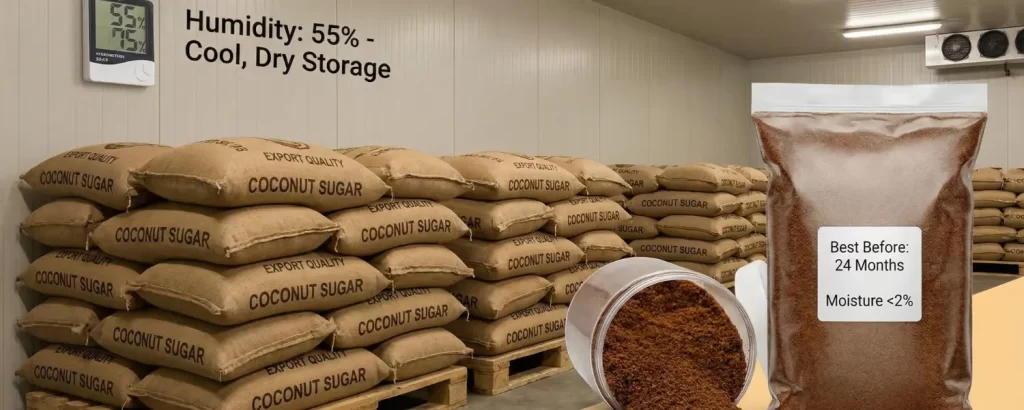
Across the United Arab Emirates, from the hypermarkets of Dubai to the luxury hotels of Abu Dhabi, a powerful consumer shift is underway. The demand for “clean label,” natural, and healthier alternatives to refined white sugar is no longer a niche trend—it’s a mainstream market driver. For savvy UAE importers and distributors, one product stands out as the clear winner in this health revolution: bulk coconut sugar.   But why has this specific natural sweetener captured the attention of the region’s largest food businesses? As a specialist exporter of premium Indian commodities, we at Exim Internationals have a front-row seat to this surging demand. Here’s a breakdown of why UAE importers are strategically sourcing bulk coconut sugar right now. 1. The Consumer Demand: A Perfect Fit for the UAE Market Coconut sugar is not just another sugar. Its unique selling propositions align perfectly with the values of the modern UAE consumer. The “Low-Glycemic” Advantage: Unlike refined sugar, unrefined coconut sugar is a low-glycemic index (GI) food. This makes it a highly desirable option for the large and growing diabetic population, as well as for health-conscious consumers looking to avoid blood sugar spikes. The “Unrefined & Natural” Appeal: Today’s “clean label” consumer wants to read an ingredient list they understand. Natural coconut sugar is a simple, one-ingredient product made from the sap of the coconut palm. It’s unrefined, sulfur-free, and free from the chemical processing of other sweeteners. A “Functional Food” Bonus: Beyond just being sweet, it retains many of the natural minerals found in the coconut palm, such as potassium, iron, and zinc. This positions it as a “functional” or “better for you” sweetener in the minds of consumers. 2. The Commercial Opportunity: Beyond the Retail Shelf This strong consumer demand creates three distinct, high-volume opportunities for importers who source in bulk. The HORECA Sector: The UAE’s world-class hotel, restaurant, and café (HORECA) sector is a massive consumer. Premium coffee shops, 5-star hotel buffets, and healthy-eating restaurants are all adding coconut sugar to their offerings to cater to discerning, high-paying customers. The Private Label Gold Rush: Major retailers in the UAE (like Carrefour, Lulu, and Spinneys) are aggressively expanding their private label health food lines. Sourcing bulk coconut sugar allows an importer to supply these retailers directly for their highly profitable in-house brands. The Food Manufacturing Boom: Local food manufacturers—from artisanal bakeries and health bar producers to beverage companies—are reformulating their products to be healthier. Coconut sugar is the perfect one-to-one replacement for traditional sugar in many recipes, instantly upgrading their product’s health credentials. Import products for your Needs Ready to Import 3. The Sourcing Solution: Why India is the Smart Choice for the UAE Once an importer decides to source bulk coconut sugar, India (and a partner like Exim Internationals, based in Pune) becomes the logical choice. The Proximity Advantage: The sea transit time from India’s west coast ports (like Nhava Sheva) to Jebel Ali Port is incredibly short (approx. 7-10 days). This is a massive logistical and cash-flow advantage over sourcing from other, more distant origins like Indonesia or the Philippines. Guaranteed Quality Specs: For bulk storage, quality is everything. We guarantee the critical specifications that UAE buyers demand: Low Moisture Content: Guaranteed to be <2% to prevent clumping and ensure a long, stable shelf life in your warehouse. Consistent Granulation: A uniform particle size perfect for repackaging or industrial use. Reliable Supply Chain: We manage the entire process, from our partner farms in South India to the final container load, providing a Certificate of Analysis (COA) with every shipment to verify its quality. A Strategic Addition for 2026 The demand for bulk coconut sugar in the UAE is not a passing fad; it’s a fundamental shift in consumer behavior. For importers, this product represents a high-growth, high-margin opportunity. As you plan your inventory for 2026, adding export quality coconut sugar to your portfolio is one of the smartest strategic moves you can make. Partnering with a reliable Indian exporter ensures you get the best quality product via the fastest, most cost-effective shipping route.   Ready to capitalize on this health trend? Contact Exim Internationals today for a detailed CNF quote to Jebel Ali and to discuss our private label solutions for the UAE market. Frequently Asked Questions (FAQs) 1. Why is coconut sugar so popular in the UAE? Its popularity is driven by the health and wellness trend. Its low-glycemic index appeals to health-conscious consumers and those managing diabetes, while its “unrefined” status fits the clean-label-eating movement. 2. What is the key quality spec for importing bulk coconut sugar? The most critical specification is moisture content, which must be less than 2%. This prevents the sugar from clumping into a solid block during shipping and storage and ensures a long shelf life. 3. What is the shipping time from India to the UAE? The sea transit time is a major advantage. From a port like Nhava Sheva (near Pune) to Jebel Ali Port (Dubai), it is typically only 7-10 days. 4. What is the MOQ for a bulk coconut sugar shipment? To be cost-effective, the standard MOQ is a container load (FCL), which is approximately 20-25 metric tons. However, we also offer trial-friendly pallet-level MOQs (e.g., 200-500 kg) via air freight for new partners. 5. Can you provide coconut sugar for my private label brand? Yes, absolutely. We specialize in providing bulk coconut sugar for UAE businesses to repackage under their own private label. We can pack in 25kg bulk bags for this purpose. 6. Is your coconut sugar unrefined and sulfur-free? Yes. Our natural coconut sugar is 100% unrefined, meaning it’s simply evaporated coconut sap. It is also sulfur-free, a key quality marker. 7. What is a Certificate of Analysis (COA)? A COA is a lab report from a third-party testing agency that scientifically verifies the key quality specifications of the coconut sugar, such as its moisture content, granulation, and purity. It is your guarantee of quality. 8. How do I get a quote for

Tapping into the Health Trend: Why UAE Importers are Sourcing Bulk Coconut Sugar Read Post »

coconut supplier for the uae
Export Import Fruits Spices Vegetables

Why Semi-Husked is King: A Coconut Supplier’s Guide to Profitability for the UAE Market

For importers in the UAE, the coconut is a staple commodity. From the high-demand kitchens of the HORECA sector in Dubai to retail shelves in Abu Dhabi, a consistent, high-quality supply is essential. But as any savvy importer knows, not all coconuts are sourced equally. The single biggest decision that impacts your bottom line is the form you import.   While fully husked (shell-only) coconuts might seem “cleaner,” the semi-husked coconut is, without question, the king of export. As a specialist coconut supplier for the UAE, with deep roots in India’s best growing regions, we’ve built our business on this superior product. Why? Because it is specifically engineered for one purpose: to maximize your profitability. Here’s the breakdown. 1. The Freight Advantage: Fit More, Pay Less This is the most direct and powerful benefit. International shipping is a game of volume and weight, and the full coconut husk is heavy, bulky, and mostly water. By opting for semi-husked, where the excess husk is removed while a protective cap remains, you gain two massive advantages: Lighter Weight: A semi-husked coconut is 25-30% lighter than a fully husked one. More Units Per Container: This weight and size reduction is a game-changer. A standard 40ft reefer container can fit approximately 25,000 semi-husked coconuts, whereas it might only fit 20,000 fully husked nuts. When you are paying a fixed price per container, shipping 5,000+ more units for the same freight cost dramatically lowers your landed cost per coconut. This saving goes directly to your profit margin. 2. The Quality Advantage: Natural Protection & Longer Shelf Life The second threat to your profit is spoilage. A coconut’s hard shell is strong, but it’s not invincible. The remaining tuft of husk on a semi-husked coconut serves as a natural shock absorber. During the 7-10 day sea transit, handling, and “stuffing” (loading) of the container, this layer provides critical protection against bumps and impacts. Fewer Cracks: This prevents the hairline cracks that are the primary entry point for mould and bacteria. Reduced Spoilage: Fewer cracks mean a significantly lower spoilage rate. Longer Shelf Life: A coconut that arrives undamaged and healthy will naturally have a much longer shelf life in your warehouse, giving you more time to sell your inventory at full price. Import products for your Needs Ready to Import 3. The India-to-UAE Proximity Advantage For the UAE market, sourcing from an Indian coconut supplier is a major strategic advantage over competitors. Short Transit Time: The sea journey from India’s west coast ports (like Nhava Sheva) to Jebel Ali Port is incredibly short, often just 7-10 days. Maximum Freshness: This rapid transit, combined with the superior protection of the semi-husked format, means you receive a fresher, higher-quality product compared to shipments from more distant origins. This is a key selling point for your HORECA clients who demand the best. 4. The Sourcing Advantage: The Best of Pollachi A premium product starts at a premium source. As a Pune-based exporter, we have direct access to the “Coconut Capital” of India: Pollachi, Tamil Nadu. Coconuts from this region are globally renowned for their quality, thick flesh, and sweet water. When you partner with us, you aren’t just buying “a coconut.” You are securing a supply of premium, export-grade Pollachi coconuts, specifically prepared in the semi-husked format to ensure they arrive at your port in perfect, profitable condition. A Smarter Shipment for a Bigger Profit For a coconut supplier to the UAE, “quality” and “profitability” are the same thing. The semi-husked coconut is the clear winner on all fronts. It is the most cost-effective, safest, and highest-quality format for import, designed to protect your investment and maximize your returns.   Ready to boost your profitability? Contact Exim Internationals today for a detailed CNF quote for premium, semi-husked Pollachi coconuts delivered directly to Jebel Ali. Frequently Asked Questions (FAQs) 1. How many semi-husked coconuts can I fit in a 40ft container to Jebel Ali? A 40ft reefer (refrigerated) container typically holds approximately 25,000 semi-husked coconuts, packed in 25 nuts per PP bag. 2. What is the typical shelf life of these coconuts when they arrive in the UAE? Thanks to the short transit and protective husk, our semi-husked coconuts have an excellent shelf life. When stored correctly in a cool, dry place, they can last for over 60 days post-arrival. 3. What is the sea transit time from India to the UAE for coconuts? From the port of Nhava Sheva (near our Pune headquarters) to Jebel Ali Port, Dubai, the sea transit time is very fast, typically only 7 to 10 days. 4. Why are Pollachi coconuts considered premium? Pollachi coconuts are grown in a region with ideal soil and weather conditions. They are globally famous for their quality, characterized by sweeter water and thicker, fleshier kernels. 5. What is the main benefit of semi-husked vs. fully-husked? Profitability. You fit more units in a container, which lowers your per-nut shipping cost, and the husk’s protection reduces spoilage, meaning more sellable product on arrival. 6. What is the MOQ for a coconut supplier like Exim Internationals? To ensure the best freight economics for our clients, our standard Minimum Order Quantity (MOQ) is one 40-foot container. We can, however, discuss a 20-foot container for a trial shipment. 7. What documents are required for UAE customs for a coconut shipment? We provide a complete set of documents for smooth customs clearance, including the Bill of Lading, Commercial Invoice, Packing List, Certificate of Origin, and the mandatory Phytosanitary Certificate. 8. Do you only ship to Jebel Ali? While Jebel Ali is the most common port, we are a full-service coconut supplier and can arrange shipments to other major UAE ports, including Khalifa Port (Abu Dhabi) and Sharjah. About us Exim Internationals is a premier export company dedicated to delivering the finest products from India to international markets. Our mission is to establish India as a global export powerhouse, contributing to economic growth and showcasing the richness of Indian goods worldwide. From the pashmina

Why Semi-Husked is King: A Coconut Supplier’s Guide to Profitability for the UAE Market Read Post »

fresh mango exporter
Vegetables Export Import Fruits Spices

How to Secure Your 2026 Alphonso & Kesar Mango Supply: A Step-by-Step Guide

For international fruit importers, the Indian mango season (April-July) is a golden window of opportunity. The “King of Mangoes,” the Alphonso, and the “Queen of Mangoes,” the Kesar, are two of the most sought-after fruits in the world. Their unique flavor, rich aroma, and buttery texture command a premium price in markets across the globe.   However, success in the mango trade is not won during the hectic harvest. It’s secured months in advance. As we are currently in November 2025, the season is over, but the work of a professional importer is just beginning. Waiting until March 2026 to place an order is a recipe for disappointment, high prices, and supply uncertainty.   As a leading fresh mango exporter from India, we’ve built this guide for strategic buyers who understand the value of planning. Here is your step-by-step guide to securing your 2026 Alphonso and Kesar mango supply now. Why You Must Plan Your 2026 Mango Supply in Q4 2025 The Indian mango export market is a game of high demand and critically short supply. The season for these premium varieties is intense and brief. Proactive planning is the only way to mitigate risk and guarantee success. Extreme Demand for “Royal” Varieties: Alphonso and Kesar mangoes are not simple commodities; they are luxury brands with Geographical Indication (GI) tags. The best-quality, export-grade fruit is pre-sold long before it’s picked. Limited Logistical Capacity: Fresh mangoes are highly perishable. They must be shipped via air freight on a strict cold chain. This cargo space is expensive and limited. A fresh mango exporter locks in this capacity for their contracted clients first. If you wait, you risk being unable to ship your product at any price. Securing the Best Quality: Early contracts allow your exporter to reserve the top-grade fruit from their network of GlobalG.A.P. certified farms. Buyers who wait get whatever is left over. A Step-by-Step Guide to Contracting for the 2026 Season Step 1 (Now: Oct – Dec 2025): Define Your Requirements This is the initial planning phase. You need to outline your needs clearly. Variety: Are you targeting the premium Alphonso market, the sweet Kesar market, or both? Specifications: What are your quality needs? This includes size (e.g., 250-300g per fruit), Brix level (sweetness), and packaging requirements (e.g., 3 kg boxes). Volume: What is your estimated total volume for the season? (e.g., 5 MT per week for 8 weeks). Import products for your Needs Ready to Import Step 2 (Now: Oct – Dec 2025): Vet Your Fresh Mango Exporter This is the most critical step. Your partner must be an expert in this high-stakes product. Ask them these critical questions: Are you APEDA certified? (A mandatory requirement). Can you provide GlobalG.A.P. certified fruit? What is your standard procedure for the mandatory hot water treatment? Can you detail your cold chain logistics from the farm to the destination airport? Do you have proven experience with air freight logistics to my country? A professional fresh mango exporter will have confident, detailed answers to all of these questions. Step 3 (Jan – Feb 2026): Finalize Contracts & Terms Once you have selected your expert partner, it’s time to finalize the agreement. Based on the crop forecasts, your exporter will provide a pricing structure. This contract will lock in your volume, quality specifications, and shipment schedule. This is your supply guarantee. Step 4 (April – July 2026): The Harvest & Export Execution This is where your planning pays off. While others are scrambling, your exporter will be executing your plan: Sourcing: Hand-picking the contracted quality fruit from the farm. Processing: Transporting to the packhouse for sorting, grading, and mandatory hot water treatment. Packing: Packing into custom-specified boxes. Logistics: Managing the unbroken cold chain to the airport, securing the phytosanitary certificate, and managing the air freight to your destination. Beyond the Fresh Season: Your Year-Round Opportunity A true fresh mango exporter is often also a leading mango pulp exporter. As you plan your 2026 fresh season, ask about year-round, shelf-stable products. Aseptic Alphonso and Kesar mango pulp are in high demand from beverage, ice cream, and bakery manufacturers. This allows you to turn a seasonal relationship into a profitable, year-round supply chain. Secure Your 2026 Success Today The groundwork for a profitable 2026 mango season is laid in the quiet of the off-season. By being proactive, asking the right questions, and partnering with an expert fresh mango exporter from India, you can ensure that when the “King of Fruits” is ready for harvest, your supply is guaranteed. Ready to start planning your 2026 Alphonso and Kesar mango strategy? Contact Exim Internationals today to discuss your volume requirements and secure your contract for the upcoming season. Import products for your Needs Ready to Import Frequently Asked Questions (FAQs) 1. Why should I contract for 2026 mangoes so early? The demand for premium Alphonso and Kesar mangoes far exceeds supply. Early contracting (in Q4 2025) is the only way to guarantee your volume, secure the best quality grades, and lock in essential air freight capacity before the seasonal rush. 2. What is the difference between Alphonso and Kesar mangoes? The Alphonso (or Hapus) is prized for its deep saffron color, creamy texture, and complex, rich flavor. It’s the ultimate “eating” mango. The Kesar is known for its intense sweetness and vibrant orange pulp, making it a favorite for both eating and processing into juices and pulp. 3. What is “hot water treatment” for mangoes? This is a mandatory phytosanitary (plant health) process for exporting Indian mangoes to many countries, including the EU, UK, and USA. The fruit is briefly submerged in hot water to eliminate any risk of fruit flies, ensuring it meets strict biosecurity standards. 4. Why are fresh mangoes shipped via air freight? Alphonso and Kesar mangoes are extremely perishable, with a short ripe-stage shelf life. Air freight (a 1-2 day journey) is the only way to get them from the farm in India to an international market in perfect, fresh condition. Sea

How to Secure Your 2026 Alphonso & Kesar Mango Supply: A Step-by-Step Guide Read Post »

Fenugreek seeds exporter
Export Import Fruits Spices Vegetables

The Rajasthan Advantage: A Fenugreek Seeds Exporter’s Guide to India’s Best

In the global spice market, fenugreek (methi dana) is a unique and high-demand commodity. It serves a dual purpose: it’s a foundational ingredient in culinary traditions for its unique, slightly bitter, and aromatic flavour, and it’s a powerhouse in the nutraceutical industry for its health benefits. For any international buyer, the key to success is not just sourcing fenugreek, but sourcing quality fenugreek. And in India, the world’s largest producer, one region stands above all others: Rajasthan. As a specialist Fenugreek Seeds Exporter with deep roots in the Indian agricultural market, we’ve built our guide to help you understand the “Rajasthan Advantage” and how to leverage it for your business. What is the Rajasthan Advantage? Rajasthan is not just a producer of fenugreek; it is the dominant producer. This state alone accounts for the vast majority of India’s total output. This dominance isn’t an accident—it’s the result of a perfect combination of scale, climate, and quality. Unmatched Scale and Supply Security: Because Rajasthan’s production volume is so immense, it provides unparalleled supply chain stability. For a bulk buyer, this scale means a consistent and reliable supply of fenugreek, even in fluctuating market conditions. It’s the engine that powers the global fenugreek trade. The Ideal Arid Climate: Fenugreek thrives in the semi-arid climate of Rajasthan. This specific weather, with its moderate temperatures and low rainfall during the growing season, is key. It allows the seeds to mature perfectly and, crucially, to dry uniformly. This natural advantage results in a cleaner, hardier seed with lower moisture content, which is a critical factor for preventing mould and ensuring a long shelf life during export. Superior Seed Quality: The seeds from this region are renowned for their quality. They are typically bold, have a uniform golden-brown colour, and possess the strong aromatic profile that both food manufacturers and supplement makers demand. A 2026 Harvest Update: The Sowing Season is Now Understanding the agricultural cycle is key to strategic sourcing. As we are currently in November 2025, the sowing season for the next Rabi crop is in full swing across Rajasthan. What our teams on the ground are seeing: Following a favorable monsoon, soil moisture levels are excellent, providing ideal conditions for planting. Strong market prices from the previous season have encouraged farmers, and we are forecasting a stable to strong acreage for the 2026 crop. This means that now is the most critical time for international buyers to plan. By engaging with a fenugreek seeds exporter today, you are strategically positioning your business to secure the best quality and pricing from the 2026 harvest (which will occur in Feb-Mar 2026). Import products for your Needs Ready to Import Sourcing for Your Application: Food vs. Nutraceutical A key part of the Rajasthan Advantage is its ability to serve two different markets from one source. A professional exporter helps you find the right grade for your specific need. For Food Manufacturers (Food Grade): This market requires clean, machine-graded seeds with a good aroma for use in spice blends, curries, and sauces. Our standard export quality fenugreek seeds from Rajasthan are perfect for this, guaranteed to be 99% pure or higher. For Health & Wellness (Nutraceutical Grade): This industry requires high-purity seeds for supplements and extracts. We can source specific batches that meet these needs and verify their profile with a Certificate of Analysis (COA). Why Your Exporter’s Expertise Matters An international buyer cannot simply go to a field in Rajasthan. You need a partner on the ground to manage the complex supply chain. As a fenugreek seeds exporter based in Pune, Maharashtra, we are in the perfect logistical position. We have strong, established sourcing networks in Rajasthan’s key trading hubs. We manage the entire process for you: Quality Control: Verifying the quality at the source. Processing: Handling the machine cleaning, grading, and packing into 25kg or 50kg bags. Documentation: Securing all necessary paperwork, including the Phytosanitary Certificate. Logistics: Managing the transport of your container load to a major port like Nhava Sheva (Mumbai) for its global journey. Secure Your Supply of India’s Best The Rajasthan Advantage is clear: it offers the scale, climate, and quality that define the world’s best fenugreek. The strategic advantage for your business is partnering with an exporter who knows how to harness it. By planning your 2026 procurement now, you ensure a year of stable, high-quality supply. Ready to leverage the Rajasthan Advantage for your business? Contact Exim Internationals today for the latest sowing season insights and to discuss your bulk contract for the 2026 harvest. Frequently Asked Questions (FAQs) 1. What is methi dana? Methi dana is the Hindi name for fenugreek seeds. You will often hear both terms used interchangeably in the Indian market. 2. Why is Rajasthan the best state for sourcing fenugreek? Rajasthan is the largest producer of fenugreek in the world. Its ideal arid climate results in a high-quality, stable crop with a low moisture content, making it perfect for export. 3. What’s the difference between food-grade and nutraceutical-grade fenugreek seeds? Food-grade fenugreek is valued for its aroma and flavour in cooking. Nutraceutical-grade is sought for its potential health benefits and often requires a higher level of purity and verification, sometimes including a Certificate of Analysis (COA). 4. When is the 2026 fenugreek harvest season in India? Fenugreek is a Rabi crop. The seeds are being sown now (October-November 2025), and the new crop will be harvested from February to March 2026. 5. What is the best time to place an order for the 2026 harvest? The best time to plan and enter into contracts is now, during the pre-harvest and sowing season (Q4 2025). This allows you to secure the best quality and pricing before the market rush. 6. What is the standard packing for a bulk fenugreek export? The standard packing is in new, clean 25 kg or 50 kg PP (Polypropylene) or jute bags. This is the standard for a container load. 7. What is a Phytosanitary Certificate? This is a mandatory

The Rajasthan Advantage: A Fenugreek Seeds Exporter’s Guide to India’s Best Read Post »

Vegetables Export Import Fruits Spices

A Buyer’s Guide to Contracting for Processed Cumin Spice

For global food manufacturers, spice blenders, and HORECA suppliers, processed cumin spice (cumin powder) is a foundational ingredient. Its consistent, warm, and earthy flavour is essential in everything from spice blends and sauces to ready-to-eat meals. However, sourcing this ready-to-use ingredient involves far more risk than sourcing whole seeds. A successful procurement strategy depends on a clear, detailed contract that guarantees not just flavour and purity, but also—most critically—food safety. As we are now in the middle of the sowing season (November 2025) for the next Indian cumin crop, the time for strategic planning is now. This is your guide to contracting for the 2026 harvest, ensuring you secure a supply that is safe, consistent, and of the highest quality. 1. Why Contract Now? The Sowing Season Advantage The cumin you will be using for most of next year is being planted right now. Contracting for your 2026 supply of processed cumin spice during the Q4 2025 sowing season is the most strategic move a buyer can make. Secure Your Supply: The new harvest (Feb-Mar 2026) will be in high demand. Contracting now ensures your required volume is allocated to you before the post-harvest rush. Guarantee Freshness: Early contracting means your cumin powder will be milled from the freshest new-crop seeds, which have the highest volatile oil content. This translates to a more potent aroma and richer flavour for your products. Achieve Price Stability: While prices are market-linked, early volume commitments allow for better strategic planning and can help hedge against the extreme price volatility that often occurs during the peak harvest season. 2. The “Processed” Spec: What Your Contract Must Define When buying cumin powder, “quality” is a technical specification. Your contract must be precise. Mesh Size: How fine do you need the powder? A mesh size (e.g., 30 mesh vs. 60 mesh) determines the powder’s texture and how it disperses in your product (a fine powder for sauces, a coarser grind for rubs). Purity & Grade: The powder should be milled from a specific grade of whole seeds, such as “Singapore Grade” (99% pure) or “Europe Grade” (99.5% pure), to guarantee it is free from stalks and foreign matter. Volatile Oil Content: For brands that compete on flavour, specifying a minimum volatile oil (or cumin aldehyde) content in your contract guarantees a consistent aromatic potency in every batch. Import products for your Needs Ready to Import 3. The Non-Negotiable: Steam Sterilization This is the most critical clause in any contract for processed cumin spice. Raw cumin, like any agricultural product, carries a natural microbial load (bacteria, yeast, mould). While this is eliminated when a whole seed is cooked, it is a significant food safety risk in a ready-to-use powder. The Old Method (ETO): For years, this was handled with Ethylene Oxide (ETO), a chemical fumigant. ETO is now banned or heavily restricted in the EU, Japan, and other major markets. Products treated with it risk being rejected at the border. The Gold Standard (Steam): Your contract must specify “Steam Sterilized.” This is a 100% natural, ETO-free process that uses high-temperature steam to reduce the microbial load to safe levels. It is the only method that guarantees your cumin powder is safe for use in ready-to-eat products and compliant with all global food safety standards. 4. The Proof: Your Documentation Checklist A contract is only as good as its verification. Your agreement must state that every shipment will be accompanied by: Certificate of Analysis (COA): This is your proof. A COA from an independent lab verifies the key specs: the microbiological report (proving it’s safe), the mesh size, purity, moisture, and volatile oil content. Phytosanitary Certificate: This is a mandatory export document certifying the product is free from plant pests. Certificate of Origin: To verify the product is authentic Indian Cumin, sourced from key regions like Gujarat. A Contract for Quality & Safety Contracting for processed cumin spice is not just a purchase; it’s a partnership in quality and food safety. By planning for the 2026 harvest now and building these key specifications—especially steam sterilization and a verified COA—into your contract, you secure a reliable, safe, and high-quality supply chain for the year ahead. Ready to plan your 2026 cumin supply? Contact Exim Internationals today for a detailed consultation and to secure your contract for the upcoming harvest. Frequently Asked Questions (FAQs) 1. What is “processed cumin spice”? “Processed cumin spice” typically refers to cumin that has been ground into powder (to a specific mesh size) and has undergone a food safety process like steam sterilization. 2. What is the difference between Steam Sterilization and ETO treatment? Steam sterilization is a natural, chemical-free process that uses high-heat steam to kill microbes. ETO (Ethylene Oxide) is a chemical gas fumigant that is banned in many countries (like the EU) due to health concerns. Always demand steam-sterilized, ETO-free cumin. 3. What is “mesh size” and why does it matter? Mesh size measures the fineness of the powder. A higher number (e.g., 60 mesh) is a very fine powder, perfect for smooth sauces. A lower number (e.g., 30 mesh) is coarser and ideal for spice rubs or visible seasoning blends. 4. When is the best time to contract for the 2026 cumin harvest? The best time is during the sowing season (October-December 2025). This allows you to secure your volume and quality from the new crop, which will be harvested from February to March 2026. 5. What is the Unjha market? The Unjha market in Gujarat, India, is the world’s largest trading hub for cumin. A good bulk cumin exporter will have deep roots and sourcing capabilities in this critical market. 6. What is a Certificate of Analysis (COA)? A COA is a lab report that verifies the product’s specifications. For processed cumin spice, it is essential proof of the product’s safety (microbial count) and quality (purity, mesh size, etc.). 7. What is the MOQ for contracting bulk cumin powder? The standard Minimum Order Quantity (MOQ) for a cost-effective export is

A Buyer’s Guide to Contracting for Processed Cumin Spice Read Post »

fennel seeds
Export Import Fruits Spices Vegetables

A Buyer’s Guide to Contracting for the 2026 Fennel Seed Harvest

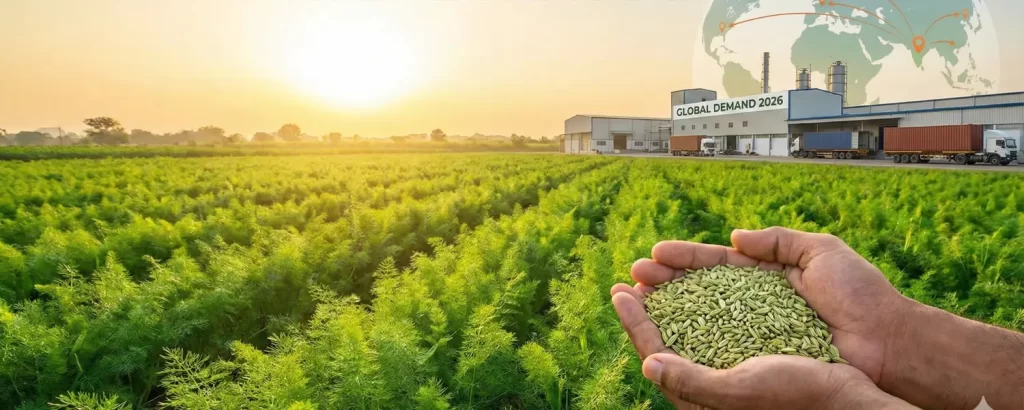
For international importers, gin distillers, and herbal tea blenders, the global demand for high-quality Indian fennel seed is robust. Its unique, sweet, and aromatic profile is an essential ingredient. However, many buyers make a critical mistake: they wait until the harvest begins (February-March) to start sourcing. By then, the best quality lots are often already spoken for. As we are currently in November 2025, the peak sowing season for India’s Rabi crop is underway. The decisions being made by farmers right now will determine the quality and quantity of the 2026 harvest. This is the single most important time for strategic buyers to plan. As a leading Indian exporter based in Maharashtra, we’ve created this buyer’s guide to help you navigate the procurement process and secure your supply of premium fennel seed for 2026. Why Contract for 2026 Fennel Seed Now? The Sowing Season Advantage Contracting with an export partner during the Q4 2025 sowing season is the most strategic move a bulk buyer can make. Here’s why: Secure Premium Quality: The most sought-after varieties, like the highly aromatic Lucknow fennel prized by gin botanicals suppliers and herbal infusion brands, are in high demand. By contracting early, you get “first pick” of the new crop, ensuring you secure lots with the highest volatile oil and anethole content. Achieve Price Stability: The spot market during the harvest (Feb-Mar) can be volatile. Early contracting allows you to lock in a more stable pricing structure based on long-term forecasts, protecting your budget from sudden spikes. Guarantee Your Supply: A reliable exporter uses this pre-season period to forecast demand and plan their sourcing. By giving them your volume commitment now, you guarantee that your container load (or multi-container load) will be allocated and ready, even if the overall market is tight. A Sowing Season Forecast: What We’re Seeing for 2026 Our teams on the ground in key growing regions are monitoring the 2025 sowing season closely. Here’s what we see: Positive Farmer Sentiment: Following a favorable monsoon, soil moisture is good in key fennel-growing states like Gujarat and Rajasthan. Acreage Trends: With firm prices for fennel seed in the previous season, farmer sentiment is positive. We anticipate a stable to slightly increased acreage being sown, which bodes well for a healthy 2026 supply. The Quality Outlook: Good sowing conditions often correlate to a high-quality crop with well-developed seeds and strong aromatic profiles. Import products for your Needs Ready to Import A Buyer’s Checklist: What to Define in Your 2026 Contract A “contract” is simply an agreement on quality and expectations. A professional exporter will work with you to define these key specifications: 1. The Variety & Grade: Lucknow Fennel: Are you a tea blender or distiller? You need this variety, prized for its sweetness and high anethole content. Gujarati Fennel: A robust, high-quality all-rounder perfect for culinary use and spice blends. Purity Grade: Do you need “Europe Grade” (99.5% purity) or “Singapore Grade” (99% purity)? 2. The Key Quality Metrics: For Aroma (Tea/Gin): Specify a minimum Volatile Oil Content. This is the scientific measure of the seed’s aroma. For All Buyers: Specify a maximum Moisture Content (typically <12%) to ensure stability and prevent mould during transit. 3. The Logistics: Packing: Confirm packing in 25kg or 50kg new PP or jute bags. Container Size: Define your volume in terms of 20ft or 40ft container loads. Documentation: Ensure your contract includes all required documents: Phytosanitary Certificate, Certificate of Analysis (COA), Certificate of Origin, etc. Don’t Buy in a Rush, Buy with a Strategy The 2026 fennel seed harvest may seem far away, but the window for smart, strategic sourcing is open right now. By planning your procurement during the sowing season, you move from being a reactive buyer to a proactive partner. You secure not just a commodity, but the exact quality your brand depends on, with price stability and a guaranteed supply.   Ready to plan your 2026 fennel seed procurement? Contact Exim Internationals today for the latest insights from the sowing season and to discuss your bulk contract requirements. Frequently Asked Questions (FAQs) 1. Why should I contract for the 2026 fennel seed harvest now, in late 2025? Contracting during the sowing season (Oct-Nov 2025) allows you to secure the best quality lots, achieve better price stability, and guarantee your volume before the market rush begins at harvest time (Feb-Mar 2026). 2. When is the actual 2026 Indian fennel seed harvest? The crop that is being sown now (a Rabi crop) will be harvested from February to March 2026. 3. What is the difference between Lucknow fennel and Gujarati fennel? Lucknow fennel is generally considered a premium variety, known for its smaller, greener seeds and a sweeter, more aromatic flavour (higher anethole). It’s a top choice for herbal infusions and gin botanicals. Gujarati fennel is a robust and high-quality all-purpose variety. 4. What is “volatile oil content” and why is it important for my contract? Volatile oil is the scientific measure of the essential oils within the seed, which create its aroma and flavour. If you are in the tea, gin, or aromatherapy industry, specifying a minimum volatile oil content in your contract is essential to guarantee a potent, high-quality product. 5. What is the difference between “Singapore Grade” and “Europe Grade” fennel seed? This refers to purity. “Singapore Grade” is a standard high-quality grade, typically 99% pure. “Europe Grade” is a higher specification, 99.5% pure or even 99.9% (Sortex clean), and is required for markets with stricter import regulations. 6. What is the minimum order quantity (MOQ) for a bulk fennel seed contract? The standard MOQ for a cost-effective export is a 20-foot container load, which holds approximately 13-14 metric tons of fennel seed. 7. What key documents are required when importing fennel seeds from India? The essential documents include the Bill of Lading, Commercial Invoice, Packing List, Certificate of Origin, and a mandatory Phytosanitary Certificate (certifying the seeds are pest-free). 8. How do I get started with a 2026 contract for

A Buyer’s Guide to Contracting for the 2026 Fennel Seed Harvest Read Post »

Scroll to Top
exim international logo

Get Our Products Pricing

Fill out the form to download!