Spices

indian cumin
Export Import Spices Vegetables

Why Global Food Manufacturers Demand Indian Cumin

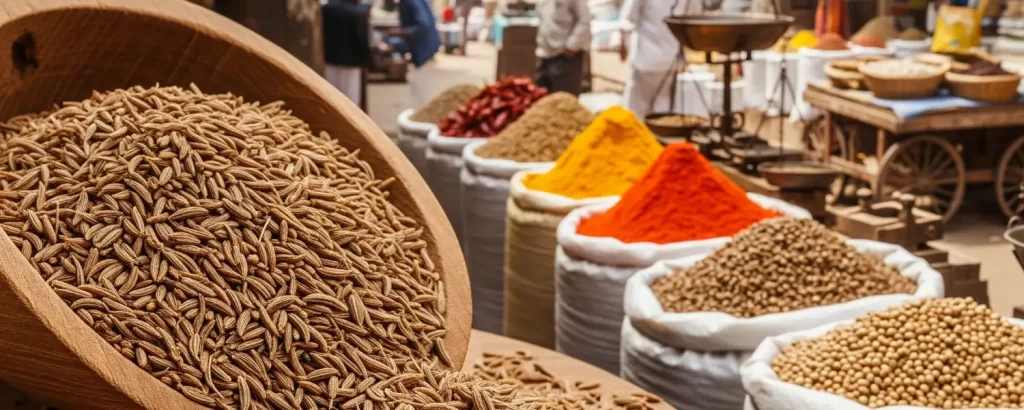
In the competitive world of food manufacturing, consistency, authenticity, and quality are non-negotiable. For many products, from savory snacks and ready meals to spice blends and ethnic cuisines, cumin is more than just an ingredient—it’s the soul of the flavour profile. And for discerning global food manufacturers, there’s a clear preference: Indian Cumin.   India is not just a major producer; it is the global epicenter of cumin cultivation and trade, particularly the famous Unjha market in Gujarat. As a leading Indian cumin export specialist from Pune, Maharashtra, Exim Internationals understands the critical factors that drive this global demand. Here’s why food manufacturers worldwide consistently choose Indian jeera. 1. Unmatched Aroma and Flavour Profile The primary reason for Indian cumin’s global dominance is its superior aromatic and flavour profile. Distinctive Warmth: Indian cumin seeds possess a unique earthy, warm, and slightly bitter flavour that is richer and more complex than cumin from other origins. This distinctiveness is crucial for delivering authentic taste in diverse culinary applications. High Volatile Oil Content: The specific agro-climatic conditions, particularly in Gujarat, contribute to a higher concentration of volatile oils, especially cumin aldehyde. This translates into a more potent and longer-lasting aroma, which is vital for processed foods where flavour retention is paramount. 2. Consistent Quality and Reliable Grading For food manufacturers, consistency in raw materials directly impacts the final product. India’s established cumin industry offers unparalleled reliability. Standardized Grades: Indian cumin is meticulously graded, allowing manufacturers to specify precise quality requirements. Common grades like Singapore grade (99% purity) and Europe grade (99.5% purity) are well-recognized and meet stringent international standards for cleanliness and purity. Traceability: Reputable Indian cumin export partners can offer detailed traceability from farm to factory, providing assurance of origin and adherence to quality protocols. Purity: Exporters implement rigorous cleaning, sorting, and processing methods to ensure the cumin seeds are free from foreign matter, stalks, and other impurities, which is crucial for food safety and product integrity. Import products for your Needs Ready to Import 3. Diverse Varieties for Specific Applications India offers a range of cumin varieties, enabling manufacturers to select the perfect match for their product. Whole Seeds: Ideal for spice blends, pickling, and products where a visual texture and burst of flavour are desired. Ground Cumin: Essential for sauces, marinades, curries, and snack seasonings where a consistent, fine powder is needed for even distribution of flavour. Cumin Powder: Available in various mesh sizes, ensuring compatibility with different processing equipment and recipe requirements. 4. Strategic Sourcing from the World’s Cumin Capital Sourcing directly from India, the world’s cumin hub, offers significant strategic advantages. Unjha Market Advantage: Unjha, the largest cumin market globally, provides unmatched access to vast quantities and competitive pricing, making it the preferred hub for bulk cumin seeds. Year-Round Availability (Through Supply Chain Management): While cumin is a Rabi crop (harvested Feb-March), an experienced Indian cumin export partner can manage inventory and sourcing through the year, ensuring consistent supply for manufacturers. Expert Logistics: Leveraging established export infrastructure, including efficient processing units and shipping routes, ensures timely and reliable delivery worldwide. Indian Cumin – The Gold Standard for Global Manufacturers For global food manufacturers, the choice of Indian cumin is a strategic decision that underpins product authenticity, quality, and ultimately, consumer satisfaction. Its distinctive aroma, consistent quality, and the unparalleled expertise of India’s export sector make it the gold standard for this essential spice.   Is your brand committed to delivering authentic, high-quality flavours? Partner with Exim Internationals, your trusted Indian cumin export specialist. Contact us today to secure your supply of premium Indian jeera for your manufacturing needs, especially as we plan for the upcoming 2026 harvest. Frequently Asked Questions (FAQs) 1. What makes Indian cumin (Jeera) different from cumin from other origins? Indian cumin, particularly from Gujarat, is renowned for its superior aromatic strength, higher volatile oil content (especially cumin aldehyde), and a distinct warm, earthy, and slightly bitter flavour profile that is considered the benchmark in global cuisine. 2. What are the key quality grades for Indian cumin in the export market? Common export grades include “Singapore Grade” (typically 99% purity) and “Europe Grade” (often 99.5% purity), which refer to the percentage of pure cumin seeds after cleaning, with minimal foreign matter. 3. What is the significance of “Unjha” in the Indian cumin trade? Unjha, a town in Gujarat, India, is the largest and most influential trading hub for cumin in the world. Prices set here often dictate global cumin prices, and it’s where the majority of India’s cumin is processed and traded. 4. How does volatile oil content relate to cumin quality for food manufacturers? Volatile oil content, particularly the percentage of cumin aldehyde, directly impacts the flavour intensity and aroma of the cumin. Higher volatile oil content means a more potent and desirable flavour for food products. 5. Can Exim Internationals provide both whole and ground Indian cumin? Yes, a versatile Indian cumin export partner like Exim Internationals can provide both whole cumin seeds and various mesh sizes of ground cumin powder to meet different manufacturing requirements. 6. When is the harvest season for cumin in India? Cumin is a Rabi crop in India, sown in October-November and harvested from February to March. This period is crucial for market forecasting and securing contracts. 7. How do Indian cumin exporters ensure purity and cleanliness for food manufacturing? Reputable exporters use advanced cleaning, sorting, and grading machinery to remove foreign matter, dust, and other impurities, ensuring that the cumin seeds meet strict international food safety and purity standards. 8. What role does an Indian cumin export specialist like Exim Internationals play in my supply chain? We offer direct access to primary sourcing regions like Gujarat, provide real-time market insights from Unjha, ensure rigorous quality control, manage complex logistics, and can help you secure consistent supply of specific grades and varieties for your manufacturing needs.

Why Global Food Manufacturers Demand Indian Cumin Read Post »
indian fennel
Spices Export Import Fruits Vegetables

Why Premium Herbal Infusions Start with Indian Fennel

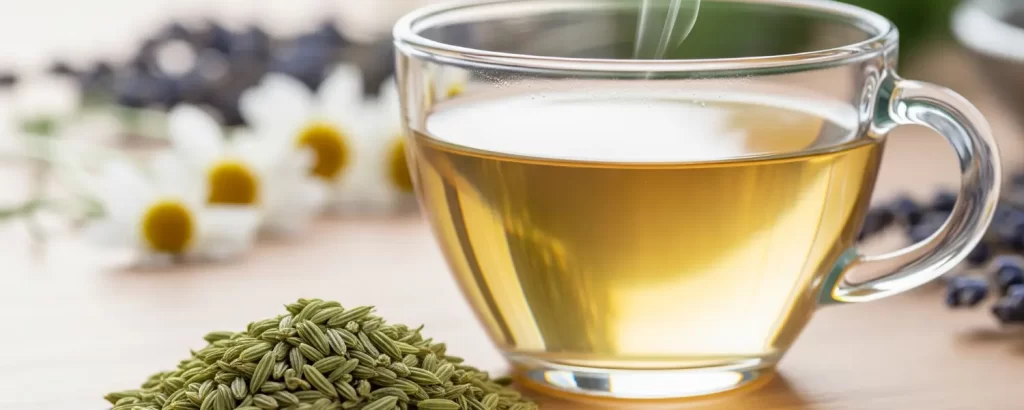
In the burgeoning global market for herbal infusions and specialty teas, the demand for authentic, high-quality ingredients is paramount. Consumers are increasingly discerning, seeking not just flavour but also functional benefits and a connection to the natural origin of their beverages. Among the pantheon of botanicals, Indian fennel, known locally as saunf, stands out as a foundational ingredient for premium herbal infusions. Its unique aromatic profile, natural sweetness, and digestive properties make it a non-negotiable choice for discerning tea blenders and beverage manufacturers worldwide. As a leading Indian fennel export specialist from Pune, Maharashtra, Exim Internationals understands the nuances that elevate saunf from a simple spice to a star ingredient in the wellness industry. The Aromatic Advantage: A Symphony of Sweetness What sets Indian fennel apart, especially varieties like Lucknow fennel and Gujarati fennel, is its distinctive aromatic profile. It’s characterized by a warm, liquorice-like sweetness that is both refreshing and comforting. This is primarily attributed to a high concentration of anethole, the active aromatic compound. Natural Sweetener: In herbal infusions, fennel’s inherent sweetness means less need for added sugars or artificial sweeteners, aligning with clean label trends and consumer preferences for natural ingredients. Balancing Act: It acts as a superb balancing agent, harmonizing stronger, more bitter herbs and spices, creating a well-rounded and palatable infusion. Complexity: The aroma adds a layer of sophistication, transforming a simple herbal tea into a complex and inviting sensory experience. Beyond Flavour: Functional Benefits for Wellness Teas The appeal of Indian fennel in herbal infusions extends beyond its taste. For centuries, saunf has been revered in Ayurvedic and traditional medicine for its digestive and calming properties. These functional benefits are precisely what today’s wellness-focused consumers are seeking. Digestive Aid: Fennel is widely recognized for its carminative properties, helping to soothe digestive discomfort, reduce bloating, and promote healthy digestion. This makes it a perfect base for “after-dinner” teas or digestive blends. Calming Properties: Its gentle, sweet aroma also contributes to a sense of calm and relaxation, making it an excellent component for bedtime teas or stress-relief blends. Antioxidant Rich: Like many botanicals, fennel seeds are a source of antioxidants, contributing to overall well-being. Import products for your Needs Ready to Import Consistency & Quality: Why Source from India For global brands, consistent quality is non-negotiable. India’s vast agricultural landscape and expertise in fennel cultivation ensure a reliable supply of premium seeds. Specific Varieties: Indian regions produce specific varieties (like the highly prized Lucknow fennel for its sweetness and aroma) that meet stringent quality and flavour standards required by premium brands. Volatile Oil Content: Reputable Indian fennel export partners focus on sourcing seeds with optimal volatile oil content, ensuring maximum flavour and potency in every batch. Purity & Cleanliness: Exporters implement rigorous sorting, cleaning, and grading processes to deliver a product free from foreign matter, meeting international food safety and purity standards. The Strategic Sourcing Advantage for Tea Blenders Partnering with an expert Indian fennel export company is a strategic decision for tea blenders and infusion brands. It ensures: Reliable Supply: Year-round availability, especially important when planning for the new Rabi crop harvest (February-March, following sowing in Oct-Nov), allows for consistent production. Tailored Specifications: Access to specific grades and varieties to perfectly match your blend’s requirements. Traceability: A transparent supply chain from farm to factory, critical for brand trust and regulatory compliance. Elevate Your Blends with Authentic Indian Fennel In the quest for exceptional herbal infusions, the choice of Indian fennel is a defining one. Its unparalleled aromatic sweetness, combined with its profound functional benefits and reliable supply from India, makes it the indispensable starting point for brands committed to quality and consumer wellness. Looking to elevate your herbal infusion line with the finest Indian fennel? Contact Exim Internationals, your trusted Indian fennel export partner, to discuss our premium varieties and secure your supply for the upcoming season. Frequently Asked Questions (FAQs) 1. What is the difference between “Indian Fennel” and “Saunf”? They are the same! “Saunf” is the common Hindi name for fennel seeds in India. Using both terms helps with broader search reach and cultural recognition. 2. What makes Indian fennel particularly good for herbal infusions? Indian fennel is prized for its high concentration of anethole, which gives it a distinct sweet, liquorice-like flavour and aroma. This natural sweetness and aromatic complexity are highly desirable in herbal teas. 3. What is “anethole” and why is it important for tea blenders? Anethole is the primary aromatic compound responsible for fennel’s characteristic flavour and aroma. For tea blenders, a high anethole content indicates superior quality, flavour intensity, and consistent taste in their infusions. 4. Which specific Indian fennel varieties are preferred for premium infusions? Lucknow fennel is particularly sought after for its sweet aroma and bright green color, making it a top choice for premium infusions. Gujarati fennel also offers excellent quality and aroma. 5. Does Indian fennel provide any health benefits in herbal infusions? Yes, Indian fennel is traditionally used for its carminative properties, aiding digestion and reducing bloating. It also has calming effects and contains antioxidants, making it popular in wellness-focused teas. 6. How is the quality of Indian fennel measured for export to tea blenders? Key quality parameters include visual appearance (colour, cleanliness, uniform size), volatile oil content (a proxy for anethole content), moisture content (for shelf stability), and absence of foreign matter. 7. When is the best time to source Indian fennel for the upcoming season? The new Rabi crop is sown in October-November and harvested in February-March. Engaging with your exporter during the pre-sowing period (August-September) allows for strategic planning and securing the best quality. 8. Can Exim Internationals provide specific grades or varieties of Indian fennel for my brand’s unique blends? Absolutely. As an experienced Indian fennel export specialist, we work closely with our clients to understand their specific blending requirements and can source and supply particular varieties and grades, ensuring consistent quality that aligns with your brand’s unique profile. About us Exim Internationals is a premier export company

Why Premium Herbal Infusions Start with Indian Fennel Read Post »

black pepper spice
Export Import Fruits Spices Vegetables

Sourcing the Right Black Pepper Spice for Your Brand

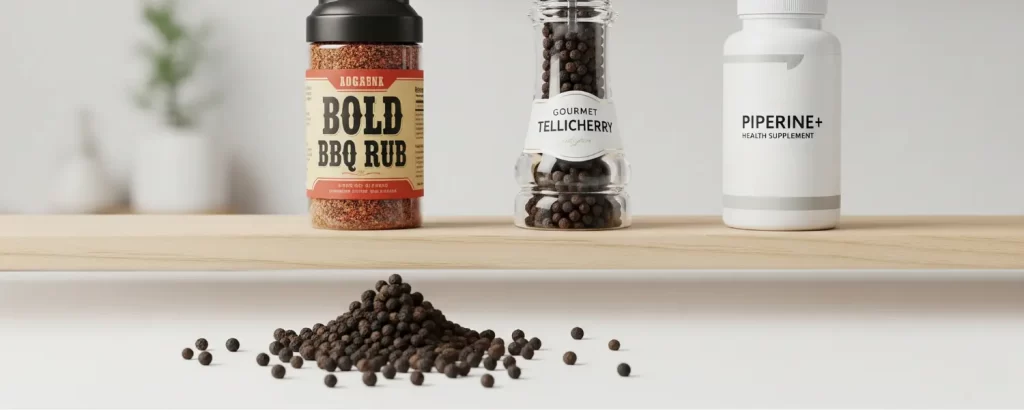
In the world of food, black pepper is ubiquitous. It’s the “King of Spices,” a foundational ingredient in nearly every cuisine. But for a brand—whether you’re a gourmet food producer, a large-scale food manufacturer, or a restaurant chain—treating all black pepper as a simple commodity is a missed opportunity. The choice of black pepper spice is a critical brand decision, defining your product’s flavour profile, quality perception, and consistency. Sourcing the right pepper is about aligning an ingredient with your brand’s promise. As a leading black pepper spice exporter from India—the home of the world’s most sought-after varieties—we at Exim Internationals guide our partners through this strategic selection process. This guide will help you determine the perfect Indian black pepper spice for your brand. Step 1: Define Your Brand’s Flavour Profile Before looking at specifications, look at your brand. What is the flavour experience you want to deliver to your customers? For Bold, Pungent & Robust Brands: If your product line includes BBQ rubs, hearty marinades, or processed meats, you need a pepper with a strong, pungent heat. Standard Malabar Garbled (MG-1) black pepper is your workhorse. It delivers a consistent, sharp bite that stands up to other strong flavours. For Gourmet, Nuanced & Premium Brands: If you’re marketing a high-end steak seasoning, a delicate sauce, or selling whole peppercorns in a gourmet retail line, you need complexity. Tellicherry Garbled Extra Bold (TGEB) is the answer. These larger, more mature berries offer a more complex, nuanced, and almost fruity aroma with a less harsh heat. Sourcing Tellicherry signals a commitment to premium quality. For Health & Wellness Brands: If your brand is in the nutraceutical or functional food space, your primary concern is potency. The key is piperine content, the active compound in black pepper. High-quality Indian varieties are known for their high piperine levels, which is crucial for products marketed for their health benefits, including bioavailability enhancement. Step 2: Understand the Language of Quality: Grades and Specs Once you know your desired flavour profile, you can drill down into the technical specifications to ensure consistency. Grades Explained: In the Indian black pepper spice trade, you’ll see acronyms like TGEB, TGSEB, and MG-1. TGEB: Tellicherry Garbled Extra Bold (largest berries, highest grade). TGSEB: Tellicherry Garbled Special Extra Bold (a step down from TGEB). MG-1: Malabar Garbled Grade 1 (standard, high-quality grade). “Garbled” means the pepper has been cleaned of impurities, a standard for quality exports. Key Specifications: A professional supplier will provide a spec sheet detailing: Density (g/l): Grams per litre measures the weight and maturity of the peppercorns. Higher density often means better quality. Moisture Content: Should be below 12% to ensure shelf stability and prevent mould. Piperine %: A scientific measure of potency, critical for consistency. Import products for your Needs Ready to Import Step 3: Whole Peppercorns vs. Ground Pepper: A Strategic Choice Should you buy your black pepper spice whole or pre-ground? This is a strategic decision. Whole Peppercorns: Offer maximum freshness, flavour, and the longest shelf life. Grinding in-house gives you complete control over the particle size and ensures the most aromatic product. This is the choice for premium brands. Ground Pepper: Provides convenience and is easier to incorporate into large-scale industrial recipes. However, it’s crucial to source ground pepper from a highly trusted black pepper spice exporter who can guarantee 100% purity, as this form is more susceptible to adulteration. Step 4: Plan Your Sourcing for the Upcoming Season The Indian black pepper harvest typically begins in December and runs through March. This means that now—in the preceding months—is the most important time for brands to plan their sourcing. By discussing your needs with your export partner before the harvest begins, you allow them to earmark specific lots and grades that perfectly match your brand’s requirements. Early planning for the 2026 season ensures you get the best selection and quality for the year ahead. The Right Pepper for a Powerful Brand The black pepper spice you choose is a direct reflection of your brand’s commitment to quality. By moving beyond a one-size-fits-all approach and strategically selecting a variety and grade that aligns with your flavour profile and customer expectations, you can create a more consistent, higher-quality, and more successful product.   Ready to find the perfect Indian black pepper spice for your brand? Contact Exim Internationals today for a consultation. Let’s analyze your needs and match you with the ideal grade from the upcoming harvest. Frequently Asked Questions (FAQs) 1. What is the main flavour difference between Tellicherry and Malabar black pepper? Malabar pepper provides a sharp, pungent, and straightforward heat. Tellicherry pepper, made from larger, more mature berries, has a more complex, aromatic, and nuanced flavour with notes that are often described as fruity or citrusy, and its heat is less harsh. 2. What does “TGEB” stand for and why is it a premium grade? TGEB stands for Tellicherry Garbled Extra Bold. It is a premium grade because it consists only of the largest and heaviest peppercorns (4.75mm screen size and above), which are harvested later and have a more developed, complex flavour. 3. For a health food brand, why is piperine content important? Piperine is the active alkaloid in black pepper responsible for its pungency and many of its health benefits, most notably its ability to enhance the bioavailability of other nutrients (like curcumin in turmeric). A higher, guaranteed piperine content is a key quality mark for nutraceuticals. 4. Is it better for a food manufacturer to buy whole or ground black pepper spice? It depends. For maximum flavour and quality control, buying whole peppercorns and grinding them in-house is superior. For convenience and ease of use in large-scale production, buying high-quality, pure ground pepper from a trusted supplier is more practical. 5. How can I ensure the consistency of black pepper spice from batch to batch? Work with a reliable exporter who provides detailed specification sheets for each batch, including density, moisture, and piperine content. Sticking to a specific grade

Sourcing the Right Black Pepper Spice for Your Brand Read Post »

mustard export
Export Import Spices Vegetables

The 2025-2026 Indian Mustard Export Season: A Pre-Sowing Forecast

As the Southwest Monsoon season concludes across India, the focus of the global edible oils and condiments market shifts decisively towards the upcoming Rabi crop season. At the heart of this transition is one of the subcontinent’s most vital oilseeds: mustard. For international importers, commodity traders, and food manufacturers, the next few weeks are a critical period for planning, strategy, and securing supply for the year ahead. As a leading mustard export partner based in Pune, Maharashtra, we offer this “boots-on-the-ground” pre-sowing forecast to provide our global partners with the market intelligence needed to navigate the 2025-2026 Indian mustard season successfully. Setting the Stage: The 2025 Monsoon’s Impact The foundation of a successful Rabi crop is laid by the preceding monsoon. The 2025 monsoon has been largely favourable across the primary mustard-growing belts of North and Northwest India. Most regions have received adequate to normal rainfall, resulting in excellent soil moisture levels. This is a strong positive indicator, providing farmers with the ideal conditions for planting and giving the crop a healthy start, which is often correlated with a higher oil content percentage. Sowing Intentions and Acreage Expectations With healthy soil moisture as a backdrop, several factors are pointing towards a potentially robust mustard sowing season, which will commence in October 2025. Farmer Sentiment: Current market prices for mustard remain firm, incentivizing farmers to dedicate significant acreage to the crop. Government Policy: The government’s Minimum Support Price (MSP) for mustard continues to provide a safety net, encouraging cultivation. Competing Crops: While prices for competing Rabi crops like chana (gram) are also a factor, the current market dynamics appear to be favouring mustard. Forecast: Based on these factors, early indications from agricultural bodies and market analysts suggest a potential 5-7% increase in mustard acreage for the 2025-2026 season compared to the previous year. A Regional Outlook: Focus on Rajasthan Rajasthan, India’s largest mustard producer, is poised for a strong season. With most of its key growing districts receiving good rainfall, the state is expected to lead the charge in expanded acreage. Other key states like Uttar Pradesh, Madhya Pradesh, and Haryana are also reporting favourable pre-sowing conditions and are likely to contribute significantly to the national output. A strong performance in these regions is vital for the stability of the mustard export market. Preliminary Price and Quality Outlook for the 2026 Harvest While it is still early, we can make some preliminary assessments for the crop that will be harvested in February-March 2026. Quality Outlook: The positive soil moisture conditions are a promising sign for crop health and seed development. We anticipate a good potential for high-quality seeds with a favourable oil content percentage, a key metric for oil millers and a determinant of overall value. Price Outlook: An increase in acreage and a potentially larger crop could exert some moderating pressure on prices. However, this is expected to be balanced by strong domestic demand and robust export inquiries. We do not anticipate a significant drop in FOB price levels; instead, we forecast a stable-to-firm market, especially for high-quality grades. Import products for your Needs Ready to Import What This Means for Global Buyers: Your Strategic Moves This pre-sowing period is the most crucial time for procurement planning. Engage Now: Begin conversations with your mustard export partners immediately to signal your intent and volume requirements for the upcoming season. Contract Early: With strong demand expected, early contracting can help secure your supply and hedge against potential price volatility as the season progresses. Specify Quality: Clearly define your quality parameters. A reliable partner can contract with farmers and processors now to ensure your specific needs for oil content, purity, and grade are met. Partnering for a Successful Season The outlook for the 2025-2026 Indian mustard export season is optimistic, with positive signals for both volume and quality. For global buyers, the time for strategic action is now. Understanding the market dynamics before the first seed is even planted is the key to a successful and profitable procurement cycle.   As a premier Indian mustard export specialist, Exim Internationals is your gateway to the new season. Contact us today for detailed market insights and to secure your supply for the 2026 harvest. Frequently Asked Questions (FAQs) 1. When is the sowing and harvesting season for the 2026 mustard crop in India? The sowing for the 2026 mustard crop will take place during the Rabi season, primarily in October and November 2025. The harvest will occur from February to March 2026. 2. How does the monsoon season impact the mustard export outlook? A good monsoon (June-September) ensures high soil moisture, which is critical for the germination and healthy growth of the winter-sown (Rabi) mustard crop. It strongly influences both the total acreage planted and the potential yield and quality. 3. What is a “Rabi crop”? Rabi crops are agricultural crops that are sown in the winter and harvested in the spring in India. Mustard is one of the most important Rabi oilseed crops. 4. Which Indian state is the most important for mustard production? Rajasthan is the largest and most important mustard-producing state in India, significantly influencing national production volumes and market prices. 5. What is MSP and how does it affect mustard export prices? MSP, or Minimum Support Price, is a price set by the Indian government to purchase directly from farmers if market prices fall below a certain level. A higher MSP encourages farmers to plant more mustard, which can influence the overall supply and, consequently, the export price. 6. What are the early indicators of good quality mustard for the upcoming season? Strong pre-sowing indicators for a quality crop include good soil moisture from a healthy monsoon, the use of high-quality seeds by farmers, and favourable weather forecasts for the growing season. These often correlate to a good oil content percentage in the final product. 7. As an importer, when should I start contracting for the 2026 harvest? The ideal time to begin discussions and potentially enter into contracts is

The 2025-2026 Indian Mustard Export Season: A Pre-Sowing Forecast Read Post »

cardamom export
Export Import Spices

What to Look for in a Cardamom Export Shipment

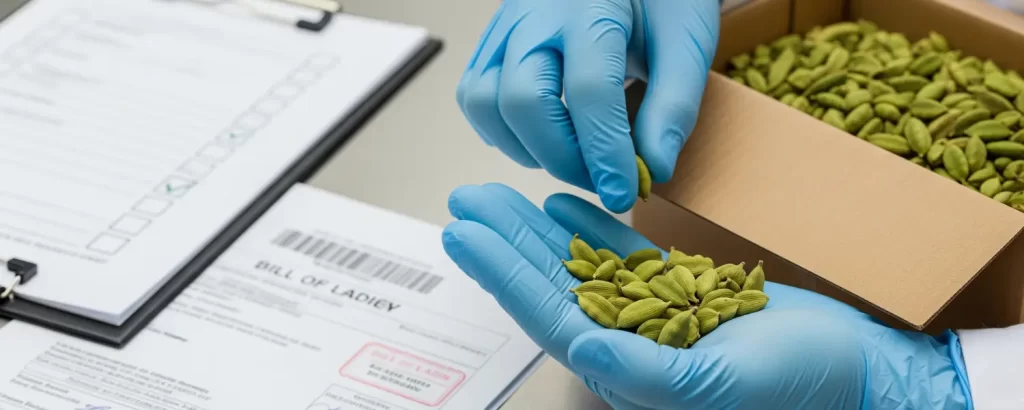
The arrival of a container of fragrant Indian cardamom is an exciting moment for any importer. The final step in a successful sourcing journey is the verification of the shipment. Knowing what to look for is crucial to ensure the product meets your quality standards, protects your investment, and satisfies your customers. As a leading cardamom export partner based in Pune, India, we believe in complete transparency. A reputable exporter will always deliver a product that matches the agreed-upon specifications. This guide provides a professional checklist for inspecting your cardamom shipment, especially relevant as the new 2025-2026 harvest season deliveries begin to arrive. 1. The Paper Trail: Verifying Your Documentation First Before you even cut open the first bag, ensure all your documents are in order. The paperwork is your first line of quality assurance. Bill of Lading (B/L): Confirms the shipment details, container number, and quantities. Commercial Invoice & Packing List: Check that the product, quantity, and price match your purchase order. Phytosanitary Certificate: This is a mandatory document certifying that the cardamom is free from pests and diseases, complying with your country’s import regulations. Certificate of Origin: Verifies the product is from India, often necessary for customs. Certificate of Analysis (COA): This crucial lab report details the technical specifications. Cross-reference the data on the COA with the agreed-upon specs in your contract. 2. The Visual Inspection: Grades, Colour, and Condition Once the documents are verified, it’s time to assess the physical product. Draw samples from multiple bags throughout the container to get a representative overview. Colour: For green cardamom, the colour is a primary quality indicator. Look for a vibrant, uniform green, characteristic of premium varieties like Alleppey Green Cardamom. A yellowish or pale green hue can indicate older stock or improper drying. Size and Grade Uniformity: This is critical. If you ordered a specific grade, such as AGEB (Alleppey Green Extra Bold) or 8mm, the vast majority of pods in the sample should meet that size. A significant mix of smaller pods is a red flag that the shipment may not be true to grade. Physical Condition: The pods should be whole, well-formed, and three-cornered. Check for an excessive percentage of “splits” or open pods, unless that was the grade you specifically ordered. Look closely for any signs of insect damage (small holes) or visible mould. Import products for your Needs Ready to Import 3. The Sensory Test: Aroma and Texture Your senses are powerful tools in quality assessment. Aroma: Crush a few pods between your fingers. The aroma should be strong, pungent, and pleasantly aromatic. This is a good indicator of high volatile oil content. A weak, dusty, or musty smell is a clear sign of old or poorly stored cardamom. Texture: The pods should feel firm and crisp. If they feel soft or leathery, it may indicate a high moisture content, which can lead to spoilage. 4. Beyond the Eye: Cross-Referencing with the COA Now, connect your physical inspection with the data from the Certificate of Analysis. Volatile Oil Content: Your sensory check for a strong aroma should be backed by the percentage listed on the COA. Higher content means more flavour. Moisture Content: The firm texture you felt should correspond to a low moisture reading on the COA, typically below 12%. Admixture/Purity: Visually scan your sample for any foreign matter (stems, small stones, etc.). The amount should be negligible and within the limits specified for your grade on the COA. Ensuring Quality with a Trusted Partner Thoroughly inspecting your cardamom export shipment is a vital business practice. By systematically checking the documentation, visual appearance, sensory qualities, and lab data, you can confidently verify that you have received the premium Indian cardamom you invested in. A transparent and reliable cardamom export partner from India will welcome this scrutiny, as they are confident in the quality of their product. At Exim Internationals, we pride ourselves on consistently delivering shipments that meet and exceed our clients’ specifications.   Planning your procurement for the new cardamom season? Contact Exim Internationals today to partner with an exporter who guarantees quality you can see, smell, and trust. Frequently Asked Questions (FAQs) 1. What is the first thing I should do when my cardamom shipment arrives? Before inspecting the product, verify that all shipping and customs documents are present and correct. Ensure the container and seal numbers match the Bill of Lading. 2. How can I visually identify a high-quality green cardamom pod? Look for a uniform, vibrant green colour, a whole and unsplit pod (unless you ordered splits), and a size that is consistent with the grade you ordered (e.g., 8mm). It should be free of blemishes and mould. 3. What is the difference between AGEB and AGB cardamom grades? AGEB stands for Alleppey Green Extra Bold, which is one of the highest grades, consisting of pods 8mm and larger. AGB stands for Alleppey Green Bold, a grade slightly smaller, typically around 7mm. 4. What does a musty smell indicate in a cardamom shipment? A musty or mouldy smell is a serious red flag. It usually indicates that the cardamom has been exposed to moisture and has begun to spoil, or it is very old stock. 5. Why is the Phytosanitary Certificate so important for a cardamom export? This certificate is a mandatory customs document that proves the agricultural product has been inspected in the country of origin and is free from harmful pests and plant diseases, making it safe for import. 6. What is the ideal moisture content for exported cardamom? To ensure a long shelf life and prevent mould, the ideal moisture content for exported green cardamom should be low, typically under 12%. 7. Are the quality standards for Alleppey Green Cardamom different? Yes, Alleppey Green Cardamom is a GI-tagged product, and its grades (like AGEB) are associated with specific quality standards regarding size, colour, and origin from the Alleppey region, often commanding a premium price. 8. What should I do if the cardamom export shipment doesn’t

What to Look for in a Cardamom Export Shipment Read Post »

coriander leaves
Vegetables Export Import Spices

Fresh, Dried, or IQF? Choosing the Right Form of Coriander Leaves for Your Business

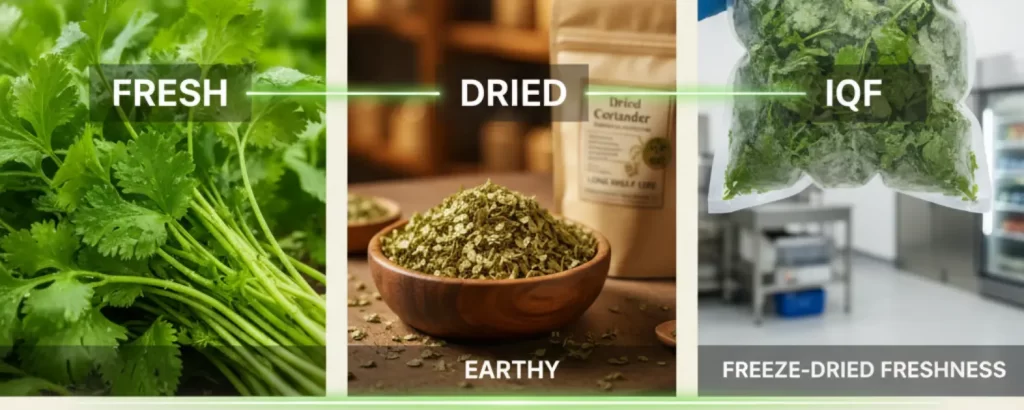
Coriander leaves, known as cilantro in many parts of the world and dhania in India, are one of the globe’s most popular herbs. Their bright, citrusy flavour is an essential component in cuisines from Latin America to Southeast Asia. For food manufacturers, importers, and the HORECA (Hotel/Restaurant/Catering) sector, the challenge isn’t whether to use this popular herb, but how to source it in the most effective form for their business. As a leading exporter of agricultural products from Pune, Maharashtra, India, we at Exim Internationals understand that the choice between fresh, dried, and IQF (Individually Quick Frozen) coriander leaves is a critical strategic decision. Each form offers a unique set of benefits and challenges related to flavour, shelf life, and logistics. This guide will break down the pros and cons to help you make the best choice for your portfolio. The Case for Fresh Coriander Leaves (Cilantro) Fresh coriander offers an unmatched vibrant and authentic flavour that is impossible to replicate. Flavour Profile: Intense, bright, citrusy, and slightly peppery. The truest expression of the herb. Best For: High-end restaurants, fresh salsa and chutney manufacturers, and premium retail where “farm-fresh” is a key selling point. It’s the top choice for garnishing. Business Considerations: Pros: Commands a premium price and offers the most authentic flavour. Cons: Extremely short shelf life. Export is challenging and expensive, requiring a seamless cold chain and reliance on air freight. The risk of spoilage and waste is very high. The Practicality of Dried Coriander Leaves Drying transforms the herb, offering a different flavour profile and maximum convenience. Flavour Profile: The bright notes disappear, replaced by a more subtle, earthy, and herbaceous flavour, similar to parsley. Best For: Dry spice blends, rubs, seasonings for snacks, and certain soups or stews where it acts as a background flavour note. Business Considerations: Pros: Extremely long shelf life (often 1-2 years). It is lightweight, easy to ship, and simple to store at ambient temperatures. This is the lowest-risk, lowest-cost option from a logistics perspective. Cons: The flavour and texture are completely different from fresh cilantro. It is unsuitable for any application that requires the signature fresh taste. Import products for your Needs Ready to Import The Innovation of IQF (Individually Quick Frozen) Coriander Leaves IQF technology offers a brilliant compromise, preserving the best qualities of the fresh herb with the convenience of a longer shelf life. Flavour Profile: The flash-freezing process of IQF locks in much of the original bright, citrusy flavour, colour, and aroma of the fresh leaves. Best For: A wide range of food processors making sauces, pastes, dips, soups, and frozen ready-to-eat meals. It’s also an excellent solution for the food service industry, reducing prep time and waste. Business Considerations: Pros: Excellent shelf life (12-18 months in a commercial freezer). It retains a high degree of freshness and nutritional value. The free-flowing nature of IQF products makes them easy to portion and add to industrial recipes. Cons: Requires a continuous frozen supply chain (-18°C / 0°F). The upfront cost is higher than dried, but the quality and convenience often provide a better overall value. Making the Strategic Sourcing Choice There is no single “best” form of coriander leaves; the right choice is entirely dependent on your final product, your production process, and your supply chain capabilities. Fresh offers authenticity at a high cost, dried provides convenience with altered flavour, and IQF delivers a fantastic balance of fresh quality and long-term stability.   The most crucial step is partnering with an exporter who understands these nuances and can provide high-quality options across all categories. As a versatile supplier from Pune, India, Exim Internationals has the capability to source and deliver fresh, dried, and IQF coriander leaves to meet your specific business needs.   Ready to discuss which form of coriander is right for your application? Contact Exim Internationals today for a consultation and a quote. Frequently Asked Questions (FAQs) 1. What is IQF and how does it preserve the quality of coriander leaves? IQF stands for Individually Quick Frozen. It’s a rapid freezing process that freezes each leaf separately, preventing large ice crystals from forming. This preserves the cell structure, locking in the flavour, colour, and nutrients far better than traditional freezing methods. 2. Does dried coriander taste the same as fresh cilantro? No, their flavour profiles are very different. Fresh cilantro has a bright, strong, citrusy taste. When dried, it loses these volatile notes and develops a more subtle, earthy, and herbaceous flavour. 3. What are the biggest challenges in exporting fresh coriander leaves? The biggest challenges are its extremely short shelf life and fragility. It requires a flawless and fast cold chain and is almost exclusively shipped via expensive air freight, making logistics complex and costly. 4. Which form of coriander leaves has the longest shelf life? Dried coriander leaves have the longest shelf life, often lasting for one to two years when stored properly in a cool, dark place. 5. Is IQF coriander a good substitute for fresh in sauces and pastes? Yes, for most food processing applications, IQF coriander is an excellent substitute for fresh. It provides a very similar flavour and colour profile with the added benefits of a long shelf life and easy, year-round usability. 6. What is the HORECA sector and which form of coriander do they prefer? HORECA stands for Hotel/Restaurant/Catering. This sector often requires both fresh coriander for garnishing and high-end dishes, as well as IQF for soups, sauces, and large-batch cooking to ensure consistency and reduce labour costs. 7. How is bulk IQF coriander packaged for export? Bulk IQF coriander leaves are typically packed in food-grade poly-lined cartons or bags, commonly in 10kg or 20kg sizes, and must be shipped and stored in a frozen environment (-18°C / 0°F). 8. Can a single supplier like Exim Internationals provide all three forms of coriander leaves? Yes, a versatile and well-connected exporter can source and provide all three forms—fresh, dried, and IQF. This allows buyers to streamline their procurement process

Fresh, Dried, or IQF? Choosing the Right Form of Coriander Leaves for Your Business Read Post »

ginger exporter
Export Import Fruits Spices Vegetables

5 Critical Mistakes to Avoid When Choosing a Ginger Exporter

The global demand for ginger, driven by its culinary versatility and health benefits, is stronger than ever. For businesses looking to source high-quality ginger in bulk, particularly the prized varieties from India, selecting the right ginger exporter is a decision that can significantly impact your success. Based right here in Pune, Maharashtra, India, at Exim Internationals, we’ve seen firsthand the pitfalls that buyers can encounter when choosing a supplier. To help you navigate this crucial process and secure a reliable source of premium Indian ginger, we’ve compiled five critical mistakes to avoid: Mistake 1: Focusing Solely on the Lowest Price While cost is undoubtedly a factor, choosing a ginger exporter based solely on the cheapest quote is a recipe for potential disaster. In the agricultural commodity market, exceptionally low prices often come at the cost of lower quality, inconsistent supply, or unreliable service. Instead: Look for a balance between competitive pricing and a proven track record of quality, reliability, and adherence to international standards. A slightly higher price from a reputable ginger exporter can save you significant costs down the line due to rejected shipments, quality issues, and supply chain disruptions. Mistake 2: Neglecting to Verify Credentials and Experience In the world of international trade, trust is paramount. Failing to thoroughly vet your potential ginger exporter can expose you to significant risks. Instead: Ask for their export license and registration details. Check how long they have been in the business of exporting ginger specifically. Look for testimonials or references from other international buyers. A long-standing exporter with a solid reputation is more likely to provide a consistent and reliable service. Don’t hesitate to inquire about their presence in key ginger growing regions like those known for Cochin ginger or Calicut ginger. Mistake 3: Ignoring Quality Control Processes The quality of ginger can vary significantly based on farming practices, harvesting methods, and post-harvest handling. Choosing a ginger exporter without understanding their quality control measures is a major oversight. Instead: Inquire about their quality checks at each stage of the supply chain, from sourcing directly from farms to cleaning, grading, and packaging. Do they conduct inspections for moisture content, size, and the absence of pests or diseases? Do they provide a Certificate of Analysis (COA) detailing key parameters like gingerol content (important for those in the nutraceutical sector) and purity? Understanding their commitment to quality is crucial for receiving a product that meets your specifications. Mistake 4: Overlooking Logistical Capabilities and Supply Chain Transparency The journey of fresh or dried ginger from the fields of India to your warehouse involves a complex logistical chain. Choosing a ginger exporter who lacks robust logistical capabilities and transparency can lead to delays, damage, and increased costs. Instead: Ask about their experience in handling international shipments, including customs procedures, documentation (phytosanitary certificate is essential for agricultural products), and transportation options (sea freight vs. air freight). A reliable exporter should be able to provide clear timelines and updates on your shipment. Inquire about their packaging methods to ensure the ginger is protected during transit and maintains its freshness (if you are sourcing fresh ginger). Import products for your Needs Ready to Import Mistake 5: Failing to Communicate Your Specific Needs Clearly A good business relationship thrives on clear communication. Failing to articulate your exact requirements to your potential ginger exporter can lead to misunderstandings and unmet expectations. Instead: Clearly communicate your desired ginger variety, grade, quantity, packaging preferences, and any specific quality parameters (e.g., minimum gingerol content, maximum moisture level for dried ginger). Providing detailed information upfront will help the exporter understand your needs and ensure they can provide a suitable product and service. Don’t assume they know your market’s specific regulations or preferences. Choose Your Ginger Exporter Wisely Selecting the right ginger exporter is a critical investment in your supply chain. By avoiding these five common mistakes, you can significantly reduce your risks and build a long-term, successful partnership with a reliable supplier of premium Indian ginger. As a trusted ginger exporter based in Pune, Maharashtra, India, Exim Internationals is committed to providing high-quality ginger, transparent communication, and efficient logistical solutions to our global partners. Contact us today to discuss your ginger sourcing needs for the upcoming season. Frequently Asked Questions (FAQs) 1. What are the key qualities to look for in a good ginger exporter? Look for a long-standing reputation, verifiable credentials, transparent quality control processes, strong logistical capabilities, clear communication, and a willingness to understand and meet your specific needs. 2. Why is it important to inquire about a ginger exporter’s experience? Experience indicates a deeper understanding of the market dynamics, quality standards, export regulations, and potential challenges. An experienced exporter is better equipped to handle unforeseen issues and ensure a smooth transaction. 3. What is a Certificate of Analysis (COA) and why is it relevant when importing ginger? A COA is a document issued by a laboratory that details the chemical and physical properties of the ginger, such as moisture content, purity, and the concentration of key compounds like gingerol. It’s crucial for verifying the quality and potency of the product. 4. What are the common forms of ginger exported from India? The most common forms are fresh ginger and dried ginger. Some exporters also deal in processed forms like ginger powder and ginger oleoresin. It’s important to specify your required form to the exporter. 5. What role does a phytosanitary certificate play in ginger exports? A phytosanitary certificate is a document issued by the Indian plant protection authorities certifying that the ginger is free from regulated pests and diseases, meeting the import requirements of the destination country. It is mandatory for customs clearance. 6. How important is communication with a potential ginger exporter? Clear and consistent communication is vital for a successful partnership. It ensures that both parties are on the same page regarding specifications, timelines, and any potential issues that may arise. 7. Should I visit the facilities of a potential ginger exporter if possible? Visiting the exporter’s facilities can

5 Critical Mistakes to Avoid When Choosing a Ginger Exporter Read Post »

green chilli
Spices Export Import Vegetables

Why Global Food Processors Source Indian Green Chilli

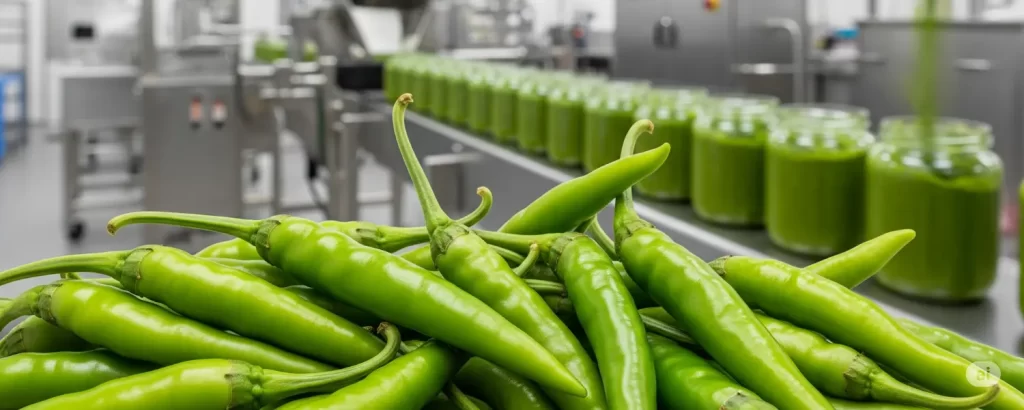
In today’s global food market, consumer demand for authentic, vibrant, and spicy flavours has never been higher. From fiery hot sauces and tangy pickles to complex curry pastes and ready-to-eat meals, the fresh, sharp heat of the green chilli is a core ingredient. For food processors tasked with creating these products, the choice of raw material is a critical decision that impacts flavour, consistency, and the bottom line. While green chillies are grown worldwide, discerning global food processors consistently turn to India as their preferred sourcing destination. As a leading fresh green chilli exporter from India, based in Pune, we understand the specific factors that drive this choice. It’s a decision based not just on tradition, but on a powerful combination of quality, variety, and supply chain reliability. Here are the key reasons why India is the go-to source for this essential ingredient. Reason 1: The Perfect Balance of Heat and Flavour Food processing is a science of precision. A product’s flavour profile must be replicable in every single batch. Indian green chillies offer a consistent and desirable balance of heat and flavour that is ideal for large-scale production. Varieties like the renowned G4 Green Chilli are prized for their predictable pungency and bright, vegetal flavour notes. This allows R&D teams to formulate recipes with a consistent heat level, measured in Scoville Heat Units (SHU), ensuring that the final product always meets brand standards. The heat is sharp and clean, not flat or overpowering, making it a versatile ingredient. Reason 2: A Diverse Portfolio for Every Application India’s diverse agro-climatic zones allow for the cultivation of numerous green chilli varieties, each with unique characteristics. This provides food processors with a portfolio of options to perfectly match their product needs. The G4 (or Guntur Sannam): A versatile, medium-sized chilli with a consistent heat profile, perfect for sauces, pastes, and general use. The Jwala Chilli: A long, slender, and intensely pungent chilli, ideal for pickles and hot sauces where a significant fiery kick is desired. A knowledgeable exporter can guide processors to the specific variety that will best complement their product, whether it requires a subtle warmth or an intense, fiery experience. Reason 3: Year-Round Availability and Unmatched Scalability Production lines cannot afford to stop. One of the most significant advantages of sourcing from India is the assurance of a year-round supply. Due to staggered cultivation across different states, fresh green chillies are harvested throughout the year. This consistent availability allows food processors to procure bulk green chilli without the fear of seasonal shortages, ensuring their manufacturing schedules remain uninterrupted. India’s sheer scale of production means it can reliably meet the high-volume demands of even the largest global food companies. Import products for your Needs Ready to Import Reason 4: Expertise in the Fresh Produce Cold Chain Exporting a perishable product like fresh green chilli across continents is a logistical challenge. India’s established export industry has developed a robust cold chain to meet this challenge and deliver a product with maximum freshness. The process involves: Rapid Post-Harvest Cooling: Chillies are quickly cooled after harvesting to remove field heat and slow down the ripening process. Optimized Packaging: They are packed in ventilated corrugated boxes that protect the produce while allowing for air circulation. Refrigerated Transport: From the packing house to the airport, the chillies are kept in a temperature-controlled environment. Air Freight: For fresh delivery, air freight is the primary mode of transport, ensuring the product reaches its destination within days of harvest, preserving its colour, crunch, and flavour. This expertise in cold chain logistics gives food processors the confidence that they will receive a high-quality, fresh raw material, minimizing spoilage and waste. Your Strategic Partner for Authentic Flavour The decision by global food processors to source Indian green chilli is a strategic one, based on a reliable supply of high-quality, flavourful, and diverse varieties. The combination of ideal agricultural products and a mature, sophisticated export supply chain makes India the definitive source for this vital ingredient. Looking to source consistent, high-quality Indian green chillies for your food processing needs? Contact Exim Internationals today to learn more about our varieties, specifications, and year-round supply capabilities. Frequently Asked Questions (FAQs) 1. What is the G4 Green Chilli and why is it popular with food processors? The G4 Green Chilli is a commercial variety widely grown in India, known for its ideal medium size, smooth green skin, consistent heat level, and good shelf life. These predictable characteristics make it a reliable and versatile choice for sauces, pastes, and other processed foods. 2. How is the heat level (SHU) of green chillies measured and guaranteed for bulk orders? The heat level is measured in Scoville Heat Units (SHU) using a laboratory method called High-Performance Liquid Chromatography (HPLC). For bulk orders, exporters can provide a Certificate of Analysis (COA) for a batch, specifying the SHU range to ensure consistency. 3. What is a “cold chain” and why is it essential for exporting fresh green chillies? A cold chain is a temperature-controlled supply chain. It’s essential for fresh green chillies to slow down ripening, prevent spoilage, and maintain freshness, flavour, and texture during the journey from the Indian farm to the international processor. 4. Can I get a year-round, consistent supply of green chillies from India? Yes. Due to India’s diverse climates and staggered growing seasons across different states, fresh green chillies are available for export throughout the year, ensuring a consistent supply for production lines. 5. What are the best forms of green chilli for food processing (fresh, paste, frozen)? While we specialize in exporting fresh green chillies, the best form depends on the final product. Fresh chillies are ideal for products where a vibrant, sharp flavour is key. Pastes offer convenience, while frozen (IQF) chillies preserve freshness for longer-term storage. 6. What kind of packaging is used to protect fresh green chillies during air freight? Green chillies are typically packed in 3-4 kg corrugated cardboard boxes that are properly ventilated to allow air circulation and

Why Global Food Processors Source Indian Green Chilli Read Post »

indian cumin seeds
Export Import Spices Vegetables

The Ultimate Guide to Importing Indian Cumin Seeds

From the smoky depths of a Mexican mole to the aromatic heart of a Middle Eastern tagine and the earthy foundation of an Indian curry, cumin is an undisputed global culinary staple. For food manufacturers, spice blenders, and international importers, securing a reliable supply of high-quality cumin is not just a necessity—it’s a competitive advantage. And when it comes to quality and volume, the global market looks to one place: India. Sourcing from the world’s largest producer and exporter of cumin seeds, known locally as jeera, can be a highly rewarding venture. But navigating the market requires insider knowledge. This ultimate guide provides a clear roadmap for any business looking to import Indian Cumin Seeds successfully. Why Source Cumin from India? The Gujarat & Unjha Advantage India’s dominance in the cumin trade is rooted in its ideal agro-climatic conditions. The state of Gujarat, in particular, is the heartland of cumin production, renowned for producing seeds with a superior aromatic profile and high volatile oil content. Within Gujarat lies the town of Unjha, the single most important location in the global cumin trade. The Unjha market is the world’s largest for cumin, acting as the primary hub for price discovery and supply aggregation. Any serious Indian cumin seeds exporter has deep connections and a strong presence in this market, which is essential for sourcing the best quality at the right price. Decoding the Quality: Singapore Grade vs. Europe Grade When you decide to buy Indian cumin seeds bulk, you will encounter two primary quality classifications. Understanding them is crucial for getting the right product for your market. Singapore Grade Cumin: This is the most widely traded standard. It typically specifies 99% purity, meaning the consignment is 99% whole cumin seeds, with a 1% allowance for admixture (foreign matter). This grade is suitable for a wide range of applications and markets. Europe Grade Cumin: As the name suggests, this grade is destined for markets with more stringent food safety and quality regulations. It requires a higher purity level, typically 99.5% or greater. The seeds also undergo more rigorous cleaning and sorting processes. Beyond these grades, a detailed specification sheet will also include parameters like moisture content (ideally below 10%), and volatile oil content, which dictates the intensity of the flavour. Import products for your Needs Ready to Import The Import Process: A Step-by-Step Guide Importing from India is a streamlined process when you work with the right partner. Here’s a typical walkthrough: Step 1: Partner with a Verified Exporter Your most critical step is choosing a reliable exporter. A good partner will not only be your supplier but your guide to the Unjha market, providing crucial intelligence on pricing and quality. Step 2: Specify Your Grade and Quantity Clearly define your needs. Do you require Singapore or Europe grade? What quantity (in metric tons) do you need? What are your packaging requirements (e.g., 25/50 kg PP bags)? Step 3: Navigate Commercials Your exporter will provide a Proforma Invoice with all terms. Payment is often handled via an advance payment and the balance against documents, or a Letter of Credit (LC) for larger volumes. Step 4: Essential Documentation A professional exporter will manage all necessary paperwork, which is vital for smooth customs clearance. This includes: Commercial Invoice & Packing List Bill of Lading (B/L) Phytosanitary Certificate Certificate of Origin (COO) Certificate of Analysis (COA) detailing the quality specifications Step 5: Logistics from Unjha to Your Port Once the deal is confirmed, your exporter manages the logistics: sourcing from the Unjha market, cleaning and grading the seeds at their facility, stuffing them into containers, and transporting them to a major port like Mundra or Pipavav in Gujarat for shipment. Understanding the Cumin Seasonality Cumin is a Rabi crop, a winter-sown crop in India. Understanding its seasonal cycle is key for strategic sourcing: Sowing Season: October – November Harvesting Season: February – March Peak Market Arrivals: The new season’s crop floods the Unjha market from late March to May. As we are currently in August, this is the perfect time for buyers to analyze the market and begin planning their procurement strategy for the 2026 harvest. Import products for your Needs Ready to Import Your Strategic Partner in the Cumin Trade Importing Indian Cumin Seeds is a straightforward process when you are armed with the right knowledge. By understanding the importance of Gujarat and the Unjha market, knowing the difference between quality grades, and partnering with an expert exporter, you can build a resilient and profitable supply chain for this essential global spice.   Ready to plan your sourcing strategy for the upcoming cumin season? Contact Exim Internationals today for expert insights and a direct line to the heart of the Indian cumin market. Frequently Asked Questions (FAQs) 1. What is the Unjha market and why is it important for cumin? The Unjha market in Gujarat, India, is the world’s largest trading hub for cumin seeds. It sets the benchmark for global cumin prices and is the primary center for sourcing and supply in the industry. 2. What is the main difference between Singapore Grade and Europe Grade cumin? The primary difference is purity. Singapore Grade typically requires 99% purity, while Europe Grade demands a higher standard of 99.5% purity or more, making it suitable for markets with stricter regulations. 3. When is the best time of year to contract for Indian cumin seeds? The best time to contract is often just before or during the peak arrival season (March-May) to secure the new crop. However, planning and making inquiries in the months prior (like now, in Q3) is a smart strategy. 4. What is “jeera” and is it the same as cumin? Yes, “Jeera” is the common Hindi name for cumin seeds. The terms are used interchangeably in the Indian market. 5. What key documents are needed to import cumin from India? The essential documents include the Bill of Lading, Commercial Invoice, Packing List, Certificate of Origin, and a Phytosanitary Certificate to ensure

The Ultimate Guide to Importing Indian Cumin Seeds Read Post »

fennel seeds
Export Import Spices

More Than a Seed: Decoding the Quality Specifications of Export-Grade Fennel

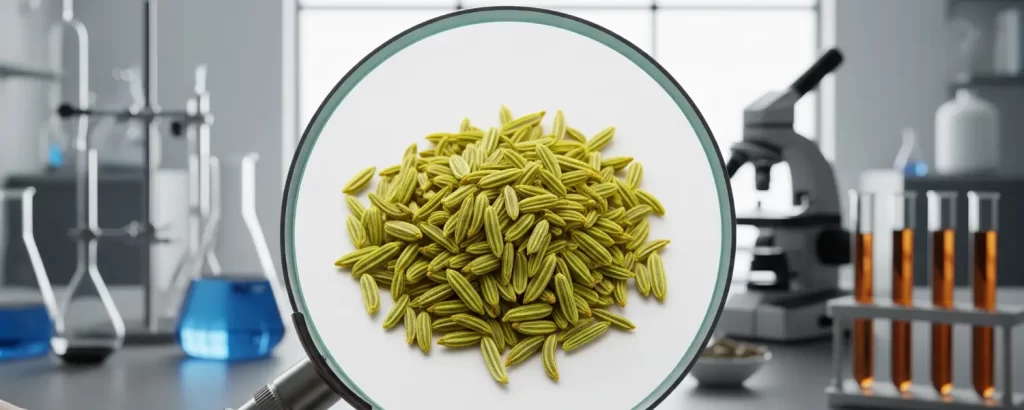
Fennel seeds, with their distinctive anise-like aroma and flavour, are a globally traded commodity, finding their way into culinary creations, herbal infusions, and even pharmaceutical applications. However, for international buyers looking to source fennel seeds in bulk from a major producer like India, understanding that “fennel seed” is not a monolithic entity is crucial. The difference between a standard batch and export-grade fennel lies in a set of meticulously defined quality specifications. As a trusted exporter based in Pune, Maharashtra, India, Exim Internationals believes in empowering our global partners with the knowledge to make informed sourcing decisions. This guide will delve into the key quality parameters that define export-grade fennel seeds, ensuring you get the premium product your business demands. Why Quality Specifications Matter for Export-Grade Fennel For international trade, consistent quality is non-negotiable. Buyers rely on specific parameters to ensure the fennel seeds they receive meet their production requirements, flavour profiles, and regulatory standards. Deviations in quality can lead to product recalls, financial losses, and damage to brand reputation. Understanding these specifications allows buyers to: Ensure Consistent Flavour and Aroma: Key for food and beverage manufacturers. Meet Regulatory Standards: Important for food safety and import compliance in different countries. Optimize Processing: Uniformity in size and moisture content aids efficient processing. Maximize Shelf Life: Proper quality control minimizes the risk of spoilage during transit and storage. Key Quality Specifications for Export-Grade Fennel Seeds When sourcing bulk fennel seeds for export, pay close attention to the following crucial parameters: 1. Volatile Oil Content: This is arguably the most important specification, as it directly dictates the intensity of the fennel’s characteristic aroma and flavour, primarily due to the presence of anethole, fenchone, and estragole. Typical Range: Export-grade fennel seeds typically have a volatile oil content ranging from 2% to 4% or even higher, depending on the variety and growing conditions. Testing: This is measured through hydrodistillation, and a Certificate of Analysis (COA) from a reputable laboratory should clearly state the percentage of volatile oil. 2. Purity: This refers to the absence of foreign matter, including dust, stones, stems, other seeds, and damaged or discolored fennel seeds. Acceptable Limits: Export standards usually specify a maximum percentage of foreign matter, often below 0.5% to 1%. Importance: High purity ensures a clean product, reduces processing costs, and meets food safety regulations. 3. Moisture Content: The level of moisture in the seeds directly impacts their shelf life and susceptibility to mould growth. Ideal Range: For export, the moisture content should ideally be below 10-12%. Monitoring: Proper drying and storage practices by the fennel seeds producer are crucial to maintain this level. 4. Size and Shape: While not always a primary specification for flavour, uniformity in size and the characteristic oblong shape of fennel seeds can be important for visual appeal, especially when sold as a whole spice. Grading: Some exporters may offer different size grades based on buyer requirements. 5. Colour: Export-grade fennel seeds typically exhibit a uniform greenish-yellow to light brown colour. Significant variations or the presence of dark or discolored seeds can indicate lower quality or improper handling. 6. Damaged Seeds: The percentage of broken, shriveled, or insect-damaged seeds should be minimal. High levels of damage can affect the overall quality and appearance. 7. Salmonella and E. coli Counts: For food-grade applications, stringent microbiological testing is essential to ensure the absence of harmful bacteria like Salmonella and E. coli. Exporters should provide lab reports confirming these counts are within acceptable international limits. Import products for your Needs Ready to Import Sourcing the Right Quality: Questions to Ask Your Supplier To ensure you are sourcing export-grade fennel seeds that meet your specific needs, it’s crucial to ask your potential suppliers the right questions: Can you provide a detailed specification sheet for your export-grade fennel seeds? What is the typical volatile oil content of your fennel seed batches? Can you share a recent Certificate of Analysis (COA)? What measures do you take to ensure the purity of the seeds during harvesting and processing? What is the average moisture content of your exported fennel seeds? Do you offer different grades or varieties of fennel seeds (e.g., Lucknow or Gujarati), and how do their specifications differ? What are your packaging standards for bulk export to ensure the quality is maintained during transit? Do you conduct microbiological testing for Salmonella and E. coli? Can you provide reports? By asking these questions to your fennel seeds supplier, you can gain a clear understanding of their quality control processes and ensure you are purchasing a product that meets the rigorous standards of international trade. Partnering for Quality in Every Seed Understanding the quality specifications of export-grade fennel seeds is paramount for global buyers. By focusing on parameters like volatile oil content, purity, moisture, and microbiological safety, you can secure a consistent and high-quality supply for your business needs. At Exim Internationals, we are committed to providing our clients with premium export-grade fennel seeds that meet stringent international standards. Contact us today to discuss your specific requirements and learn more about our quality assurance processes. Frequently Asked Questions (FAQs) 1. What is the difference between Lucknow and Gujarati fennel seeds? Lucknow fennel seeds are generally known for their sweeter aroma and higher volatile oil content, particularly anethole. Gujarati fennel seeds may have a slightly greener colour and a somewhat different flavour profile. Specifying the origin can help you target the desired characteristics. 2. How is the volatile oil content in fennel seeds measured? The volatile oil content is typically measured using a laboratory method called hydrodistillation, where the essential oils are extracted from the seeds using steam, and the volume is then measured and expressed as a percentage of the seed weight. 3. What is considered an acceptable level of foreign matter in export-grade fennel seeds? Acceptable levels usually range from below 0.5% to 1%, depending on the specific grade and buyer requirements. Lower foreign matter content indicates a higher quality product. 4. Why is low moisture content important in exported

More Than a Seed: Decoding the Quality Specifications of Export-Grade Fennel Read Post »

Scroll to Top
exim international logo

Get Our Products Pricing

Fill out the form to download!