Fruits

chilli variety
Export Import Fruits Spices Vegetables

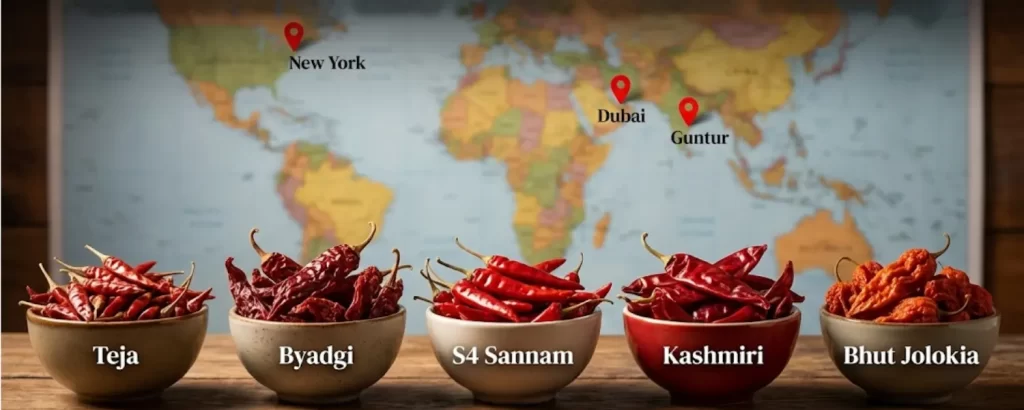
Which Chilli Variety is Best? A B2B Guide to India’s “Red Gold”

In the global spice market, there is no single “best” chilli. Instead, there is the “right” chilli variety for your specific product formulation. India produces over 35 different varieties, accounting for nearly 45% of world exports. For a procurement manager, the choice comes down to two scientific metrics: SHU (Scoville Heat Units for pungency) and ASTA (Color value for vibrancy). At Exim Internationals, we’ve analyzed the 2025-2026 harvest trends to help you choose. 1. Teja (S17): The Fiery Powerhouse Heat Level: 75,000 – 110,000 SHU (Very High) Best For: Hot sauces, meat processing, and oleoresin extraction. Why it’s a Top Choice: Teja is currently the most exported chilli from India to Southeast Asia and the Middle East. If your goal is a “sharp, stinging bite” that cuts through other ingredients, Teja is the undisputed king. 2. Byadgi: The Color Champion Heat Level: 15,000 – 25,000 SHU (Mild) ASTA Color Value: 150 – 200 (Extremely High) Best For: Natural food coloring, cosmetic pigments (lipstick), and mild spice blends. Why it’s a Top Choice: Known for its distinct wrinkled skin and deep crimson hue, Byadgi provides a stunning red color without the overwhelming heat. It is the secret ingredient in many premium “mild” curry powders. Import products for your Needs Ready to Import 3. Guntur Sannam (S4): The All-Rounder Heat Level: 35,000 – 50,000 SHU (Medium) Best For: General culinary use, everyday spice powders, and pizza flakes. Why it’s a Top Choice: This is the most versatile chilli variety in the world. It offers a balanced profile of moderate heat and bright red color, making it the safest bet for bulk international trading and food service. 4. Kashmiri: The Gourmet Garnish Heat Level: 1,000 – 2,000 SHU (Very Mild) Best For: Tandoori marinades, visual garnishing, and European markets. Why it’s a Top Choice: Prized for its vibrant “lava red” color and subtle smoky flavor, Kashmiri chillies are essential for dishes where presentation is more important than spice. 5. G4 (Guntur Green): The Fresh Market Leader Heat Level: 30,000 – 40,000 SHU (Medium-High) Best For: Fresh vegetable markets, pickles, and green pastes. Why it’s a Top Choice: While most export talk centers on dry red chillies, the G4 green variety is the staple for the UAE and GCC fresh markets due to its glossy skin and long shelf life. Variety Comparison Table (2026 Export Specs) Chilli Variety Pungency (SHU) Color Value (ASTA) Best Application Teja (S17) 100,000+ 60 – 70 High-Heat Sauces Guntur S4 40,000 40 – 50 Multipurpose Byadgi 15,000 150 – 200 Natural Coloring Kashmiri 2,000 100 – 140 Gourmet Cooking Bhut Jolokia 1,000,000+ 30 – 40 Extreme Spicy Snacks Import products for your Needs Ready to Import How to Verify Quality for 2026 Shipments When you select a chilli variety, ensure your exporter provides the following “Golden Specs”: Moisture Content: Must be below 12% for dry chillies to prevent aflatoxin and mold during transit. Form: Choose between “With Stem” (longer shelf life) or “Stemless” (lower weight/processing cost). Sortex Cleaning: Ensure the batch has undergone optical sorting to remove discolored pods or stones. Making Your Choice If you need heat, go with Teja. If you need color, go with Byadgi. If you are looking for a reliable, multi-purpose product for a retail brand, Guntur Sannam (S4) is your best investment. At Exim Internationals, we source directly from the Guntur and Hubli markets to provide lab-certified chillies that meet EU and US safety standards. Would you like a free sample pack containing these four major chilli varieties for your quality lab to test? Frequently Asked Questions (FAQs) 1. Which chilli variety has the longest shelf life? The S4 Sannam and Teja varieties have thicker skins, allowing them to retain their natural oils and color for up to 12–18 months in cool, dry storage. 2. What is the difference between “Whole Chilli” and “Crushed Flakes” for export? Whole chillies retain their volatile oils longer. We recommend importing whole pods for maximum flavor, though crushed flakes are more space-efficient for sea freight. 3. Why is Byadgi chilli more expensive than Sannam? Byadgi has a lower yield per acre and is in high demand for the oleoresin (oil) industry, which keeps prices firm. 4. Is Indian chilli treated with pesticides? At Exim Internationals, we offer IPM (Integrated Pest Management) chillies which are tested for over 200 pesticide residues to ensure they meet strict EU and US “Clean Label” standards. 5. Which variety is best for making traditional Indian Curry Powder? Most exporters use a blend of 60% Guntur Sannam (for heat) and 40% Byadgi or Kashmiri (for color) to create the perfect balance. About us Exim Internationals is a premier export company dedicated to delivering the finest products from India to international markets. Our mission is to establish India as a global export powerhouse, contributing to economic growth and showcasing the richness of Indian goods worldwide. From the pashmina shawls and apples of the North to the spices of the South, the fruits and powders of the West, and the tea and bamboo of the East, we connect every corner of India with the global market. Certification we have: FSSAI, APEDA, IEC, UDYAM, FIEO, Spices Board, Coconut Contact us Samin heritage, Sl building, Shop no. 19, Chandan wadi, Almeda road Thane west, Maharashtra, India-400601. Email Us: support@eximinternationals.comCall Us: +91 9820446601 | +91 9321559185

Which Chilli Variety is Best? A B2B Guide to India’s “Red Gold” Read Post »
mango exporters from India
Export Import Fruits Spices Vegetables

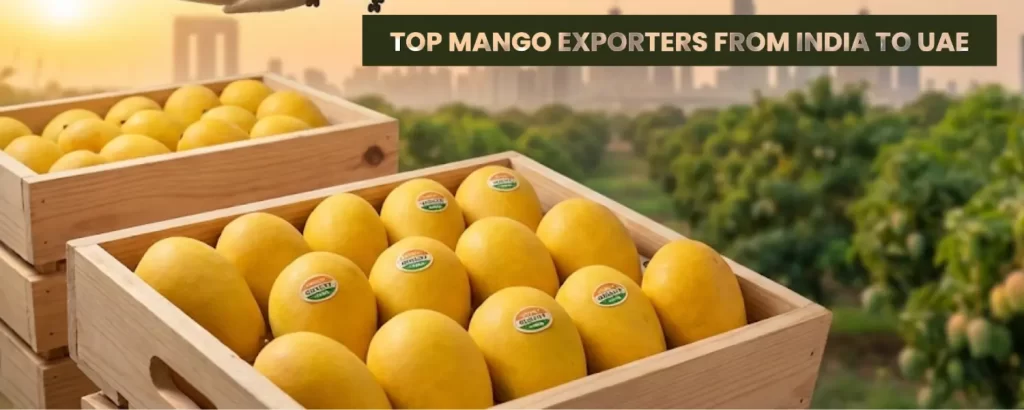
Top Mango Exporters from India to UAE: Securing Your 2026 Supply Chain

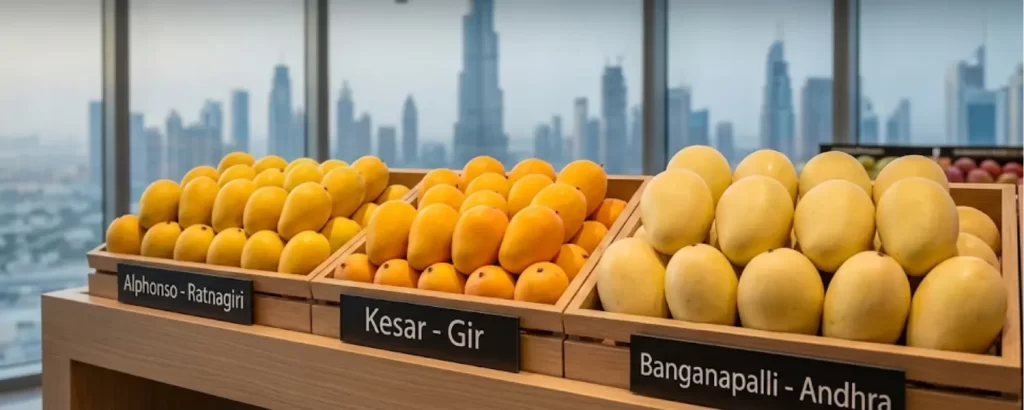
The UAE is more than just a neighbor to India; it is the single largest global gateway for the Indian mango. From the bustling wholesale markets of Al Aweer in Dubai to the premium shelves of Waitrose and Spinneys, the demand for “The King of Fruits” is unparalleled. As we approach the 2026 season, the landscape for mango exporters from India is shifting. Importers are no longer just looking for the lowest price—they are seeking exporters who can guarantee zero-defect arrivals, traceability, and consistent cold-chain logistics. At Exim Internationals, we have streamlined our operations to meet the specific demands of the Gulf market. Here is what you need to know about sourcing from the top tier of Indian exporters. 1. The Variety Strategy for the Gulf Market Top exporters don’t just ship one type of mango; they manage a “Season Calendar” to keep UAE shelves stocked from March to July. The Early Premium (March–May): This is the window for Alphonso from Ratnagiri and Devgad. UAE buyers prioritize the GI-tagged Hapus for its unmatched aroma. The Volume Driver (April–June): Kesar mangoes from Gujarat and Maharashtra. This variety is currently the #1 choice for UAE hypermarkets due to its robust shelf life and high brix (sweetness) levels. The Mid-Season Giant (May–June): Banganapalli (Benishan) from Andhra Pradesh. Its large size and fiberless pulp make it a favorite for the diverse expat population in the Emirates. 2. Logistics: The “Cold Chain” Competitive Edge The 3.5-hour flight from Mumbai to Dubai is only a small part of the journey. Top-tier mango exporters from India differentiate themselves through their handling protocols: Pre-Cooling: Immediately after harvest, mangoes are pre-cooled to 13°C to remove field heat. This “sleeps” the fruit, slowing down the ripening process. Vapor Heat Treatment (VHT): While not always mandatory for the UAE, top exporters use VHT or Hot Water Treatment to ensure the fruit is free from fruit flies, guaranteeing a 100% acceptance rate at UAE customs. Air-Freight vs. Sea-Freight: While 80% of premium mangoes reach the UAE via air-freight to DXB or DWC, top exporters are now using Controlled Atmosphere (CA) Containers for sea-freight, reducing logistics costs by 40% for the Banganapalli and Kesar varieties. Import products for your Needs Ready to Import 3. Packaging Standards for Dubai & Abu Dhabi UAE retailers have strict aesthetic requirements. Top exporters utilize: Super-Ventilated CFB Boxes: 3.5kg to 5kg boxes designed to prevent heat buildup. Individual Foam Netting: To prevent skin bruising during transit. Bilingual Labeling: Ensuring all cartons feature Arabic and English descriptions, origin details, and expiry dates as per UAE food safety laws. 4. Why Sourcing from Exim Internationals Makes Sense As one of the growing mango exporters from India, we bridge the gap between rural orchards and urban UAE retailers. Direct Farm Sourcing: We eliminate middlemen, ensuring the farmer gets a fair price and the importer gets the freshest harvest. Quality Inspection: Every batch undergoes a 3-tier inspection—at the farm, the packhouse, and before loading at the airport. Real-Time Tracking: We provide our UAE partners with live updates, ensuring your logistics team is ready for the “just-in-time” arrival. Frequently Asked Questions (FAQs) 1. What is the peak season for Indian mangoes in the UAE? The season starts in late February with early Alphonso arrivals and peaks between April and June when Kesar and Banganapalli are in full supply. 2. Which Indian mango variety has the best shelf life for UAE retail? Kesar is widely considered the best for retail longevity. It can stay fresh for 10–14 days after arrival if kept in a controlled environment, compared to 5–7 days for Alphonso. 3. Are Indian mangoes to the UAE treated with chemicals for ripening? No. Top exporters use Ethylene ripening chambers which mimic the natural ripening process, or they ship “green-mature” fruit that ripens naturally during transit. Calcium Carbide is strictly prohibited. 4. What is the MOQ for air-freight shipments to Dubai? For air-freight, the Minimum Order Quantity (MOQ) typically starts at 500 kg to 1000 kg (1 Ton) to make the logistics costs viable. 5. Do you provide organic-certified mangoes for the UAE market? Yes, we can source NPOP/NOP certified organic Kesar and Alphonso for specialized organic food stores in the UAE. About us Exim Internationals is a premier export company dedicated to delivering the finest products from India to international markets. Our mission is to establish India as a global export powerhouse, contributing to economic growth and showcasing the richness of Indian goods worldwide. From the pashmina shawls and apples of the North to the spices of the South, the fruits and powders of the West, and the tea and bamboo of the East, we connect every corner of India with the global market. Certification we have: FSSAI, APEDA, IEC, UDYAM, FIEO, Spices Board, Coconut Contact us Samin heritage, Sl building, Shop no. 19, Chandan wadi, Almeda road Thane west, Maharashtra, India-400601. Email Us: support@eximinternationals.comCall Us: +91 9820446601 | +91 9321559185

Top Mango Exporters from India to UAE: Securing Your 2026 Supply Chain Read Post »

Coconut Sugar
Export Import Fruits Spices Vegetables

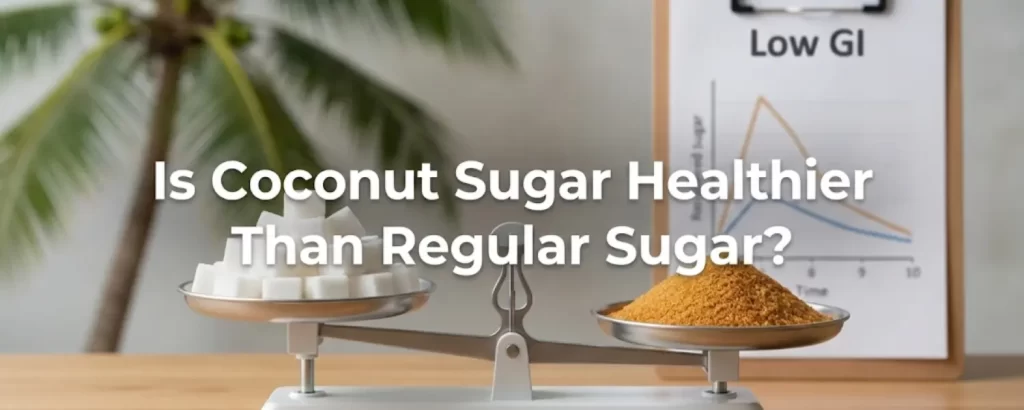
Is Coconut Sugar Healthier Than Regular Sugar? The Deep Dive

In the world of natural sweeteners, coconut sugar (often called coconut palm sugar) has gained a “halo effect.” It is frequently found in organic bakeries and keto-friendly snack bars. To understand its true value, we need to look past the marketing and examine the nutritional data. 1. The Glycemic Index (GI) Factor The most significant health claim for coconut sugar is its low Glycemic Index. The GI measures how quickly a food raises your blood sugar levels. Regular Table Sugar: Has a GI of approximately 60–65. Coconut Sugar: Typically ranks between 35 and 54. Why this matters: Because coconut sugar has a lower GI, it causes a slower, more gradual rise in blood sugar rather than the “spike and crash” associated with refined white sugar. This makes it a preferred option for individuals managing insulin sensitivity or those looking to avoid energy slumps. 2. The Secret Weapon: Inulin Why does coconut sugar have a lower GI despite being mostly sucrose? The answer is Inulin. Inulin is a type of prebiotic fiber found in the coconut sap. It slows down glucose absorption in the gut. While you won’t get your daily fiber intake from a spoonful of sugar, this naturally occurring fiber is the primary reason coconut sugar behaves differently in your body than white sugar. 3. Nutrient Density: More Than Empty Calories Refined white sugar is often called “empty calories” because the refining process strips away all vitamins and minerals. Coconut sugar, being minimally processed, retains trace amounts of nutrients from the coconut palm: Iron and Zinc: Essential for immune function. Potassium: Helps with blood pressure regulation. Calcium: Vital for bone health. Antioxidants: Polyphenols that help fight oxidative stress. Import products for your Needs Ready to Import 4. Side-by-Side Comparison Feature Regular White Sugar Coconut Sugar Processing Highly Refined (Bleached) Minimally Processed (Dehydrated Sap) Glycemic Index 60 – 65 (High) 35 – 54 (Low/Medium) Nutrients None Trace Minerals & Antioxidants Fiber None Contains Inulin (Prebiotic) Flavor Profile Neutral Sweetness Deep Toffee/Caramel Notes The Honest Truth: It is Still Sugar While coconut sugar is undeniably better than regular sugar, it is not a “superfood.” Calories: It contains roughly 16 calories per teaspoon, which is nearly identical to white sugar. Fructose: It is still roughly 70% to 80% sucrose. Consuming it in excess will have the same metabolic impact as over-consuming any other sugar. The Verdict: If you are choosing a sweetener for your 2026 wellness routine, coconut sugar is the superior choice because of its lower GI and mineral content. However, moderation remains the key to a healthy lifestyle. A Win for Clean Labeling For food manufacturers and home bakers, coconut sugar offers a way to provide sweetness with a “cleaner” label. It provides a rich, caramel-like flavor that enhances coffee, chocolate, and baked goods in a way that plain white sugar cannot. At Exim Internationals, we source our coconut sugar from sustainable farms that prioritize traditional evaporation methods to preserve every bit of natural goodness. Would you like to receive our 2026 nutritional analysis report for our bulk organic coconut sugar? Frequently Asked Questions (FAQs) 1. Is coconut sugar safe for diabetics? While it has a lower GI, coconut sugar still contains carbohydrates and calories. People with diabetes should consult their doctor and treat it as a sugar source, albeit a slightly better one. 2. Does coconut sugar taste like coconut? Surprisingly, no! It does not taste like coconut fruit. It has a flavor profile very similar to brown sugar or palm sugar, with deep notes of caramel and butterscotch. 3. Can I substitute coconut sugar 1:1 for white sugar? Yes. In most recipes, you can replace white or brown sugar with coconut sugar in a 1:1 ratio. Note that since it is brown, it may slightly darken the color of your baked goods. 4. Is coconut sugar “Keto”? While many people on Paleo or “Clean Eating” diets use it, it is generally not considered strictly Keto because it still contains significant carbohydrates. 5. Why is coconut sugar more expensive than regular sugar? It is a labor-intensive product. Tappers must climb trees twice a day to collect sap by hand, and the evaporation process is much slower than the industrial milling used for sugarcane. About us Exim Internationals is a premier export company dedicated to delivering the finest products from India to international markets. Our mission is to establish India as a global export powerhouse, contributing to economic growth and showcasing the richness of Indian goods worldwide. From the pashmina shawls and apples of the North to the spices of the South, the fruits and powders of the West, and the tea and bamboo of the East, we connect every corner of India with the global market. Certification we have: FSSAI, APEDA, IEC, UDYAM, FIEO, Spices Board, Coconut Contact us Samin heritage, Sl building, Shop no. 19, Chandan wadi, Almeda road Thane west, Maharashtra, India-400601. Email Us: support@eximinternationals.comCall Us: +91 9820446601 | +91 9321559185

Is Coconut Sugar Healthier Than Regular Sugar? The Deep Dive Read Post »

spices export from india
Export Import Fruits Spices Vegetables

Spices Export from India: The 2026 Guide to Sourcing Premium Quality

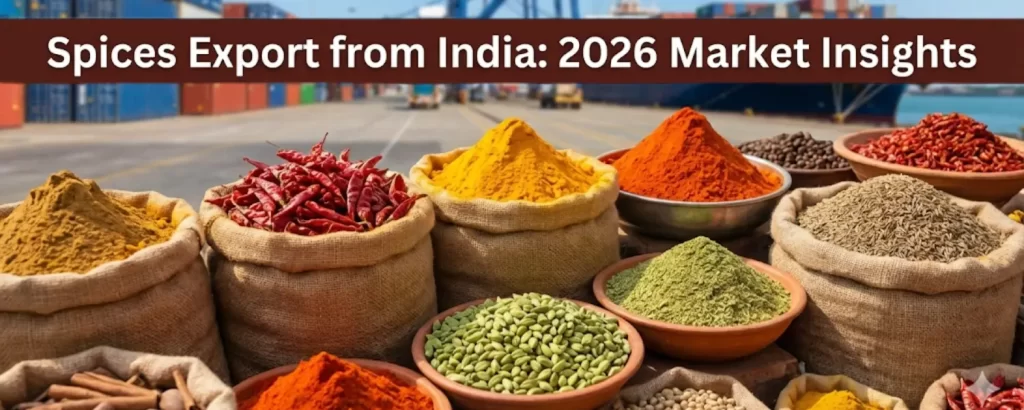
India is not just a producer; it is the global heart of the spice trade. In 2025, Indian spice exports reached an all-time high of $4.72 billion, driven by a surging global demand for wellness-oriented ingredients and a supply gap in competing origins.   For international B2B buyers-whether you are a retail chain in the UAE or a food manufacturer in the USA-understanding the current landscape of spices export from India is the key to securing a high-margin supply chain. 1. Top Spices Driving the 2026 Export Basket While India exports over 52 different spices, four “heavyweights” dominate the current trade volume: Chilli (The Volume Leader): India produces over 40% of the world’s chillies. The “Guntur Teja” variety remains the top choice for hot sauce manufacturers due to its intense pungency and vibrant red color. Cardamom (The 2026 Surge): Due to a major crop failure in Guatemala (India’s primary competitor), Indian cardamom exports nearly doubled in the 2025-2026 season. Buyers are currently locking in Kerala-grown cardamom for its superior green color and higher volatile oil content. Turmeric (The Wellness King): With the world focusing on immunity, Indian turmeric—specifically the Nizamabad and Erode varieties—is in high demand for its high curcumin content (above 3.5%). Cumin (The Flavor Anchor): Sourced primarily from Gujarat and Rajasthan, Indian cumin is prized for its high purity levels and earthy aroma, essential for European spice blends. 2. Quality Benchmarks: Meeting Global Standards In 2026, “cheap” spice is a liability. Global importers now prioritize MRL (Maximum Residue Limits) compliance for pesticides and microbial safety. To ensure your shipment clears customs in the EU or USA, look for these three pillars of quality: Steam Sterilization: Unlike older chemical methods, steam sterilization is the preferred organic-compliant method to reduce microbial loads without losing flavor. Sortex Cleaning: This optical sorting technology ensures 99.5% to 99.9% purity, removing stones, stalks, and discolored seeds that can ruin a batch. Spices Board CRES Certification: All legitimate spices export from India must be backed by the Spices Board’s Certificate of Registration as Exporter of Spices (CRES). Import products for your Needs Ready to Import 3. Strategic Hubs: Why Dubai and the USA Lead Demand The UAE, specifically Dubai, acts as the world’s most efficient re-export hub for Indian spices. In 2026, Dubai-based traders are increasingly importing bulk Indian whole spices, value-adding them through high-end packaging, and re-shipping them to Africa and Europe. Meanwhile, the US market is shifting toward Spice Oils and Oleoresins. Instead of whole pods, US food techs are sourcing concentrated extracts for use in ready-to-eat meals, ensuring flavor consistency across massive production lines. 4. Mandatory Documentation Checklist If you are beginning your journey in spices export from India, your documentation must be flawless to avoid port delays: IEC (Importer Exporter Code): Issued by the DGFT. Phytosanitary Certificate: Confirming the shipment is free from quarantine pests. Certificate of Analysis (COA): Detailing moisture, oil content, and purity. FSSAI License: Mandatory for all food-grade products. Frequently Asked Questions (FAQs) 1. Why has the price of Indian cardamom increased in 2026? The price surge is primarily due to a supply shortage in Central America (Guatemala), leading to a global dependence on Indian “Small Green” cardamom. Current average auction prices have stayed strong between ₹2,300 and ₹2,600 per kg. 2. What is the difference between “Singapore Quality” and “Europe Quality” cumin? “Singapore Quality” typically implies 99% purity (machine cleaned), while “Europe Quality” requires 99.5% purity (Sortex cleaned) and stricter testing for pesticide residues to meet EU standards. 3. Can Indian spices be exported in ground form? Yes, but ground spices have a shorter shelf life. Most B2B buyers prefer importing whole spices and grinding them locally to preserve volatile oils, or sourcing “Milled-to-Order” batches that are ground just days before shipment. 4. How do I find a reliable spice exporter in India? Always verify their Spices Board CRES registration, check for ISO 22000 or HACCP certifications, and request a lab report from an NABL-accredited laboratory for their current stock. 5. What is the MOQ (Minimum Order Quantity) for spice exports? For sea freight (FCL/LCL), the MOQ is usually 1 to 5 metric tons. For high-value spices like cardamom or saffron, air freight shipments can start as low as 100 kg. About us Exim Internationals is a premier export company dedicated to delivering the finest products from India to international markets. Our mission is to establish India as a global export powerhouse, contributing to economic growth and showcasing the richness of Indian goods worldwide. From the pashmina shawls and apples of the North to the spices of the South, the fruits and powders of the West, and the tea and bamboo of the East, we connect every corner of India with the global market. Certification we have: FSSAI, APEDA, IEC, UDYAM, FIEO, Spices Board, Coconut Contact us Samin heritage, Sl building, Shop no. 19, Chandan wadi, Almeda road Thane west, Maharashtra, India-400601. Email Us: support@eximinternationals.comCall Us: +91 9820446601 | +91 9321559185

Spices Export from India: The 2026 Guide to Sourcing Premium Quality Read Post »

semi husked coconut
Export Import Fruits Spices Vegetables

Top Semi Husked Coconut Exporters from India: What Global Buyers Need to Know

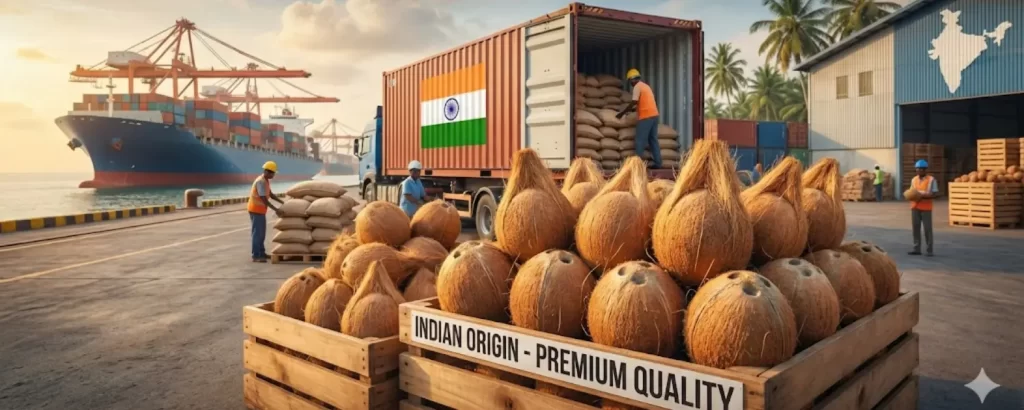
The global demand for semi husked coconut is surging across the Middle East, Europe, and North America. Whether for religious rituals, industrial oil extraction, or supermarket retail, the semi-husked format is the preferred export standard because it balances protection with usability. India’s coconut export industry, valued at over $450 million annually, is concentrated in the southern “Coconut Belt.” However, not all exporters are equal. To secure a high-value contract, you need a partner who understands the science of the “Tuft” and the logistics of long-haul sea freight. Here is what defines the top-tier exporters from India. 1. Regional Specialization: The Pollachi Advantage When scouting for top exporters, location is everything. While Kerala and Karnataka produce massive volumes, the Pollachi region in Tamil Nadu is recognized as the “Coconut Capital” for international trade. Year-Round Supply: Unlike other regions that have distinct harvest seasons, Pollachi’s unique micro-climate allows for continuous harvesting. Top exporters like Exim Internationals source directly from this belt to ensure your supply chain never breaks. Nut Density: Coconuts from this region are known for their thicker meat (kernel) and higher oil content, providing a better ROI for industrial processors. 2. The Science of the “Tuft” (Shelf-Life Engineering) A top exporter isn’t just a shipper; they are quality engineers. The “Semi Husked” process involves removing the outer green husk but leaving a small, fibrous “tuft” over the three eyes of the coconut. Why it matters: These eyes are the most vulnerable part of the nut. The tuft acts as a natural seal, preventing moisture loss and protecting against fungal pathogens. The Result: Premium Indian semi husked coconuts can survive 60 to 75 days in transit. Top exporters ensure this tuft is perfectly trimmed—neither too thick (adding weight) nor too thin (exposing the eyes). Import products for your Needs Ready to Import 3. Grading Standards for Global Markets Top exporters don’t ship “mixed bags.” They categorize their stock into clear B2B grades: Grade A (Premium Retail): Weight: 550g – 650g+. These are uniform, bold nuts ideal for supermarkets in the UAE or UK. Grade B (Industrial/Processing): Weight: 450g – 550g. These are perfect for oil mills and desiccated coconut production where uniformity is secondary to volume. Purity Specs: 100% mature nuts (brown shell). Immature nuts (pale shells) have lower shelf life and are rejected by top-tier exporters. 4. Compliance and Certifications A “top” exporter must speak the language of international law. To ensure a smooth import process at Jebel Ali, Rotterdam, or New York, verify that your exporter holds: APEDA Registration: The primary body for agri-exports from India. FSSAI Certification: Ensures food safety and hygiene standards. Phytosanitary Certificate: Mandatory proof that the shipment is pest-free. Traceability: Top companies can trace every bag back to the specific farm cluster. Choosing Your Partner The difference between a successful shipment and a container of spoiled fruit is the exporter’s attention to detail during the husking and packing phase.   At Exim Internationals, we pride ourselves on being among the top semi husked coconut exporters by combining Pollachi’s natural harvest advantage with rigorous 3-step quality grading. We don’t just export coconuts; we export reliability.   Ready to secure your 2026 supply? Contact Exim Internationals for a quote on our Grade A Pollachi Semi Husked Coconuts. Frequently Asked Questions (FAQs) 1. How do you prevent mold during 30+ days of sea transit? We use breathable PP (Polypropylene) mesh bags (25 nuts per bag) and ensure the container has proper ventilation. The key is maintaining a moisture level below 7% on the outer husk before loading. 2. What is the standard loadability for a 40ft High Cube container? A 40ft HC container can typically hold 27 to 29 Metric Tons, which is approximately 1,900 to 2,000 bags (47,500 to 50,000 individual nuts). 3. Why is Indian semi husked coconut preferred over Indonesian origin? While Indonesia has massive volume, Indian coconuts (specifically from South India) are often preferred for their longer shelf life and higher density, making them more resilient for long sea voyages to the West. 4. Can you supply organic certified semi husked coconuts? Yes. India has a growing number of NPOP/NOP certified organic coconut farms. Top exporters can provide full organic documentation upon request. 5. What are the major ports for coconut export in India? The majority of shipments move through Tuticorin (V.O. Chidambaranar Port), Cochin, and Chennai. These ports have the most frequent feeder lines to major global hubs. About us Exim Internationals is a premier export company dedicated to delivering the finest products from India to international markets. Our mission is to establish India as a global export powerhouse, contributing to economic growth and showcasing the richness of Indian goods worldwide. From the pashmina shawls and apples of the North to the spices of the South, the fruits and powders of the West, and the tea and bamboo of the East, we connect every corner of India with the global market. Certification we have: FSSAI, APEDA, IEC, UDYAM, FIEO, Spices Board, Coconut Contact us Samin heritage, Sl building, Shop no. 19, Chandan wadi, Almeda road Thane west, Maharashtra, India-400601. Email Us: support@eximinternationals.comCall Us: +91 9820446601 | +91 9321559185

Top Semi Husked Coconut Exporters from India: What Global Buyers Need to Know Read Post »

Indian fruits
Export Import Fruits Spices Vegetables

Which Indian Fruits Have High Demand in the US Market?

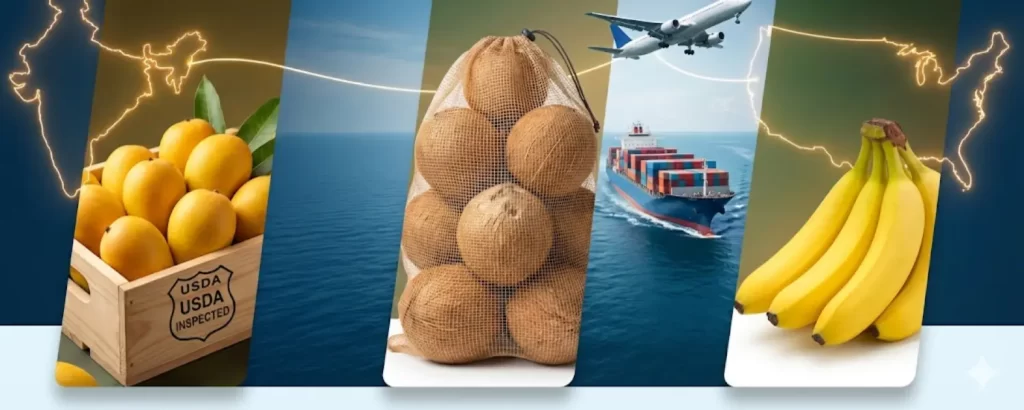
The United States is one of the most lucrative yet challenging markets for fresh produce. For years, strict phytosanitary barriers kept many tropical delights out of American homes. However, recent trade agreements and logistics breakthroughs have opened the doors for premium Indian fruits. For buyers and distributors in the US, the “Made in India” label is becoming synonymous with intense flavor and superior nutritional profiles. At Exim Internationals, we see three specific fruits leading the charge into the American market for the 2025-2026 season. 1. Indian Mangoes: The “Gold” of Global Trade Mangoes are the undisputed leader of Indian fruits in the US. The demand is so high that the US market often sees “pre-bookings” months before the harvest begins. The Varieties: While Mexico and Peru supply the “standard” market, India wins with Alphonso and Kesar. These are treated as “Luxury Fruits” in high-end US retailers. The US Requirement: To enter the US, all Indian mangoes must undergo Irradiation Treatment under USDA-APHIS supervision. Market Trend: In 2024, Indian mango exports to the US grew by over 130%. US consumers are moving away from the fibrous varieties and are now willing to pay a premium for the “buttery” texture of the Indian Alphonso. 2. Fresh Semi Husked Coconuts: The Superfood Staple The US “Coconut Water” and “Vegan” movements have created a permanent hunger for fresh coconuts. While the Philippines and Vietnam are major players, Indian semi husked coconuts from the Pollachi region are gaining ground. Why the US chooses India: Indian coconuts are prized for their long shelf life (up to 70 days) and high meat yield. Logistics Advantage: The “Semi Husked” format—leaving a small fibrous tuft over the eyes—ensures the nut survives the long sea voyage to US ports (New York or Savannah) without spoiling. Usage: They are widely sold in Asian-American supermarkets and used by US-based organic milk and oil processors. Import products for your Needs Ready to Import 3. Cavendish Bananas: The High-Volume Challenger India is the world’s largest producer of bananas, but it is only recently that Indian Cavendish bananas have started competing with Central American supply in the US market. The Quality Shift: With the adoption of Global G.A.P. standards and better cold-chain management, Indian bananas now meet the visual “Class A” standards required by US grocery giants. Economic Edge: Due to optimized production in states like Maharashtra and Gujarat, Indian Cavendish bananas offer a competitive price point, especially during supply shocks in Central America. The “G9” Factor: The Indian G9 Cavendish is particularly favored for its uniform ripening and resistance to bruising, making it ideal for the long-haul US supply chain. B2B Sourcing Strategy: Navigating the US Market Exporting Indian fruits to the US is not just about volume; it’s about Compliance. To capture this market, Exim Internationals focuses on: Traceability: Modern US buyers demand to know which farm the fruit came from. We maintain rigorous digital logs for every shipment. Cold Chain Integrity: For bananas and mangoes, a deviation of even 2°C can lead to a “total loss” shipment. We use real-time GPS and temperature tracking in our reefer containers. FDA & USDA Compliance: From label font sizes to irradiation certificates, we ensure every “i” is dotted so your shipment clears US Customs without delays. Frequently Asked Questions (FAQs) 1. Are Indian bananas available in the US year-round? Yes. Unlike seasonal fruits like mangoes, India produces Cavendish bananas in a staggered cycle, allowing for a consistent, year-round supply to US distributors. 2. Can I import “Semi Husked” coconuts by sea? Absolutely. In fact, sea freight is the preferred method for coconuts. The robust nature of the Indian semi husked variety allows it to stay fresh during the 30-40 day transit to the US East Coast. 3. What is the shelf life of Indian mangoes once they arrive in the US? After irradiation and air-freight, Indian mangoes typically have a retail shelf life of 7 to 10 days. Proper cold storage at 13°C at the destination warehouse is crucial. 4. Why should a US buyer choose Indian fruits over closer South American sources? It comes down to Brix (Sugar Content) and Aroma. Indian soil conditions produce a higher sugar concentration in fruits like mangoes and bananas, offering a taste profile that “local” varieties simply cannot match. 5. Does Exim Internationals provide private labeling for US retailers? Yes. We can provide customized packaging and labeling that complies with US FDA “Nutrition Facts” requirements and features your brand logo. About us Exim Internationals is a premier export company dedicated to delivering the finest products from India to international markets. Our mission is to establish India as a global export powerhouse, contributing to economic growth and showcasing the richness of Indian goods worldwide. From the pashmina shawls and apples of the North to the spices of the South, the fruits and powders of the West, and the tea and bamboo of the East, we connect every corner of India with the global market. Certification we have: FSSAI, APEDA, IEC, UDYAM, FIEO, Spices Board, Coconut Contact us Samin heritage, Sl building, Shop no. 19, Chandan wadi, Almeda road Thane west, Maharashtra, India-400601. Email Us: support@eximinternationals.comCall Us: +91 9820446601 | +91 9321559185

Which Indian Fruits Have High Demand in the US Market? Read Post »

genuine cumin seeds
Export Import Fruits Spices Vegetables

How to Identify Genuine Cumin Seeds Sourced from India

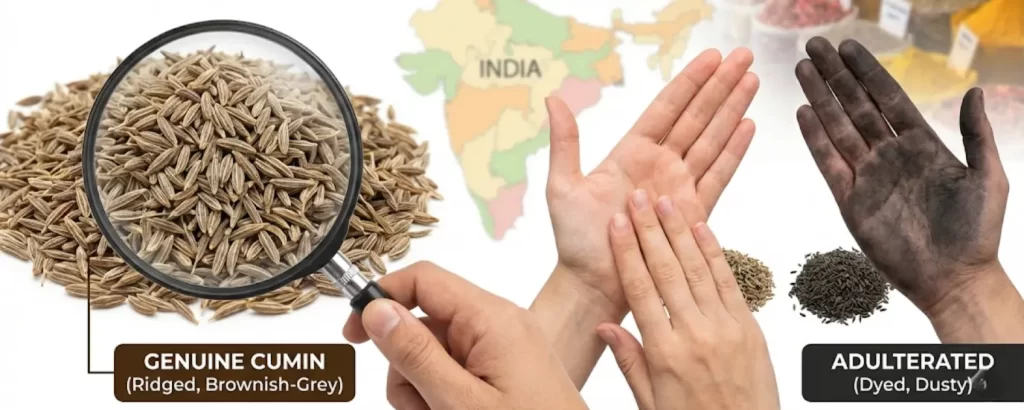
Cumin (Cuminum cyminum), or “Jeera” as it is known in its homeland, is the second most popular spice in the world. India is the undisputed leader, producing over 70% of the global supply. However, high demand often invites low-quality imitations and adulteration in the international market. For a global importer, “cheap” cumin often comes at the cost of purity. Adulterants like charcoal-dusted grass seeds or “exhausted” seeds (where the oil has already been extracted) can ruin a brand’s reputation and lead to shipment rejections. To ensure you are procuring genuine cumin seeds from the 2025-2026 harvest, you must look beyond the price tag. Here is your professional guide to identifying authenticity. 1. Visual Markers: The “Ridges and Taper” Rule Genuine Indian cumin has a very specific morphology. Unlike fennel or anise, cumin seeds are smaller and have a distinct structure. The Ridges: Each seed should have nine longitudinal ridges. These are not just lines; they are canals that hold the essential oils. The Shape: Authentic seeds are boat-shaped, slightly thick in the middle, and tapering at both ends. The Color: Natural Indian cumin is brownish-grey. If the seeds look overly black or have a suspicious “shiny” charcoal tint, they have likely been artificially colored. 2. Understanding Purity Grades: Singapore vs. Europe In the Indian “Mandi” (market) system, “genuine” is defined by purity levels. You should specify your grade based on your destination’s regulatory standards. Grade Purity Level Cleaning Process Best For Europe Quality 99.5% Sortex Cleaned EU, USA, Japan (Strict MRLs) Singapore Quality 99% Machine Cleaned Middle East, SE Asia Standard Quality 97% – 98% Machine Cleaned Grinding / Industrial use Import products for your Needs Ready to Import 3. The Sensory & Physical “Mandi” Tests Before you sign a contract, use these three simple physical tests to verify the quality of your sample: The Palm Rub Test: Rub a pinch of seeds vigorously between your palms. If your palms turn black or grey, the seeds have been coated with charcoal dust or artificial dyes to hide “old crop” or grass seed fillers. The Water Float Test: Drop a spoonful of seeds into a glass of water. Authentic: Most seeds will sink due to their density. Fake/Adulterated: Grass seeds or hollow, exhausted seeds will float to the top. The Aroma Snap: Crush a few seeds between your fingernails. The aroma should be immediately pungent, earthy, and warm. If it smells like dried grass or has a musty odor, the volatile oil content is low. 4. Technical Specifications: The “Oil” Factor The value of genuine cumin seeds lies in their volatile oil content. This is what provides the flavor and medicinal benefits. Premium Export Grade: Should have a volatile oil content of 2.5% to 4.5%. Moisture Content: Must be below 9% – 10%. Anything higher risks fungal growth during sea transit. Ash Content: Total ash should not exceed 9.5%, indicating the absence of added sand or dirt. 5. Essential Documentation for Importers A genuine exporter will always provide a paper trail. Do not accept a shipment without a Certificate of Analysis (COA) from an accredited laboratory (like SGS or Intertek). Key documents to verify: Phytosanitary Certificate: Proves the seeds are free from pests. Certificate of Origin: Confirms the seeds are from the Gujarat or Rajasthan belts. Spices Board of India (CRES): Ensure your supplier is a registered member of the Indian Spices Board. Quality Over Price The global cumin market in 2026 is seeing a shift toward pesticide-free (IPM) and organic varieties. While adulterated seeds are easy to find at low prices, they lack the flavor potency and safety required for global standards. At Exim Internationals, we specialize in Sortex-cleaned, high-oil-content cumin sourced directly from the Unjha market. We ensure every bag is tested for purity before it leaves the port. Would you like me to send you a sample specification sheet for our 99.5% Europe Grade Cumin Seeds for your quality team to review? Frequently Asked Questions (FAQs) 1. Is “Black Cumin” the same as Indian Cumin? No. Black Cumin (Kalonji or Nigella sativa) and Shahi Jeera (Bunium persicum) are botanically different. Standard Indian cumin is Cuminum cyminum. 2. Why is the Unjha market in Gujarat so famous? Unjha is the world’s largest hub for cumin trading. Sourcing from here ensures you get the “New Crop” first and have access to the most competitive bulk pricing. 3. What is “Exhausted” Cumin? Exhausted cumin refers to seeds from which the essential oils have already been extracted for use in perfumes or flavorings. These seeds look genuine but have no taste or aroma. Always check the volatile oil percentage on your COA. 4. Can I buy genuine cumin in powder form? Adulteration is much harder to detect in powder. It is always safer to buy genuine cumin seeds as whole fruit and grind them yourself, or source powder from a supplier with a verified “Steam Sterilization” facility. 5. How should I store bulk cumin to keep it genuine and fresh? Store in a cool, dry place away from direct sunlight. In a sealed 25kg or 50kg HDPE bag, genuine cumin retains its potency for up to 24 months. About us Exim Internationals is a premier export company dedicated to delivering the finest products from India to international markets. Our mission is to establish India as a global export powerhouse, contributing to economic growth and showcasing the richness of Indian goods worldwide. From the pashmina shawls and apples of the North to the spices of the South, the fruits and powders of the West, and the tea and bamboo of the East, we connect every corner of India with the global market. Certification we have: FSSAI, APEDA, IEC, UDYAM, FIEO, Spices Board, Coconut Contact us Samin heritage, Sl building, Shop no. 19, Chandan wadi, Almeda road Thane west, Maharashtra, India-400601. Email Us: support@eximinternationals.comCall Us: +91 9820446601 | +91 9321559185

How to Identify Genuine Cumin Seeds Sourced from India Read Post »

cavendish bananas
Export Import Fruits Spices Vegetables

Which Supermarkets in UAE Sell Cavendish Bananas?

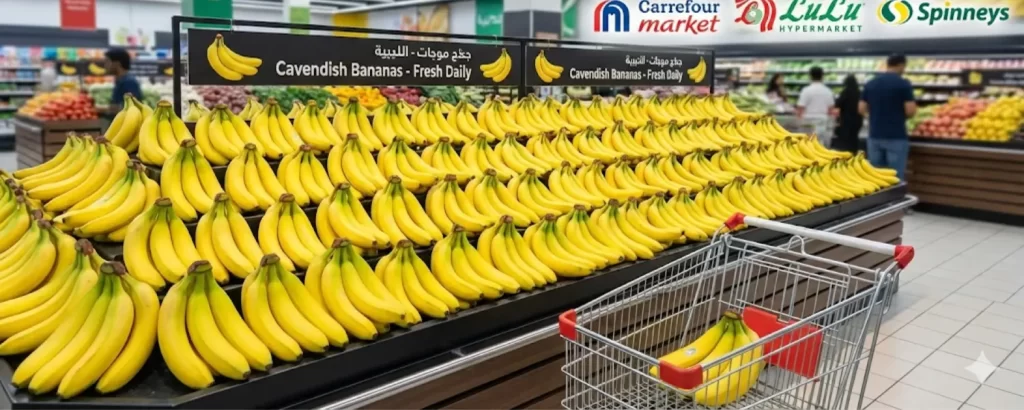
The Cavendish banana is the undisputed king of the UAE fruit market. Accounts for nearly 90% of all banana imports into the country, this variety is favored for its “Class A” appearance and ability to withstand long-distance shipping from India, Ecuador, and the Philippines. If you are wondering where to find the freshest stock, here is a comprehensive guide to the top retailers and supermarkets in the UAE. 1. Major Hypermarket Chains (Bulk & Best Value) For the best price-to-quality ratio, these hypermarkets are your primary destination. They often source directly from major importers or their own international procurement offices. LuLu Hypermarket: One of the largest retailers in the GCC, LuLu frequently stocks Cavendish bananas from India (G9 variety) and Ecuador. Prices typically range from AED 3.00 to AED 6.00 per kg. Carrefour UAE: Carrefour offers multiple tiers of Cavendish, including premium branded options like Chiquita or Del Monte, alongside budget-friendly “unbranded” bulk options. Nesto Hypermarket: Known for competitive pricing, Nesto is a go-to for daily essentials, offering fresh Cavendish bananas sourced mainly from Indian and Southeast Asian plantations. 2. Premium & Gourmet Retailers (Quality & Brands) If you are looking for specific certifications (Organic/Fairtrade) or perfectly ripened premium brands, these stores are the benchmark. Spinneys & Waitrose: These supermarkets prioritize aesthetics and “ready-to-eat” ripeness. You will often find the “Extra Sweet” Cavendish varieties here, often air-freighted for maximum freshness. Union Coop: A favorite among locals and residents, Union Coop provides high-quality produce with rigorous quality checks, often featuring large, blemish-free Cavendish hands. 3. Online Grocers & Specialty Suppliers The UAE’s digital economy has made it incredibly easy to have fresh produce delivered to your doorstep. Kibsons International: A household name for fresh delivery. Kibsons is unique because they are also major wholesalers, ensuring that their Cavendish bananas are among the freshest in the country. Barakat Fresh: Known for their juices and pre-cut fruits, Barakat offers whole Cavendish bananas through their online store, often focusing on the Ecuador origin known for its larger size and creamy texture. Fresh Leaf: A specialty fruit and vegetable supplier in Dubai that provides high-end Ecuadorian Cavendish bananas to both retail and HORECA (Hotel, Restaurant, Cafe) sectors. Import products for your Needs Ready to Import Why the UAE Market Prefers Cavendish The preference for Cavendish bananas in the UAE isn’t accidental. The variety offers several industrial and consumer advantages: Logistical Resilience: Its thick skin protects the fruit during sea transit from Mumbai (4-6 days) or Ecuador (20-30 days). Nutritional Profile: It is a rich source of Vitamin B6, Vitamin C, and Potassium, making it a staple in the health-conscious UAE market. Uniformity: Supermarkets love the consistent size and shape of Cavendish, which makes it easy to display and sell by weight or per piece. Comparison: Indian vs. Ecuadorian Cavendish in UAE Feature Indian Cavendish (G9) Ecuadorian Cavendish Price More Affordable Premium Size Medium (18cm – 22cm) Large (22cm – 25cm+) Availability Year-round (Fast transit) Year-round (Long transit) Popularity High in Hypermarkets High in Gourmet Stores Finding Your Batch Whether you prefer the value of Indian Cavendish at LuLu or the premium feel of Ecuadorian Chiquita at Spinneys, the UAE offers unparalleled access to this tropical treasure. At Exim Internationals, we understand the nuances of the Gulf fruit trade. We ensure that our export-grade Cavendish bananas meet the “Class A” standards required by these top-tier UAE retailers. Are you looking to supply Cavendish bananas to the UAE market? Contact Exim Internationals today for a breakdown of logistics, ripening protocols, and wholesale pricing. Frequently Asked Questions (FAQs) 1. What is the average price of Cavendish bananas in Dubai? Prices fluctuate based on origin and season but generally range between AED 3.50 and AED 6.50 per kg in most supermarkets. 2. Can I find Organic Cavendish bananas in the UAE? Yes, most premium supermarkets like Spinneys and online platforms like Kibsons stock Certified Organic Cavendish, usually sourced from Peru or India. 3. Which is better: Indian or Ecuadorian Cavendish? It depends on your preference. Indian bananas are often sweeter and more cost-effective due to shorter shipping times, while Ecuadorian bananas are famous for their larger size and perfectly smooth skin. 4. How do supermarkets keep bananas yellow for so long? Most large retailers in the UAE use ethylene-controlled ripening rooms. They receive the bananas green and ripen them scientifically to ensure they arrive on the shelf at “Stage 4” (Yellow with green tips). 5. How should I store Cavendish bananas at home in the UAE? Store them at room temperature (approx. 20-22°C) away from direct sunlight. If your kitchen is very hot, hanging them on a banana stand can prevent bruising and slow down over-ripening. About us Exim Internationals is a premier export company dedicated to delivering the finest products from India to international markets. Our mission is to establish India as a global export powerhouse, contributing to economic growth and showcasing the richness of Indian goods worldwide. From the pashmina shawls and apples of the North to the spices of the South, the fruits and powders of the West, and the tea and bamboo of the East, we connect every corner of India with the global market. Certification we have: FSSAI, APEDA, IEC, UDYAM, FIEO, Spices Board, Coconut Contact us Samin heritage, Sl building, Shop no. 19, Chandan wadi, Almeda road Thane west, Maharashtra, India-400601. Email Us: support@eximinternationals.comCall Us: +91 9820446601 | +91 9321559185

Which Supermarkets in UAE Sell Cavendish Bananas? Read Post »

best Indian mango varieties
Export Import Fruits Spices Vegetables

Best Indian Mango Varieties for Export to UAE: A Buyer’s Guide

The United Arab Emirates (UAE) is the crown jewel of India’s mango export industry. In 2024 alone, India exported over 15,000 metric tonnes of fresh mangoes to the Emirates. With a massive South Asian diaspora and a local population that appreciates luxury fruit, the demand spans from high-end retail in Dubai to wholesale markets in Abu Dhabi.   However, for an importer or retail procurement manager, the “Best Indian Mango” depends on your end-user. Are you stocking a luxury boutique or a high-volume supermarket chain? Here is our expert analysis of the best Indian mango varieties for the UAE market. 1. Alphonso (Hapus): The Premium Benchmark Origin: Ratnagiri & Devgad, Maharashtra. The Appeal: Often called the “King of Mangoes,” its creamy, non-fibrous texture and unique aroma are unmatched. UAE Market Niche: High-end supermarkets (Spinneys, Waitrose) and corporate gifting. Logistics Note: Alphonso is sensitive. For the UAE, Air Freight is the standard to ensure it arrives at peak ripeness. While it commands the highest price, it remains the first variety to sell out in Dubai every season. 2. Kesar (The Saffron Mango): The Value Leader Origin: Gir (Gujarat) and Marathwada (Maharashtra). The Appeal: Known for its intense sweetness and vibrant orange pulp. Market Shift: In the 2024-2025 season, Kesar surpassed Alphonso in export volume. Why? It is significantly more affordable while offering a similar “premium” eating experience. UAE Market Niche: Family packs and bulk retail. Its robust skin allows for Sea Freight in reefer containers if handled correctly, making it highly profitable for volume importers. Import products for your Needs Ready to Import 3. Banganapalli (Benishan): The Volume Giant Origin: Andhra Pradesh and Telangana. The Appeal: Large, oblong, and fleshy with a very thin skin. It is sweet and lacks fiber. UAE Market Niche: The “daily use” mango. It is widely available in hypermarkets like Lulu and Carrefour. Its large size (300g – 500g) makes it a visually dominant fruit on the shelf. 4. Dasheri & Langra: The Niche Favorites Origin: Uttar Pradesh and Bihar. The Appeal: * Dasheri: Famous for its long shape and intense sweetness. Langra: Distinguished by its greenish skin even when ripe and its unique “turpentine” aroma that connoisseurs love. UAE Market Niche: Specifically targeted toward the North Indian diaspora. These varieties typically arrive later in the season (May-June), extending the mango sales window in the UAE. Strategic Trends for 2025-2026 The UAE market is evolving. To succeed as an importer this season, consider these two factors: GI-Tagged Branding: Consumers in the UAE are becoming more aware of Geographical Indication (GI). Branding your mangoes specifically as “Ratnagiri Alphonso” or “Gir Kesar” allows you to charge a 15–20% premium. Sea Protocol Success: With air freight costs rising, APEDA (India’s export body) has perfected sea-shipment protocols for Kesar and Banganapalli. Utilizing Controlled Atmosphere (CA) containers can reduce your logistics costs by up to 60% compared to air freight. Sourcing for the UAE The “best” variety is a balance of price, shelf life, and flavor. For maximum market coverage, we recommend starting the season with Alphonso (Air), transitioning to Kesar (Sea) for volume, and finishing with Dasheri for the diaspora market. At Exim Internationals, we provide specialized sorting and VHT (Vapor Heat Treatment) to ensure every box meets UAE’s strict phytosanitary standards.   Would you like to pre-book your allocation for the 2026 Alphonso and Kesar season? Contact us for a specialized export quote. Frequently Asked Questions (FAQs) 1. What is the standard packaging for mangoes to UAE? The most common packaging is a 3.5kg or 4kg corrugated fiberboard box. For premium Alphonso, we often use individual foam nets and 2kg “gift boxes” containing 6–9 fruits. 2. Is Hot Water Treatment (HWT) required for UAE? While the UAE is more lenient than the US, HWT or VHT is highly recommended to ensure the fruit is free from fruit flies and to improve the uniform ripening of the batch. 3. How long is the transit time to Dubai? Air Freight: 4–7 hours (Total 24–48 hours from packhouse to shelf). Sea Freight: 6–10 days from Nhava Sheva (Mumbai) or Mundra (Gujarat) to Jebel Ali. 4. Why is Kesar becoming more popular than Alphonso? Kesar has a longer shelf life and a more consistent supply chain. It is also less prone to “spongy tissue” (an internal ripening defect) which occasionally affects Alphonso. 5. What is the best temperature for transporting fresh mangoes? Mangoes should be transported at a temperature of approximately 13°C (55.4°F). Temperatures below 10°C can cause chilling injury, while higher temperatures lead to over-ripening and spoilage. About us Exim Internationals is a premier export company dedicated to delivering the finest products from India to international markets. Our mission is to establish India as a global export powerhouse, contributing to economic growth and showcasing the richness of Indian goods worldwide. From the pashmina shawls and apples of the North to the spices of the South, the fruits and powders of the West, and the tea and bamboo of the East, we connect every corner of India with the global market. Certification we have: FSSAI, APEDA, IEC, UDYAM, FIEO, Spices Board, Coconut Contact us Samin heritage, Sl building, Shop no. 19, Chandan wadi, Almeda road Thane west, Maharashtra, India-400601. Email Us: support@eximinternationals.comCall Us: +91 9820446601 | +91 9321559185

Best Indian Mango Varieties for Export to UAE: A Buyer’s Guide Read Post »

coconut sugar
Export Import Fruits Spices Vegetables

How Coconut Sugar is Made: Everything You Need to Know

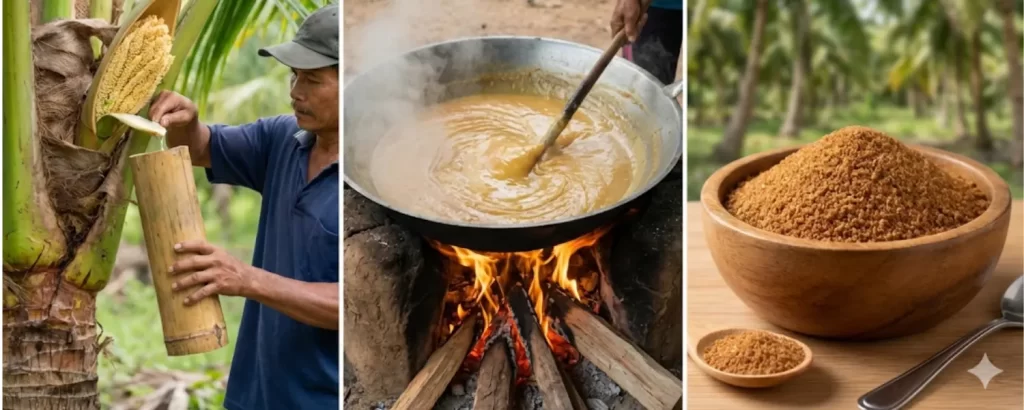
While the world is moving away from heavily refined white sugars, coconut sugar has emerged as the “clean label” champion. But unlike cane sugar, which involves massive industrial mills and chemical bleaching, the story of coconut sugar is one of traditional craftsmanship paired with modern precision.   Derived from the “Tree of Life,” this sweetener is prized for its low Glycemic Index (GI) and rich mineral profile. But how exactly does a clear, watery sap from a palm tree turn into the golden-brown granules found on global supermarket shelves?   At Exim Internationals, we believe transparency in the supply chain starts with understanding the process. Here is the step-by-step journey of how coconut sugar is made for the global market. Step 1: Tapping the “Inflorescence” The process doesn’t start with the coconut fruit, but with the flower. Skilled harvesters, often called “tappers,” climb the palm trees to reach the unopened flower buds (inflorescence). The Technique: The tapper makes a precise incision in the flower stalk. The Yield: A clear, nutrient-rich liquid called “Neera” or sap begins to drip. A single tree can provide 1 to 2 liters of sap per day. Step 2: The Race Against Time (Collection & Filtration) Coconut sap is highly susceptible to natural fermentation due to the wild yeasts in tropical air. To prevent the sap from turning into coconut vinegar or alcohol, it must be collected every 12 hours. Hygiene: Modern exporters use sterilized collection vessels. Filtration: The raw sap is immediately filtered through fine mesh or cloth to remove any natural debris like bark or coconut fibers. Step 3: Evaporation (From Sap to Syrup) The filtered sap is roughly 80% water. To concentrate the sugars, the water must be removed. Traditional Method: Small-scale farmers boil the sap in large open woks over controlled wood fires. Industrial Method: For large-scale export, we use Vacuum Evaporators. By lowering the atmospheric pressure, we can boil the sap at a lower temperature (approx. 60°C – 80°C). This preserves more vitamins and minerals compared to high-heat boiling. The Result: The sap thickens into a viscous, amber-colored liquid known as Coconut Nectar or syrup. Import products for your Needs Ready to Import Step 4: Granulation (The Transformation) This is the most critical stage. As the syrup reaches a sugar concentration of about 80%, it is removed from the heat. Continuous Stirring: Workers or mechanical paddles stir the cooling syrup vigorously. This aeration promotes the formation of tiny crystals. Solidification: As it cools and is stirred, the liquid syrup magically transforms into solid, moist granules. Step 5: Drying, Sieving, and Grading The fresh granules still contain too much moisture for international shipping. Drying: The sugar is dried (often sun-dried or in industrial ovens) until the moisture content drops below 2%. This ensures a shelf life of up to 24 months. Sieving: The sugar is passed through various mesh sizes (typically 14-16 mesh or 30-40 mesh) to create uniform granule sizes suitable for industrial baking or retail packs. Metal Detection: For export, the final product passes through a metal detector to ensure 100% food safety. The “Golden” Specs: What B2B Buyers Look For When sourcing coconut sugar, industrial buyers prioritize these metrics: Moisture Content: Should be < 2% to prevent clumping. Purity: 100% Coconut Sap (No cane sugar or fillers added). Solubility: High-quality coconut sugar should dissolve quickly in beverages and dough. Certifications: USDA Organic, EU Organic, Halal, and Kosher are the standard requirements for 2026. A Sustainable Cycle The beauty of coconut sugar production is its sustainability. A single coconut palm can produce sap for over 20 years without being cut down, making it a far more “green” crop than sugarcane. At Exim Internationals, we work directly with cooperatives that balance traditional tapping skills with modern food safety technology. Whether you need bulk 25kg bags for a bakery or private-label retail pouches, we provide the traceability you need. Looking for a reliable supply of authentic coconut sugar? Contact Exim Internationals today for our latest lab reports and wholesale pricing Frequently Asked Questions (FAQs) 1. Is coconut sugar “raw”? Technically, no. All coconut sugar must be heated to evaporate the water. However, it is considered “unrefined” because it doesn’t undergo the bleaching or chemical processing used in white sugar. 2. Why is some coconut sugar darker than others? The color depends on the temperature and duration of the boiling process. Higher heat leads to more caramelization, resulting in a darker, more “toffee-like” flavor. “Blonde” coconut sugar is processed at lower temperatures. 3. Does the process involve any chemicals? In traditional and organic production, no. We use only heat and physical stirring. Some non-organic producers may use lime or anti-foaming agents, but Exim Internationals prioritizes 100% natural, clean-label processing. 4. Can the same tree produce coconuts and sugar? Usually, no. If a tree is being tapped for sap, it won’t produce many coconuts. Farmers often dedicate specific sections of their plantations to sugar production and others to fruit production. 5. How should bulk coconut sugar be stored? It should be kept in a cool, dry place. Because it is a natural product, it is hygroscopic (absorbs moisture). Ensure bags are sealed tightly to prevent clumping. About us Exim Internationals is a premier export company dedicated to delivering the finest products from India to international markets. Our mission is to establish India as a global export powerhouse, contributing to economic growth and showcasing the richness of Indian goods worldwide. From the pashmina shawls and apples of the North to the spices of the South, the fruits and powders of the West, and the tea and bamboo of the East, we connect every corner of India with the global market. Certification we have: FSSAI, APEDA, IEC, UDYAM, FIEO, Spices Board, Coconut Contact us Samin heritage, Sl building, Shop no. 19, Chandan wadi, Almeda road Thane west, Maharashtra, India-400601. Email Us: support@eximinternationals.comCall Us: +91 9820446601 | +91 9321559185

How Coconut Sugar is Made: Everything You Need to Know Read Post »

Scroll to Top
exim international logo

Get Our Products Pricing

Fill out the form to download!